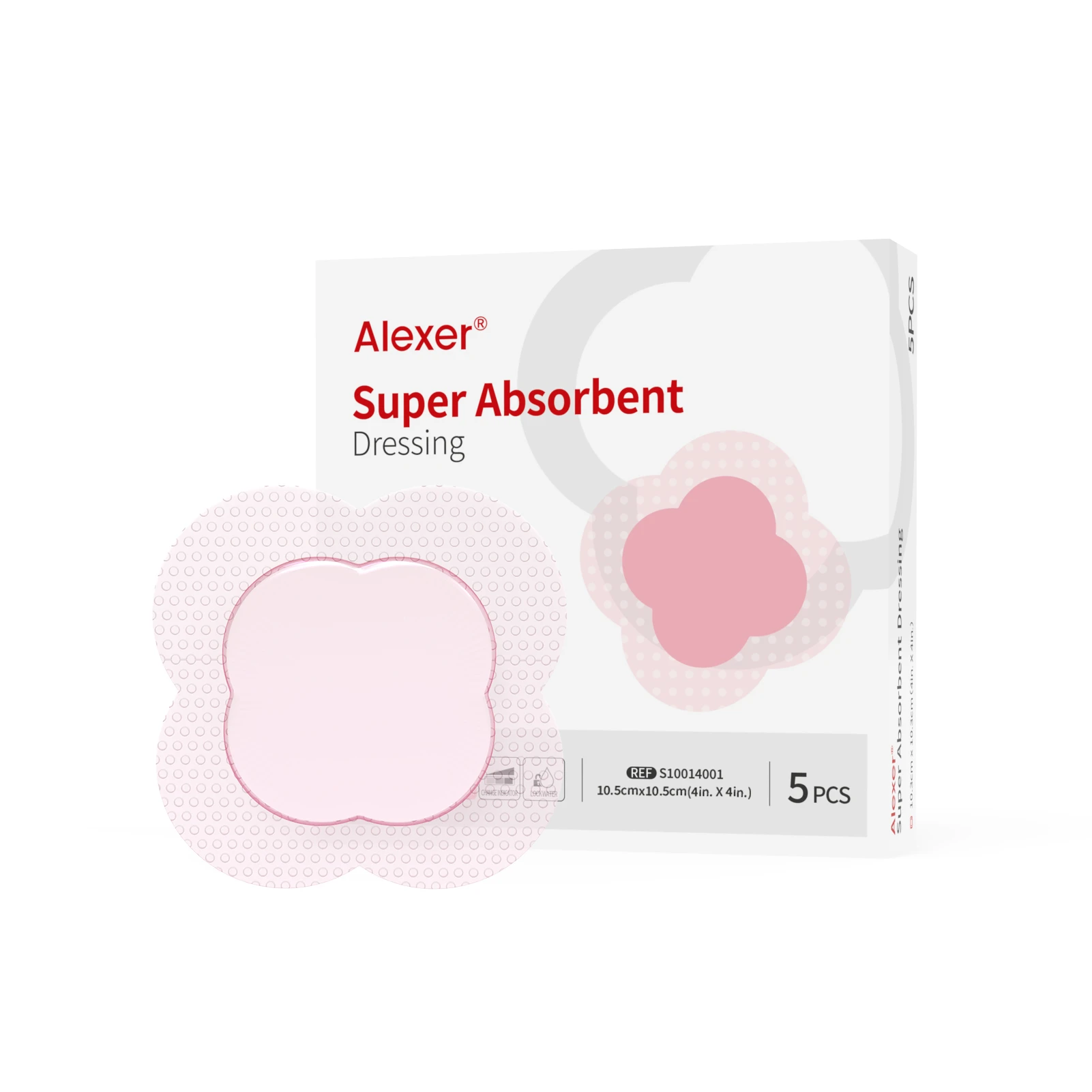
When you pick a foam dressing supplier, your choice matters for patient healing and comfort. Supplier standards help decide how good and safe the products are. You should check for certifications like ISO 13485 or CE Marking. These standards mean the supplier follows tough rules and gives safe products.
|
Certification |
Description |
Impact on Reliability |
|---|---|---|
|
FDA |
A basic requirement to enter the U.S. market. Regulatory compliance, and increases trust from global customers and OEM/ODM partners. |
This registration demonstrates regulatory compliance and supports the reliability of the manufacturing and supply process. |
|
ISO 13485 |
This is for medical devices. It checks safety, design, and how things are made. |
It means the supplier follows strict rules. This helps you trust the product’s safety and how well it works. |
|
CE Marking |
This shows the product meets EU rules. |
It proves the product is safe and works well. This is important for selling in Europe. |
SLK Medical is a leader in new ideas, quality, and caring for patients. Knowing about supplier standards helps you pick the best products for wounds that need special care.
Key Takeaways
-
Pick suppliers who have certifications like ISO 13485 and FDA approval. These show the products are safe and good quality. – Always look at the material standards of foam dressings. Good materials help wounds heal better and feel more comfortable. – Find dressings that have both absorbency and breathability. This helps wounds heal faster and keeps them safe from germs. – Use a checklist when you check suppliers. This makes sure they follow high rules for safety and quality. – Ask for samples before you buy a lot. Testing samples lets you see if the quality and fit are right for you.
Foam dressing specifications and quality

Material standards and composition
When picking a foam dressing, check what it is made of. The materials help the dressing soak up fluid and keep the wound wet. This helps the wound heal faster. Foam dressings have layers that control fluid and protect skin. Some dressings have special features, like SLK Medical’s D-Pore™ Dual-Dimensional Pore Foaming Technology. This feature helps the dressing soak up more fluid and lets air pass through. You want a supplier that uses strong, medical-grade materials. These materials stop skin from getting irritated and help fragile skin.
-
The way foam dressings are made affects:
-
How much fluid they soak up
-
How well they keep wounds wet
-
How they handle different wound fluids
-
Always look at the material standards before buying.
Absorbency and breathability
Absorbency is very important for foam dressings. You need a dressing that can handle the fluid your wound makes. Even the lowest absorbency for foam dressings is 39.9 mL in 24 hours. This is enough for wounds with lots of fluid. Dressings are tested for different fluid levels, from dry to wet. A 10 × 10 cm dressing can soak up 10 to 21 mL in 24 hours. Most foam dressings work for wounds with medium or heavy fluid.
Breathability matters too. A breathable dressing lets air reach the wound but keeps germs out. SLK Medical’s D-Pore™ technology makes dressings more breathable. This helps wounds heal better. If you buy from a good supplier, you get dressings that balance soaking up fluid and letting air in.
Sterility and safety protocols
Sterile dressings keep wounds safe from germs. Only use foam dressings that follow strict safety rules. Good suppliers make dressings in clean places and test each batch for germs. Look for dressings that are packed and sealed one by one. This keeps them clean until you use them. Safety rules also mean using safe adhesives and materials that do not cause allergies. These steps stop skin problems and allergic reactions. You can trust suppliers who follow world standards for safety and sterility.
Tip: Always check the package for clear labels. This shows the dressing is clean and safe to use.
Sizing guide for wound types
Picking the right size foam dressing helps wounds heal. Dressings come in many shapes and sizes. You need to match the dressing to the wound. If the dressing is too small, it will not cover the wound. If it is too big, it may waste material or feel uncomfortable.
|
Pore Size (μm) |
Fluid Absorption |
Impact on Healing Efficiency |
|---|---|---|
|
25 |
Low |
Not much cell absorption |
|
1000 |
High |
Healing cells may escape |
Big pores soak up more fluid but may let healing cells out. Small pores protect the wound but may not soak up enough fluid. SLK Medical has many sizes and shapes. You can find dressings for small cuts, big ulcers, or hard-to-cover wounds. A good supplier will help you pick the best size for each wound.
-
Match the dressing size to the wound for:
-
Better coverage
-
Lower chance of infection
-
Faster healing
-
Always ask your supplier for a sizing chart. This helps you choose the right dressing for every patient.
Foam dressing supplier certifications and standards
International compliance (ISO, FDA)
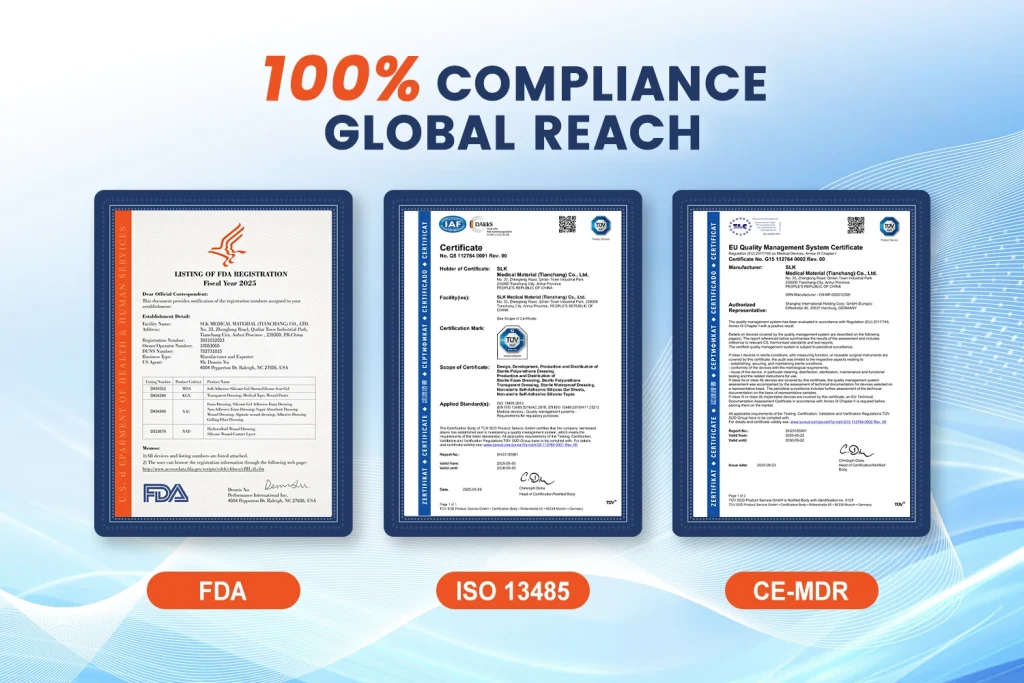
It is important to check if a foam dressing supplier has international certifications. These show the supplier follows strict safety and quality rules. The most important ones are:
-
FDA certification
-
ISO 13485 certification
FDA approval means the products are safe for use in the United States. ISO 13485 shows the supplier uses a strong system to make medical devices. SLK Medical has both certifications. You can trust their foam dressings for patient care.
Regional and national standards
Every country has its own rules for medical products. You must make sure your foam dressing supplier meets these rules. This is important if you want to use their products where you live. Here are some important certifications:
|
Certification Type |
Description |
|---|---|
|
CE Certification |
Shows the product meets EU safety rules. |
|
FDA Registration |
Needed for medical products in the United States. |
|
ISO13485 |
Quality system standard for medical devices. |
A supplier with these certifications can sell products in Europe, the United States, and other big markets.
Documentation and certification process
You should ask your foam dressing supplier for proof they meet standards. Suppliers use documents and test results to show this. Here are some ways they prove it:
|
Evidence Type |
Description |
|---|---|
|
Suppliers use this standard in their paperwork. |
|
|
FLUHTE Wound Simulator |
This is a special test for fluid handling. |
|
Clinical Relevance |
Test results match real-life medical cases. |
These documents help you see how the supplier checks their products.
Tip: Always ask for certificates and test reports before you buy foam dressings.
SLK Medical’s global certifications
SLK Medical is a foam dressing supplier with global certifications. Their certifications show they care about quality. Here are some of them:
|
Certification |
Relevance |
|---|---|
|
FDA |
Shows the product meets U.S. medical rules. |
|
ISO 13485 |
International quality system for medical devices. |
|
CE MDR |
Needed for selling products in Europe. |
SLK Medical meets the highest standards in the industry. You can feel sure when you choose their foam dressings for your patients.
Evaluating foam dressing suppliers
Quality assurance and batch testing
You should make sure your foam dressing supplier checks for quality. Good suppliers test the materials before making dressings. They watch each step to keep the quality high. During making, they test to find problems early. They use the same steps every time to keep things the same. At the end, they test some dressings from each batch to check quality.
|
Quality Assurance Measure |
Description |
|---|---|
|
Raw Material Testing |
Checks all materials before production. |
|
Process Control Monitoring |
Watches the manufacturing process closely. |
|
In-Process Testing |
Tests during production to spot issues. |
|
Standardized Production Procedures |
Uses set methods for every batch. |
|
Batch Sampling and Final Testing |
Tests samples from each batch before shipping. |
You should also look for tests on how much fluid the dressing can soak up. Tests for wicking and how fast it takes in fluid are important too. These tests show if the dressing works well for different wounds.
Traceability and transparency
Traceability means you can track each dressing from start to finish. Transparency means the supplier tells you about their process. This helps you trust the products more and lowers risks for your business. Suppliers who share supply chain details follow the rules and build trust with buyers.
|
Benefit |
Description |
|---|---|
|
Improved legal compliance |
Meets rules like antislavery acts. |
|
Reduced business risk |
Shares supply chain info to lower risks. |
|
Enhanced brand loyalty |
Builds trust with buyers and patients. |
OEM/ODM customization capabilities
Customization lets you get dressings that fit your needs. Top suppliers let you pick thickness, border style, color, and how sticky the dressing is. You can choose the size, what goes on the back, and even add your logo. SLK Medical lets you order custom dressings and helps you design them for special cases.
|
Customization Feature |
Description |
|---|---|
|
Size |
Pick width, thickness, and length. |
|
Bandage Surface & Backing |
Choose from different materials. |
|
Adhesive Formulation |
Select standard or hypoallergenic options. |
|
Custom Printed Logos |
Add your branding. |
|
Packaging Style |
Choose roll, box, or bulk carton. |
Healthcare leaders like foam dressings that work for many treatments. Custom features help you treat different wounds and change dressings less often.
SLK Medical’s support and sample process
SLK Medical helps you with research, making, and selling all in one place. You can ask for samples to test before you buy a lot. The company lets you pick custom sizes and shapes. You should always ask for samples to check if they are good and safe. Suppliers who give samples and test results help you choose better.
Tip: Always ask for samples and check test results before you buy a lot. This helps you get dressings that meet your needs.
Buyer best practices and red flags
Signs of non-compliance
You need to watch for warning signs when you choose a foam dressing supplier. Suppliers who do not follow rules can put patients at risk. Look for missing certifications or unclear product labels. If a supplier does not share test results or batch numbers, you should be careful. Poor packaging or damaged boxes can mean the supplier does not care about safety. Suppliers who avoid answering questions about their process may not meet quality standards.
Tip: Always check for clear certificates and safety seals on every box. This helps you avoid unsafe products.
Supplier assessment checklist
You can use a checklist to make sure your supplier meets high standards. This helps you pick the best foam dressings for your patients. Here is a simple checklist:
-
Check for ISO 13485, FDA, or CE certifications.
-
Ask for batch test reports and sterility proof.
-
Review the supplier’s traceability system.
-
Confirm the supplier offers customization options.
-
Make sure the supplier provides clear sizing guides.
-
Ask about customer support and sample policies.
If you follow this checklist, you can lower risks and improve patient care.
How to request samples
You should always test foam dressings before you buy a large order. SLK Medical makes it easy to request samples and get support. Here are the steps you can follow:
|
Step |
Description |
|---|---|
|
1 |
Visit the supplier’s sample policy page. |
|
2 |
Decide if you need free or paid samples. |
|
3 |
For free samples, pay for shipping costs. |
|
4 |
For paid samples, share custom needs and confirm costs. |
|
5 |
Arrange pickup or pre-pay shipping charges. |
|
6 |
Wait for confirmation from the sales team. |
You can contact SLK Medical’s team for help with sample requests. Their support staff will guide you through each step and answer your questions. Testing samples lets you check quality and fit before you buy more.
You should pick foam dressing suppliers who follow strict rules. Certifications like ISO 13485 and FDA approval mean you can trust their products. Good suppliers help keep patients safe and help wounds heal better. Use a checklist to help you make good choices. SLK Medical gives expert help, has world certifications, and offers custom options. You can ask for samples to check how good they are. Go to www.slkmedical.com to learn more and start checking suppliers.
Tip: Always look at supplier credentials before you buy foam dressings.
FAQ
What certifications should you check before buying foam dressings?
You need to look for ISO 13485, FDA, and CE certifications. These certificates show the supplier follows important safety and quality rules. Always ask to see these certificates before you buy anything.
How do you know if a foam dressing is safe for sensitive skin?
Check if the supplier uses medical-grade materials and hypoallergenic adhesives. You can also ask for samples to try on sensitive skin. Make sure the product has clear labels and safety details.
Can you request custom sizes or shapes for foam dressings?
Yes, many suppliers let you pick custom options. You can choose the size, shape, thickness, and even how sticky the adhesive is. SLK Medical offers OEM and ODM services to fit your needs.
How often should you change a foam dressing?
Change the dressing every 3 to 7 days, or as your healthcare provider tells you. How often you change it depends on the wound and how much fluid comes out.
Tip: Always do what your healthcare provider says for the best results.