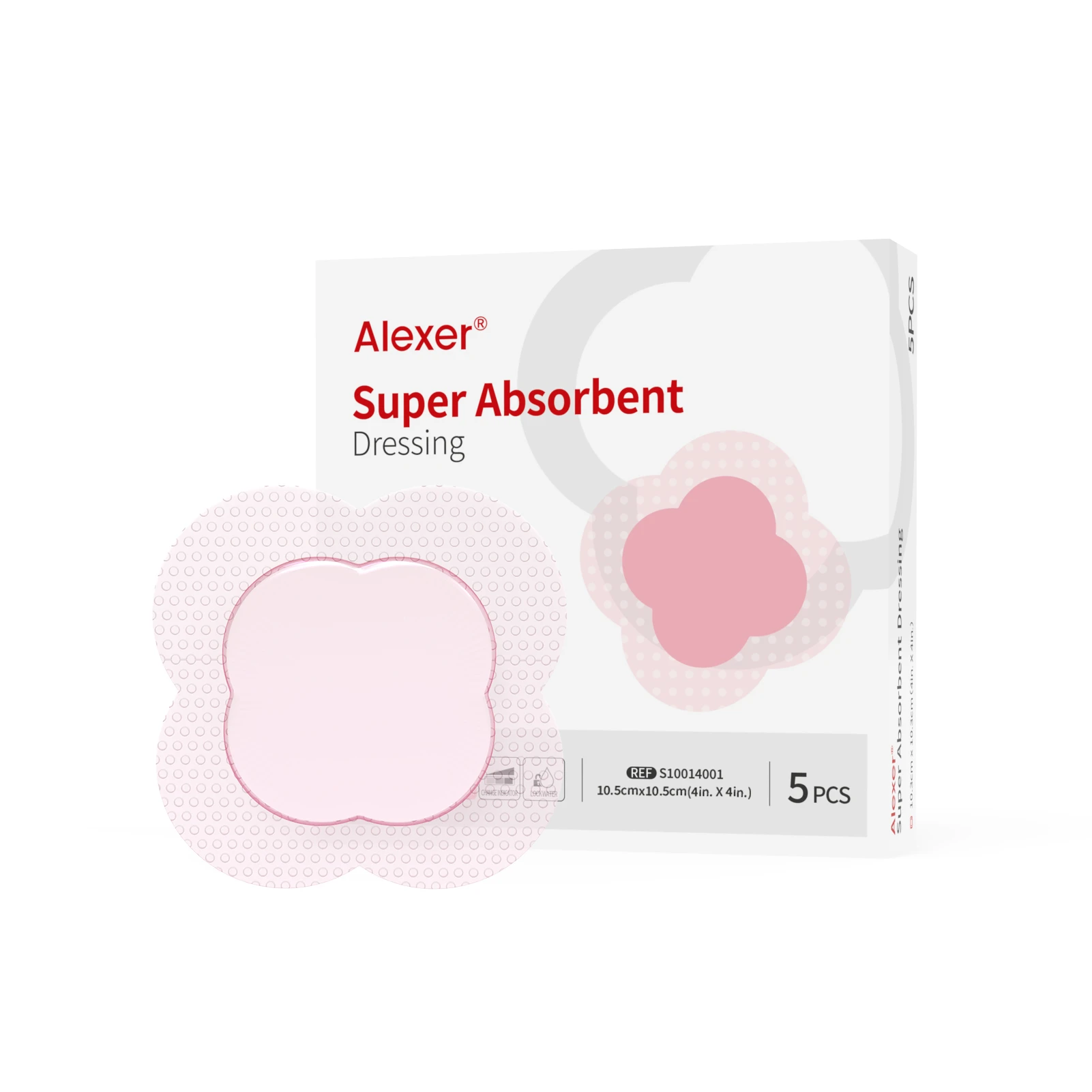
A hydrocolloid dressing is a popular, wafer-like wound cover designed to support moist wound healing.Low to moderate (not suited for heavily draining wounds).
Here is a table outlining the 7 Signs You Should Stop Using Hydrocolloid Dressings:
|
Sign / Trigger |
What is Happening (The Cause) |
Immediate Action |
|
1. Wound is Fully Healed |
Complete epithelialization has occurred; a protective moisture barrier is no longer needed. |
Stop dressing. Leave open to air or apply a light skin protectant/moisturizer. |
|
2. Signs of Infection |
Trapping bacteria under an occlusive seal exacerbates infection (erythema, warmth, purulent drainage). |
Remove immediately. Switch to an antimicrobial dressing (e.g., silver) and seek systemic evaluation. |
|
3. Excessive Exudate & Leakage |
Fluid volume exceeds the hydrocolloid’s absorption capacity, causing the gel matrix to liquefy and fail. |
Switch to a higher-capacity dressing such as a foam, alginate, or hydrofiber. |
|
4. Periwound Maceration |
Trapped fluid breaks down healthy skin surrounding the wound edge, turning it white and fragile. |
Remove dressing. Protect intact skin with a barrier film and switch to an absorbent dressing. |
|
5. Allergic Reactions |
Skin sensitivity or contact dermatitis from the adhesive matrix (redness, severe itching, rash). |
Discontinue adhesive. Switch to a non-adhesive dressing or gentle silicone contact layer. |
|
6. Hypergranulation Tissue |
Overgrowth of vascular tissue above the skin line, caused by excessive moisture and tissue hypoxia. |
Stop occlusive dressings. Switch to a non-occlusive dressing and consult for cautery or topical steroids. |
|
7. Stalled Healing (7–14 Days) |
The current wound bed environment is no longer stimulating active cellular repair. |
Re-evaluate treatment plan. Switch dressing modalities, debride if necessary, or refer to a specialist. |
What Is a Hydrocolloid Dressing and How Does It Work?
Have you ever wondered how special bandages help scraped knees heal without forming a hard, itchy scab? That is the power of a hydrocolloid dressing!
1. Understanding Moist Wound Healing
In the past, people thought wounds needed to dry out in the air. Today, science proves that moist wound healing—keeping a wound comfortably damp—helps skin cells rebuild up to twice as fast!
- Moisture Balance Concept : The wound environment shouldn’t be too dry (which stalls healing) or too wet (which damages healthy skin). Hydrocolloids maintain the “just right” moisture level.
- Occlusive vs. Semi-Occlusive: Hydrocolloids act like an occlusive or semi-occlusive shield. They form a tight, waterproof barrier that locks natural moisture in while keeping water, dirt, and bad bacteria out.
2. Why Hydrocolloids Turn White
If you’ve used one, you might notice a milky white bubble forming over your wound. Don’t worry, it isn’t pus!
- Gel Formation Mechanism: Hydrocolloids contain water-loving particles like carboxymethylcellulose (CMC). When they mix with wound fluid, they swell into a soft white gel. This gel cushions the wound, reduces pain, and hydrates dead tissue so the body can clean itself naturally (autolytic debridement).
- Normal vs. Abnormal: A centered, smooth white bubble is normal. However, if you see green or yellow foul-smelling fluid leaking out, or if the skin turns dark red and hot, it could be an infection—time to remove it!
3. Research Backing
- Moist Environment Studies: Early landmark research by Dr. George Winter proved that keeping wounds moist allows new skin cells to slide smoothly across the wound bed rather than fighting through a dry scab.
- Autolytic Debridement Evidence: Clinical evidence shows that trapping natural body enzymes under a gel matrix safely dissolves dead tissue without the pain of manual scraping.
Before You Stop: Is the Dressing Working Normally?
How do you know if a hydrocolloid dressing is actually doing its job? Healing takes place silently beneath the waterproof seal, but your skin gives you clear visual clues when everything is going right!
1. What Success Looks Like
- A Controlled White Gel Bubble: Seeing a smooth, localized white bubble right over the wound means the dressing is actively absorbing fluid and maintaining the perfect moisture balance.
- Fading Pain and Inflammation : Within 24 to 48 hours, throbbing and sharp pain should drop significantly as exposed nerve endings stay insulated under the cushioned gel shield.
- Shrinking Wound Edges : Each time you change the dressing, you will notice the wound getting smaller as new, healthy pink skin (granulation tissue) fills in from the outer edges.
- Clear Periwound Skin : Healthy therapy keeps the intact skin surrounding the wound dry, calm, and normal in color—showing no signs of redness, rash, or soggy white breakdown (maceration).
2. The science of healing
- Accelerated Epithelialization: Landmark research in moist wound healing proves that when skin stays comfortably damp under an occlusive barrier, new cells slide smoothly across the wound bed up to twice as fast as they would under a dry, hard scab.
- Gentle Autolytic Debridement: Clinical evidence shows that trapping the body’s natural enzymes inside the gel matrix safely softens and dissolves dead tissue, allowing the wound bed to clean itself without painful scraping.
The Sign About When to Stop Using a Hydrocolloid Dressing
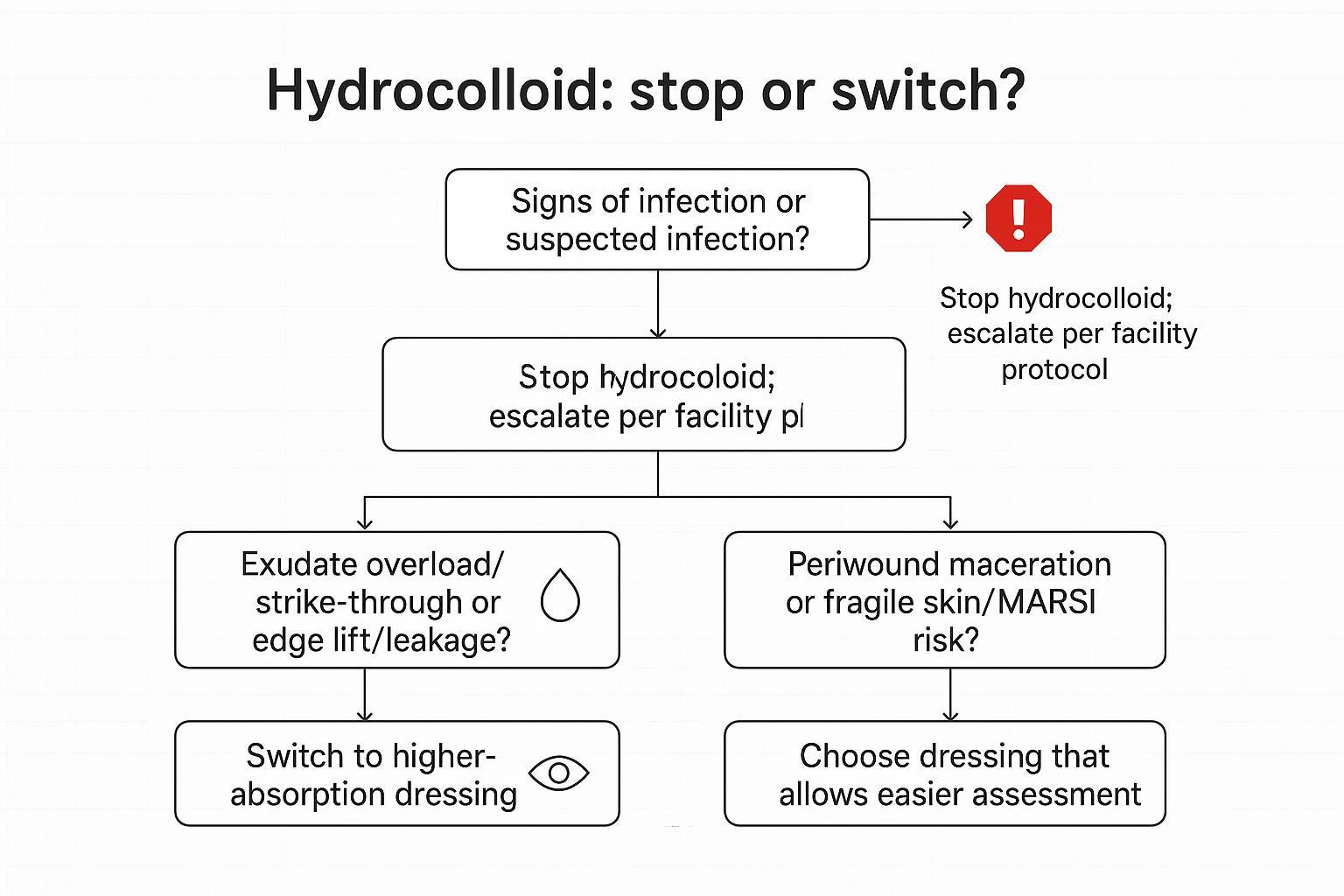
Hydrocolloid dressings are amazing tools for healing minor cuts, blisters, and shallow wounds. They turn wound fluid into a soft gel to keep things moist and protected. But even the best dressing isn’t meant to stay on forever!
Here are the 7 clear signs that tell you it is time to take off the hydrocolloid and change your plan.
|
Reason to Stop |
Key Signs |
What to Do Next |
|
1. Fully Healed |
Smooth pink skin; no more drainage. |
Stop using dressings. Protect skin with sunscreen or moisturizer. |
|
2. Infection |
Redness, heat, foul odor, or yellow/green thick pus. |
Remove immediately. See a doctor for antimicrobial treatment. |
|
3. Too Much Exudate |
Dressing leaks, edge lifts, or saturates in less than 24 hrs. |
Switch to a higher-capacity silicone foam dressing. |
|
4. Maceration |
Surrounding healthy skin turns soggy, white, and wrinkled. |
Dry the skin, apply a barrier film, and use a breathable dressing. |
|
5. Allergy / Skin Damage
|
Red rash, itching, or skin stripping when removed (MARSI). |
Stop adhesive dressings. Use non-adhesive pads with silicone tape. |
|
6.Hypergranulation |
Raised, bumpy, bright red tissue growing higher than normal skin. |
Stop sealed dressings. Consult a doctor for silver nitrate or steroid treatment. |
|
7. Stalled Healing |
Zero progress or shrinking after 7 to 14 days. |
Re-evaluate the wound with a clinician to find underlying issues. |
When Hydrocolloid Dressings Should Never Be Used (and What to Do Instead)
Hydrocolloid dressings are fantastic for small, shallow scrapes and blisters because they lock in moisture. But hydrocolloids act like an airtight plastic seal (an occlusive barrier). Putting them on the wrong type of wound is like sealing a wet sponge inside a warm plastic bag—it creates a dangerous breeding ground for bacteria or causes severe skin breakdown!
Here are the 6 dangerous situations where hydrocolloid dressings should never be used, along with the right tools to use instead.
|
Absolute Contraindication |
Why Hydrocolloid Fails |
What We Do Instead |
|
1. Infected Wounds |
Seals bacteria inside a warm, airless chamber, causing infection to spread fast. |
Use antimicrobial silver or iodine dressings + see a doctor. |
|
2. Heavy Exudate Wounds |
Overwhelms capacity, liquefying the seal and destroying healthy skin (maceration). |
Switch to super-absorbent polymer (SAP) or silicone foam. dressing |
|
3. Deep Cavities & Tunnels |
Seals the top surface while leaving a hollow space underneath, forming abscesses. |
Pack the cavity with alginate rope or hydrofiber ribbon. |
|
4. Exposed Bone or Tendon
|
Stings and dries out vital structures, causing permanent tissue death. |
Cover with non-adherent contact layers + saline hydrogel. |
|
5. Ischemic Wounds |
Lacks blood flow; airtight seals increase oxygen deprivation and tissue necrosis. |
Keep dry and protected with breathable non-adherent pads + doctor evaluation. |
|
6. High-Risk Diabetic Foot Ulcers |
Hides silent, deep infections that can quickly lead to amputation. |
Use advanced foam/antimicrobials + strict offloading & medical supervision. |
When to Switch to a Different Dressing Instead
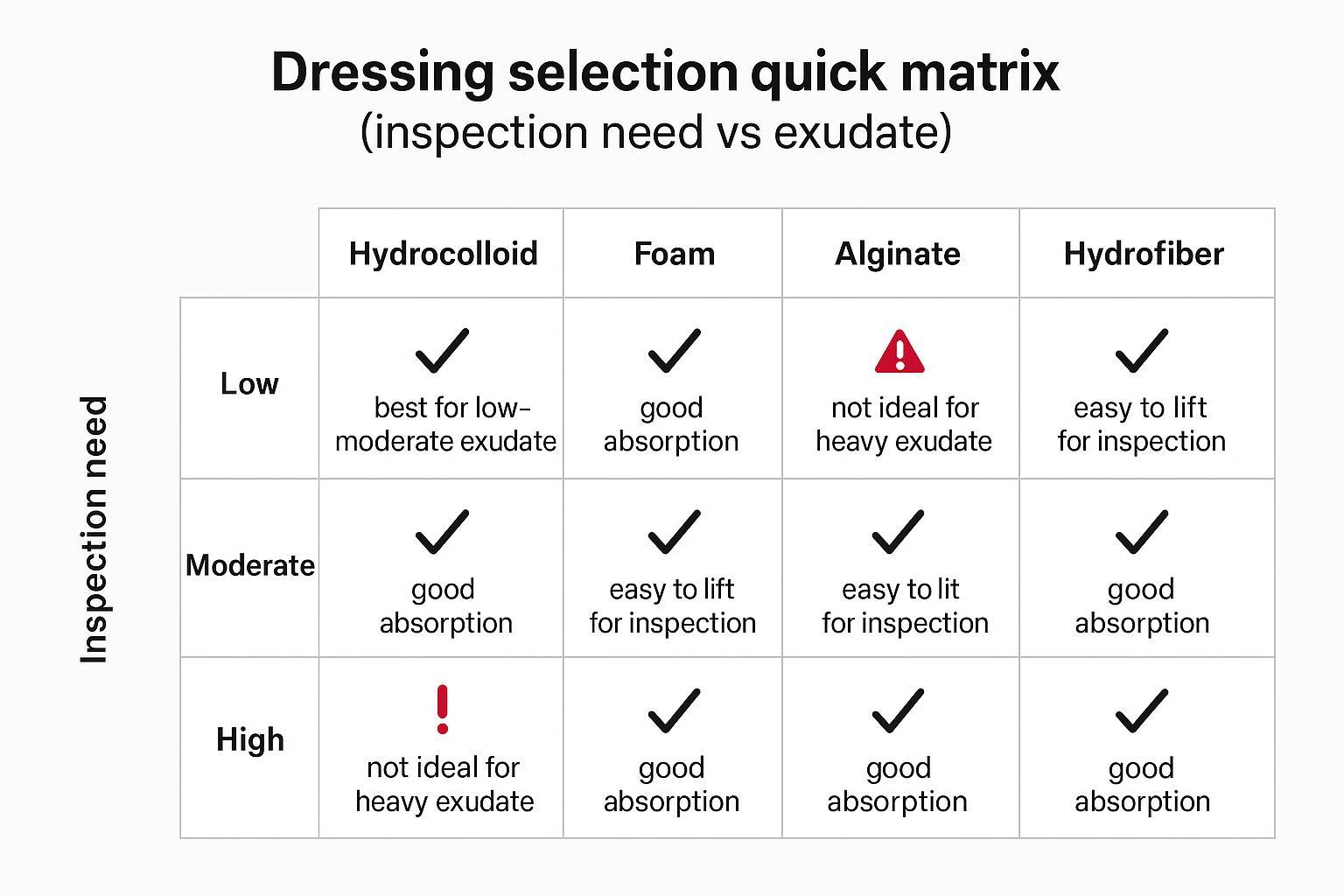
Hydrocolloid dressings are fantastic for light, shallow scrapes and blisters, but they aren’t a one-size-fits-all solution! As a wound heals or changes, its needs shift. Knowing when—and what—to switch to can make the difference between fast healing and a stuck, painful wound.
Here is a simple breakdown of the four main alternative dressings and when you should switch to them!
|
Dressing Type |
Best Exudate Level |
Key Advantage |
When to Switch to It |
|
Hydrocolloid |
Low to Moderate |
Seals wound; autolytic debridement. |
Default choice for shallow, lightly draining wounds. |
|
Silicone Foam |
Moderate to Heavy |
High absorption; ultra-gentle on fragile skin. |
Switch when fluid leaks out or skin is fragile. |
|
Alginate) |
Moderate to Heavy |
Derived from seaweed; fills deep cavities. |
Switch when wounds are deep, tunneling, or bleeding. |
|
Hydrofiber |
Heavy to Massive |
Locks fluid strictly vertically to prevent maceration. |
Switch when fluid is extremely heavy and ruining edges. |
If you want a quick internal refresher on exudate-driven selection criteria, see SLK Medical’s overview on choosing a foam dressing based on exudate levels.
FAQ
Should I remove a hydrocolloid dressing if it turns white?
No! The white bubble is completely normal. It simply shows that the hydrocolloid particles are absorbing wound fluid (exudate) and turning into a soft, protective gel. Only change the dressing if the white bubble reaches the edge or starts leaking.
How long can I leave it on?
A hydrocolloid dressing can stay in place for up to 3 to 7 days, depending on the amount of wound drainage. Leaving it undisturbed supports optimal moist wound healing, but it should be changed earlier if it fills up, leaks, or lifts at the borders.
Can I shower with it?
Yes! Hydrocolloid dressings have a waterproof outer film layer that shields the wound from water, dirt, and bacteria, allowing you to shower normally. Avoid heavy scrubbing directly over the edges, and gently pat it dry afterward.
Can hydrocolloid dressings cause infection?
The dressing itself does not cause infection. However, because it creates an occlusive (airtight) seal, applying it over an already infected wound or trapped bacteria can create a warm, airless chamber where bacteria multiply rapidly. Always clean the wound thoroughly first and avoid use if infection signs exist.
What dressing should I use after hydrocolloid?
It depends on the wound’s condition:
If fully healed: Leave open to air and apply moisturizer or sunscreen. If exudate increased: Switch to an absorbent Silicone Foam Dressing. If wound dried out: Switch to a Hydrogel to donate moisture.
Can I use hydrocolloid on pressure ulcers?
Yes, but only for Stage 1 and Stage 2 pressure injuries (shallow wounds with minor fluid). They shield the skin from friction and shear. Do not use hydrocolloids on deep Stage 3 or 4 ulcers with cavity space, heavy fluid, or exposed bone.
When should I switch to silicone foam dressing?
Switch to a silicone foam dressing if wound fluid begins leaking out, if dressing changes are needed more than once every 24 to 48 hours, or if peeling off the hydrocolloid adhesive is damaging fragile, papery skin.
What does maceration look like?
Maceration happens when intact periwound skin absorbs too much trapped moisture. It looks white, soggy, soft, and wrinkled—similar to how your skin looks after staying in a bathtub or swimming pool for too long.
Is leakage always a sign of failure?
Yes, in terms of functional capacity. Leakage means the hydrocolloid matrix has reached its absolute liquid limit and can no longer trap fluid. Liquid breaking the outer seal compromises protection against bacteria and damages surrounding skin.
Why is my wound not healing under hydrocolloid?
Wounds may stall under hydrocolloid if the exudate level is too high, if silent infection/bioburden is present, or if underlying clinical factors (like poor blood circulation, diabetes, or malnutrition) exist. If a wound shows zero progress after 7 to 14 days, stop hydrocolloids and seek medical reassessment.
Conclusion
Hydrocolloids can be useful when they match the wound’s current needs—but they should be stopped early when stop signals appear. The highest-yield stop signals at the bedside are infection/suspected infection, exudate overload with strike-through, and periwound maceration or fragile skin.
Switch to a dressing category aligned with the wound’s goals right now: higher absorption for uncontrolled drainage, short-term antimicrobials when clinically indicated (with a planned reassessment), and atraumatic interfaces when the periwound is fragile.
Reassess weekly and document the rationale so bedside teams, WOC, and value analysis can track consistency over time.
If you want a procurement-grade next step, request an updated spec/IFU packet and a small sampling plan for the dressing categories you’re standardizing (hydrocolloid, foam, alginate, hydrofiber, and any antimicrobial options) so teams can align formulary, training, and stewardship expectations.
References
-
Wound dressings overview (contraindications include infected wounds and moderate-to-heavy exudate): https://www.ncbi.nlm.nih.gov/books/NBK470199/
-
International consensus on appropriate use of silver dressings (2012): https://woundsinternational.com/consensus-documents/international-consensus-appropriate-use-silver-dressings-wounds-english-en/
Last updated: 2026-07-26