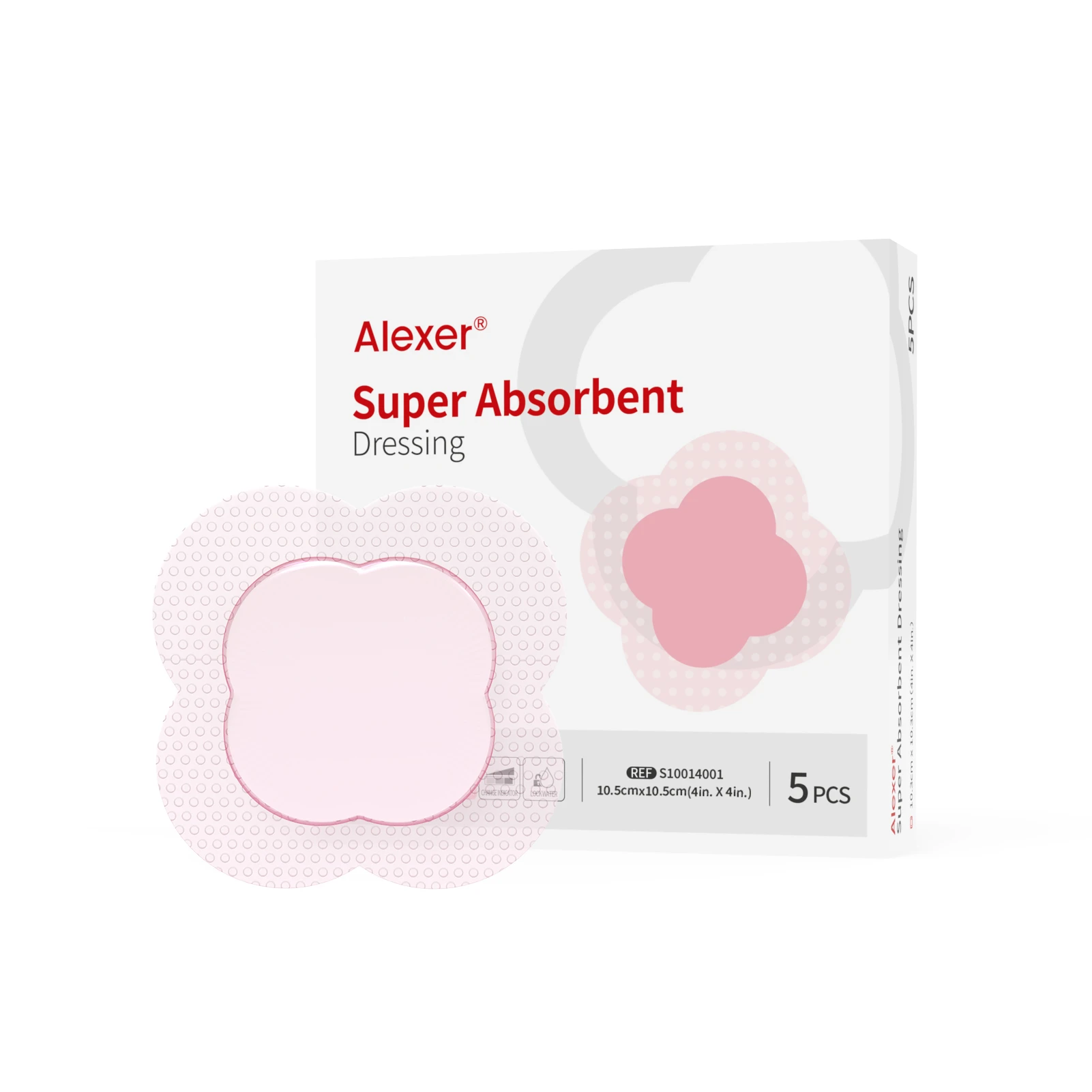
If you’re buying silicone foam wound dressings for a distributor portfolio or a private-label line, you’re not just buying a dressing. You’re buying repeatability: the same absorption behavior, the same edge seal, the same packaging integrity, and the same documentation every time you reorder.
This guide is written for OEM/private label buyers who need to shortlist suppliers without relying on marketing claims, and without guessing on MOQ and lead time for a private label wound dressing program.
Key takeaways
Key Takeaway: Start with a scorecard. If a supplier can’t pass documentation and change-control gates, technical performance doesn’t matter.
Key Takeaway: Ask for third-party test reports tied to the exact SKU you plan to sell, not generic “we have testing” statements.
Key Takeaway: Treat samples as contractual. Your “approved sample” should be the reference unit for production and incoming QC.
A procurement scorecard for OEM/private label silicone foam wound dressings
The goal is to compare suppliers on the same dimensions, using evidence you can verify. Use the scorecard below as your first shortlist filter.
A silicone foam wound dressing is usually evaluated around fluid handling (absorb, spread, retain), adhesion and wear behavior, and packaging integrity. For a technical grounding on why fluid handling is central to foam dressing performance, see the peer-reviewed 2024 review on foam dressing fluid handling.
|
Category |
What to verify |
Evidence to request |
Pass/fail signal |
|---|---|---|---|
|
Product construction |
Silicone contact layer + absorbent foam + backing film; bordered vs non-bordered variants |
Spec sheet + cross-section description; materials list |
Clear, consistent BOM and descriptions across documents |
|
Fluid handling capacity |
How the dressing absorbs and retains exudate under time and pressure |
Absorbency/fluid handling test data; test method and sample ID |
Reports are product-specific and recent; no “internal testing only” |
|
Adhesion and edge seal |
Border adhesion strength, edge lift risk, performance on contours |
Adhesion/border seal evaluation; complaint data summary (if available) |
Supplier can explain tradeoffs (secure hold vs atraumatic removal) |
|
Atraumatic removal |
Behavior on fragile or compromised skin |
Material biocompatibility and skin-contact testing where applicable |
Conservative claims; no “pain-free guaranteed” language |
|
Wear-time use conditions |
What makes wear time shorter/longer (exudate level, location, friction) |
IFU + wear-time guidance consistent with IFU |
IFU matches the product’s intended use and labeling |
|
Packaging integrity |
Seal strength, sterility barrier integrity (if sterile), and shipping durability |
Packaging validation summary; seal inspection criteria |
Packaging spec is controlled and versioned |
|
Labeling readiness |
UDI layout (if applicable), GTIN strategy, multilingual labeling workflow |
Label template + change-control SOP |
Supplier can run artwork approval without repeated errors |
|
Quality system maturity |
ISO 13485 scope, document control, traceability |
ISO 13485 certificate + scope; QMS overview |
Scope matches the products you’re buying |
|
CAPA behavior |
Whether complaints drive real corrective actions |
CAPA log excerpts (redacted); complaint handling SOP |
Root cause and effectiveness checks are credible |
|
Change control |
Notification and approval process for raw material, tooling, packaging changes |
Change notification clause proposal; change-control SOP |
Supplier agrees to written notice and approval gates |
|
Commercial execution |
MOQ flexibility, pilot-run support, lead-time stability |
MOQ tiers; lead-time ranges by SKU; capacity snapshot |
Supplier can commit to realistic windows and escalation |
Pro Tip: If you can’t get the same answer from the spec sheet, IFU, and label, treat it as a risk. In regulated markets, inconsistency becomes a compliance issue, not a copywriting issue.
The evidence pack to request before you talk price
Don’t negotiate price until you know what you’re buying, and whether it can clear your market’s documentation gate.
Below is an evidence pack that’s typical for due diligence. Your exact list varies by market and claims, but the structure holds.
1) Regulatory baseline (US and EU)
For US-market distribution, buyers typically start with FDA’s baseline requirements and confirm the supplier’s ability to support the correct pathway for the specific dressing and claims. FDA’s own overview is a good baseline reference: FDA’s Overview of Device Regulation (updated 2026).
For EU-market sales, buyers typically need MDR-aligned technical documentation and labeling/IFU language support for destination countries.
2) Product technical file highlights (what procurement can review)
Request a concise, buyer-readable pack. It should include:
-
Product spec sheet(s) for each SKU (sizes, shapes, bordered/non-bordered, thickness)
-
IFU and labeling mockups (including the language set you plan to sell)
-
Biocompatibility documentation for skin-contact components (product-specific)
-
Performance testing summary for absorbency/fluid handling and related characteristics
-
Packaging configuration and integrity/validation summary (especially if sterile)
3) Quality and supplier controls
These items determine whether the supplier stays stable after you scale.
-
ISO 13485 certificate and scope
-
Incoming inspection and supplier qualification approach for critical raw materials
-
Traceability model (lot coding, raw material linkage, batch records)
-
Complaint handling workflow and CAPA process
-
Change-control workflow with notification timing
If you want a concrete OEM audit checklist example to adapt, this 2026 OEM sourcing guide includes practical diligence items (including certificate scope checks, product-specific biocompatibility expectations, EN 13726 testing references, CAPA log signals, and cleanroom controls): an OEM wound dressing quality-audit checklist (2026).
⚠️ Warning: Treat “we’re ISO certified” as a starting sentence, not a conclusion. Ask for the certificate, the scope, and whether the manufacturing site matches the documented entity.
Foam dressing MOQ lead time: how to reduce risk without guessing numbers
MOQ and lead time vary by supplier, SKU complexity, packaging configuration, and whether you’re asking for private-label artwork and validation. The mistake is trying to force a single universal number.
Instead, qualify the commercial risk in a way procurement can manage.
Ask for MOQ tiers, not a single MOQ
Request tiers like:
-
Trial MOQ (for sampling and limited launch)
-
Standard MOQ (for regular replenishment)
-
Price-break tiers (for tender or seasonal demand)
Your aim is to align MOQ to your forecast accuracy. A supplier that only offers one high MOQ is pushing inventory risk onto you.
Ask for lead time by stage
A useful lead-time quote breaks into:
-
Artwork finalization (private label)
-
Sample / pre-production approval (PPA)
-
Production
-
Sterilization (if applicable)
-
Final QC + release
-
Logistics and export documentation
This makes it easier to spot what’s truly driving delays.
Lock in what happens when something changes
Two practical controls:
-
A written change notification clause (materials, adhesive, film, packaging changes)
-
A definition of what counts as “equivalent” (so substitutions don’t silently alter performance)
A sampling plan procurement can run in 30–60 days
Sampling is where most private-label projects fail quietly: the sample works, but production drifts. The fix is to make the sample a controlled reference.
Week 1–2: define your evaluation set
Choose 3–6 SKUs that match real demand:
-
One high-volume standard size
-
One contoured/anatomical shape if relevant (sacral/heel)
-
One bordered and one non-bordered if your markets differ
Use your internal clinical or customer feedback to define “what good looks like” in practical terms: leakage, edge lift, skin tolerance, handling in humid climates, and packaging resilience.
Week 2–4: sample testing and incoming QC draft
Create an incoming QC checklist that mirrors your scorecard:
-
Visual inspection and dimensions
-
Packaging seal checks
-
Lot coding and traceability fields
-
Basic performance checks you can run consistently (even if you also rely on third-party tests)
Week 4–6: pre-production approval (PPA)
Your PPA sample should be produced using the same materials, tooling, and process intended for mass production. If a supplier resists this step, treat it as a signal.
Week 6–8: pilot order and feedback loop
Pilot orders should prove three things:
-
Supplier can hit lead time predictably
-
Finished goods are consistent with the approved sample
-
Documentation and labeling are released without rework
Red flags that often show up only after launch
Most supplier issues are not dramatic. They show up as small, repeated variability.
-
Documentation doesn’t match across spec sheet, IFU, and label
-
Border seal performance changes without a formal change notice
-
Packaging damage rates spike after a logistics change
-
CAPA responses are slow, generic, or never closed with effectiveness checks
-
“Same product” behaves differently across lots because raw materials changed
Micro case: a “small” material change that caused edge lift
A common post-launch issue is this sequence:
-
A supplier switches a silicone adhesive, backing film, or foam substrate to an “equivalent” alternative
-
The change is not communicated clearly (or is only mentioned verbally)
-
The next few lots show higher edge lift, different tack, or reduced wear time—especially on high-mobility areas
-
Complaints rise, but root-cause is hard to prove without lot-level traceability and a signed change notice
How to prevent it during OEM/private label sourcing:
-
Treat your approved sample as the contractual reference and keep a sealed retention sample for comparison
-
Require written change notification with a defined approval gate (materials, adhesive, film, foam, and packaging)
-
Ask for test reports that include SKU + lot + sample ID + method version so you can link performance shifts to documented changes
-
In your pilot order, include an incoming QC check that focuses on edge-seal behavior (simple, repeatable checks beat “it feels different” debates)
How to include any manufacturer (including SLK Medical) in your shortlist
To keep this buyer guide vendor-neutral, use the same process for every candidate supplier:
-
Run the scorecard using only evidence you can verify (spec sheet, IFU/label drafts, test reports, packaging validation summary, QMS certificates).
-
Request the evidence pack before discussing price, and confirm the documents are consistent across versions.
-
Treat the approved sample as the contractual reference unit, then require written change notification for any critical materials or packaging.
If you want an example of how one manufacturer presents its silicone foam range and OEM/ODM positioning, you can review SLK Medical’s category page here:
For internal education content (useful for onboarding procurement, sales teams, or distributor partners), these articles may help explain foam dressing basics and common usage considerations:
-
[how long you can leave silicone foam dressing on](https://www.slkmedical.com/how-long-leave-silicone-foam dressing on wound/)
FAQ
What’s the difference between bordered and non-bordered silicone foam?
Bordered products add an adhesive border designed to improve fixation and edge seal. Non-bordered products are typically secured with secondary fixation (tape, wraps, retention bandage) depending on the site and care protocol. Choose based on location, movement, skin fragility, and how much you need the dressing to stay in place.
Do I need sterile silicone foam dressings for every channel?
Not always. Sterility expectations vary by care setting, local regulations, and intended use claims. Confirm your channel requirements first, then ensure the packaging configuration and documentation match the intended use and destination market.
What test reports matter most for silicone foam wound dressings?
Start with product-specific performance testing tied to fluid handling and integrity, plus biocompatibility documentation for skin-contact components when applicable. If a supplier cannot provide product-specific documentation, treat it as a shortlist risk.
How do I compare suppliers when everyone claims “high absorbency”?
Make suppliers show test methods, sample IDs, dates, and the exact SKU tested. You’re looking for repeatability and traceability, not slogans.
How should I request MOQ and lead time without getting an optimistic quote?
Ask for MOQ tiers and stage-based lead time (artwork, PPA, production, QC, logistics). Then request examples from recent export orders in similar configurations.
Transparency, scope, and how to use this guide
Published: 2026-06-09
Last updated: 2026-06-09
Version: v1.0
Scope: This is a B2B procurement and supplier-qualification guide for silicone foam wound dressings (OEM/private label). It focuses on due diligence items such as documentation, testing evidence, packaging integrity, and change control.
Not clinical advice: This content is not medical or clinical advice and should not be used to make treatment decisions. Always follow local regulations, institutional policies, and clinician judgment.
Disclosure: This article is published by SLK Medical. The scorecard and evidence-pack approach is intended to be vendor-neutral and can be applied to any manufacturer. Buyers should independently verify all claims and documentation with the supplier, accredited test labs, and (when needed) regulatory professionals.
Standards and methods mapping (examples)
Use this mapping to turn “we have testing” into evidence you can verify. The exact standard and acceptance criteria depend on your claims, indication, and market.
-
Quality system (QMS): ISO 13485 certificate + scope that matches the manufacturing site and product category.
-
Biocompatibility (skin-contact components): ISO 10993 series documentation appropriate to contact type and duration.
-
Packaging validation (sterile barrier, if applicable): ISO 11607 (and related packaging validation evidence) tied to the exact packaging configuration.
-
Foam dressing performance (fluid handling): EN 13726 test methods are commonly referenced for absorbency/retention-related characterization—request the specific part(s) and report details.
What a third-party test report should include (minimum)
Ask suppliers to provide reports tied to the exact SKU you plan to sell, and confirm the report is traceable to the tested sample(s):
-
Product name, SKU, size, and configuration (bordered/non-bordered)
-
Sample identification (sample ID), lot/batch number, and manufacturing date (if available)
-
Test method/standard and version, plus any deviations
-
Test lab name and accreditation/qualification status (where applicable)
-
Test date, raw results summary, and pass/fail criteria
-
Report author/reviewer names and signature/approval (or equivalent controls)
-
Photos or diagrams when relevant (e.g., sample setup, seal failure modes)
Next steps
If you want to run this as a controlled supplier qualification, request:
-
A product spec sheet and IFU for your target SKUs
-
A documentation pack (QMS scope, traceability model, CAPA overview)
-
A sampling and pre-production approval plan
You can start that process with SLK Medical by using the silicone foam category page above as the routing point, then asking for a spec sheet + sampling plan aligned to your market.