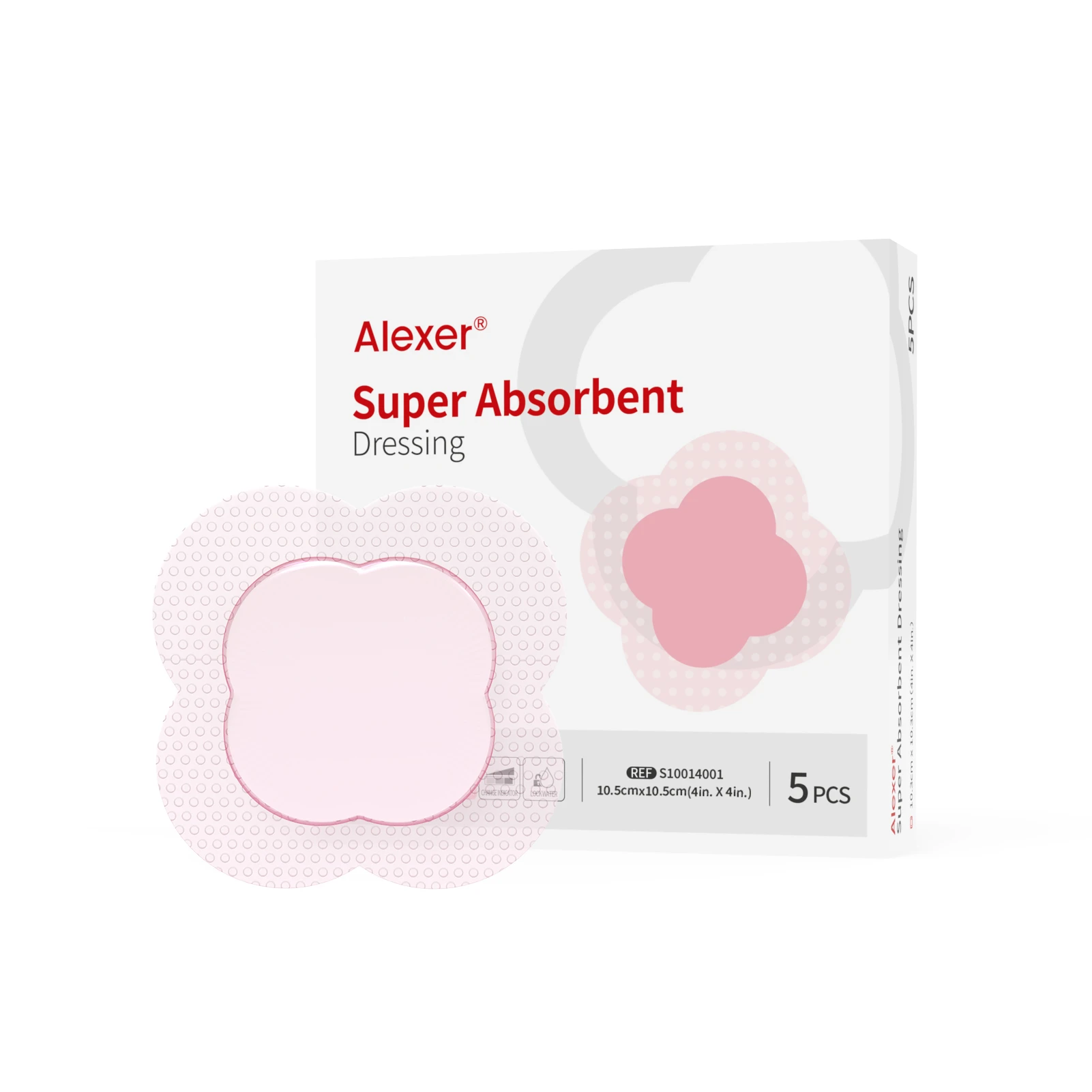
Silicone foam dressings offer effective exudate management and gentle skin protection, but they also have limitations. Buyers should look beyond unit price and “high-absorbency” claims by evaluating fluid retention, adhesion, breathability, biocompatibility, sterilization, and packaging. For distributors and OEM buyers, selecting the right supplier is equally important, with manufacturing consistency, regulatory support, customization, and reliable supply playing a critical role in long-term product success. Get custom samples and test them!
For hospitals, distributors, and OEM buyers, the key is not simply to avoid these disadvantages, but to choose a manufacturer that can address them through product design, material selection, quality control, customization, and reliable supply.
| Common Challenge | What Buyers Should Look For |
|---|---|
| Higher cost | Total cost of care, not unit price alone |
| Heavy exudate | Absorption & fluid-retention performance |
| Maceration | Multi-layer fluid management |
| Skin sensitivity | Gentle silicone contact layer |
| Deep wounds | Appropriate primary/secondary dressing combination |
| Adhesion problems | Consistent silicone coating & adhesive performance |
| Supply risk | Production capacity & quality consistency |
| OEM requirements | Private label, packaging & specification customization |
Key Takeaways
-
Limitations: Silicone foam dressings aren’t ideal for deep cavity wounds or extreme exudate, and they carry higher upfront costs and potential adhesive sensitivity.
-
Performance Beyond Absorbency: Evaluate total fluid management—including retention, wicking, breathability, and leak resistance.
-
Total Cost vs. Unit Price: Consider overall value; longer wear time and reduced nurse workload often outweigh a higher unit cost.
-
Selection Criteria: Choose dressings based on clinical needs, skin compatibility, adhesion strength, and packaging.
-
Supplier Quality: OEM buyers and distributors must verify supplier quality systems, regulatory compliance, capacity, and traceability.
-
Full-Service Partnerships: Partner with suppliers that offer customization, technical support, and stable manufacturing alongside the product.
What Are the Disadvantages of Silicone Foam Dressings?
Silicone foam dressings are widely used in advanced wound care because they combine effective exudate management with gentle adhesion and protection for fragile skin. However, like any wound care product, they also have limitations that should be considered during product selection and clinical use. Factors such as unit cost, exudate level, periwound skin condition, wound depth, and dressing adhesion can all affect product performance and suitability.
For healthcare providers, distributors, and OEM buyers, understanding these potential challenges is essential when comparing different silicone foam dressing solutions. The table below highlights six common limitations of silicone foam dressings and explains the key considerations for selecting the right product for different wound conditions.
| Challenge | Brief Description |
|---|---|
| 1. Higher Cost | Silicone foam dressings may have a higher unit cost than conventional foam or basic wound dressings, but their gentle adhesion and longer wear time may help reduce overall dressing-change costs. |
| 2. Limited Capacity for Extremely Heavy Exudate | Standard foam dressings may become saturated when managing very heavy exudate. High-absorbency or superabsorbent options may be more appropriate for these wounds. |
| 3. Risk of Periwound Maceration | Excessive exudate can make the surrounding skin overly moist and fragile. Proper dressing selection, absorbency, and timely changes help minimize the risk of maceration. |
| 4. Skin Irritation or Adhesive Sensitivity | Although silicone adhesives are designed for gentle skin contact, individual patients may still experience irritation or sensitivity. Skin condition and adhesive performance should be assessed regularly. |
| 5. Limitations for Deep or Cavity Wounds | Foam dressings are generally not designed to fill deep cavities or tunnels. Appropriate cavity fillers, such as alginate or gelling fiber dressings, may be required before applying a foam dressing as a secondary cover. |
| 6. Adhesion and Handling Challenges | Moisture, movement, friction, and difficult anatomical locations can affect dressing adhesion. Choosing the correct size, shape, and adhesive design can improve secure placement and wear time. |
Higher Cost: Is Silicone Foam Worth the Premium?
When evaluating the cost of silicone foam dressings, the unit price alone does not provide the full picture. A lower-cost dressing may require more frequent changes, offer shorter wear time, or provide less effective exudate management. These factors can increase nursing workload, contribute to skin trauma during repeated dressing removal, generate more product waste, and create additional costs for secondary dressings.
For healthcare providers and procurement teams, a more meaningful comparison should consider the total cost of wound care rather than the purchase price of a single dressing. As shown in the table below, factors such as wear time, absorption capacity, dressing change frequency, and overall resource use can significantly influence long-term treatment costs.
The lowest unit price does not always mean the lowest total wound-care cost.
| Cost Factor | Standard Foam | Silicone Foam |
|---|---|---|
| Unit price | Lower | Higher |
| Gentle removal | Limited | Better |
| Dressing changes | Product-dependent | Potentially fewer |
| Fragile skin protection | Variable | Stronger |
| OEM customization | Depends on supplier | Depends on supplier |
Can Silicone Foam Dressings Handle Heavy Exudate?
When comparing foam dressings, “high absorption” alone is not enough to evaluate real-world performance. For healthcare providers, distributors, and OEM buyers, absorbency should be assessed as part of a complete fluid-management system. A dressing may absorb a large volume of exudate but still perform poorly if fluid is not retained, distributed effectively, or controlled under pressure.
Buyers should therefore ask suppliers for more detailed information about how the dressing manages fluid throughout its wear time. Key factors include total absorption capacity, fluid retention, vertical wicking, leakage resistance, strike-through performance, fluid-locking capability, and absorption under pressure. Together, these indicators provide a more complete picture of whether a foam dressing can effectively manage exudate while helping reduce leakage, periwound maceration, and premature dressing changes.
| Performance Parameter | Why It Matters |
|---|---|
| Total Absorption Capacity | Indicates how much exudate the dressing can absorb before reaching saturation. |
| Fluid Retention Capacity | Measures how effectively absorbed fluid remains locked inside the dressing. |
| Vertical Wicking | Helps move exudate away from the wound surface and distribute it through the dressing. |
| Leakage Resistance | Helps prevent exudate from escaping from the dressing and damaging surrounding skin. |
| Strike-Through Performance | Evaluates whether fluid can pass through the outer surface of the dressing during use. |
| Fluid-Locking Capability | Helps reduce the risk of absorbed exudate returning to the wound under movement or pressure. |
| Absorption Under Pressure | Assesses whether the dressing can maintain fluid-management performance when used on pressure-prone areas or under external compression. |
How Should Buyers Evaluate Foam Dressing Absorbency?
When evaluating foam dressings, buyers should look beyond simple “high absorbency” claims. Effective exudate management depends not only on how much fluid a dressing can absorb, but also on how efficiently it distributes, retains, and manages that fluid throughout the wear period.
For distributors, healthcare providers, and OEM buyers, asking manufacturers for clear performance data can help support better product comparisons and purchasing decisions.
Ask Your Manufacturer About:
| Performance Parameter | Why It Matters |
|---|---|
| Absorption Capacity | Indicates how much exudate the dressing can absorb before reaching saturation. |
| Retention Capacity | Helps keep absorbed fluid inside the dressing and reduces the risk of fluid returning to the wound. |
| Wicking Speed | Indicates how quickly exudate can move away from the wound surface into the absorbent layers. |
| Fluid Distribution | Helps spread fluid more evenly throughout the dressing and reduces localized saturation. |
| Leakage Resistance | Helps prevent exudate from escaping and protects the periwound skin from excessive moisture. |
| MVTR / Breathability | Supports moisture balance by allowing appropriate water vapor transmission while maintaining a suitable wound environment. |
How to Evaluate a Silicone Foam Dressing Before Buying
When sourcing silicone foam dressings, buyers should look beyond basic product claims such as “high absorbency” or “gentle adhesion.” Product performance can vary significantly depending on material selection, structural design, manufacturing consistency, and quality-control standards.
For distributors, healthcare providers, and OEM buyers, a proper evaluation should cover not only wound-care performance but also product safety, sterilization, packaging, and supply suitability. The following seven factors can help buyers make a more informed purchasing decision.
| Evaluation Area | What Buyers Should Ask |
|---|---|
| Absorption | How much fluid can the dressing absorb, distribute, and manage? |
| Fluid Retention | Can absorbed exudate remain locked inside under pressure or movement? |
| Adhesion | Does the dressing provide secure fixation with gentle removal? |
| Breathability | How does the dressing balance MVTR, moisture management, and protection? |
| Biocompatibility | What material safety and skin compatibility documentation is available? |
| Sterilization | What sterilization method and validation support are provided? |
| Packaging | Can the supplier provide reliable, customized, and market-appropriate packaging? |
What Should Buyers Evaluate Beyond Product Performance?
Choosing a silicone foam dressing supplier involves more than evaluating the product itself. Buyers should also assess the supplier’s quality and regulatory capabilities, manufacturing reliability, and OEM/private-label flexibility. The following checklist highlights key questions to ask before making a purchasing decision.
Quality & Compliance
| Evaluation Item | What Buyers Should Ask |
|---|---|
| ISO 13485 | Is the manufacturer certified to ISO 13485 for medical device quality management? |
| CE MDR | Can the supplier support applicable EU MDR requirements and documentation? |
| U.S. Market Compliance | Is FDA registration/listing applicable, or what U.S. regulatory pathway applies to the product? |
| Biocompatibility Testing | Are relevant biocompatibility and skin compatibility test reports available? |
| Sterilization Validation | Is the sterilization process validated for sterile products? |
| EO Sterilization Capability | Does the manufacturer have in-house or qualified EO sterilization capability? |
| Packaging Validation | Has packaging integrity and performance been appropriately validated? |
| Shelf-Life Data | Can the supplier provide supporting shelf-life or stability data? |
Manufacturing
| Evaluation Item | What Buyers Should Ask |
|---|---|
| Monthly Production Capacity | Can the manufacturer support current and future order volumes? |
| Production Lead Time | What is the typical lead time for standard and customized orders? |
| MOQ | What is the minimum order quantity for each product or customization option? |
| Quality Inspection Process | What quality-control procedures are used during production and before shipment? |
| Lot Traceability | Can products and materials be traced by batch or lot number? |
| Raw Material Control | How are key raw materials selected, qualified, and controlled? |
OEM / Private Label
| Customization Option | What Buyers Should Ask |
|---|---|
| Custom Logo | Can the product or packaging include a private brand logo? |
| Custom Packaging | Are customized packaging formats and designs available? |
| Custom Size | Can dressing dimensions or shapes be customized? |
| Custom Color | Are color options available where appropriate for the product design? |
| Custom Specifications | Can the product structure or specifications be adjusted to meet project requirements? |
| Free Samples | Are samples available for product evaluation before bulk purchasing? |
| Artwork Support | Can the supplier assist with packaging artwork and private-label design? |
European & U.S. OEM Considerations
For European and U.S. OEM buyers, product quality alone is not enough. Regulatory readiness, technical documentation, labeling, sterilization, and manufacturing consistency should all be evaluated before selecting a silicone foam dressing supplier.
For the European market, buyers should assess the product’s applicable regulatory pathway, technical documentation, risk management, biocompatibility, clinical evaluation, labeling, and post-market requirements. For the U.S. market, buyers should confirm the applicable FDA requirements based on the specific device classification and intended use.
OEM buyers should also ask manufacturers whether they can provide supporting documents such as test reports, material specifications, sterilization information, packaging validation, and shelf-life data.
What Middle East Buyers Should Consider
Middle East distributors and medical supply buyers may face different procurement and supply-chain challenges. In addition to product performance and regulatory requirements, factors such as high temperatures, long-distance transportation, storage conditions, packaging integrity, and supply continuity should also be considered.
Buyers should evaluate whether the dressing and its packaging can maintain appropriate performance throughout transportation and storage. Private-label flexibility, multilingual packaging, market-specific labeling, and stable production capacity may also be important for distributors serving multiple countries.
For hospitals and regional distributors, it is also useful to evaluate the supplier’s ability to provide multiple dressing sizes, sterile options, customized packaging, consistent batch quality, and long-term supply support.
Real-World Case Study
A real-world clinical case can provide additional context when evaluating how silicone foam dressings perform as part of a comprehensive wound management protocol.
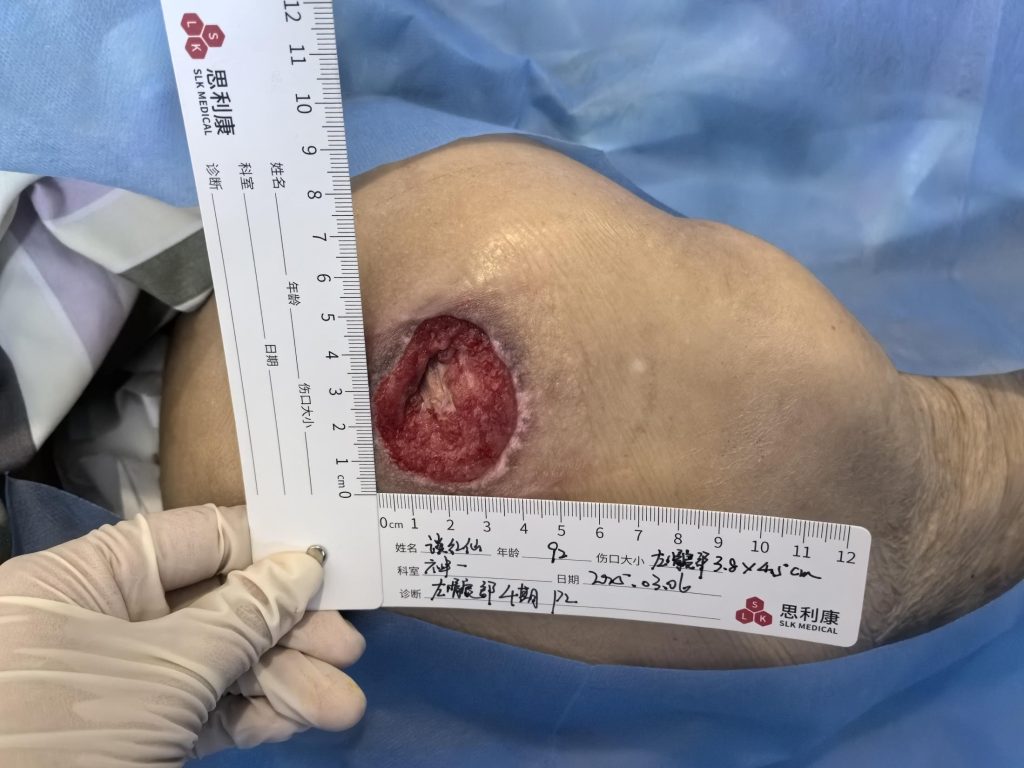
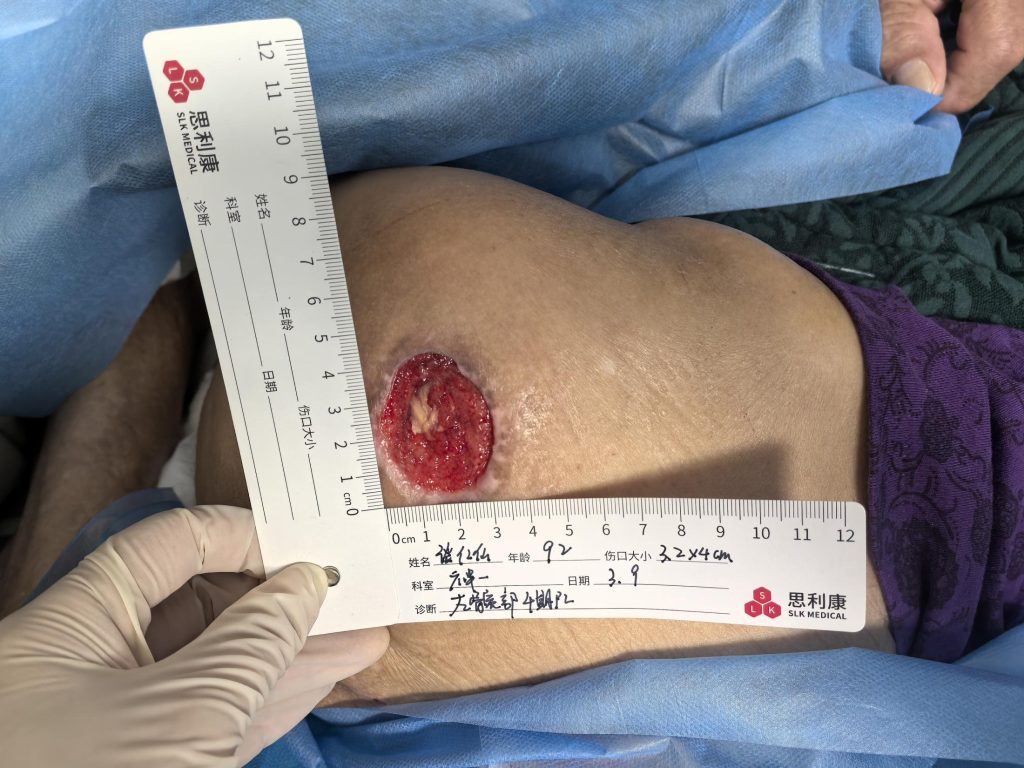
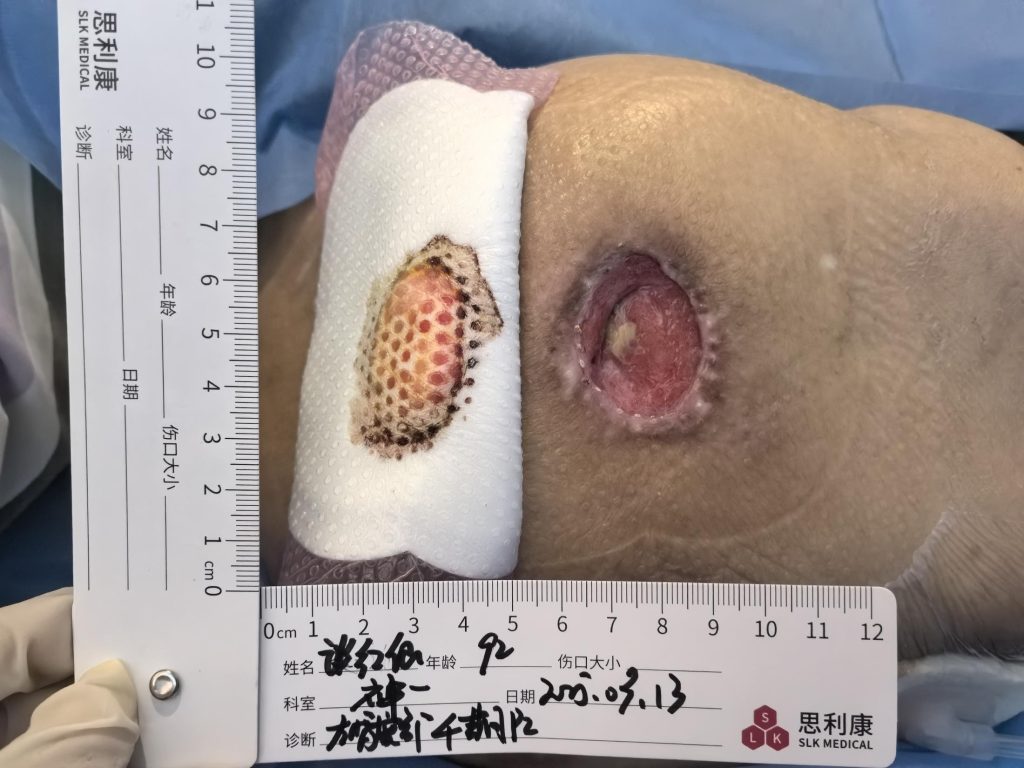
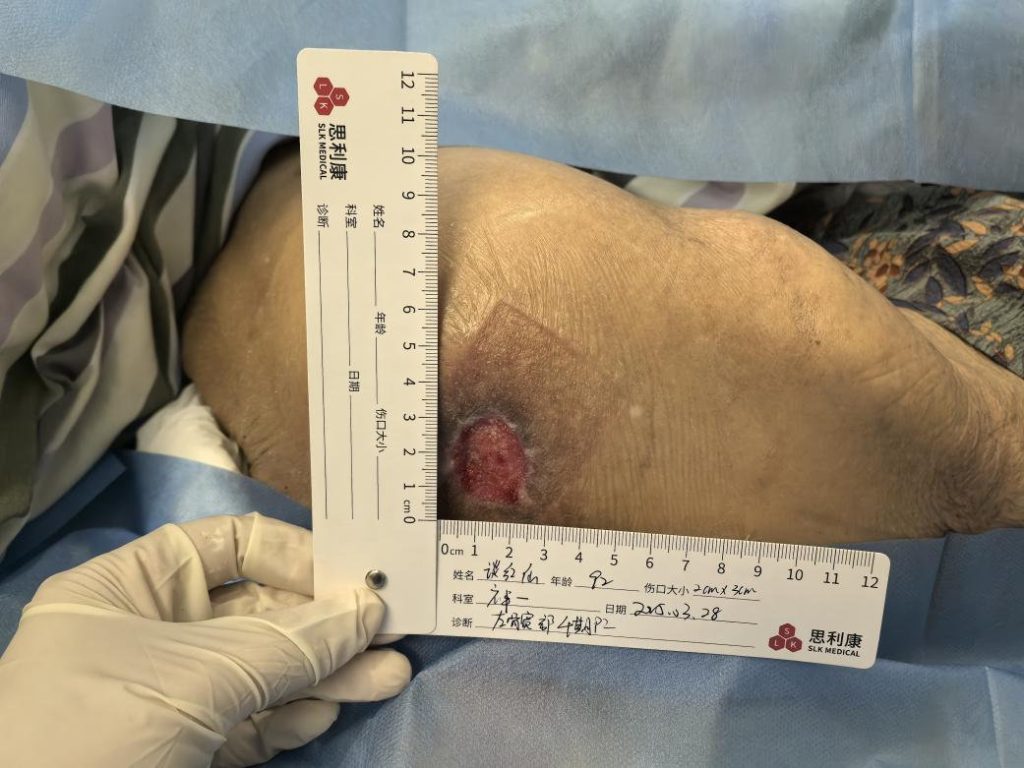
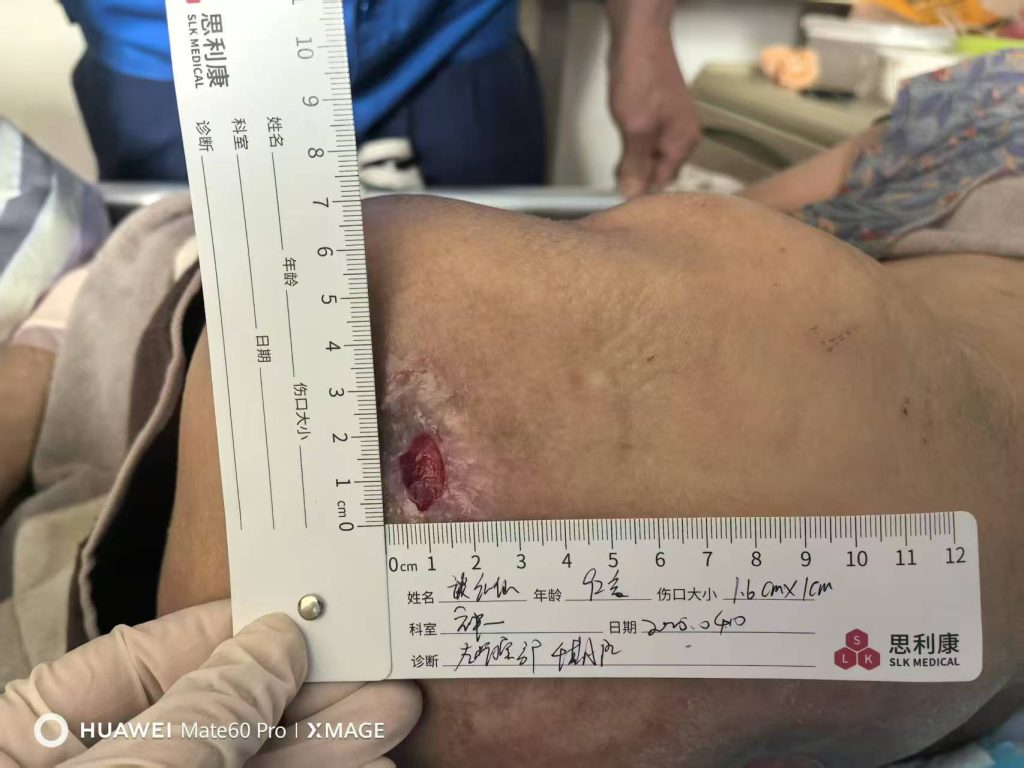
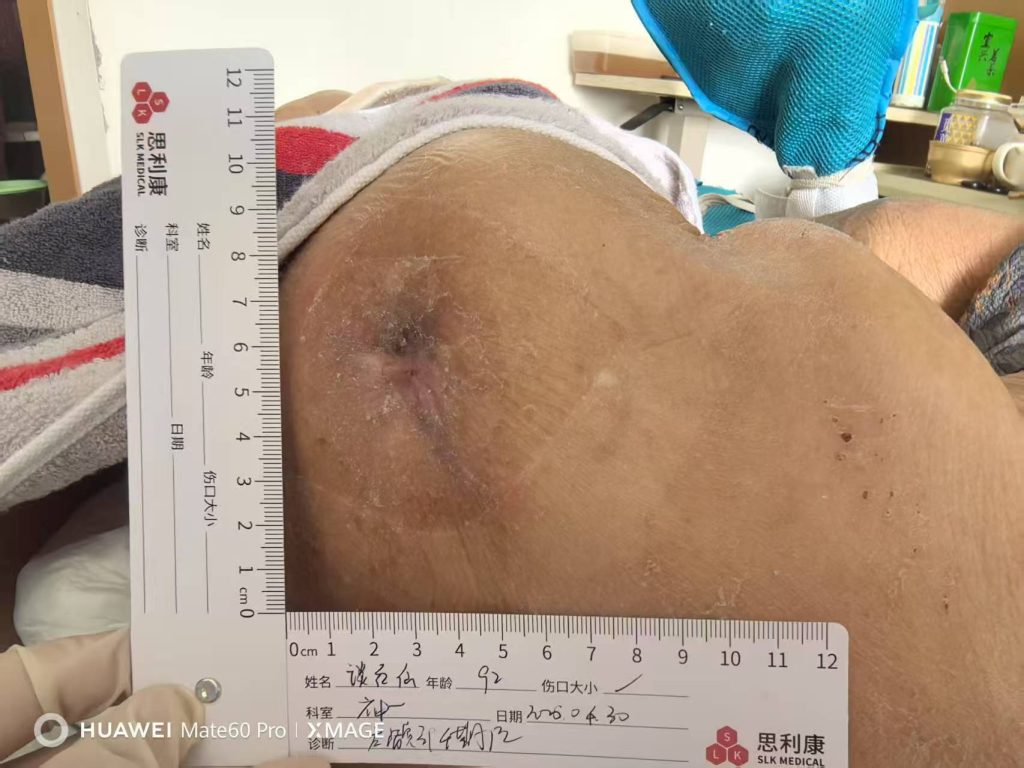
In one Stage IV pressure injury case involving the left hip, the wound initially presented with moderate exudate, approximately 25% slough and 75% granulation tissue, with no tunneling and no signs of periwound infection. Treatment included regular debridement, exudate management, and the use of a silicone foam dressing to support a moist wound environment.
As the wound condition improved, the dressing change interval was gradually extended from 3 days to 4 days and then to 7 days. Progressive wound contraction and epithelialization were observed during treatment, with complete wound closure achieved at the final follow-up.
 |
 |
 |
 |
 |
 |
|---|---|---|---|---|---|
| Mar 6,Before | Mar 9,3 Days | Mar 13,7 Days | Mar 28,22 Days | Apr 10,35 Days | Apr 30,Healed |
| Outcome | Result |
|---|---|
| Initial Wound Stage | Stage IV Pressure Injury |
| Treatment Period | Mar 6 – Apr 30, 2025 (≈8 Weeks) |
| Dressing Wear Time | 3 Days → 4 Days → 7 Days |
| Exudate Management | Moderate exudate effectively controlled throughout treatment |
| Wound Progress | Continuous granulation, wound contraction, and epithelialization |
| Final Outcome | Complete Wound Healing |
SLK Medical’s silicone foam dressing features

SLK Medical offers advanced silicone foam dressings that have multi-layer structure. Silicone Wound Contact Layer/Foam Absorbent Layer/Non-Woven Distribution Layer/SAF Absorption & Retention Layer/Polyurethane Film Backing. They help you care for wounds better. You get several benefits when you choose SLK Medical products:
-
Gentle on skin: The silicone layer feels soft and does not pull on your skin. You can use it even if your skin is sensitive.
-
High absorbency: The foam absorbs a lot of fluid, so your wound stays dry and clean.
-
Waterproof backing: The dressing keeps water and germs out, so your wound stays safe.
-
Long wear time: You can wear the dressing for several days. This means you do not need to change it often.
-
Easy to use: The dressing sticks well but comes off easily. You can apply and remove it without trouble.
|
Feature |
Benefit for You |
|---|---|
|
Soft silicone contact |
Less pain, gentle removal |
|
Multi-layer design |
Better absorption |
|
Waterproof film |
Keeps wound protected |
|
Flexible shapes |
Fits many body areas |
SLK Medical uses new technology like D-Pore® Dual-Dimensional Pore Foaming. This helps the dressing absorb fluid faster and lets your skin breathe. You get better healing and more comfort. If you want to learn more, you can visit SLK Medical’s website.
Cost-effective solutions with SLK Medical
You want to care for wounds and save money. SLK Medical has silicone foam dressings that help you spend less. These dressings use new ideas to help with tough wounds. This can lower how much you pay for treatment. They help wounds heal faster and lower infection risk. You do not need extra treatments as often.
|
Feature |
Benefit |
|---|---|
|
New ideas |
Lower wound care costs |
|
Better healing |
Faster recovery, fewer problems |
|
Less infection |
Fewer extra treatments needed |
|
Less pain |
Better experience for patients |
Choose SLK Medical as Your Reliable OEM Partner
| Buyer Concern | What to Evaluate | SLK Medical Approach |
|---|---|---|
| High unit cost | Total cost of care | Optimized multi-layer construction |
| Heavy exudate | Absorption & retention | Foam + SAF technology |
| Maceration | Fluid distribution | Multi-layer fluid management |
| Skin trauma | Adhesive performance | Soft silicone contact layer |
| Inconsistent quality | Manufacturing process | In-house core technologies |
| Supply instability | Production capacity | Scalable manufacturing |
| OEM customization | Flexible specifications | Private-label OEM/ODM |
| Sterile supply | Sterilization capability | EO sterilization capability |
Get a Custom Quote & Sample Kit
FAQ for Silicone Foam Dressing Buyers
What is the MOQ for private-label silicone foam dressings?
Our MOQ is 1,000 boxes. We maintain stable production capacity, with a monthly output of 10 million units to guarantee reliable supply.
Can you provide free samples before bulk production?
Yes, we can. Just contact us for a quote & sample kit.
Can you customize dressing size and shape?
Our products come in standard square and butterfly shapes, as well as custom‑fit shapes for special anatomical sites such as the sacrum and heel. A wide range of sizes is available. Please contact us for detailed inquiries.
Can you provide custom packaging and private labeling?
Yes, we support custom packaging and private labeling services.
What certifications are available?
Global Compliance: Achieved ISO 13485, FDA, and CE. And furthermore our facilities are fully certified under both C-TPAT security protocols and the BSCI social compliance standard.
Can you provide EO-sterilized products?
Our facilities are equipped with ethyleneoxide (E0) sterilization capability, ensuring that our products meet stringent medical safety and regulatory requirements.
What is the standard lead time for bulk orders?
Efficient Lead Time: Bulk orders delivered within 30 days.
What is your monthly production capacity?
Stable Production Capacity: Monthly capacity of 10 million units guarantees reliable supply.
What wounds work best with silicone foam dressings?
You should use silicone foam dressings for shallow wounds that leak fluid. These dressings help with burns, pressure ulcers, surgical cuts, and diabetic foot wounds. They work well if your skin is sensitive or if you need gentle care.
How often should you change a silicone foam dressing?
You usually change the dressing every 3 to 7 days. Always check your wound and follow your nurse or doctor’s advice. If the dressing gets wet or dirty, you should replace it sooner.
Can you shower with a silicone foam dressing on?
Yes, you can shower with most silicone foam dressings. The waterproof backing keeps water out. Make sure the edges stick well before you get the dressing wet.
What should you do if your skin gets red or itchy?
If you see redness or feel itching, stop using the dressing. Clean your skin gently. Talk to your nurse or doctor for advice. You may need a different type of dressing.