In advanced wound care, silicone foam dressings have established themselves as the clinical standard for managing moderate-to-heavy exudate while protecting fragile skin. However, wound care clinicians and medical procurement officers frequently face a fundamental selection challenge: When should a clinician choose a Bordered Silicone Foam Dressing versus a Non-Bordered Silicone Foam Dressing?
While both formats utilize hydrophilic polyurethane (PU) foam and perforated soft silicone contact layers to minimize pain and tissue trauma during dressing changes, their structural engineering, fluid retention dynamics, and fixation mechanics differ significantly.
SLK Medical is a leading wound dressings manufacturer of silicone foam dressings in China, offering both bordered and non-bordered options. They help prevent maceration and pressure injuries while ensuring your comfort. Choose the right foam dressing to promote healing and achieve the best outcomes.
This technical guide analyzes the structural physics, clinical indications, and performance metrics of both configurations to help healthcare purchasing managers and clinicians optimize dressing selection for better patient outcomes and cost-efficiency.
Key Takeaways
-
Pick bordered silicone foam dressings for wounds with lots of fluid. They soak up more and keep the wound safe.
-
Non-bordered silicone foam dressings are easy to bend. You can cut them to fit wounds with odd shapes.
-
Think about skin sensitivity when picking dressings. Soft silicone layers make dressing changes hurt less and protect the skin.
-
Choose the right dressing for where the wound is. Bordered dressings are good for places that move a lot. Non-bordered dressings are better for compression therapy.
-
Talk to healthcare providers for advice on dressings. They can help you pick the best one for your needs.
Bordered vs Non-Bordered Silicone Foam: Key Differences
Bordered Silicone Foam Dressing (5-Layer Composite Architecture)

Bordered foam dressings and non-bordered foam dressings are not the same. Bordered silicone foam dressings are engineered as all-in-one, self-adhesive sealing systems. Their multi-layer construction includes:
-
PU film backing: Acts as a waterproof, bacterial, and viral barrier with a high Moisture Vapor Transmission Rate (MVTR).
-
SAF absorption & retention layer: Enhances absorption capacity, improves the water-locking performance.
-
Non-woven distribution layer: Distributes absorbed exudate laterally across the absorbent pad to maximize fluid capacity.
-
Foam absorbent layer: Prevents wound maceration, provides a moist wound environment, and reduces the risk of infection.
-
Silicone wound contact layer: It features gentle self-adhesion and provides gentle care for fragile and sensitive skin.
Non-Bordered Silicone Foam Dressing (3-Layer Streamlined Architecture)
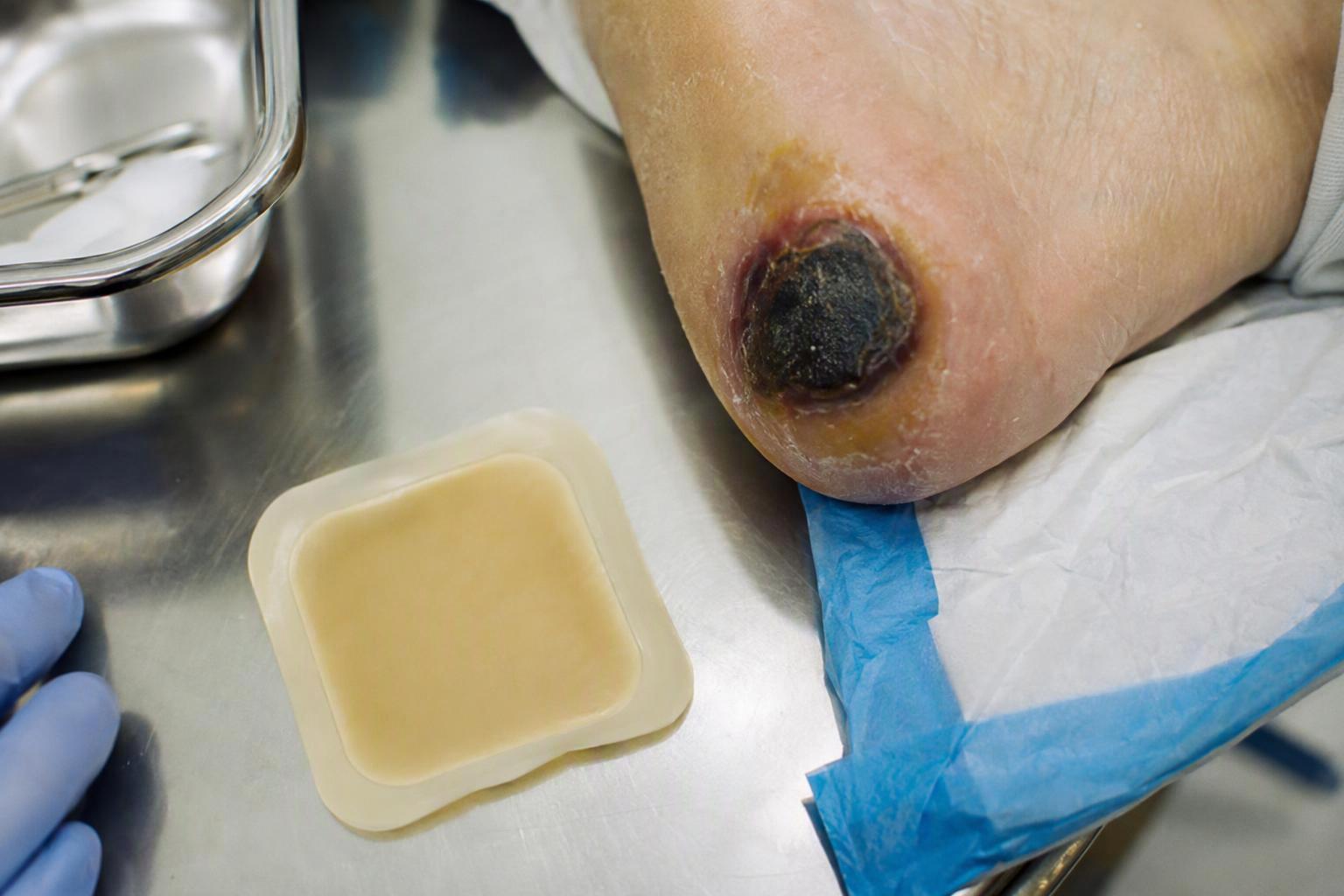
Non-bordered silicone foam dressings focus on unrestricted conformability and primary contact versatility:
-
Breathable PU backing film: Maintains optimal moisture balance while serving as an external barrier.
-
Absorbent foam layer: It prevents wound maceration, provides a moist wound environment, and reduces the risk of infection.
-
Silicone contact layer: It is suitable for sensitive skin, prevents adhesion to the skin, and has hydrophobic properties to reduce pain during dressing changes and avoid secondary damage.
Here is a table that shows the main structural differences between bordered and non-bordered silicone foam dressings:
| Parameter / Feature | Bordered Silicone Foam Dressing | Non-Bordered Silicone Foam Dressing |
| Fixation Mechanism | Integrated self-adhesive silicone border | Gentle micro-tack; requires secondary fixation (bandage/tape) |
| Waterproof / Shower-Proof | Yes (Sealed perimeter permits daily showering) | No (Fluid can ingress around unsealed edges) |
| Cut-to-Fit Flexibility | No (Cutting ruins the perimeter adhesive seal) | Yes (Can be cut into any custom shape without delamination) |
| Shear & Friction Mitigation | Superior (Multilayer design redistributes shear) | Moderate (Relies on secondary wrap for stability) |
| Anatomical Conformability | High for flat or contoured sites (Sacrum, Heel, Trochanter) | Exceptional for flexible joints, toes, and narrow cavities |
| Secondary Dressing Requirement | None (All-in-one design reduces nursing labor) | Required (Tubular bandage, cohesive wrap, or retention tape) |
| Exudate Level | Moderate to Heavy Exudate | Light to Heavy Exudate (Under compression) |
| Primary Clinical Focus | Pressure Injury Prevention (PIP), Exudate Locking | Fragile Skin Protection, Joint Mobility, Compression Therapy |
SLK Medical’s bordered silicone foam dressing uses a waterproof film backing. This backing stops bacteria and keeps moisture inside the wound. The foam layer soaks up fluid and keeps the wound moist. The silicone contact layer lets you take off the dressing without pain. It also spreads fluid quickly. Non-bordered foam dressings have these layers too, but they do not have the extra margin. The margin in bordered dressings makes them stronger and helps seal the wound.
Choosing the Right Silicone Foam Dressing
When to Choose Bordered Silicone Foam Dressings
Bordered silicone foam dressings are designed for maximum convenience, long wear time, and robust barrier protection.
Key Clinical Indications:
-
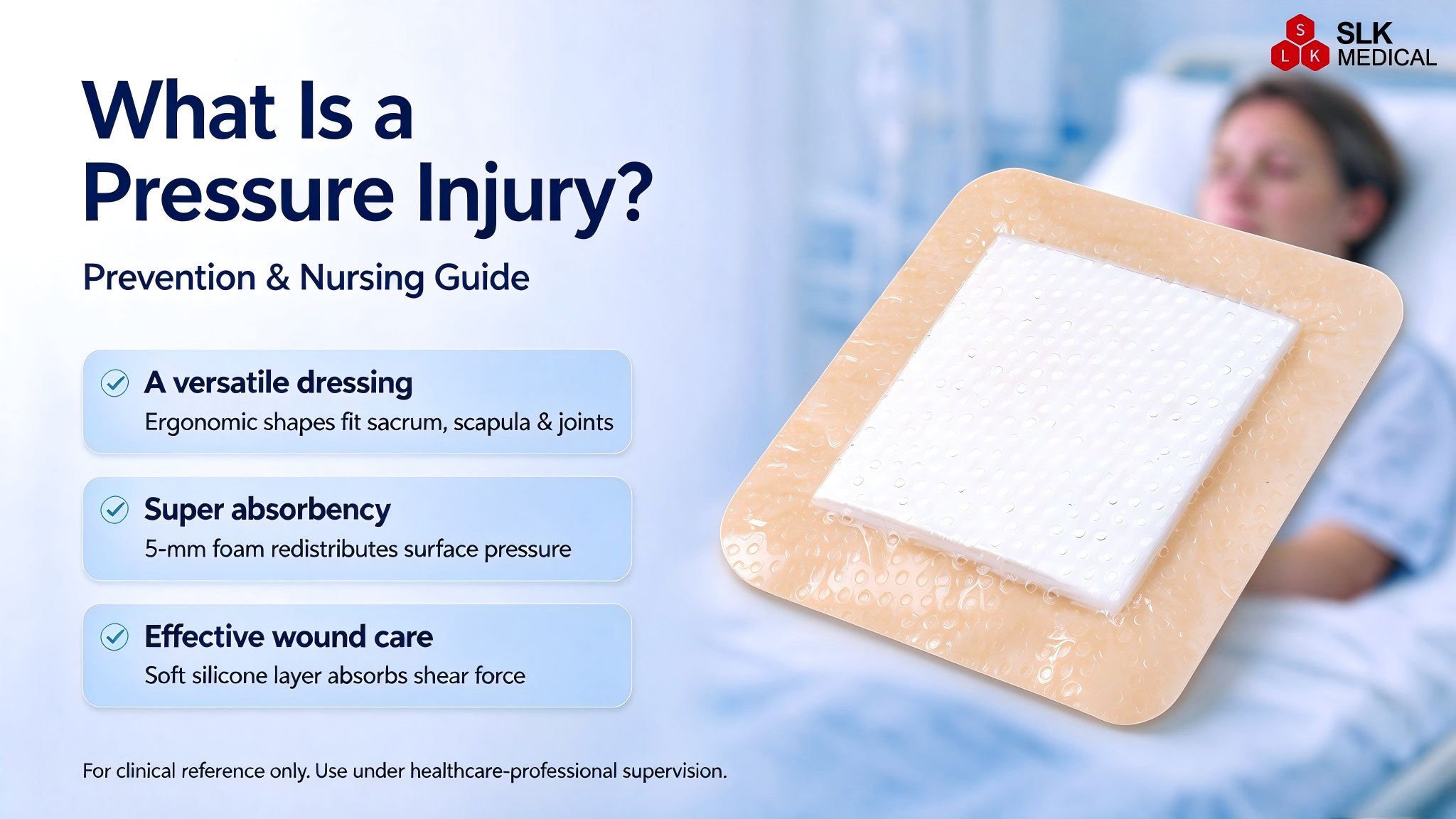
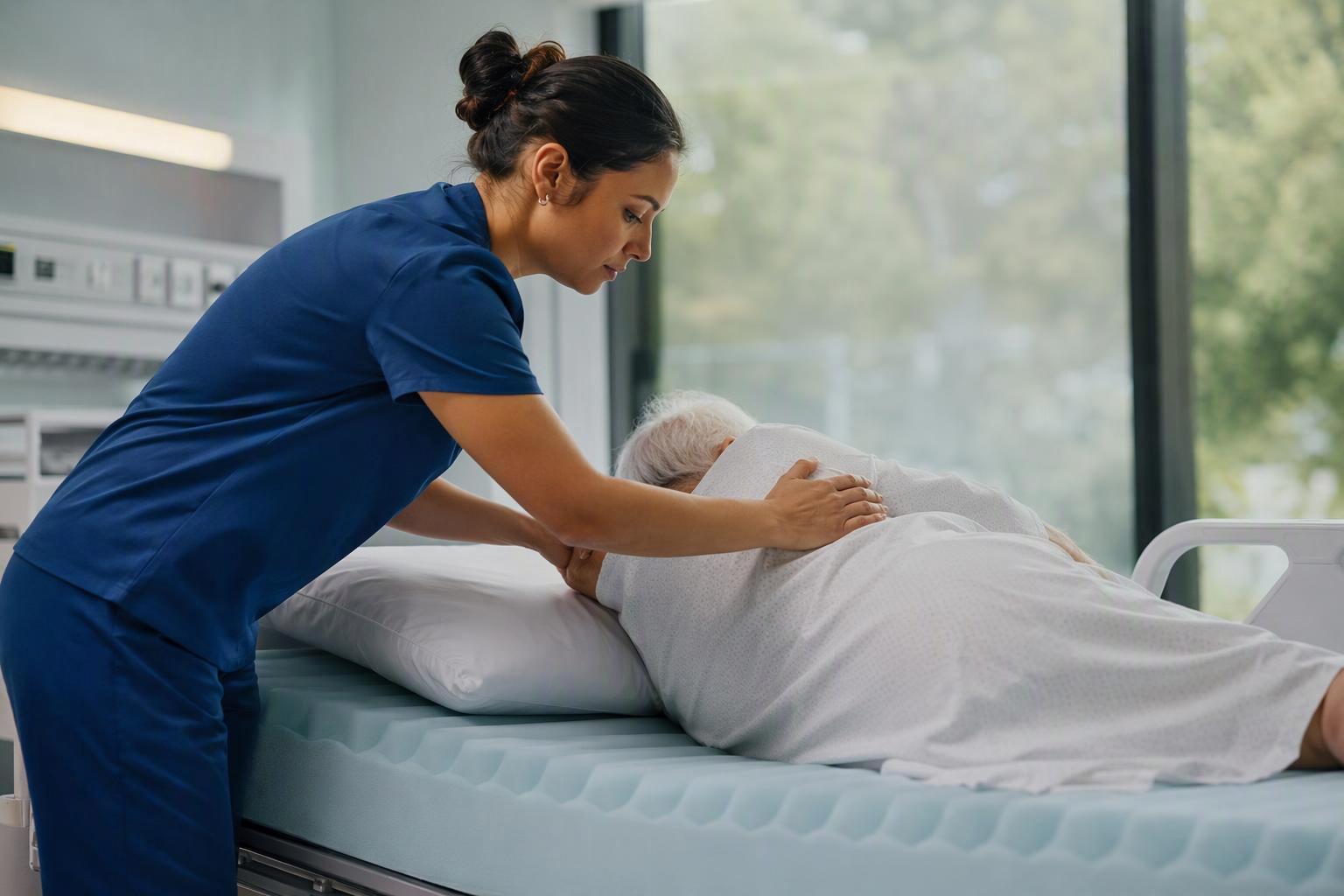
Pressure Injury Prevention (PIP) & Treatment: The sacrum, heels, and trochanter are subject to continuous shear forces and moisture accumulation. The 5-layer composite structure absorbs impact, reduces interfacial shear stress, and prevents maceration.
-
Exudative Acute & Chronic Wounds: Ideal for Stage II–IV pressure ulcers, diabetic foot ulcers (DFUs), venous leg ulcers (VLUs), surgical incisions, and donor sites.
-
Patients Requiring Independent Mobility & Showering: The sealed perimeter prevents water ingress during daily hygiene, maintaining a sterile wound bed.
Explore SLK Medical’s OEM range: Bordered Silicone Foam Dressings
When to Choose Non-Bordered Silicone Foam Dressings
Non-bordered silicone foam dressings offer unmatched clinical adaptability where rigid borders are impractical or contraindicated.
Key Clinical Indications:
-
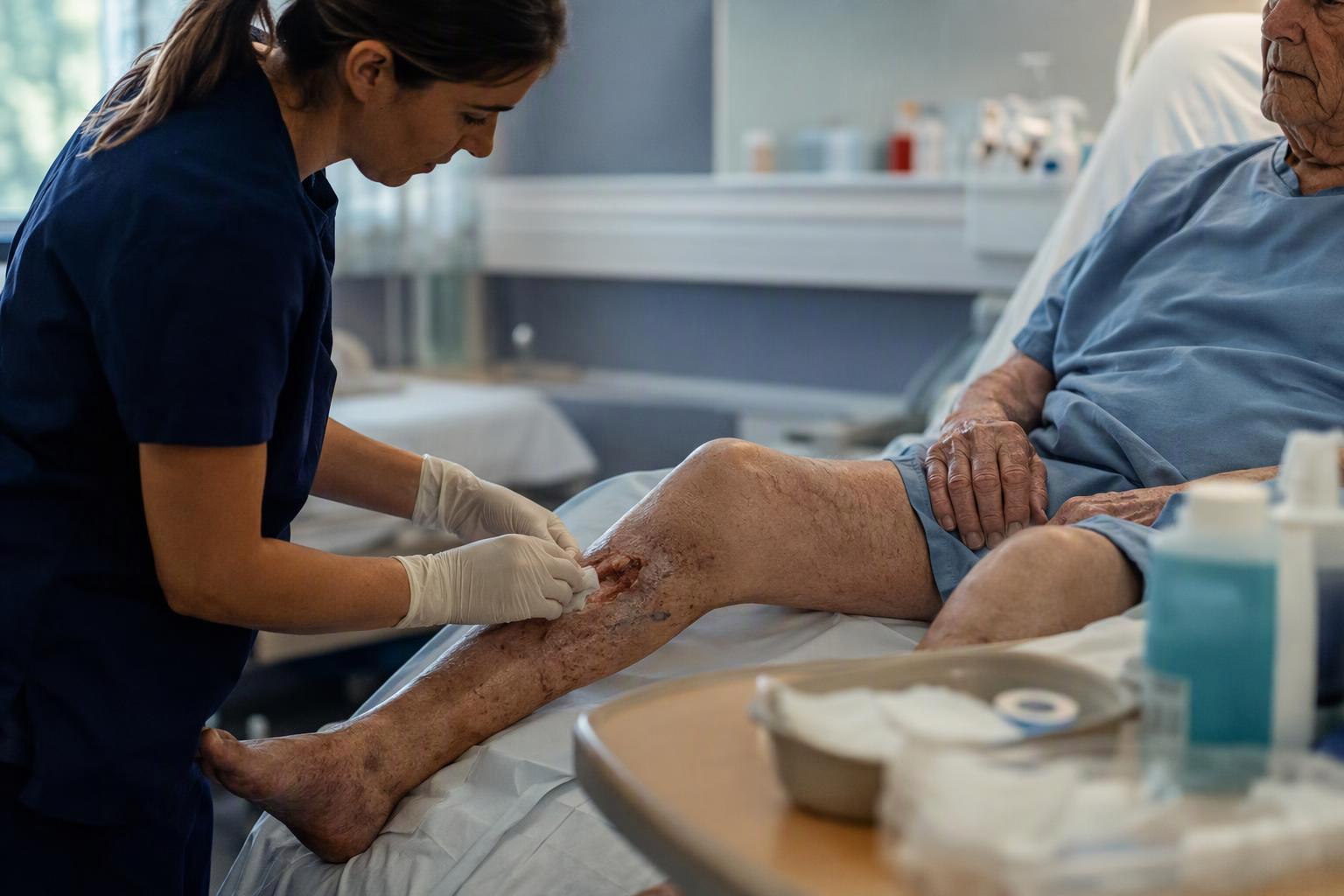
Awkward Anatomical Contours & Custom Shaping: Non-bordered foam can be cleanly cut with sterile scissors to fit between toes, around tracheostomy tubes, gastrostomy sites, elbows, and heels without fraying or delamination.
-
Fragile, Aging, or Compromised Skin: Elderly patients with paper-thin skin or severe epidermal stripping risk benefit from a full-surface soft silicone contact layer without an additional adhesive border edge.
-
Use Under Compression Therapy: When treating Venous Leg Ulcers (VLUs) with multi-layer compression bandages or tubular retainers, a bordered dressing can create painful pressure ridges. Non-bordered foam provides a flat, uniform profile under compression.
Explore SLK Medical’s OEM range: Non-Bordered Soft Silicone Foam Dressings
SLK Medical Innovation in Wound Care
D-Pore™ Technology and Product Advantages
You want dressings that heal wounds faster and keep skin safe. SLK Medical uses D-Pore Dual-Dimensional Pore Foaming Technology in their foam dressings. This technology helps the foam soak up exudate quickly. It also lets air move through the dressing. This means the wound can breathe and stay healthy. The foam keeps the wound moist and stops maceration. You will feel less pain and heal faster.
-
D-Pore technology helps the foam soak up exudate.
-
Air can move through the foam to keep wounds healthy.
-
Dressings are comfortable and protect your skin.
Brand Commitment to Quality and Patient Care
SLK Medical works with top medical brands and research groups. You get dressings made with strict quality rules. SLK Medical follows CE MDR and ISO 13485 standards. This means the dressings are safe and work well. The foam dressings help wounds heal faster and lower pain. You will see fewer infections and better healing. SLK Medical makes sure you get good wound care at a fair price.
-
Dressings help wounds heal and lower pain.
-
You get safer care with less risk of infection.
-
Standard dressings help nurses and doctors work together.
-
More people get the right wound care for less money.
Manufacturing & OEM Perspectives
Manufacturing Challenges: Die-Cutting for Bordered vs. Coating Stability for Non-Bordered
Making bordered and non-bordered foam dressings is not the same. Bordered dressings need careful die-cutting to keep the border strong and stop leaks. The foam must handle exudate well for a long time. Non-bordered dressings need a stable coating so the foam stays soft and soaks up fluid. Each type uses different materials and designs.
-
Bordered dressings need strong borders to control fluid.
-
Non-bordered dressings need a good foam coating for exudate.
-
Different designs and materials change how dressings work.
Packaging: Differences in Sterile Barrier System (SBS) Designs
You need safe packaging for foam dressings. Bordered dressings use special Sterile Barrier System designs. These keep the border safe and the dressing clean. Non-bordered dressings use simple packaging but still keep the foam sterile. Good packaging stops germs and keeps dressings ready to use.
FAQ
What is the main difference between bordered and non-bordered silicone foam dressings?
Bordered dressings have a border around the edge. This border keeps the dressing stuck to your skin. It also helps seal the wound. Non-bordered dressings do not have this border. You can cut them to fit many wound shapes.
Can I use silicone foam dressings on sensitive skin?
Silicone foam dressings are safe for sensitive skin. The soft silicone layer protects your skin. It makes taking off the dressing less painful. You get gentle care and less chance of skin injury.
How often should I change my silicone foam dressing?
You should change your silicone foam dressing every 3 to 7 days. The right time depends on how much fluid your wound makes. Always check your dressing and listen to your healthcare provider.
Which dressing works best under compression therapy?
Non-bordered silicone foam dressings are best for compression therapy. They do not cause extra pressure points. The dressing stays comfortable under bandages or stockings.
Can non-bordered silicone foam dressings be cut to fit small or irregular wounds?
Yes. Non-bordered silicone foam dressings feature a fully laminated structure where the soft silicone layer is bonded directly across the entire foam pad. Cutting the dressing does not cause delamination, frayed edges, or loss of gentle adhesion at the cut margins.
Why are bordered silicone foam dressings preferred for sacral pressure ulcer prevention?
Bordered silicone foam dressings incorporate a 5-layer composite structure including a super-absorbent layer and an adhesive silicone perimeter. This design absorbs vertical compression, mitigates horizontal shear vectors caused by patient repositioning, and seals out incontinence moisture.