


You want your patients to get the best care. Picking the right wound dressing helps healing and comfort. Silicone wound dressings are now used a lot in clinics and hospitals. They protect sensitive skin and help people heal faster.
The worldwide market for silicone wound dressings may reach 1.6 billion USD in 2024.
Experts think this market will grow to 3.5 billion USD by 2035. It may grow by 8.1% each year starting in 2025.
Key Takeaways
Picking the right silicone wound dressing helps wounds heal better and feel more comfortable for patients. Silicone dressings keep wounds moist, which helps them heal faster and lowers the chance of infection. These dressings are soft on the skin, so they hurt less when changed and cause fewer allergies. Silicone dressings may cost more at first, but they do not need to be changed as often, which saves time and money later. You should always talk to a healthcare provider to find the best dressing for your wound and condition.
Key Criteria for Evaluating Silicone Wound Dressings
Picking the right silicone dressing can really help healing and comfort. You need to think about a few important things before you choose. These things are product quality, material innovation, clinical efficacy, safety, cost-effectiveness, accessibility, and user feedback. Each one helps you find the best dressing for you or your patients.
Product Quality and Material Innovation
You want a dressing made with new materials and smart design. New silicone dressings use flexible materials. These help control moisture and stop skin irritation. Silicone keeps the wound moist and sticks softly to the skin. This means it hurts less when you change it. It also helps wounds heal better. Some dressings have special layers. These layers soak up fluid and let moisture vapor out. This keeps the wound balanced and lowers infection risk.
Feature | Benefit |
|---|---|
Absorbing Exudate | Manages wound fluid, preventing maceration while maintaining necessary moisture. |
Promoting Moisture Vapor Transmission | Allows moisture vapor to escape, balancing the wound environment. |
Minimizing Infection Risk | Reduces the risk of infection and supports tissue growth and repair. |
Silicone can lower inflammation and help new skin grow.
Clinical Efficacy and Safety
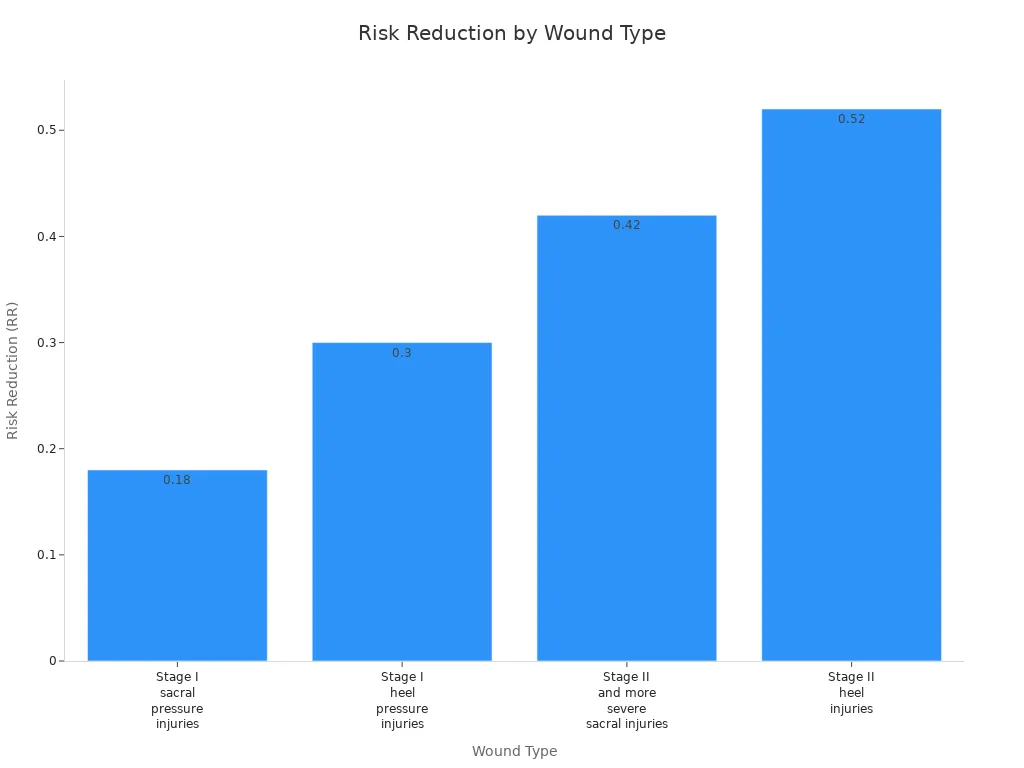
You need to know if a silicone dressing works well and is safe. Studies show these dressings help stop pressure injuries. They also help many types of wounds heal. They cause fewer problems than some other dressings. The table below shows how well silicone dressings work for different wounds:
Outcome | Number of RCTs | Risk Reduction (RR) | 95% Confidence Interval | p-value |
|---|---|---|---|---|
Stage I sacral pressure injuries | 7 | 0.18 | 0.09–0.33 | < 0.001 |
Stage I heel pressure injuries | 5 | 0.30 | 0.14–0.66 | 0.003 |
Stage II and more severe sacral injuries | 8 | 0.42 | 0.31–0.58 | < 0.001 |
Stage II heel injuries | 5 | 0.52 | 0.27–0.99 | 0.05 |
Silicone dressings also have fewer side effects. They cause less pain and fewer allergic reactions than other types.
Cost-Effectiveness and Accessibility
You want a dressing that does not cost too much and is easy to get. Silicone dressings may cost more at first. But they last longer and do not need to be changed as often. This can save money over time. Some things make it harder to get these dressings. High prices, strict rules, or not enough training for workers can be problems.
Factor Influencing Accessibility | Description |
|---|---|
High product costs | Limiting accessibility in healthcare settings. |
Stringent regulatory approval processes | Affecting the availability of silicone dressings. |
Limited awareness and training among healthcare providers | Reducing effective use in hospitals and home care. |
User Experience and Feedback
You should listen to what patients and doctors say. Many people like silicone dressings. They are comfortable and easy to use. They stick well but do not hurt when you take them off. Patients say they feel less pain and have fewer skin problems. Silicone dressings also help control fluid and keep the wound healthy.
Silicone adhesives lower pain and worry during changes.
Dressings are flexible and fit the body well.
They help control fluid and lower infection risk.
The clear design lets you see the wound without taking it off.
Tip: Always ask your healthcare provider for advice on which dressing is best for your needs.
Overview of Leading Silicone Dressing Brands
SLK Medical: Advanced Silicone Foam Dressings
You want your patients to get great care. SLK Medical is a top company for silicone dressings. They use new technology and follow strict rules for quality. SLK Medical’s silicone foam dressings soak up a lot of fluid and fit the body well. These dressings are good for hard-to-treat wounds like sacral pressure ulcers. Many people buy SLK Medical products again because they work well and can be trusted. The company cares about new ideas, patient comfort, and quick healing.
SLK Medical’s dressings use D-Pore™ technology to soak up more fluid.
The soft silicone layer keeps skin safe and makes changes less painful.
SLK Medical products meet FDA and ISO 13485 rules.
SLK Medical wants to make wound care better with new ideas and high quality.
[Other Leading Brands]: Unique Features
There are many other brands that make silicone dressings. Each brand has special things to help people heal. Here are some top brands:
Smith & Nephew
Mölnlycke
3M Healthcare
Convatec
Coloplast
Hartmann Group
Integra LifeSciences
Medtronic
Smiths Medical
Derma Sciences
BSN Medical
These brands use different ways to help wounds heal and keep people comfortable. The table below shows some special features you might find:
Unique Features | Description |
|---|---|
Self-adhesive Silicone Dressings | Stick to skin without extra adhesives. |
Bioactive Silicone Dressings | Help tissue grow and heal faster. |
Antimicrobial Silicone Dressings | Lower infection risk with special agents. |
Market Position and Brand Achievements
Many brands try to be the best in the silicone dressing market. SLK Medical is trusted by hospitals and clinics because their products work well and people buy them again. Other brands win awards for new ideas and helping patients. For example, Medline won the Chicago Innovation Award in 2024 for its OptiView® Transparent Dressing with HydroCore™ Technology. Silagen Scar Refinement System got top awards for helping scars and skin heal.
Award Category | Brand/Product |
|---|---|
Top Scar and Skin Repair Product | Silagen Scar Refinement System |
Top Medical Nutraceutical | Silagen Arnica-Bromelain Complex |
Top Breakout Company | Newmedical Technology, Inc |
Top Executive | Lisa Massaad, of Marketing |
Many brands work to make dressings that heal wounds faster and keep people comfortable.
Comparing Features of Silicone Wound Dressings
Absorption and Moisture Management
You need a dressing that keeps wounds moist but not too wet. Good absorption helps wounds heal faster and lowers infection risk. Modern silicone wound dressings use foam layers to soak up fluid. This keeps the area balanced. Different brands manage moisture in their own ways:
Kliniderm foam silicone dressing handles low to moderate fluid. It keeps the wound moist.
You can wear it for up to seven days. It is showerproof, so you do not need to worry about water.
In lab tests, Kliniderm foam silicone absorbs fluid as well as other top brands, even under pressure.
Foam dressings work well for moderate to heavy fluid. They pull in moisture and keep the wound healthy.
Studies show silicone foam dressings help manage fluid and keep wounds moist. They protect the skin around the wound. You do not need to change them as often, so you save money. You get more comfort and faster healing. A moist wound helps new tissue grow and lowers infection risk. Modern dressings, like silicone dressing, have replaced dry dressings. They keep wounds moist and healthy.
You need a dressing that keeps the wound hydrated and at the right temperature. This helps tissue grow and keeps germs away.
Tip: Keeping wounds moist helps them heal faster and lowers infection risk.
Adhesion and Comfort for Sensitive Skin
You want a dressing that sticks well but does not hurt when you take it off. Silicone wound dressings use gentle adhesives. These protect both the wound and your skin. Here is how these dressings help with comfort and safety:
Feature | Description |
|---|---|
Gentle adhesion | Silicone adhesive is gentle to both wound bed and skin for safe, easy removal. |
Low incidence of allergic reaction | Low profile border for added adhesion and flexibility. |
Showerproof | Border is showerproof and prevents exudate leakage. |
Thermal insulation | Provides thermal insulation and protection. |
Wear duration | Can be safely worn for several days, depending on wound condition and exudate levels. |
Most patients say they feel little pain when the dressing comes off. You get less wound pain and more comfort. Health professionals find these dressings easy to use and remove. You get a better experience and less worry about skin damage.
Easy for health professionals to apply and remove
Durability and Wear Time
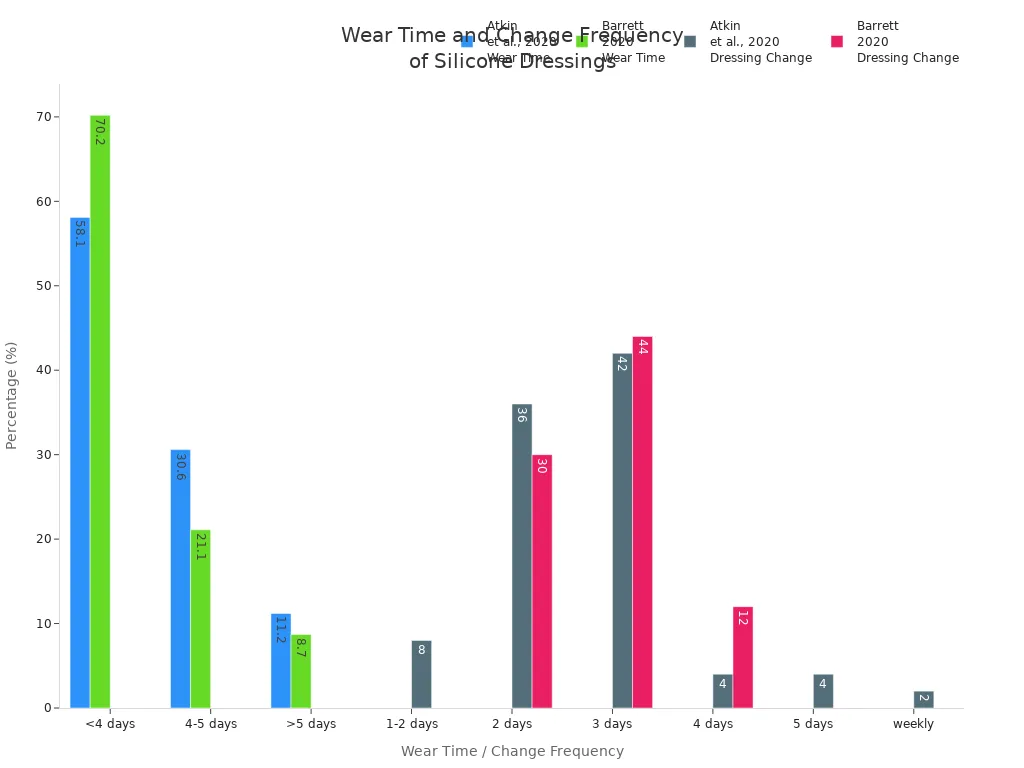
You want a dressing that lasts and does not need to be changed too often. Studies show that silicone wound dressings can stay on for several days. This means less work for you and fewer dressing changes. You can see how long these dressings last in different studies:
Study | Mean Time Between Dressing Change | Wear Time Distribution | Dressing Change Frequency |
|---|---|---|---|
Atkin et al., 2020 | 3.7 days (SD 2.2) | <4 days: 58.1%, 4-5 days: 30.6%, >5 days: 11.2% | 1-2 days: 8%, 2 days: 36%, 3 days: 42%, 4 days: 4%, 5 days: 4%, weekly: 2% |
Barrett 2020 | N/A | <4 days: 70.2%, 4-5 days: 21.1%, >5 days: 8.7% | 2 days: 30%, 3 days: 44%, 4 days: 12% |
A case series looked at silicone SAP dressings for hard-to-treat wounds. Nurses said these dressings stayed in place and felt comfortable. They helped patients heal. You get better results and less pain with fewer dressing changes.
SLK Medical’s D-Pore™ Technology
You want the best for your patients. SLK Medical uses D-Pore™ Dual-Dimensional Pore Foaming Technology in its silicone wound dressings. This technology helps wounds heal faster and keeps the area moist. You get better comfort and less pain when you change the dressing. The table below shows how D-Pore™ Technology helps you and your patients:
Benefit | Description |
|---|---|
Increases fibroblast activity and supports tissue repair. | |
Faster Healing | Moisture-retentive dressings help wounds heal faster and lower infection rates. |
Improved Comfort | Reduces pain and trauma during dressing changes, enhancing patient comfort. |
You get a dressing that helps tissue grow and lowers infection risk. Healing is easier. SLK Medical’s advanced design helps you care for wounds with confidence.
Note: Picking a dressing with advanced technology like D-Pore™ can help wounds heal and make sensitive skin feel better.
Performance of Soft Silicone Dressings in Clinical Practice
Clinical Outcomes and Patient Comfort
You might wonder how soft silicone dressing works for people. Many studies show these dressings help people feel less pain. They also make healing easier. Soft silicone dressing is gentle on your skin. You do not have to worry about it sticking too much. It does not hurt when you take it off.
Here is what studies found about pain and comfort:
Study Description | Findings |
|---|---|
A randomized crossover investigation of pain at dressing change comparing 2 foam dressings | People felt less pain when the silicone dressing was removed. There was also less skin softening around the wound. |
Use of a Soft Silicone Wound Contact Layer to Prevent Procedural Pain at Dressing Changes | Most patients were very happy. Pain went down by more than 75%. No one needed medicine for pain. |
Soft silicone dressing helps stop pain. You do not need medicine for pain with these dressings. You feel more comfortable while your wound heals.
Soft silicone dressing gives you other good things too:
The dressing sticks gently and soaks up fluid well. This means less pain when you change it.
It lowers the chance of hurting your wound or skin. This is important if your skin is sensitive.
You can move the dressing and put it back on. It still sticks well. This makes it easy for you and your nurse.
The dressing keeps germs out but lets your skin breathe. You heal in a safe and comfy way.
Many people say they feel better and worry less about changes. You get more comfort and better healing with soft silicone dressing.
Infection Prevention and Healing Rates
You want your wound to heal fast and stay clean. Soft silicone dressing helps you do this. Studies show these dressings lower the risk of infection. They keep the wound moist but not too wet. This helps new skin grow and keeps germs away.
Soft silicone dressing works well for pressure ulcers. If you have stage ii pressure ulcers, you need a dressing that protects your skin and helps it heal. Studies show soft silicone dressing lowers the chance of getting new pressure ulcers. You get fewer infections and heal faster.
Here is what you should know:
Soft silicone dressing keeps the wound moist. This helps your skin repair itself.
The dressing soaks up fluid and stops leaks onto your skin.
You get less skin softening and fewer problems.
The dressing stays in place, even on hard spots like your lower back or heel.
If you have stage ii pressure ulcers, you need a dressing that does not hurt. Soft silicone dressing gives you comfort. You heal faster and feel better.
SLK Medical Product Performance
You want a dressing that works really well. SLK Medical makes advanced wound care products with soft silicone dressing technology. Many hospitals and clinics trust SLK Medical for their patients.
SLK Medical products, like the Alexer® Silicone Sacral Wound Dressing, get perfect review scores. Nurses and doctors say these dressings soak up a lot of fluid and have a soft edge. This is important for pressure ulcers and other wounds. Studies show SLK Medical dressings help lower pressure ulcers. You get proof that they work and are safe.
Here is what makes SLK Medical special:
SLK Medical products meet ISO 13485 rules. You get quality and safety every time.
The dressings use advanced technology to help you heal faster.
You get a dressing that is gentle, strong, and easy to use.
Many people say they heal better and have less pain with SLK Medical soft silicone dressing.
If you want the best results, you can trust SLK Medical. You get help for stage ii pressure ulcers, long-lasting wounds, and sensitive skin. The dressings help you heal, stop infection, and feel good every day.
Note: Always talk to your healthcare provider before picking a dressing for your wound. The right choice can help you heal better.
Practical Guide to Choosing the Best Silicone Dressing
Decision Matrix for Product Selection
You want to pick the best dressing for your wound. A decision matrix helps you compare dressings by important things. Ask yourself these questions: What kind of wound do you have? Is it from surgery, diabetes, or a burn? How much fluid comes out of the wound? Is there a big chance of infection? What stage is the wound in? Where is the wound on your body? These questions help you find the right dressing. Using this method helps you make good choices for wound care.
Considerations for Hospital and Home Care
You need to think about different things at the hospital or at home. Here are some important points: What kind of wound is it? Is it a surgical wound, diabetic ulcer, or burn? Does the wound leak a lot or just a little? Do you need a dressing that fights germs? Is the wound new or almost healed? Is the wound on a joint or a hard spot to cover? Hospitals need dressings that are easy to use for many people. At home, you want dressings that are simple and gentle on skin. Both places need dressings that help wounds heal well.
Cost and Insurance Factors
You should know how insurance can change what dressings you get. Medicaid pays for many wound care supplies, but not all of them. Some dressings are not paid for if they are not seen as needed. Medicare pays for special dressings if a doctor says you need them. Basic things like plain gauze are usually not paid for. You need to check your plan so you do not pay extra. This helps you get the right dressing for your wound.
Tip: Ask your doctor or insurance company if your dressings are covered before you buy them.
Matching Dressing Type to Wound Needs
You want to use the best dressing for each wound. The table below shows which silicone dressing works best for different wounds:
Dressing Type | Properties | Recommended Uses |
|---|---|---|
Foam with silicone adhesive | Soaks up fluid and lets skin breathe | Wounds with low or high fluid, leg ulcers, pressure sores, cuts, surgical wounds, small burns, skin tears |
Primary wound contact layers | Gentle and lets fluid go through | Skin tears, scrapes, surgical wounds, second-degree burns, cuts, leg ulcers, pressure sores |
Primary dressing silicone sheets | Flexible, waterproof, and low pain | Raised scars, closed wounds |
Silicone gel | Easy to use and does not need glue | Raised scars, closed wounds |
Silicone tape | Gentle, holds dressings, and protects skin | Holding dressings, IV lines, stopping pressure damage |
Picking the right dressing helps wounds heal faster and keeps you comfortable.
You can pick from many silicone wound dressings. Studies show these dressings protect skin well. They lower the chance of pressure ulcers by 66%.
Key Findings | Description |
|---|---|
Protective Efficacy | These dressings help stop pressure ulcers for people at risk. |
Mechanism of Action | Inside layers help lower rubbing and stress on skin. |
Clinical Relevance | They give steady protection for a few days. |
When you choose a dressing, make sure it controls fluid. It should also help with pain and fit what you need. SLK Medical uses new technology to help wounds heal faster. Their dressings help you feel comfortable. Always ask your healthcare provider for advice.
FAQ
What makes silicone wound dressings different from regular dressings?
Silicone dressings are made from a soft and bendy material. They stick gently to your skin and do not hurt much. These dressings help wounds heal faster and make changes less painful. Regular dressings can stick too hard or dry out the wound.
How often should you change a silicone wound dressing?
You should change the dressing every three to seven days. The right time depends on how much fluid comes from the wound. Your doctor will tell you what is best. Always look for leaks or signs of infection.
Are silicone dressings safe for sensitive skin?
Yes, silicone dressings are good for sensitive skin. The soft layer sticks gently and does not hurt much. You feel less pain when you take it off. Many people with delicate skin use these dressings safely.
Can you shower while wearing a silicone wound dressing?
Most silicone dressings keep water out. You can take a shower without taking the dressing off. Make sure the edges stay stuck to your skin. If water gets under the dressing, put on a new one.
What types of wounds benefit most from silicone dressings?
You can use silicone dressings for many kinds of wounds. These include pressure ulcers, diabetic foot ulcers, surgical wounds, burns, and skin tears. They work well for wounds with a lot of fluid and protect weak skin.


