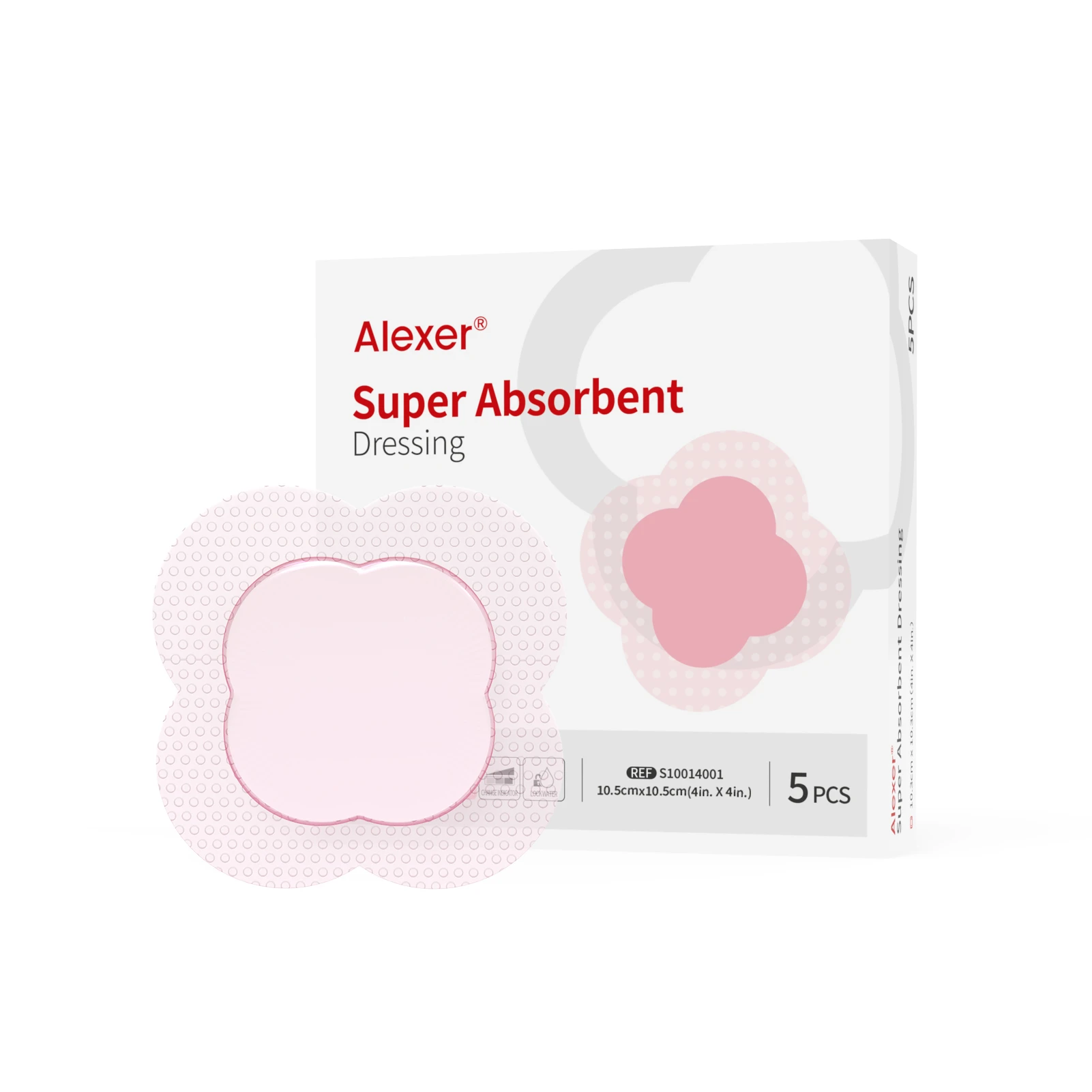
The guide of Silicone Foam Dressing: What It Is, How It Works & When to Use It

2026 Quick Summary: A silicone foam dressing is an advanced wound care solution designed for moderate-to-high exudate management and pressure injury prevention (Stage I-IV). By utilizing a 5-layer structure integrated with SAF (Super Absorbent Fiber) technology, it maintains a dynamic moist wound healing microenvironment, prevents periwound maceration, and ensures atraumatic, painless removal. For medical distributors, compliance with CE MDR and FDA standards is important for global sourcing.
Silicone foam dressings have redefined the standard of advanced wound care by addressing the inherent limitations of traditional dressings. By combining superior exudate management with a gentle-to-skin approach, these dressings have become a cornerstone of modern clinical practice.
What Is a Silicone Foam Dressing?
A silicone foam dressing is a high-performance, multi-layered wound care product designed to manage wound exudate (fluid) while maintaining a moist healing environment. Unlike traditional dressings that can cause secondary trauma upon removal, silicone foam dressings utilize a specialized soft silicone contact layer.
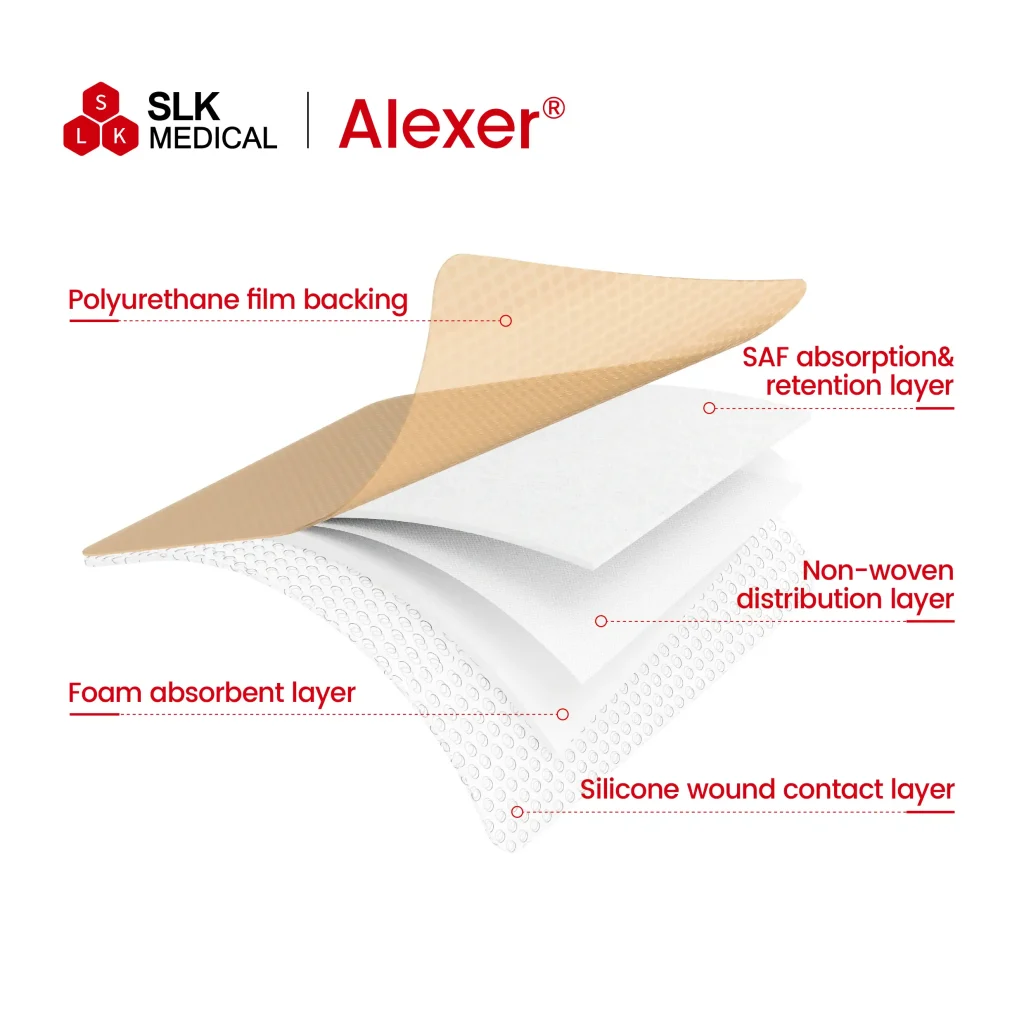
What is the 5-Layer Structure of an Advanced Silicone Foam Dressing?
High-quality dressings, such as those manufactured by SLK Medical, typically consist of three to five distinct layers. For example:
- Breathable Polyurethane Film Backing: A waterproof and bacteria-proof barrier that allows oxygen in while managing moisture vapor transmission (MVTR). Prevent external friction and manage the micro environment.
- SAF absorption & retention layer: Super absorbent film layer can absorb 10 times of drainage to minimize skin maceration risk and improve the water-locking performance.
- Non-woven distribution layer: Evenly disperses wound exudates, efficiently transfers the exudates to the super absorbent layer, and avoids local exudate accumulation and skin maceration.
- Foam absorbent layer: Featured with Dual-Pore Design, Balancing Mechanics and Fluid Management, D-Pore® dual-pore structure delivers ideal mechanical support and efficient fluid handling. Rapidly absorbs and retains exudate to reduce leakage and minimize the risk of maceration.
- Silicone wound contact layer: Provides a gentle adhesion silicone wound contact layer that reduces pain and trauma during dressing changes. Most suitable for fragile and sensitive skin.
How Silicone Foam Dressings Work
The clinical functionality of a silicone foam dressing is multifaceted, engineered specifically to handle moderate-to-heavy wound exudation while safeguarding the healing tissue. This high-performance mechanism is rooted in a balance of vertical absorption and dressing’s adhesion. Meanwhile, the foam dressing maintains a moist wound environment for enhancing wound healing.
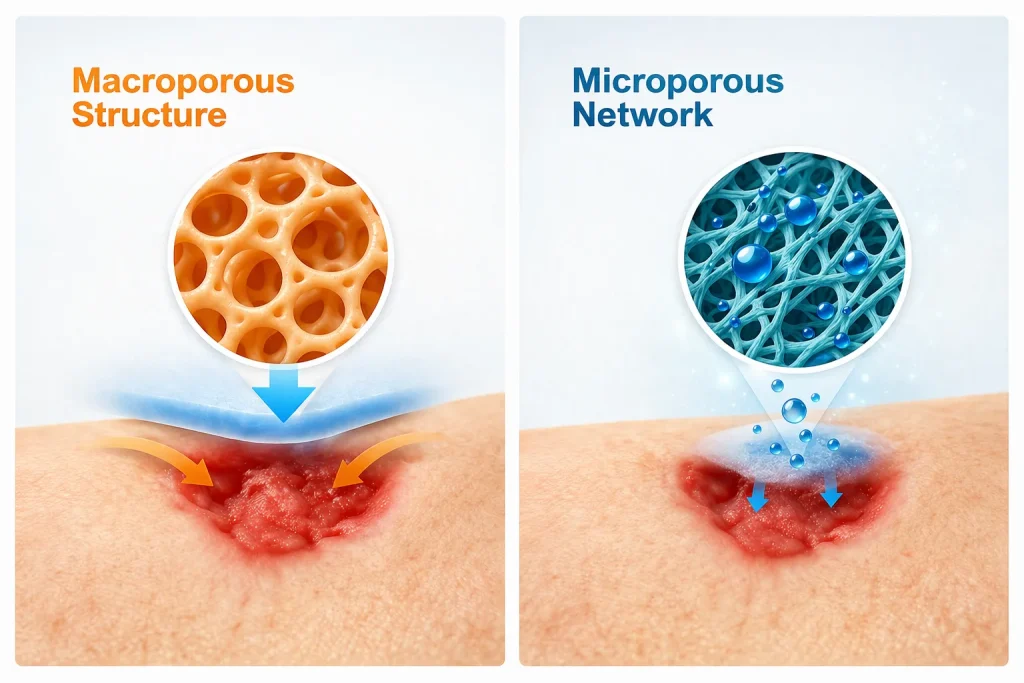
- High Absorbency & Exudate Locking (The Foam Core with D-Pore®Tech.)
The primary engine of the dressing is its medical-grade polyurethane foam pad, which acts as a high-capacity reservoir. Through capillary action, the foam core pulls excess fluid vertically away from the wound bed. Rather than simply holding the fluid, the advanced D-Pore® dual-pore structure effectively locks the exudate away. This revolutionary technology adopts an optimized stress distribution structure. By fine-tuning the micro-nano foam structure, it perfectly balances pressure relief and fluid management. It maintains stable mechanical support while greatly boosting exudate absorption and air permeability.
- Atraumatic Adhesion & Repositioning (The Silicone Layer)
The soft silicone contact layer contours precisely to the microscopic irregularities of the skin. This creates a secure, protective seal that prevents fluid from leaking laterally onto the periwound area. Crucially, the gentle adhesion ensures that the dressing can be easily lifted and repositioned during clinical inspections without losing its tack. When it is time for removal, it releases cleanly without causing additional pain to the patient or stripping away newly formed granulation tissue and fragile epidermal cells.
- Maintenance of an Optimized Moist Environment
By dynamically regulating moisture levels—absorbing excess fluid while allowing optimal moisture vapor transmission—the dressing maintains a balanced, moist wound micro-environment. Clinical science demonstrates that this controlled moisture is essential for accelerating cellular migration, promoting faster wound closure, and significantly enhancing the body’s natural healing processes.
When Should Clinics Use Silicone Foam Dressings? (Core Applications)
Silicone foam dressings are versatile but excel in managing moderate-to-highly exuding wounds. Their ability to protect fragile skin makes them the preferred choice for specific clinical indications:
1. Pressure Ulcers (Decubitus Ulcers)
Used for both prevention and treatment, these dressings redistribute pressure and reduce shear forces. In high-risk areas like the sacrum or heels, silicone foam is a gold standard for prophylactic care in hospitals. Square dressings are commonly used in general applications. You can also customize special sizes via reliable Chinese OEM manufacturers according to actual wound conditions.
2. Diabetic Foot Ulcers (DFUs)
Managing exudate is critical in DFU care to prevent infection. The absorbent foam core keeps the wound clean, while the silicone layer allows for frequent inspections without damaging the delicate diabetic skin and effectively relieves patients’ pain during dressing changes.
3. Surgical Wounds
Post-operative wounds, especially those with drainage, benefit from the protective barrier and absorption capacity of foam, reducing the risk of surgical site infections (SSIs). Foam dressings can effectively manage wound exudate and maintain a moist healing environment to accelerate wound recovery. The dressing replacement cycle can be adjusted according to wound conditions, with a maximum interval of up to 7 days. It effectively cuts down dressing change costs and reduces pain during replacement.
4. Burn Wounds
For partial-thickness burns, silicone foam provides a cushioned, moist environment that promotes healing while minimizing the intense pain often associated with dressing changes. Unlike traditional dressings such as gauze, the silicone contact layer will not adhere to wounds. Its lipophilic soft silicone ingredients are hydrophobic, avoiding sticking to moist wound beds. It effectively relieves pain during dressing changes and prevents secondary damage to healing wounds.
5. Skin Tears & Fragile Skin
In geriatric care, skin tears are common. Traditional adhesives can cause “skin stripping.” Silicone foam is essential here because it supports the “atraumatic” removal required for elderly patients with paper-thin skin.
| Feature / Metric | Alexer® Silicone Foam Dressing (SLK) | Traditional Gauze / Standard Foam |
| Max Wear Time | Up to 7 Days (Exudate dependent) | 1–2 Days (Requires frequent changes) |
| Exudate Management | Advanced SAF (Super Absorbent Fiber) | Capillary absorption (High risk of leakage) |
| Removal Experience | Atraumatic & Painless (Gentle Silicone) | High risk of skin tears & wound bed adhesion |
| Fluid Retention Under Compression | Excellent (Locks fluid inside, prevents maceration) | Poor (Fluid squeezes back into periwound skin) |
Clinical Benefits of Silicone Foam Dressings
From a clinical perspective, the selection of a wound dressing is dictated by its ability to optimize the wound micro-environment, protect the surrounding tissue, and minimize patient trauma. While traditional dressings focus purely on covering a wound, advanced wound dressings dynamically interact with it.
For distributors and brand owners, the value proposition to clinicians is more important.
Core Technology: D-Pore® Vertical Absorption Polyurethane Foam Core, whose core lies in precisely regulating the microscopic pore structure of foam materials and realizing optimized distribution and configuration of pore sizes. Creating optimal microenvironmental conditions for wound healing.
Wound Moistening Management: Foam dressings utilize vertical absorption. Capillary action draws exudate upward into the polyurethane core and locks it away, rather than allowing it to spread laterally. Superior Exudate Handling & Maceration Prevention.
Top Film: High-MVTR (Moisture Vapor Transmission Rate) polyurethane film acting as a waterproof, viral, and bacterial barrier. It permits gas exchange and evaporation while maintaining the exact moisture balance.
Longer Wear Time and Less Pain: Clinical efficacy of high-absorbed capacity allows for longer wear times (up to 7 days, depending on exudate levels), which reduces nursing time and overall cost of care. For patients, the silicone layer does not stick to the skin. Significant reduction in pain during dressing changes, leading to higher patient satisfaction.
Versatility: Mechanical Cushioning & Pressure Redistribution: The inherent thickness and shock-absorbing properties of polyurethane foam reduce shear forces and friction. This makes them a frontline clinical choice for pressure ulcer prevention in high-risk areas like the sacrum and heels, and available in various shapes and under compression bandages.
Silicone foam dressings represent a significant therapeutic advancement, particularly in treating moderate-to-highly exuding and chronic wounds (such as pressure injuries, diabetic foot ulcers, and venous leg ulcers).
Direct Comparison: Foam Dressings vs. Other Dressing Types(Some dressings, for reference only)
| Dressing Type | Exudate Capacity | Impact on Wound Bed | Cushioning / Pressure Relief | Wear Time & Labor Cost | Primary Clinical Disadvantage |
| Foam Dressings | Moderate to Heavy | Non-adherent; preserves granulation tissue. | Excellent; absorbs shock & friction. | Long (up to 7 days); reduces nursing time. | Not suitable for completely dry, necrotic eschar. |
| Traditional Gauze | Poor (saturates quickly) | Adheres to dry tissue; causes secondary trauma. | Minimal | Short (daily/multiple changes); labor-intensive. | Sheds fibers; leaks laterally; high pain on removal. |
| Hydrocolloids | Low to Moderate | Forms a cohesive gel; can leave residue. | Fair (thin wafer style) | Moderate (3 to 5 days) | Completely occlusive; high risk of maceration under heavy fluid. |
| Alginates | Very Heavy | Transforms into a gel via sodium-calcium exchange. | None | Moderate; requires a secondary dressing. | It can dry out the wound bed if exudate levels drop. |
| Transparent Films | None | Adheres to dry periwound skin. | None | Long (if non-draining) | Fluid pools instantly if exudate is present; zero absorption. |
Trusted OEM Silicone Foam Dressing Manufacturer

For brands looking to enter or expand in this market, choosing the right manufacturing partner is a strategic pivot. SLK Medical stands out as a leading Chinese high-tech manufacturer specializing in advanced wound care.
Proprietary Technology: SLK utilizes D-Pore® Dual-Dimensional Pore Foaming Technology, which optimizes the foam’s structure for superior fluid management and cushioning.
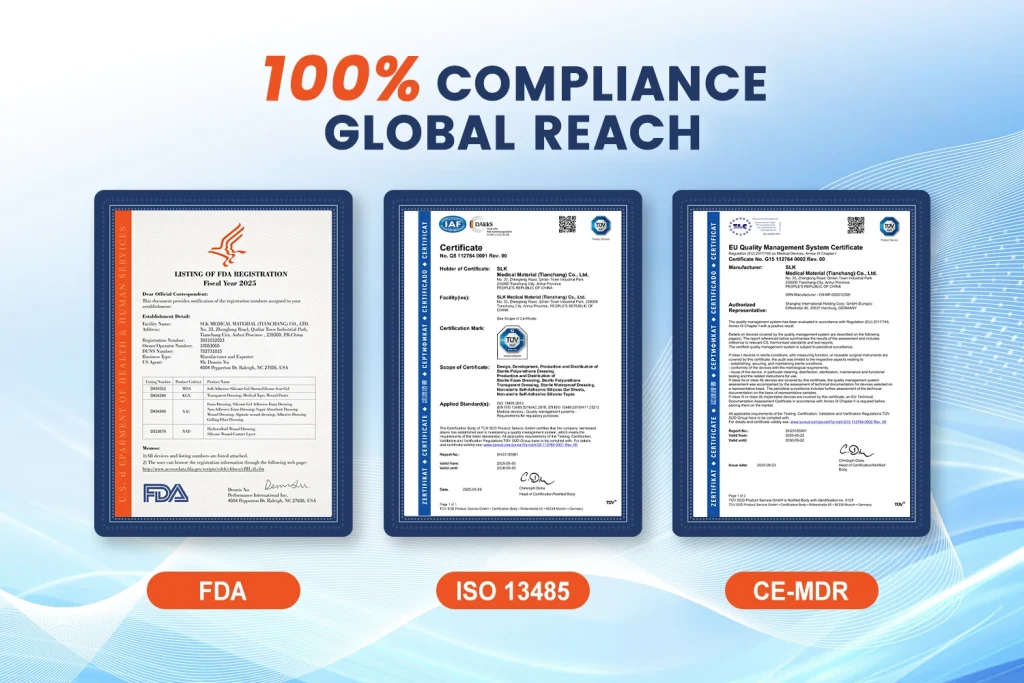
Global Compliance: With CE (MDR), FDA, and ISO 13485 certifications, SLK Medical ensures that products meet the regulatory standards of the European and American markets.
Full OEM/ODM Capability: From custom shapes and sizes to specialized packaging for “Private Label” brands, SLK Medical provides an advanced wound care solution for medical supply distributors.
Manufacturing Excellence: Operating out of a 10,000㎡square foot facility with automated production lines, we ensure consistency and competitive products and prices. With world-class intelligent production lines, the full process—foaming, gluing, punching, forming, packaging—delivers superior dressings.
Frequently Asked Questions
What is the main purpose of silicone foam dressings?
The primary purpose is to manage moderate-to-high wound exudate while providing an atraumatic, pain-free environment that promotes faster healing and protects the periwound skin.
How often should silicone foam dressings be changed?
While they can stay in place for up to 7 days, the frequency depends on the wound’s exudate level. If the fluid reaches the edges of the foam pad, a change is required.
Can silicone foam dressings be used on infected wounds?
Yes, but they should be used under the supervision of a healthcare professional, often in conjunction with systemic antibiotics or an antimicrobial primary layer.
When not to use silicone foam dressings?
1. Dry or minimally exuding wounds: A dry wound isn’t suitable for foam dressing; you can try gauze or a bandage.
2. Full-thickness or third-degree burns, Wounds with Necrotic Tissue (Eschar) or Slough, Active or Untreated Infection: These severe wounds often require specialized grafting or surgical intervention or debridement. Please follow the advice of a professional doctor.
3. Known Allergy to Silicone or Polyurethane.
4. Over Cavity Wounds (Without Proper Packing): Foam dressings are generally designed for surface application; you should fill them with alginate dressing first. Please follow the advice of a professional doctor.
What is the difference between bordered and non-bordered foam dressings?
Bordered dressings have an integrated adhesive edge and are self-fusing. Non-bordered dressings require a secondary fixation (like a bandage or tape) and are often used for wounds that need to be cut to a specific shape.
Are silicone foam dressings suitable for sensitive skin?
Absolutely. This is their primary advantage. The soft silicone adhesive is specifically designed for fragile, sensitive skin.
Conclusion
Silicone foam dressings represent the “sweet spot” of modern wound care—combining high-tech fluid management with the human element of pain reduction. For medical brands and distributors in the US and Europe, these products are no longer “optional” but a core requirement for any comprehensive wound care catalog.
By partnering with an experienced OEM manufacturer like SLK Medical, you can leverage advanced Chinese manufacturing efficiency and proprietary D-Pore® technology to deliver world-class clinical outcomes to your customers. With a 10,000-square-meter production plant, we can ensure a stable, high-quality advanced wound dressing and global delivery. Possession of international certifications, including CE MDR, FDA, and ISO13485, fully demonstrates our strong manufacturing strength.
Ready to Elevate Your Wound Care Brand?
Partner with SLK Medical for high-quality, CE/FDA-certified silicone foam dressings. Whether you need OEM customization or bulk distribution, we provide the technical expertise to help you lead the market.
[Contact SLK Medical Today for a Custom Quote or Sample Kit]
Visit us at: www.slkmedical.com