


Foam dressings are often the first “advanced” dressing category teams adopt when gauze stops keeping up—especially when wounds are leaking, peri-wound skin is getting soggy, or dressing changes are getting painful and time-consuming.
This beginner guide is written for US clinicians and value-analysis teams in facilities that are new to the category. It focuses on practical basics: what foam dressings do, when they fit, when to avoid them, how to apply them at the bedside, and how to compare common options (silicone vs non-silicone, bordered vs non-bordered, and sacral vs heel shapes).
Clinical note: This article is for education only. Always follow your facility protocol and the dressing’s instructions for use (IFU). When in doubt—especially with infection, ischemia, or rapidly deteriorating wounds—consult a qualified wound care clinician.
Key takeaways
A foam dressing is designed to manage exudate while protecting the wound and surrounding skin.
These products are generally used when drainage is low to heavy, but they’re not a good fit for dry wounds or hard, dry eschar (product-dependent).
A silicone foam dressing is often chosen when pain, fragile skin, or MARSI risk is a priority.
Bordered vs non-bordered is mostly a fixation question: do you need an all-in-one seal, or do you want separate fixation (wraps, compression, retention)?
For pressure-injury risk zones, sacral and heel shapes can improve fit—but they’re an adjunct to prevention basics (repositioning, offloading, support surfaces).
What a foam dressing is
A foam dressing is an absorbent dressing used to help balance moisture in an exuding wound. In plain terms: it’s meant to soak up extra wound fluid (exudate) without drying the wound out completely.
From here on, we’ll often say foam dressings or foam products to keep the language natural—while still meaning the same dressing category.
Most foam dressings are designed to do four jobs at once:
Absorb and retain exudate
Support a moist wound environment (a core principle in modern wound care)
Protect the wound from friction/trauma and outside contamination
Protect peri-wound skin by reducing moisture pooling and leakage
Foam dressings come in different thicknesses, shapes, and fixation styles. Some include a soft silicone contact layer or border for gentler removal.
If you want a product-category overview first, SLK Medical’s foam dressing guide is a helpful starting point.
How foam dressings work
These dressings are typically built with:
a wound-contact layer (may be silicone)
an absorbent foam core that holds fluid
a backing film that can help reduce strike-through and support wear time
The clinical goal is moisture balance: enough moisture to support healing processes, but not so much that exudate spreads laterally and contributes to peri-wound maceration.
When foam dressings are a good fit
The most common reason clinicians choose foam is simple: the wound is producing enough exudate that basic gauze becomes inefficient or risks leakage.
Foam products are commonly used (product-dependent) for:
Pressure injuries (foam dressing for pressure injuries is typically chosen for exudate control and protection—alongside offloading and repositioning)
Diabetic foot ulcers (when exudate is present and offloading is addressed)
Venous leg ulcers (often with compression, depending on the overall plan)
Post-operative wounds with expected drainage
Skin tears and other wounds where gentle removal is important
Donor sites and some partial-thickness burns
A high-level clinical overview like StatPearls’ “Wound Dressings” chapter on the NCBI Bookshelf describes foam as a common choice when exudate is moderate to heavy.
A quick “exudate-first” way to think about selection
Exudate level | What you’re trying to prevent | Often-considered dressings (not exhaustive) |
|---|---|---|
Low | drying out / sticking | contact layers, hydrogels, some hydrocolloids (case-dependent) |
Moderate | maceration / leakage | foams (many variants), hydrocolloid (case-dependent) |
Heavy | strike-through / frequent changes | higher-absorbency foams, alginates + secondary dressings (case-dependent) |
When to avoid foam dressings (and when to be cautious)
These products are generally not suitable for:
Dry wounds (they may be too drying)
Necrotic wounds with hard/dry eschar
Wounds requiring very frequent review
This “not suitable for dry wounds/hard eschar” point is also reflected in clinical review literature (e.g., First-Line Interactive Wound Dressing Update (PMC)).
⚠️ Warning: If exudate volume increases suddenly, odor worsens, pain increases, or surrounding erythema spreads, reassess the patient and the wound promptly. A dressing change alone isn’t the plan.
Foam dressing how to use: a bedside operation guide
Good performance usually comes down to three things:
Size and overlap (enough margin on intact skin)
Secure fixation (especially on mobile/contoured areas)
Changing before leakage/maceration occurs
Step 1: Assess wound + peri-wound skin
Before choosing a foam product, document:
wound dimensions and depth
exudate amount (low/moderate/heavy)
peri-wound skin status (fragile? macerated? adhesive injury history?)
location challenges (sacrum cleft, heel curvature, joints)
Step 2: Cleanse and dry peri-wound skin
Cleanse per protocol, then dry intact surrounding skin well. Most fixation failures (edge lift, channeling) start with moisture under the border.
Step 3: Bordered vs non-bordered foam dressing
If you’re new to the category, this single choice eliminates a lot of frustration.
Bordered foam: built-in adhesive border; typically easier to standardize and apply.
Non-bordered foam: requires secondary fixation (wrap, tape, retention bandage), and is often used under compression.
For a deeper walkthrough, see SLK Medical’s bordered vs non-bordered silicone foam dressing guide—and for pressure-injury context specifically, their NPIAP indications explainer for silicone foam dressings.
Step 4: Apply without stretching
For bordered products, place the dressing and avoid stretching as you smooth the border. Stretching can increase tension and contribute to edge lift.
For non-bordered products, center the pad and then secure with an appropriate fixation method that does not create pressure points.
Step 5: Recheck seal and early failure points
Within the first hour (or at the next check), confirm:
no wrinkles or gaps at the edge
no fluid channeling toward the border
patient comfort (pain and itching can signal issues)
Step 6: Change timing—don’t wait for leakage
Wear time depends on exudate, site, and IFU. Many foam dressings can remain in place for several days when exudate is controlled (some product guidance supports up to 7 days).
Change sooner when:
exudate is approaching the edge
strike-through is visible
border loosens or edges lift
peri-wound skin turns white/soft (maceration signs)
How to compare foam dressing options (no competitor brands)
Below is a beginner-friendly comparison that keeps the discussion at the category and feature level.
Silicone foam dressing vs non-silicone foam
Decision factor | Silicone foam | Non-silicone foam | Why it matters |
|---|---|---|---|
Removal comfort | Often selected for gentler removal | Varies by adhesive/fixation | Painful changes reduce adherence and can damage fragile skin |
Fragile skin / MARSI risk | Often preferred when MARSI risk is high | More variable | MARSI prevention favors gentle, atraumatic removal where appropriate |
Fixation options | bordered + non-bordered variants exist | bordered + non-bordered variants exist | Fixation drives leakage risk and wear time |
Repositioning during placement | often possible in silicone systems | varies | Helps reduce placement errors and wasted dressings |
For background on silicone as a low-trauma approach, see Wounds International’s “Soft silicone dressings” overview (PDF).
Sacral vs heel shapes: fit is the feature
Anatomical shapes are less about “better materials” and more about better geometry:
Sacral shapes are designed to manage movement and contours that can lead to edge lift.
Heel shapes are designed to wrap a curved surface and reduce gaps.
If your team is standardizing shapes and sizes, SLK Medical’s foam dressing sizes and shapes guide and sacral vs heel silicone foam dressing guide can help align bedside needs with SKU selection.
What outcomes you can reasonably expect (without overpromising)
It’s tempting to talk about “healing faster,” but for YMYL content, it’s safer—and more useful—to describe mechanisms and operational outcomes you can observe.
Exudate control and maceration risk management
When selection and change timing match the wound’s output, foam can help absorb exudate and reduce lateral spread that contributes to peri-wound softening. The bedside signal you’re aiming for is simple: less leakage, less peri-wound whitening/softening, and fewer unplanned changes.
Protection and cushioning (supportive, not a substitute)
Foam can provide a protective layer that supports friction/shear reduction. For high-risk sites, evidence suggests prophylactic multilayer silicone foam dressings can be an adjunct to pressure injury prevention in selected settings, aligned with the 2019 International Guideline (EPUAP/NPIAP/PPPIA) and supported by evidence syntheses such as “Silicone adhesive multilayer foam dressings as adjuvant therapy to prevent hospital-acquired pressure ulcers” (2020, PMC).
Important caveat: dressings don’t replace repositioning, offloading, and support surfaces.
Patient comfort and less trauma during dressing changes
When adhesive injury or pain is a recurring issue, soft silicone interfaces are commonly used to support gentler removal. Broader MARSI prevention guidance from Wounds International emphasizes skin assessment and choosing products that support atraumatic removal when appropriate.
Fewer dressing changes and better workflow (when the match is right)
When absorbency matches exudate output, these dressings may stay in place longer—reducing dressing-change frequency and nursing time. The key is to change based on saturation signs, not the calendar.
FAQ
What wounds are foam dressings used for?
Foams are commonly used for exuding wounds such as pressure injuries, venous leg ulcers, DFUs, post-op wounds, skin tears, and donor sites (case- and product-dependent).
Can I use a foam dressing on a dry wound?
Often, no. Foam is generally not suited for dry wounds or hard/dry eschar because it can be too drying and may not support the intended moisture balance. Always follow IFU and clinical judgment.
How often should a foam dressing be changed?
It depends on exudate level, wound type, and IFU. Change sooner if you see strike-through, edge lift, leakage, increased odor, or peri-wound maceration.
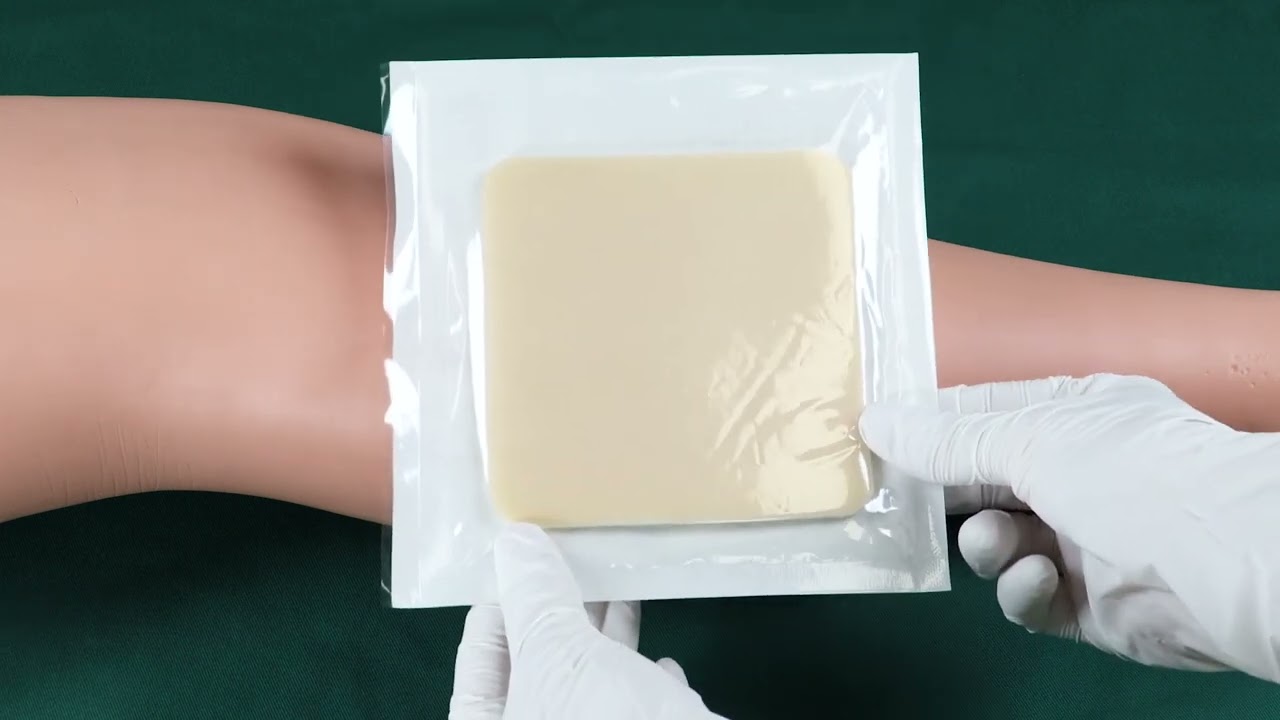
Video: foam dressing basics (from SLK Medical)
Next steps
If your facility is moving from gauze-first to foam-first for exuding wounds, the biggest win usually comes from standardizing selection criteria and bedside technique.
SLK Medical can provide a procurement-ready starter pack (spec sheet + IFU pack + sampling plan) aligned to your most common wound sites and exudate profiles.


