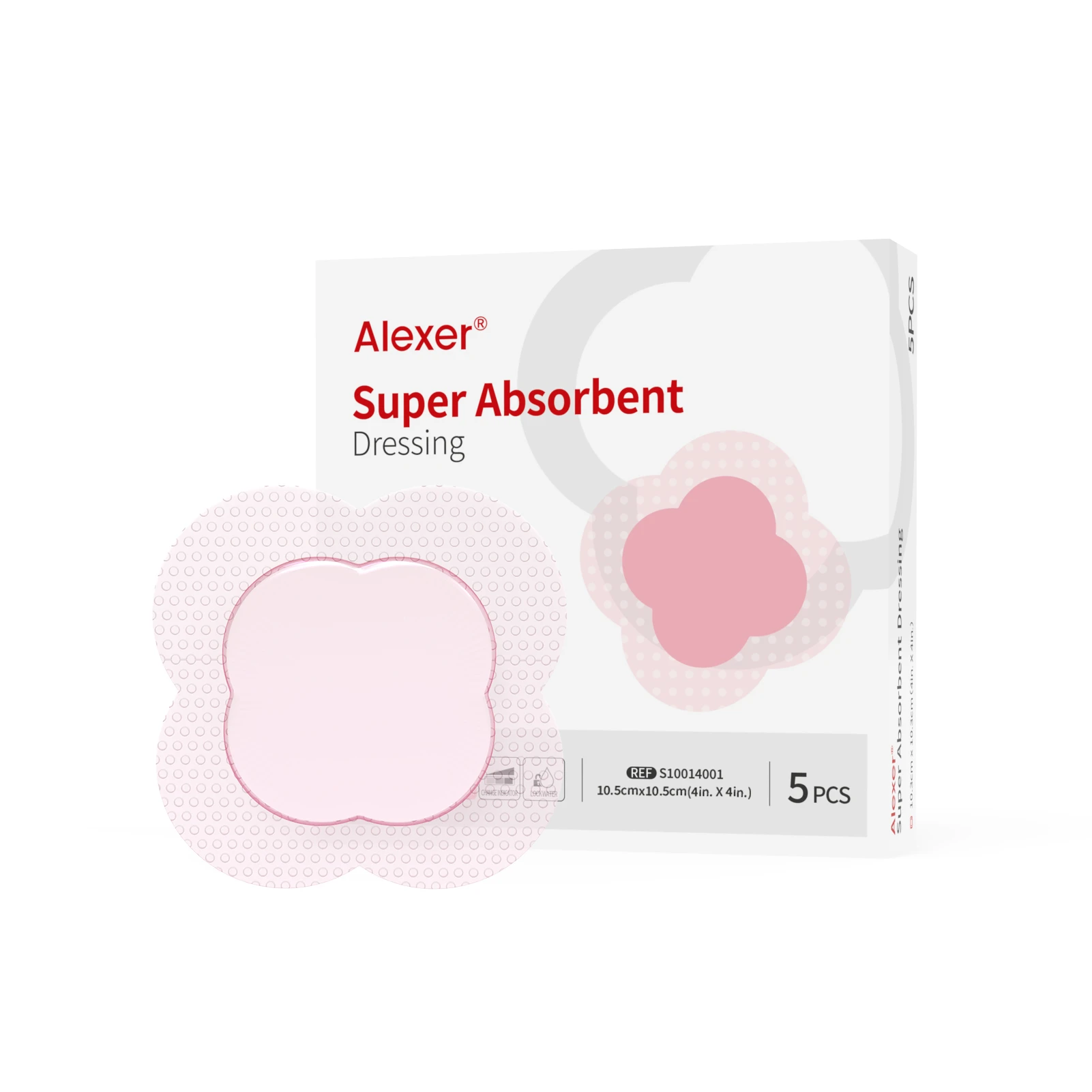
You need to pick the right wound care dressing supplies. This helps wounds heal faster. It also lowers the chance of infection. A study showed that using planned treatment can help. Healing time can drop from 269 days to 139 days. Over 60% of people with chronic wounds get antibiotics. This means infection is common if the dressing is not right.
-
Chronic wounds often stay in the inflammatory stage. Less than 30% heal after 4 to 12 weeks.
If you match the dressing to the wound type and healing stage, you help comfort. You also support recovery.
Key Takeaways
-
Picking the right wound dressing helps wounds heal faster and lowers the chance of infection.
-
Different wounds, such as pressure ulcers and diabetic foot ulcers, need special dressings for best care.
-
Wounds heal in three steps: inflammatory, proliferative, and maturation. Knowing these steps helps you choose the right dressing.
-
Always check wounds for infection signs and change dressings when needed. This keeps the wound moist and helps it heal.
-
Using advanced dressings, like ones from SLK Medical, can make you feel better and help you heal quicker.
Wound Types & Healing Stages
Common Wound Types
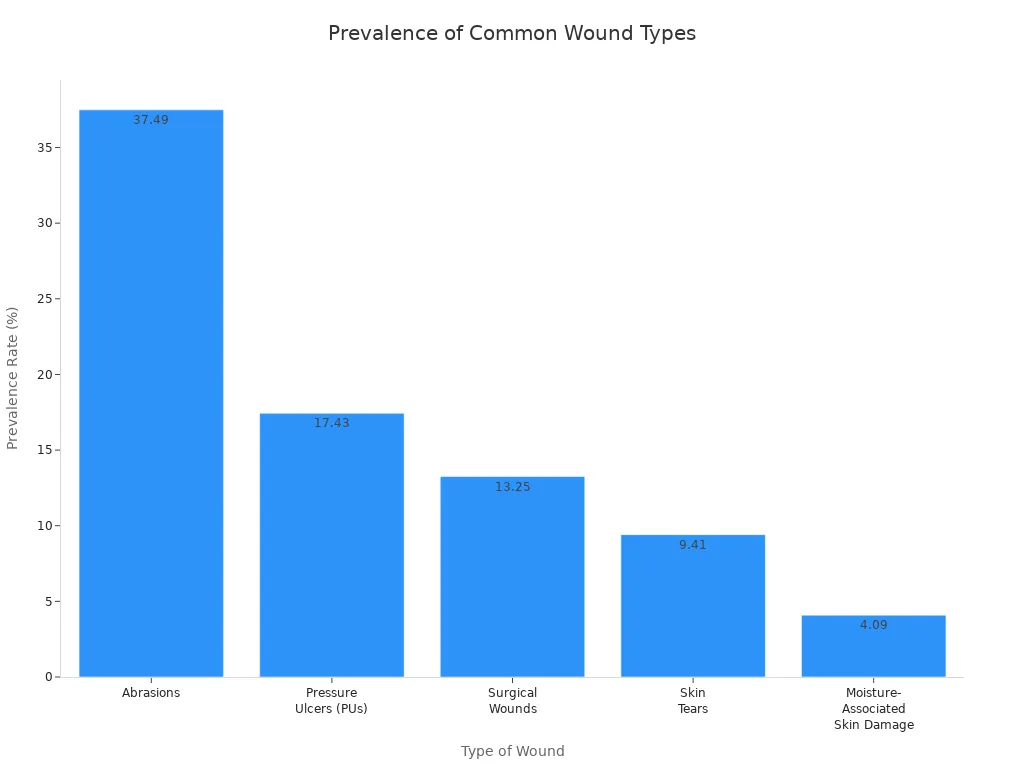
You can find many wound types in clinics. Each one needs its own care. The most common types are abrasions, pressure ulcers, surgical wounds, skin tears, and moisture-associated skin damage. Some people also get diabetic foot ulcers and burns. The table below shows how often each wound type appears:
|
Type of Wound |
Prevalence Rate (%) |
Count |
|---|---|---|
|
Abrasions |
37.49% |
8792 |
|
Pressure Ulcers |
17.43% |
4089 |
|
Surgical Wounds |
13.25% |
3107 |
|
Skin Tears |
9.41% |
2206 |
|
Moisture-Associated Skin Damage |
4.09% |
959 |
Pressure ulcers are a big problem. You see them in people who stay in bed a lot. Diabetic foot ulcers happen to people with diabetes. These wounds can get infected or may need amputation. Surgical wounds need close watching to stop problems. Burns and skin tears usually happen by accident. Each wound type needs different wound dressings.
Healing Stages Overview
Wounds heal in three main steps. First is the inflammatory stage. This starts when the wound happens. The body fights germs and cleans the wound. Next is the proliferative stage. New tissue grows during this time. Last is the maturation stage. The skin and tissue get stronger. Acute wounds heal fast, in two to four weeks. Chronic wounds, like pressure ulcers and diabetic foot ulcers, often get stuck in the first stage. These wounds can last for months or even years.
|
Aspect |
Acute Wounds |
Chronic Wounds |
|---|---|---|
|
Healing Timeline |
Predictable (2–4 weeks) |
Prolonged (months or years) |
|
Progression |
Normal healing stages |
Often stalls in inflammation |
Impact on Dressing Choice
You need to match wound dressings to the wound and its stage. Pressure ulcers do best with foam dressings. These help lower friction and pressure. Diabetic foot ulcers need hydrocolloid and foam dressings. These keep the skin safe and dry. Surgical wounds need dressings that stop infection and help healing. Picking the wrong dressing can cause pain, infection, or skin problems. About 27% of people with surgical wounds have trouble with adhesives. Pain affects almost 30% of people. Some adhesives can cause skin stripping and dermatitis. Hydrocolloid dressings can cause maceration. Always think about the wound type, fluid amount, and healing stage before you pick a dressing.
Tip: Always look at the wound for infection or too much moisture. Change the dressing if you see redness, swelling, or leaking.
Choosing the right wound dressing helps wounds heal and keeps patients comfortable.
Top 10 Wound Care Dressing Supplies
Picking the right wound care dressing supplies helps you take care of wounds at every stage. You should know which wound dressing works best for each wound type. This guide lists the top 10 wound dressing supplies. It includes advanced choices from SLK Medical. You will find out how each dressing helps with wound treatment, protection, and healing.
Silicone Foam Dressing with Border – SLK Medical
Silicone foam dressing with border gives strong protection for wounds that leak fluid. You can use this wound dressing for surgical wounds, pressure ulcers, diabetic ulcers, burns, and skin tears. The border keeps the dressing in place. It helps stop infection. SLK Medical uses new technology so the foam absorbs fluid and keeps the wound moist.
-
You get protection from bumps and knocks.
-
The foam traps bacteria and bad enzymes, helping wounds heal faster.
-
Patients feel less pain and have more comfort.
|
Wound Type |
Healing Stage |
|---|---|
|
Low-high exudative wounds |
Throughout the healing process |
|
Leg ulcers |
Throughout the healing process |
|
Pressure sores |
Throughout the healing process |
|
Cuts and abrasions |
Throughout the healing process |
|
Surgical wounds |
Throughout the healing process |
|
Minor thermal burns |
Throughout the healing process |
|
Skin tears |
Throughout the healing process |
|
Friable or delicate skin |
Throughout the healing process |
Tip: Change the dressing every 3–7 days or when there is too much fluid. Always clean the wound before putting on new bandages.
Silicone Foam Dressing without Border – SLK Medical
Silicone foam dressing without border is good for wounds that need gentle care. You can use this wound dressing for surgical wounds, diabetic foot ulcers, burns, and pressure ulcers. The foam absorbs fluid and keeps the wound moist. The silicone layer protects weak skin and lowers pain when you change the dressing.
-
You can cut the dressing to fit any wound shape.
-
The foam is waterproof, so patients can shower safely.
-
The dressing stays on for up to 7 days.
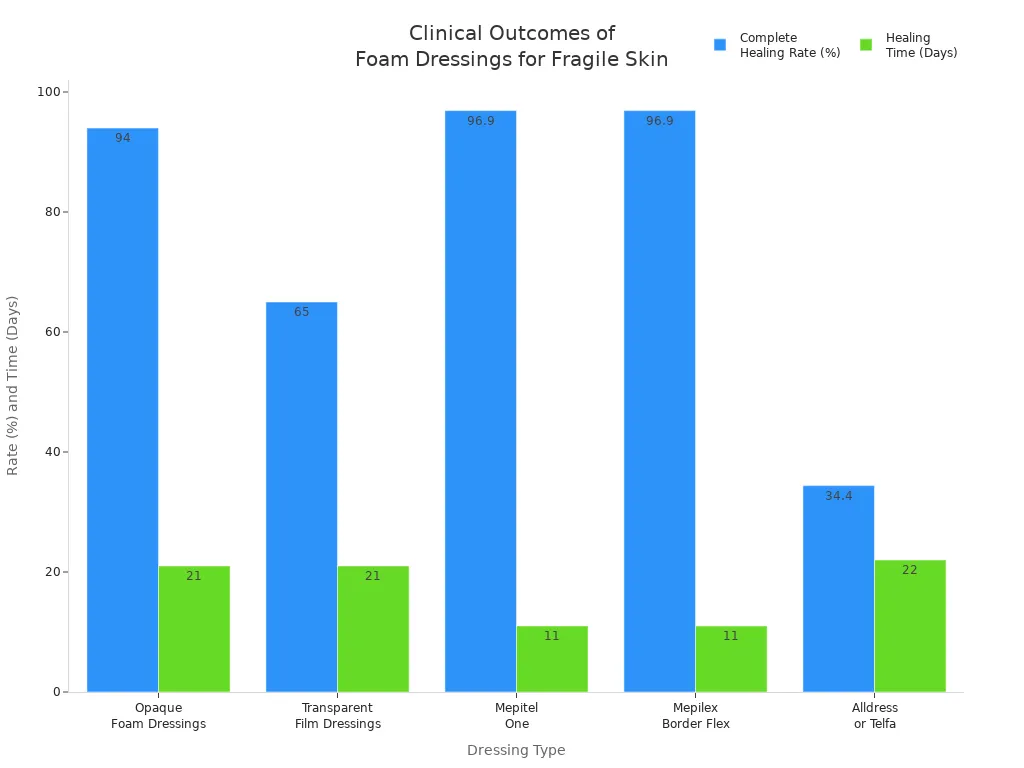
|
Dressing Type |
Complete Healing Rate (%) |
Healing Time (Days) |
Wound Surface Area Reduction (cm²) |
|---|---|---|---|
|
Opaque Foam Dressings |
94 |
21 |
2.9 |
|
Transparent Film Dressings |
65 |
21 |
N/A |
|
Mepitel One |
96.9 |
11 |
N/A |
|
Mepilex Border Flex |
96.9 |
11 |
N/A |
|
Alldress or Telfa |
34.4 |
22 |
N/A |
Note: Use this dressing for wounds with moderate to high fluid. Always check the wound for infection signs.
Non Adhesive Foam Dressing – SLK Medical
Non adhesive foam dressing is flexible for hard-to-cover wounds. You can use this wound dressing for surgical wounds, burns, ulcers, and skin tears. The foam absorbs fluid and keeps the wound moist. You can cut the dressing to fit any wound shape. The waterproof layer lets patients shower without taking off the bandages.
-
You get high absorbency and long wear time.
-
The foam protects weak skin and lowers pain.
-
The dressing helps wounds heal faster.
Tip: Use non adhesive foam dressing for wounds on elbows, heels, or other tricky spots. Secure with sterile bandages for extra safety.
Silicone Foam Ag Dressing – SLK Medical
Silicone foam Ag dressing has silver ions that fight germs. You can use this wound dressing for infected wounds, diabetic foot ulcers, burns, and surgical wounds. The foam absorbs fluid and keeps the wound moist. The silver ions lower bacteria and help wounds heal faster.
-
You get quick and lasting germ protection.
-
The dressing lowers infection and helps healing.
-
Patients feel less pain when changing dressings.
-
The antimicrobial silicone foam dressing releases silver ions that fight MRSA and other germs.
-
Studies show better healing and fewer infection signs in diabetic foot ulcers.
Note: Use silicone foam Ag dressing for wounds with infection signs. Change the dressing every 3–7 days or as needed.
Super Absorbent Dressing Non Adherent – SLK Medical
Super absorbent dressing non adherent helps with wounds that have lots of fluid. You can use this wound dressing for leg ulcers, pressure ulcers, diabetic foot ulcers, and surgical wounds. The dressing absorbs up to 20 times its weight in fluid. The non-adherent layer protects the wound and lowers pain when changing dressings.
-
You get strong protection against leaks and wet skin.
-
The dressing fits body shapes for better comfort.
-
Patients need fewer dressing changes.
Tip: Use super absorbent dressing for wounds with lots of fluid. Always secure with sterile bandages and check for leaks.
Hydrocolloid Dressing – SLK Medical
Hydrocolloid dressing makes a moist place for wound healing. You can use this wound dressing for surgical wounds, burns, abrasions, and skin tears. The hydrocolloid absorbs fluid and forms a gel that protects the wound. This dressing helps remove dead tissue and supports new skin growth.
-
Hydrocolloid dressings keep wounds moist and help them heal faster.
-
The gel stops the wound from drying out and helps natural healing.
-
You get pain relief and protection for open nerve endings.
Note: Use hydrocolloid dressing for wounds with low to moderate fluid. Change the dressing when the gel turns white or cloudy.
Alginate Wound Dressings – SLK Medical
Alginate wound dressings are best for wounds with lots of fluid. You can use this wound dressing for surgical wounds, burns, ulcers, and cavity wounds. The alginate absorbs fluid and forms a soft gel. This dressing helps remove dead tissue by autolytic debridement.
|
Recommendation |
Description |
|---|---|
|
Indications |
Recommended for acute and chronic wounds with moderate to heavy exudate. |
|
Properties |
Highly absorbent, promotes autolytic debridement, suitable for deep wounds and cavity wounds. |
Alginate wound dressings do not stick to the wound bed, so you can take them off without pain. You get strong protection and help for healing.
Tip: Use alginate wound dressings for deep wounds or wounds with lots of fluid. Always use sterile bandages to hold the dressing in place.
Transparent Film Dressings – SLK Medical
Transparent film dressings give clear protection for shallow wounds. You can use this wound dressing for cuts, scrapes, burns, and surgical wounds. The film lets you see the wound without taking off the dressing. It keeps out germs and lets moisture vapor escape.
|
Benefit/Limitations |
Description |
|---|---|
|
Better Visualization |
Allows for better monitoring and assessment of wound healing. |
|
Autolytic Debridement |
Creates a moist environment that aids in natural debridement. |
|
Decreased Infection Risk |
Provides a barrier against contaminants, reducing infection rates. |
|
Protection from Friction |
Shields the wound from friction and external trauma. |
|
Lack of Absorptive Capacity |
Not suitable for heavy exudating wounds due to risk of maceration. |
|
Suitability for Skin Types |
Should be avoided on aging or fragile skin and in small children. |
|
Timely Change Requirement |
Needs to be changed regularly and removed gently to avoid skin damage. |
|
Cleaning Before Application |
Skin must be cleaned prior to applying the dressing to ensure effectiveness. |
Transparent film dressings help you watch healing and protect wounds from rubbing. You need to change the dressing often and not use it on weak skin.
Tip: Clean the skin before putting on transparent film dressings. Use for wounds with low fluid only.
Antimicrobial Dressings
Antimicrobial dressings help fight infection in wounds. You can use these wound dressing supplies for surgical wounds, burns, ulcers, and diabetic foot wounds. These dressings have agents like silver, honey, iodine, or chlorhexidine. They block bacteria and help wounds heal.
|
Antimicrobial Agent |
Efficacy Against Common Pathogens |
Notes |
|---|---|---|
|
Silver |
Effective against MRSA and MSSA |
Blocks bacterial energy metabolism |
|
Povidone Iodine |
Broad spectrum against wound pathogens |
Effective in killing various microorganisms |
|
Chlorhexidine |
Active against gram-positive and gram-negative bacteria |
Persistent antimicrobial agent |
|
Honey |
Effective against MRSA and Pseudomonas aeruginosa |
Historical use in wound management |
You get strong protection against infection. These dressings work well for wounds with infection signs or slow healing.
Note: Use antimicrobial dressings for wounds with infection risk. Change the dressing as your healthcare provider tells you.
Gauze Dressings
Gauze dressings are the most common wound dressing supplies. You can use gauze for surgical wounds, burns, abrasions, and skin tears. Gauze absorbs fluid and keeps the wound safe from dirt. You can use sterile gauze for packing deep wounds or covering big areas.
-
You get flexible protection for many wound types.
-
Gauze works well with other bandages and dressings.
-
You need to change gauze often to stop infection.
Tip: Always use sterile gauze for open wounds. Secure with bandages and check for infection signs.
Bandages and Dressings in Wound Care Kits
Wound dressing kits give you all the supplies you need for wound care. You get sterile bandages, gauze, foam dressings, and hydrocolloid dressings. These kits help you clean, cover, and protect wounds at home or in clinics.
-
You get easy access to wound care dressing supplies.
-
Wound dressing kits save time and help proper wound care.
-
You can use these kits for surgical wounds, burns, and ulcers.
Note: Keep wound dressing kits ready for emergencies. Always use sterile supplies for every wound.
You should match wound care dressing supplies to the wound type and healing stage. The right wound dressing helps healing, protection, and comfort. SLK Medical offers advanced foam, hydrocolloid, and antimicrobial dressings for better wound care. Use sterile bandages and dressings for every wound. Change dressings when needed and watch for infection signs.
Choosing Wound Care Supplies
Assessing Wound Needs
Look at the wound before picking supplies. Check how much fluid comes out. Notice if the fluid is thick or thin. Look at the color of the fluid. See what the tissue inside looks like. You may see red, yellow, or black tissue. Check if the skin around the wound is red or swollen. Use a ruler or tracing kit to measure the wound. Take pictures to see if it gets better. The Skin and Wound Assessment Tool helps you find infection. It also shows if the tissue changes. Moisture tools tell you if the skin is too wet or dry.
|
Factor |
Description |
|---|---|
|
Exudate Level |
Check how much fluid, its color, and thickness to pick the right dressing. |
|
Tissue Type |
Find out if the tissue is granulation, slough, or eschar to help choose treatment. |
|
Wound Edges |
Look at the wound edges and skin nearby to see how healing is going and spot problems. |
Matching Dressing to Wound
Pick wound care supplies that fit the wound type and healing stage. If the wound has a lot of fluid, use foam or alginate dressings. These dressings soak up fluid and keep the wound moist. For shallow wounds, use gauze or transparent film. These protect and let you see the wound. Chronic wounds need dressings with silver to fight germs and help new skin grow. Burns do best with hydrogel or silver dressings. These cool the burn and stop infection. Surgical wounds need non-adherent or transparent film dressings. These stop sticking and help healing. Always think about allergies, comfort, and how easy it is to get supplies.
|
Wound Type |
Dressing Type |
Purpose |
|---|---|---|
|
Superficial Wounds |
Gauze, Transparent Film |
Protects, keeps moist, and lets you watch healing. |
|
Deep Wounds |
Foam, Alginate, Hydrogel |
Soaks up fluid, keeps moist, and protects to help healing. |
|
Chronic Wounds |
Collagen, Silver Dressings |
Fights germs and helps new tissue grow. |
|
Infected Wounds |
Silver, Iodine Dressings |
Kills bacteria and keeps the wound clean. |
|
Burn Wounds |
Hydrogel, Silver Dressings |
Cools, eases pain, and stops infection. |
|
Surgical Wounds |
Non-adherent, Transparent Film |
Helps healing and keeps surgical cuts clean. |
Tip: Clean the wound first. The right dressing helps wounds heal and feel better.
Application & Removal Tips
Use wound care supplies the right way. Clean the wound with mild soap, water, or saline. Do this before putting on a new dressing. Follow the directions for each dressing. Change dressings if they get wet or dirty. Watch for redness, swelling, or pus. These are signs of infection. Do not use hydrogen peroxide or alcohol. These can hurt healthy skin and slow healing. Do not wrap bandages too tight or too loose. Do not pick at scabs or healing skin. Keep wounds moist, not dry, to help them heal.
-
Pick the right dressing for the wound and fluid level.
-
Gently clean the wound before using supplies.
-
Put on dressings as told and change them when needed.
-
Watch for infection and call a doctor if you see problems.
-
Do not use harsh chemicals or pick at the wound.
Note: Using advanced wound care supplies from SLK Medical can help wounds heal and stay germ-free. Always use safe steps to protect the wound and help it get better.
Picking the right wound care dressing supplies for each wound type and healing stage helps wounds heal faster. It also lowers the chance of problems. Dressings that keep wounds moist, like ones from SLK Medical, make patients feel better and help wounds get better quicker. You can notice changes in how wounds heal:
|
Effect on Wound Healing |
|
|---|---|
|
Interactive Dressings |
Change the wound area to help healing |
|
Moist Dressings |
Help wounds heal faster and protect tissue |
Some quick tips for picking dressings:
-
Keep the wound moist while it heals.
-
Control fluid so skin does not get hurt.
-
Clean away dead tissue to stop swelling.
-
Choose dressings that do not hurt the skin.
If your wound does not get better in two weeks or heal in six weeks, ask a healthcare professional for help.
FAQ
What is a moist environment, and why does it help wounds heal?
You need a moist environment for wounds to heal well. A moist environment keeps the wound from drying out. This helps new skin cells grow. You see faster healing and less pain. A moist environment also lowers the risk of scarring.
How do I keep a wound moist during healing?
You can use dressings that hold moisture. Foam, hydrocolloid, and alginate dressings work well. These dressings create a moist environment. You should check the wound often. Change the dressing if it gets too wet or dry. A moist wound heals faster.
Can a moist environment prevent infection?
A moist environment helps your body fight germs. It keeps the wound covered and blocks dirt. You lower the risk of infection. You should always clean the wound before putting on a new dressing. Keeping the wound moist helps protect it from bacteria.
Why do experts recommend moist wound care over dry wound care?
Experts say a moist environment helps wounds heal faster. Dry wounds form scabs. Scabs slow healing and cause pain. A moist wound lets new cells move easily. You get less pain and better healing. Moist wound care also lowers the chance of scars.
Which dressings help create a moist environment?
You can use silicone foam, hydrocolloid, alginate, and super absorbent dressings. These dressings keep the wound moist. They hold fluid and protect the skin. You should pick a dressing that matches the wound type. A moist environment supports healing at every stage.