


Choosing the right wound dressing supplies helps you avoid pain. It also helps you avoid skin irritation. Many people with sensitive skin have reactions to regular dressings. You might see redness. You might feel itching. You might feel discomfort. Some common problems are pain, skin stripping, and maceration. Silicone adhesives cause fewer problems than other materials.
-
Allergic contact dermatitis affects about 5.4% of people.
-
Almost 30% of people with chronic wounds have allergic reactions.
-
People with leg ulcers have a high risk for skin allergies.
SLK Medical gives you hypoallergenic, breathable, and gentle products. These products are made for sensitive skin. You can feel sure and comfortable when you care for your wound.
Key Takeaways
-
Pick hypoallergenic and breathable dressings. This helps stop skin irritation. It also helps wounds heal faster.
-
Find soft and non-stick materials. These make dressing changes less painful.
-
Use dressings that keep wounds moist. This helps wounds heal quickly. It also lowers swelling.
-
Read product labels every time. Make sure they are safe for sensitive skin. Check that they do not have allergens.
-
Ask healthcare providers for advice. They can help you choose the best wound care and dressings.
Sensitive Skin and Wound Dressing Supplies
Common Skin Sensitivities
Your skin can react fast to some products. Sensitive skin may turn red, itch, or hurt when you use wound dressing supplies. Many people get different kinds of dermatitis. The table below lists two common skin problems you might see:
|
Type of Dermatitis |
Description |
|---|---|
|
Irritant Contact Dermatitis |
Happens from touching things that bother the skin; often seen in people with incontinence and ostomies. |
|
Allergic Contact Dermatitis |
Comes from allergens in wound dressing materials or adhesives; leads to redness and itching. |
If your skin is sensitive, you should look closely at what is in your wound dressing supplies. Some adhesives and fabrics can make your skin react. This can slow healing and make you feel worse.
Potential Irritants in Dressings
You need to know what can bother your skin. Many regular wound dressing supplies use adhesives, latex, or rough fabrics. These things can cause allergic contact dermatitis or irritant contact dermatitis. You might notice swelling, redness, or burning. Some dressings hold in moisture, which can hurt your skin. If you have allergies, stay away from dressings with strong adhesives or latex.
Tip: Always read the label for hypoallergenic and latex-free choices. Doing this helps you avoid pain and problems.
Benefits of Hypoallergenic Materials
Hypoallergenic and breathable wound dressing supplies have many good points. They help you feel better and heal faster. These materials, like hydrocolloid dressings, keep wounds moist and lower swelling. They soak up fluid and keep germs out. Surgical adhesive film dressings help you feel more comfortable and heal better. They lower infection risks and make changing dressings easier. Soft and flexible designs move with you, so you have less pain and irritation. Picking hypoallergenic and breathable supplies helps your skin heal and stay safe.
Features of Comfortable Wound Dressing Supplies
Softness and Cushioning
You need wound dressing supplies that feel soft. Soft dressings help you avoid pain and skin irritation. Dressings with foam layers, like SLK Medical’s, cushion your wound. They protect skin that is fragile. Silicone foam dressings use gentle silicone. This silicone sticks lightly but does not pull when you take it off. This helps you heal faster and keeps your skin safe. Foam dressings soak up fluid. This stops your skin from getting soggy or hurt.
Dressings with soft layers do more than just feel nice. They help your skin heal by lowering pressure and friction. You can wear these dressings longer without feeling uncomfortable. Many patients say flexibility and softness help them feel better.
|
Feature |
Benefit |
|---|---|
|
Non-adherent surfaces |
Stops sticking to the wound and lowers pain when you change dressings. |
|
Flexibility |
Bends to fit curved areas and makes wearing more comfortable. |
|
Fluid absorption |
Soaks up fluids well and keeps the wound clean and comfy. |
Breathability and Moisture Control
You need dressings that let air reach your skin. Breathable dressings keep moisture at a good level. This helps your wound heal and stops swelling or redness. SLK Medical uses special technology to make dressings that let air in but keep germs out. The water vapor transmission rate (WVTR) controls moisture in these dressings. Your wound stays moist, which helps new skin grow and lowers pain.
Studies show moist dressings help wounds heal faster. They lower swelling and help wounds heal better. You get better results when your wound stays moist but not too wet.
|
Study Type |
Findings |
Implications |
|---|---|---|
|
Porcine model |
Moist dressings caused less dead tissue |
Shows moist dressings help wounds heal better |
|
Clinical trial |
Healing was faster with moist dressings |
Means moist dressings should be used for care |
|
General observation |
Moist places lower swelling and help wounds heal well |
Shows why keeping moisture helps wound care |
Non-Stick and Easy Removal
You want dressings that do not stick to your wound. Non-stick dressings make changing supplies easy and less painful. SLK Medical’s silicone foam dressings use gentle adhesives. These adhesives protect your skin. You can take off these dressings without tearing or hurting your skin. This is important for people with sensitive skin.
Non-adherent dressings help you avoid hurting your skin when you change dressings. You feel less pain and your skin stays healthy. Many patients like dressings that come off easily and do not hurt.
|
Benefit |
Description |
|---|---|
|
Minimized Discomfort |
Silicone foam dressings lower discomfort when you take them off. |
|
Pain Reduction |
Non-adherent dressings do not stick, so changing is less painful. |
|
Skin Protection |
Made to be gentle and lower the chance of skin damage. |
|
Pain-Free Removal |
Gentle silicone adhesive holds well but does not hurt your skin when removed. |
Tip: Pick wound dressing supplies that are soft, let air in, and do not stick. You will feel better and heal faster.
SLK Medical Wound Dressing Supplies Recommendations
SLK Medical has many wound dressing supplies for sensitive skin. You can pick silicone foam, non-adhesive foam, hydrocolloid, transparent, or super absorbent dressings. Each type helps you heal and feel comfortable.
Silicone Foam Dressings by SLK Medical
Key Features
-
Soft silicone layer sticks gently to your skin.
-
Waterproof backing keeps out bacteria.
-
High absorbency soaks up lots of fluid.
-
Breathable design helps your skin stay healthy.
Pros and Cons
|
Feature |
Other Brands |
|
|---|---|---|
|
Skin Compatibility |
Works well for sensitive skin |
May not work as well |
|
Comfort during Removal |
Easy and less painful to remove |
Can hurt more |
|
Risk of Skin Damage |
Low chance of skin damage |
Higher chance |
|
Patient Compliance |
People use them more often |
Use varies |
Best For
-
Sensitive or weak skin
-
After surgery wounds
-
Pressure ulcers
-
Diabetic foot ulcers
Non Adhesive Foam Dressings
Key Features
-
Surface does not stick to wounds.
-
Moist environment helps wounds heal.
-
Polyurethane blocks germs and dirt.
-
You can cut them to fit any wound.
Pros and Cons
-
Do not stick, good for people with allergies.
-
Keep wounds moist for better healing.
-
Give extra comfort and cushion.
Best For
-
People with adhesive allergies
-
Wounds with lots of fluid
-
Places that need more padding
Hydrocolloid Dressings
Key Features
-
Gel particles keep wounds moist.
-
Thin and flexible, easy to use.
-
See-through for checking wounds.
Pros and Cons
-
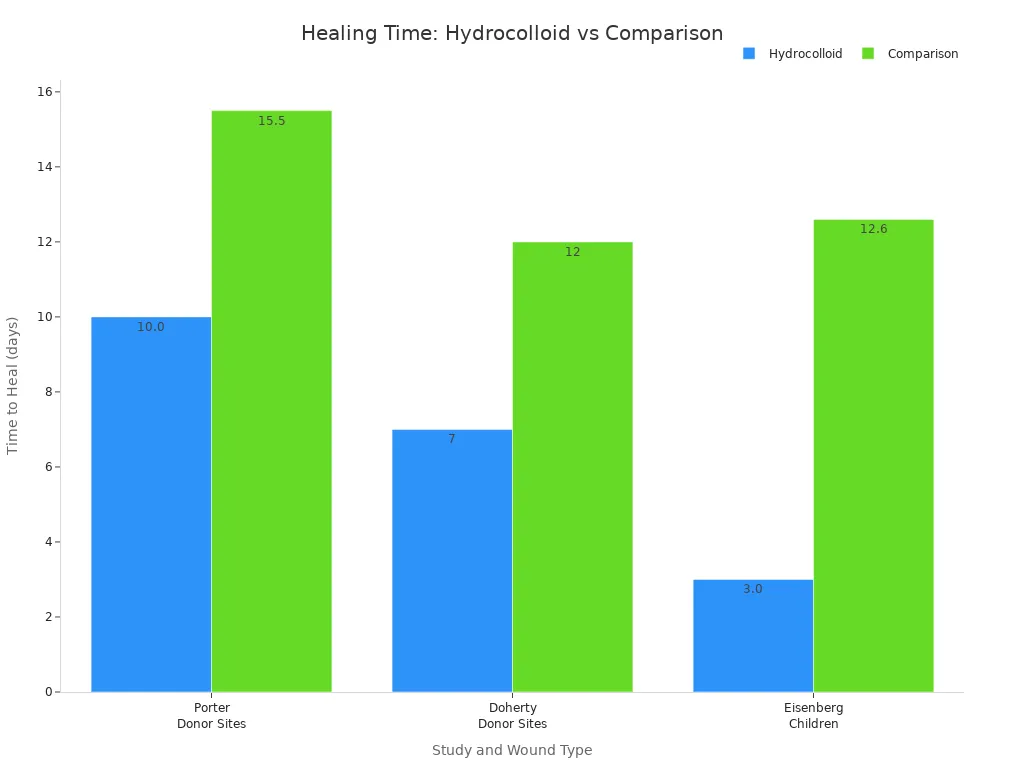
Help wounds heal faster at donor sites and grafts.
-
Lower pain and protect nerves.
Best For
-
Wounds that are not chronic
-
Donor sites
-
Split skin grafts
Transparent Dressings for Comfort
Key Features
-
Breathable, waterproof film lets air in.
-
Hypoallergenic adhesive is gentle for sensitive skin.
-
Clear window makes it easy to check wounds.
Pros and Cons
|
Evidence Description |
Key Benefits |
|---|---|
|
Check wounds without taking off the dressing |
Lowers infection risk, helps wounds heal faster |
|
Gentle silicone adhesive |
Less trauma when you change dressings |
Best For
-
Holding catheters in place
-
Small wounds
-
People who need to check wounds often
Super Absorbent Non Adherent Dressings
Key Features
-
Many layers soak up lots of fluid.
-
Non-adherent layer does not stick to wounds.
-
Fits the shape of your body.
Pros and Cons
-
Take in lots of fluid from wounds.
-
Do not stick or hurt your skin.
-
Make removal more comfortable.
Best For
-
Chronic wounds with lots of fluid
-
Leg ulcers
-
Pressure ulcers
Summary & SLK Website Recommendation
SLK Medical has wound dressing supplies for every need. Each product helps sensitive skin and gives comfort. Go to the SLK Medical website to learn more and pick the best wound care supplies.
Application and Removal Tips
Step-by-Step Application Guide
You want to keep your wound clean and safe. Follow these steps for best results:
-
Wash your hands with soap and water. This lowers the risk of infection.
-
Put on disposable gloves if you have them.
-
Rinse your wound with clear, running water. Remove dirt and debris.
-
Clean the skin around the wound gently with mild soap. Do not use soap directly on the wound.
-
Apply a thin layer of antibiotic cream or ointment. This helps your wound heal.
-
Cover the wound with a clean, sterile, nonstick bandage. Make sure the area is dry before you apply the bandage.
-
Change your dressing at least once a day or when it gets wet or dirty.
Tip: Always use wound dressing supplies that match your skin type. This helps you avoid irritation and pain.
Minimizing Discomfort
You can lower pain during dressing changes by choosing the right products and techniques. The table below shows ways to make the process easier:
|
Technique |
Description |
|---|---|
|
Dressing Selection |
Pick dressings that lower trauma and pain. Foam, alginate, and hydrocolloid dressings are less painful than gauze. |
|
Atraumatic Dressings |
Use non-adherent layers to stop sticking and reduce pain. |
|
Moist Dressings |
Keep the wound moist to prevent the dressing from sticking. |
Other ways to help include virtual reality for distraction, skin hyperstimulation, and hypnosis with relaxation. You should also ask your healthcare provider about pain relief methods like topical anesthetics.
Safe Removal Techniques
You need to remove dressings gently to protect your skin. Here are some tips:
-
Wash your hands before you start.
-
Peel the dressing slowly from one edge. Hold your skin down with one hand.
-
If the dressing sticks, moisten it with saline or water. This helps it come off easily.
-
Check your wound for redness, swelling, or signs of infection.
-
Avoid pulling or tearing your skin.
The table below lists common mistakes and how to avoid them:
|
Common Mistakes |
Prevention Strategies |
|---|---|
|
Inadequate Cleaning of the Wound |
Rinse with lukewarm water; use gentle cleansers; avoid harsh chemicals. |
|
Neglecting Moisture Management |
Use dressings that keep moisture balanced; follow care instructions. |
|
Selecting Inappropriate Dressings |
Ask experts for advice; make sure dressings fit well but do not constrict. |
|
Overlooking Signs of Infection |
Inspect for redness, warmth, swelling; seek help if symptoms get worse. |
|
Failing to Debride the Wound |
Visit professionals for safe tissue removal. |
Note: Always check your wound and dressing for changes. If you see signs of infection, contact your healthcare provider.
You should pick wound dressing supplies that protect sensitive skin. These supplies help you heal and feel comfortable. Products with gentle materials are good for your skin. Waterproof layers keep the dressing on when you shower. Breathable designs let air reach your skin. This gives you comfort that lasts a long time. The table below lists the long-term benefits:
|
Benefit |
Description |
|---|---|
|
Minimizes pain on removal |
Makes taking off the dressing hurt less and protects your skin. |
|
Gentle on fragile skin |
Keeps your skin safe and helps you feel comfortable. |
|
Protective barrier |
Stops germs and lowers your chance of getting an infection. |
|
Breathable materials |
Lets air in so your skin can heal better. |
|
Waterproof |
Stays on even if you get the dressing wet. |
|
You do not need to change the dressing often. |
Pick dressings that fit your wound and control moisture. Make sure they are easy to take off. If you are not sure what to use or see problems, ask your healthcare provider. SLK Medical makes new products in a modern building. They focus on high quality and helping patients.
FAQ
How do I know if a wound dressing is safe for sensitive skin?
Look for dressings that say “hypoallergenic” or “latex-free.” SLK Medical dressings use gentle silicone and soft materials. These help stop irritation and allergic reactions.
Can I shower while wearing SLK Medical dressings?
Yes, you can shower with most SLK Medical dressings. The waterproof backing keeps your wound dry and safe. Always read the product instructions for the best results.
How often should I change my wound dressing?
Change your dressing if it gets wet or dirty. You should also follow your healthcare provider’s advice. Many SLK Medical dressings last up to 7 days. This means you do not have to change them often. Your skin will stay comfortable.
What should I do if my skin gets red or itchy under the dressing?
Tip: Take off the dressing and gently clean your skin. If redness or itching does not stop, stop using the product. Talk to your healthcare provider. You might need a different dressing.
Which SLK Medical dressing is best for wounds with a lot of fluid?
|
Dressing Type |
Best For |
|---|---|
|
Super Absorbent Non Adherent |
Heavy exudate, leg ulcers |
|
Silicone Foam |
Moderate to high exudate |
|
Non Adhesive Foam |
Fragile skin, moist wounds |


