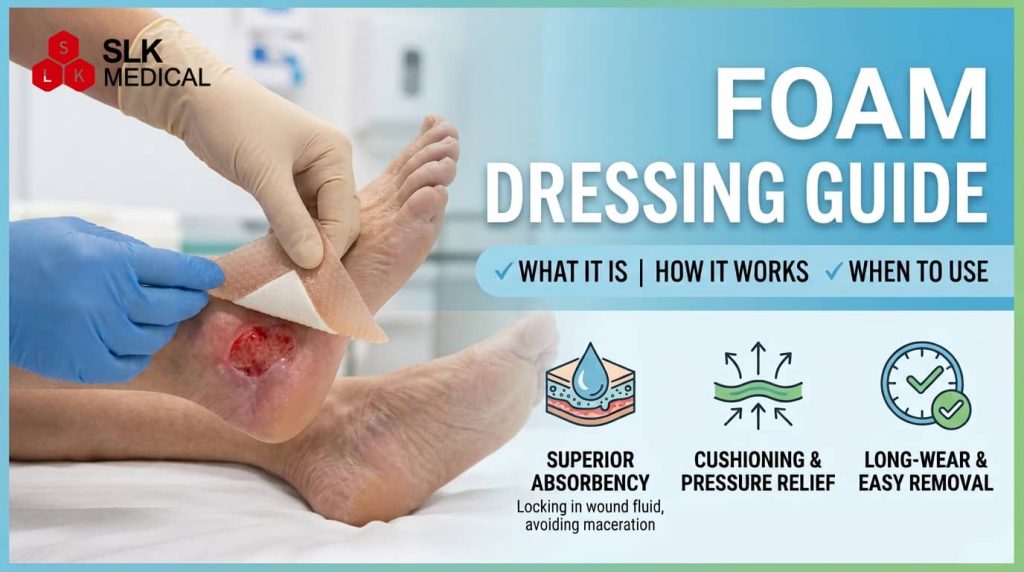
 According to a study by Winter et al. (1962), moist wounds heal twice as fast as dry wounds. Foam dressing is a modern wound dressing designed to manage wound exudate, maintain a moist wound‑healing environment, reduce pain, and help wound healing faster and safer.
Foam dressings are commonly considered for wounds with mild to heavy exudate, depending on the specific product design. They are available in different forms, including adhesive, non-adhesive, bordered, without-border, and border-flex dressings for areas such as the sacrum or heel.
However, foam dressings are not suitable for every wound. The right choice depends on factors such as exudate level, wound depth, location, surrounding skin condition, and the need for frequent wound assessment.
This guide explains what foam dressings are, how they work, when they may be useful, when another dressing may be more appropriate, and how to choose the right type.
Key Takeaways
- Foam dressings keep wounds moist, which helps them heal faster. Use them for wounds that leak moderate to heavy fluid.
- These dressings are soft and do not stick to wounds, making them easy and painless to remove. This reduces discomfort during dressing changes.
- Always match the dressing to the wound type. Foam dressings are not suitable for dry wounds or wounds with little fluid.
- Foam dressings protect wounds from germs and dirt, lowering the risk of infection. They can be used for various wounds, including pressure ulcers and surgical wounds.
- Follow proper application and removal steps to ensure the best results. Clean your hands, use gloves, and check the wound regularly.
Foam Dressing Basics

What Is a Foam Dressing
Back in 1962, Winter et al. published landmark research demonstrating that wounds kept in a moist environment heal twice as quickly as dry wounds. This key finding laid the foundation for modern wound care dressing technology. Foam dressings represent one such advanced solution: they effectively absorb wound exudate, preserve a favourable moist healing environment, ease patient pain, and support faster, safer wound recovery.
Foam dressings are soft pads used for wounds. They soak up fluid from the wound. This helps keep the wound moist. Moist wounds heal faster than dry ones. Foam dressings protect wounds from germs and dirt. They work best for wounds with lots of fluid.
Tip: Foam dressings do not stick to wounds. You can take them off with less pain. They do not harm new skin.
Structure and Materials
Foam dressings have a special design. Most use polyurethane foam. This foam absorbs lots of fluid. It also lets air move through. Air helps the wound stay healthy. Foam dressings do not have latex. People with latex allergies can use them. The pads are soft and bend easily. They fit under compression bandages. They feel good on your skin.
Here is a table showing the main parts and materials:
|
Component/Material |
Description |
|
High-Performance Polyurethane Foam |
Breathable, non-adherent, absorbs large amounts of fluid |
|
Natural Rubber Latex |
Absent from the dressing |
|
Soft, Conformable Pads |
Ideal for use under compression |
|
Recommended Use |
For moderate to heavily draining wounds |
Foam dressings have special features:
- The pores are 25 to 75 micrometers wide. This helps pull fluid away from the wound.
- The layer that absorbs fluid has cells between 100 and 350 micrometers. It soaks up fluid very well.
- Small, even pores keep tissue from sticking. This means less pain when you change the dressing.
- The dressing lets some moisture out. This keeps the wound from getting too wet.
Foam dressings in the United States and Europe must follow strict rules. Agencies like the FDA and EMA check them. These rules make sure foam dressings are safe and work well.
New foam dressings use polyurethane for more comfort. They control moisture better. Some have alginate from nature. Alginate helps absorb fluid and makes the dressing stronger. Some dressings have silver particles. Silver fights infection and gives extra protection.
How Does a Foam Dressing Work?
|
Function |
How It Works |
Why It Matters |
|
Absorbs Wound Exudate |
The foam layer absorbs wound fluid and draws it away from the wound surface. |
Helps manage exudate and reduce fluid accumulation. |
|
Maintains Moisture Balance |
Absorbs excess fluid while helping prevent the wound from becoming excessively dry. |
Supports an appropriate moist wound environment. |
|
Protects the Wound & Periwound Skin |
The dressing creates a physical barrier against external friction, contaminants, and excess moisture. |
Helps protect the wound and reduce irritation of surrounding skin. |
|
Provides Cushioning & Comfort |
The soft foam structure provides padding over the wound. |
Helps reduce friction and mechanical stress, particularly on pressure- or movement-prone areas. |
1. Absorbs Wound Exudate
Foam structures absorb fluid away from the wound surface.
2. Helps Maintain Moisture Balance
The goal is not to keep the wound “wet,” but to manage excess fluid while avoiding excessive drying.
3. Helps Protect the Wound and Periwound Skin
A properly selected dressing may help reduce exposure to external friction, contamination, and excess moisture.
4. Provides Cushioning and Comfort
Foam can provide padding, particularly on areas exposed to friction or pressure.
Real Clinical Case Study
A real‑world clinical cases help us better understand how silicone foam dressings work in complete wound care plans.
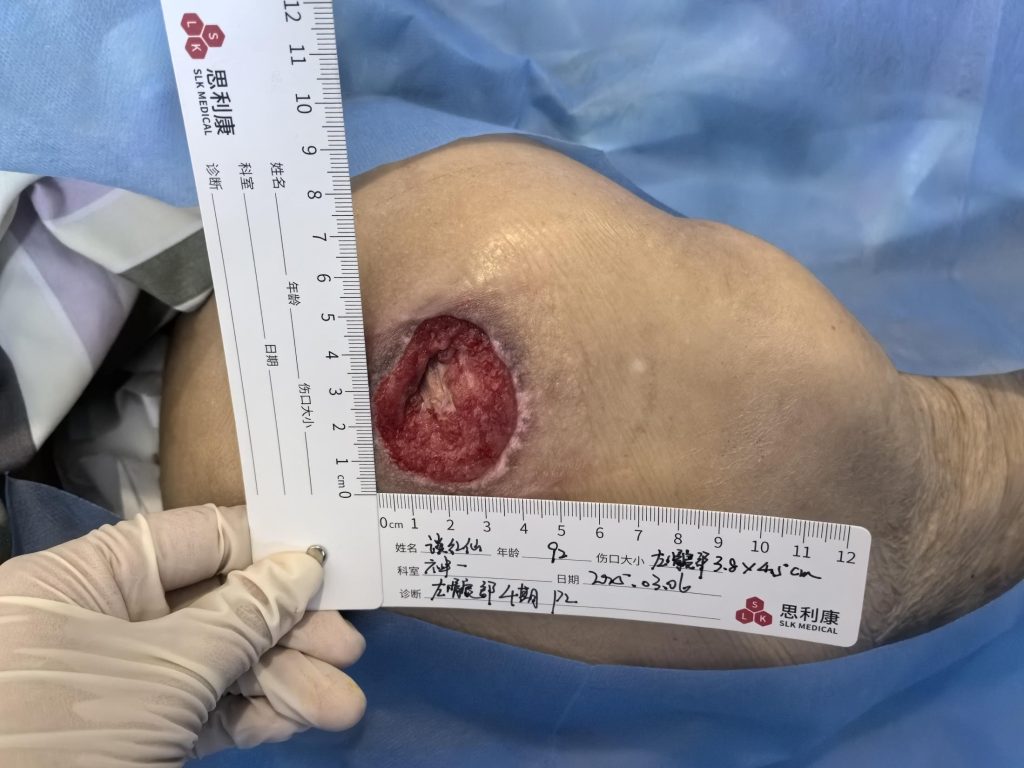
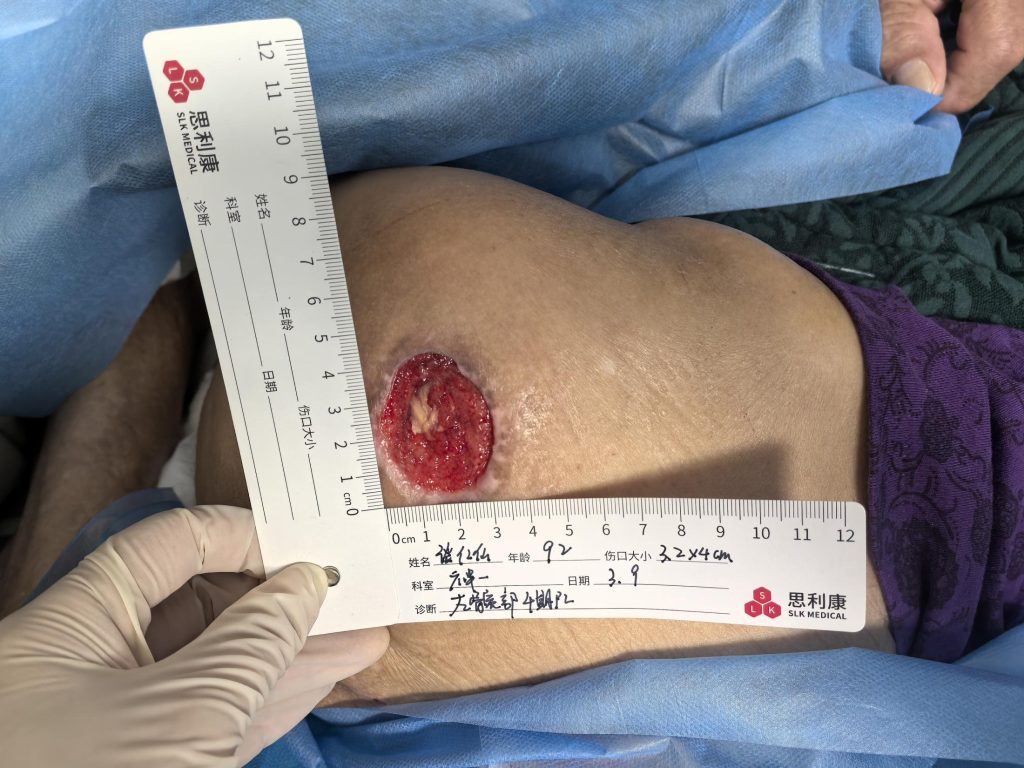
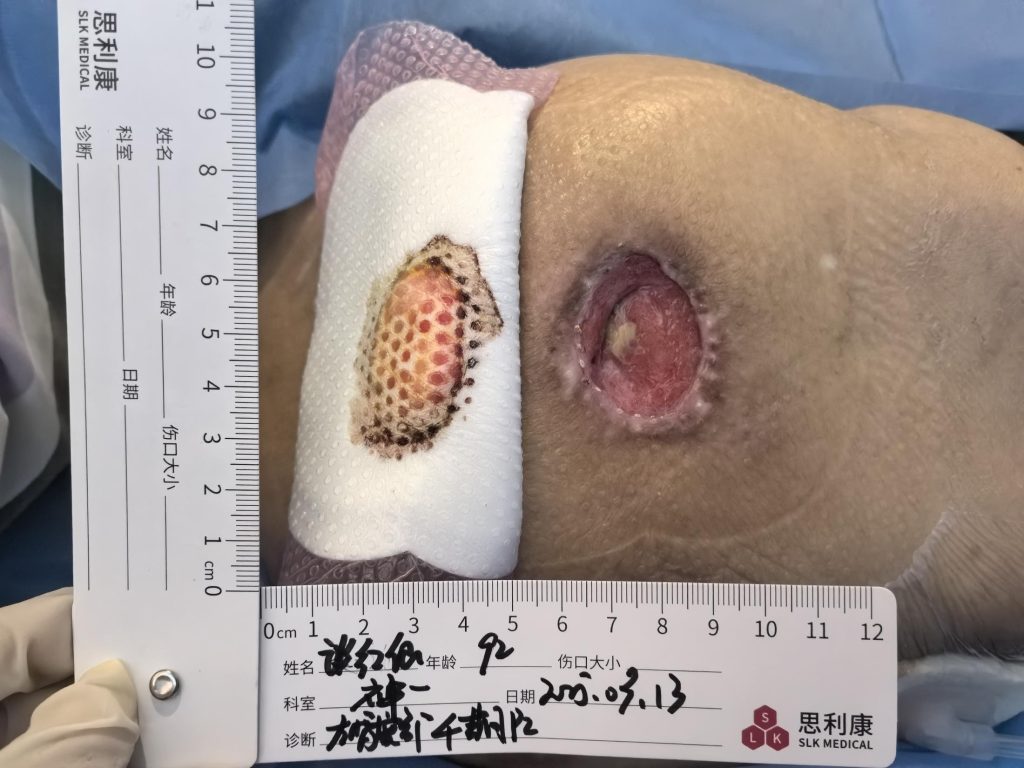
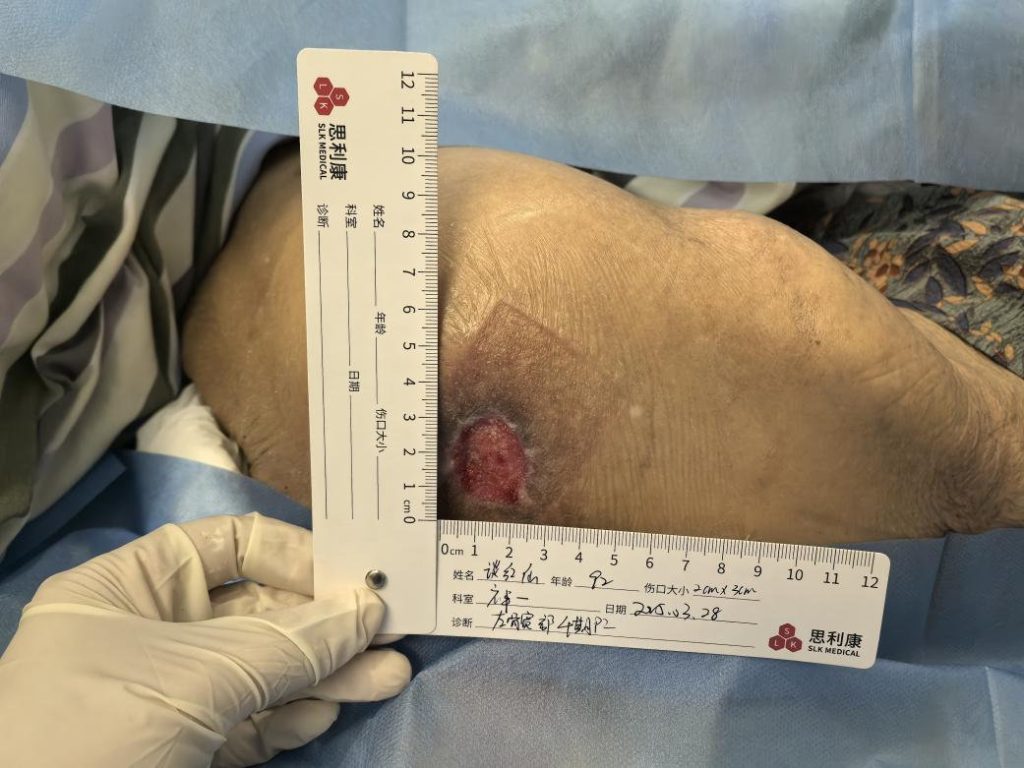
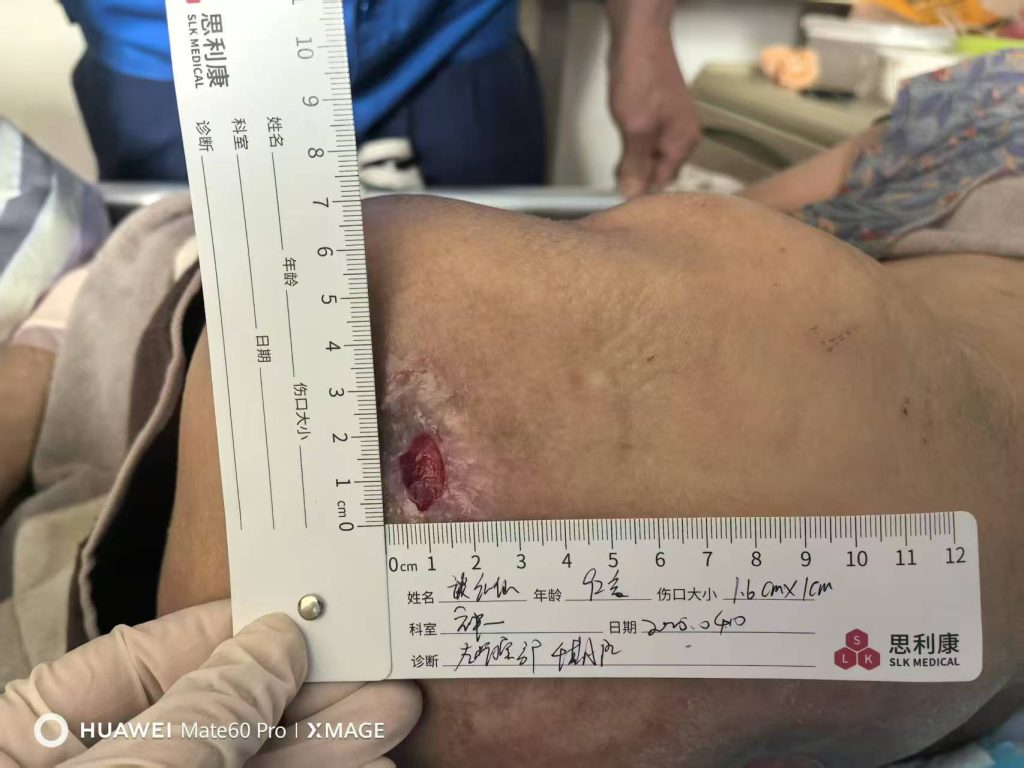
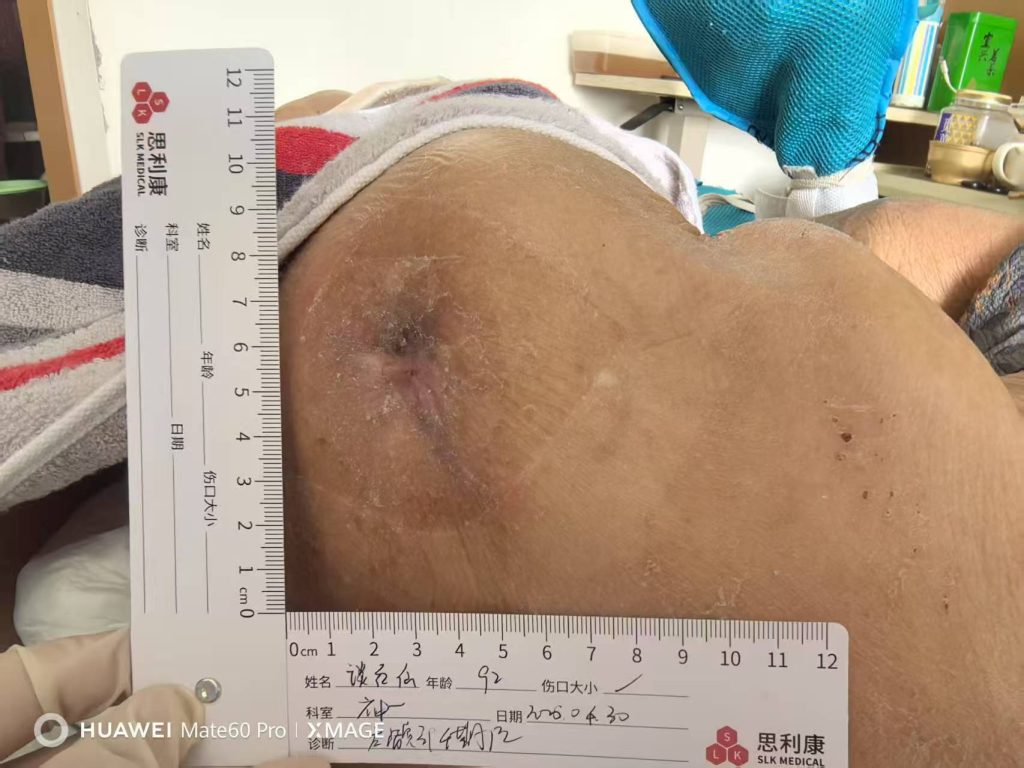
In one Stage IV pressure injury case involving the left hip, the wound initially presented with moderate exudate, approximately 25% slough and 75% granulation tissue, with no tunneling and no signs of periwound infection. Treatment included regular debridement, exudate management, and the use of a bordered silicone foam dressing to support a moist wound environment.
As the wound condition improved, the dressing change interval was gradually extended from 3 days to 4 days and then to 7 days. Progressive wound contraction and epithelialization were observed during treatment, with complete wound closure achieved at the final follow-up.
 |
 |
 |
 |
 |
 |
|---|---|---|---|---|---|
| Mar 6, Beginning | Mar 9,3 Days | Mar 13,7 Days | Mar 28,22 Days | Apr 10,35 Days | Apr 30,Healed |
| Outcome | Result |
|---|---|
| Initial Wound Stage | Stage IV Pressure Injury |
| Treatment Period | Mar 6 – Apr 30, 2025 (≈8 Weeks) |
| Dressing Wear Time | 3 Days → 4 Days → 7 Days |
| Exudate Management | Moderate exudate effectively controlled throughout treatment |
| Wound Progress | Continuous granulation, wound contraction, and epithelialization |
| Final Outcome | Complete Wound Healing |
What types of foam dressings are available?
Silicone foam dressings are available in different designs to meet different wound-care needs. The main differences relate to adhesion, border design, flexibility, absorbency, thickness, and how exudate is transferred or managed.
Choosing the right type depends on factors such as wound location, exudate level, skin condition, dressing fixation requirements, and whether the dressing needs to work with a secondary absorbent layer.
Silicone Foam Dressing Types
|
Type |
Key Features |
When It May Be Considered |
|
Adhesive / Bordered Silicone Foam
|
Silicone adhesive border helps secure the dressing in place |
When secure fixation and easier application are important |
|
Non-Bordered Silicone Foam
|
No adhesive border; flexible and adaptable |
When additional fixation is preferred or frequent inspection is needed |
|
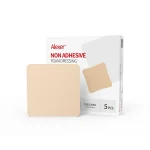
Non-Adhesive Foam Dressing
|
No adhesive contact with surrounding skin; requires secondary fixation |
Fragile or sensitive skin and wounds requiring flexible fixation |
|
Border Flex Silicone Foam
|
Flexible border designed to adapt to body movement and contours |
Joints, curved areas, and locations exposed to movement |
|
Lite Silicone Foam
|
Thinner, lightweight construction with a conformable profile |
Low-exuding wounds or areas where a thinner dressing is preferred |
|
Transfer Silicone Foam
|
Designed to transfer exudate to a secondary absorbent dressing |
Wounds requiring a separate high-capacity absorbent layer |
|
Composite Silicone Foam
|
Combines multiple functional layers for fluid management and protection |
When additional fluid management or protection is required |
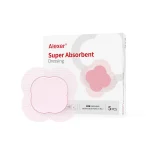
Explore Silicone Foam Dressing Options
- Silicone Foam Dressing with Border— for secure fixation
- Silicone Foam Dressing without Border— for flexible fixation
- Non-Adhesive Foam Dressing— for situations where adhesive fixation is not preferred
- Silicone Foam Dressing – Border Flex— for movement and body contours
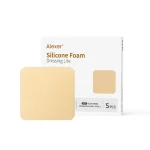
- Silicone Foam Dressing – Lite— for low-exuding wounds and a thinner profile
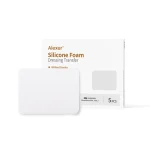
- Silicone Foam Dressing – Transfer— for use with a secondary absorbent dressing
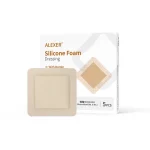
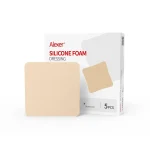
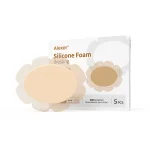
SLK Medical’s silicone foam range includes bordered and non-bordered designs as well as specialized Border Flex, Lite, Transfer, and non-adhesive options. The product range also includes anatomical designs such as sacral and heel dressings.
Adhesive / Bordered Silicone Foam Dressing
A bordered silicone foam dressing combines an absorbent foam layer with a silicone adhesive border. The border helps keep the dressing in position without requiring a separate fixation method in many situations.
It may be considered when:
- Dressing displacement is a concern
- The wound is located in a high-movement area
- Easy application is important
- A self-securing dressing is preferred
The silicone contact layer is designed to provide gentle contact with the wound and surrounding skin.
Non-Bordered Silicone Foam Dressing
Without a surrounding adhesive border, this type can be positioned and secured according to the wound location and clinical requirements.
It may be useful when:
- The surrounding skin is fragile or sensitive
- A secondary fixation method is preferred
- The dressing needs to be inspected or repositioned frequently
- The wound has an irregular shape
SLK Medical’s non-bordered silicone foam is designed for moderate-to-high exuding wounds and is available in multiple sizes.
Non-Adhesive Foam Dressing
Non-adhesive foam dressings do not attach directly to the surrounding skin and generally require a secondary dressing, retention bandage, or other fixation method.
They can be considered when:
- Skin sensitivity is a concern
- Adhesive contact should be minimized
- Flexible fixation is preferred
- The dressing needs to be cut or adapted to the wound shape
SLK Medical’s non-adhesive foam dressing is designed for moderate-to-high exudate and can be cut to size for difficult-to-dress areas.
Border Flex Silicone Foam Dressing
Border Flex dressings are designed to provide more flexibility around body contours and areas exposed to movement. Indicated for moderately to heavily exuding wounds, such as diabetic foot ulcers, venous leg ulcers, pressure injuries, skin tears, and traumatic wounds.
SLK Medical core advantage applications include:
- Five layer construction with Flex Technology in the absorbent layer.
- Enables 360° stretch, for improved stay-on-ability and conformability.
- Silicone gel brings less painful when dress changing and reduces risk of maceration.
This design is particularly useful when conformability and fixation need to work together.
Lite Silicone Foam Dressing
Lite foam dressings use a thinner structure to provide a softer, more conformable dressing profile.
SLK Medical describes its Lite silicone foam as intended for low-exuding acute and chronic wounds, with a thin profile that can be cut to size.
Transfer Silicone Foam Dressing
A transfer dressing is designed to allow wound exudate to pass through to a secondary absorbent layer rather than functioning as the primary high-capacity absorbent dressing.
This type may be useful when:
- A high-capacity secondary dressing is required
- The wound needs a gentle contact interface
- Dressing changes require flexibility
- The clinical protocol uses a two-layer dressing system
Composite Silicone Foam Dressing
Composite foam dressings integrate multiple functional layers into one dressing system. Depending on the specific design, these layers may include a protective backing, absorbent components, fluid distribution layers, and a silicone wound-contact layer.
This type can be considered when users want to combine:
- Exudate absorption
- Fluid distribution
- Wound protection
- Gentle wound contact
When to Use Foam Dressings
You want to choose the right wound dressing selection for each type of wound. Foam dressings work best for wounds that leak moderate to large amounts of fluid. These dressings help keep the wound moist, which supports faster wound healing. You can use foam dressings for many different wounds. Clinical guidelines recommend them for wounds that need moisture control and protection.
Here are some common wounds where you can use foam dressings:
|
Wound Situation |
Is Foam Commonly Considered? |
Why |
|
Moderate exudate |
Often |
Helps manage excess fluid |
|
Higher exudate |
Product-dependent |
Higher-absorbency foam may be needed |
|
Pressure injuries |
Often |
Fluid management and cushioning may be useful |
|
Surgical wounds |
Case-dependent |
Depends on incision condition and drainage |
|
Skin tears |
Often considered |
Gentle removal may be important |
|
Venous leg ulcers |
Often |
Frequently used as part of a broader care plan |
|
Diabetic foot ulcers |
Case-dependent |
Requires overall wound assessment and offloading |
|
Heel wounds |
Often |
Shaped dressings may improve fit |
Tip: Always match the wound dressing selection to the amount of fluid the wound produces. Foam dressings work best when the wound is moist but not dry.
When Not to Use
You need to know when foam dressings are not the right choice. Some wounds do not need extra moisture or absorbency. If you use a foam dressing on a dry wound, it can make the wound even drier. This slows down healing and may damage new tissue. You should avoid foam dressings on wounds with little or no fluid.
Here is a table showing when you should not use foam dressings:
|
Source |
Contraindications |
|
Wound Source |
Foam dressings are contraindicated on third-degree burns, necrotic tissue, or wounds without drainage. |
|
AHP Network |
Contraindicated in dry eschar, third degree burns. Not indicated for dry wounds, may macerate periwound. |
|
WCEI Blog |
Contraindications of foam wound care dressings include dry wounds, third degree or full thickness burns, and sinus tracts. |
You should not use foam dressings on:
- Dry wounds or wounds with minimal exudate
- Third-degree or full-thickness burns
- Dry eschar or dead tissue
- Sinus tracts or deep tunnels
If you use a foam dressing on these wounds, you may slow healing or cause harm. Always check the wound before choosing your wound dressing selection. If you are not sure, ask a healthcare professional for advice.
Note: The right wound dressing selection helps your wound heal faster and keeps you comfortable. Using the wrong dressing can delay healing or cause problems.
FAQ
What is the main difference between foam dressings and negative pressure wound therapy?
Foam dressings soak up fluid and protect wounds. Negative pressure wound therapy uses suction to pull fluid out. Hospitals use negative pressure wound therapy for deep wounds. Foam dressings are good for wounds with lots of fluid.
How long can a foam dressing stay on?
Most silicone foam dressings can remain in place for 3–7 days. However, the exact time depends on wound exudate, wound location, dressing saturation.You need to think about your wound type, how much fluid comes out, and how your wound is healing. Check your silicone foam dressing often.
Can foam dressing be used on infected wounds?
Yes, but under strict conditions. Non‑antimicrobial foam dressings are not first‑line for active infection and require wound debridement before application. Their moist occlusive nature may cause bacterial overgrowth without proper hygiene. Silver silicone foam dressings can be applied post‑debridement under clinical supervision. They maintain a clean, moist wound environment to promote healing, with systemic antibiotics used as needed.
Can foam dressings be used for pressure ulcers?
Yes, they are among the most effective options. Foam dressings work well for Stage 2‑4 pressure ulcers with moderate to heavy exudate. They absorb excess drainage, prevent skin maceration, and offer cushioning against friction and shear forces.
What is the difference between a silicone foam and a standard adhesive foam?
Silicone foam uses a gentle, medical-grade silicone contact layer that adheres lightly to dry surrounding skin without sticking to the moist wound bed—ensuring pain-free removal without tearing fragile or aging skin.
What is the difference between foam dressing、hydrocolloid and alginate?
- Foam dressings suit moderate‑to‑heavy exudate wounds. They absorb exudate, prevent maceration and offer cushioning against friction and shear.
- Hydrocolloid dressings are for low‑to‑moderate exudate wounds. They form a gel to create a moist healing environment and need no frequent changing.
- Alginate dressings are ideal for heavy‑to‑high exudate wounds. They turn into gel upon absorbing fluid, highly absorbent but require a secondary outer dressing.
Here is difference Between Foam Dressing, Hydrocolloid Dressing and Alginate Dressing.