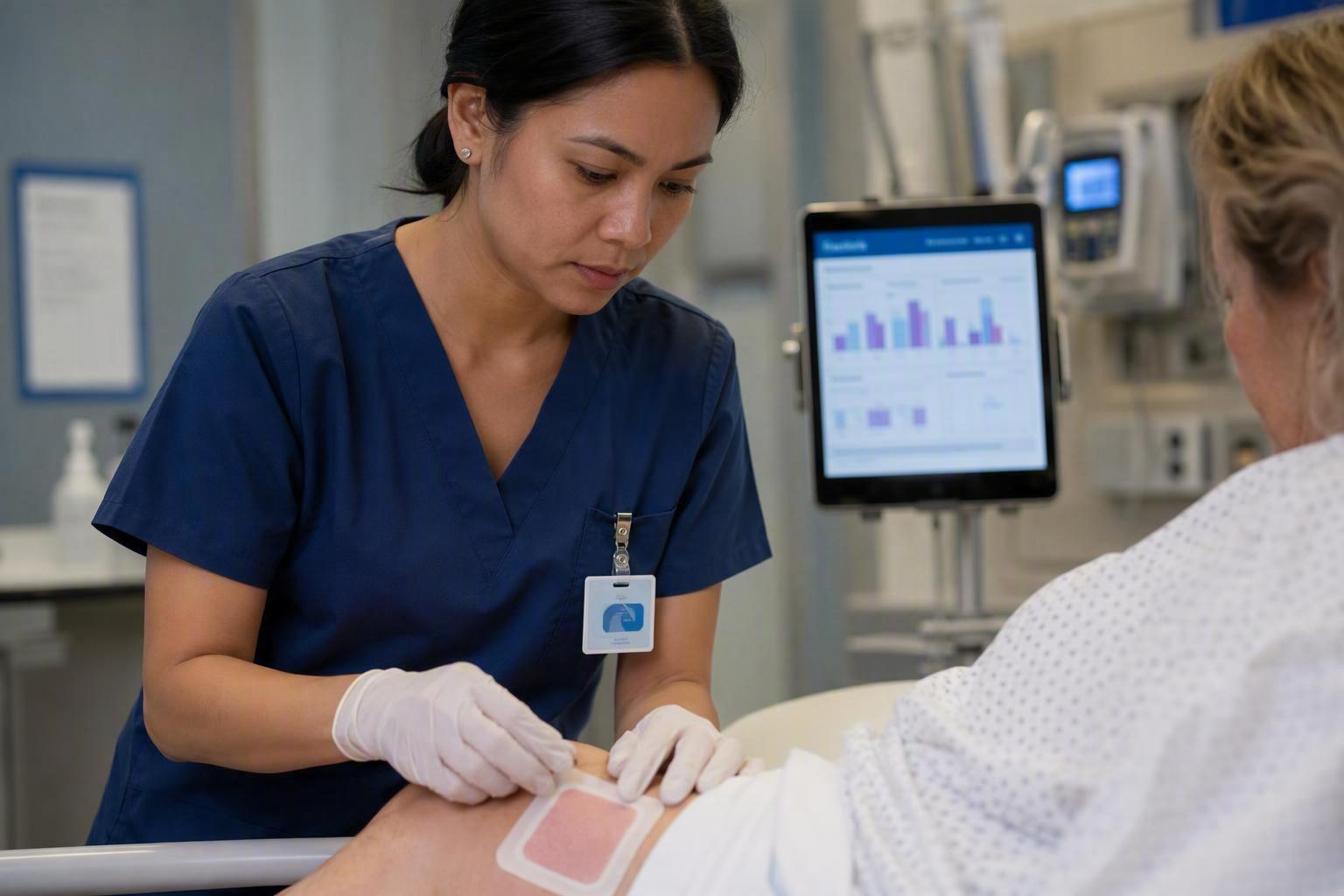
Generally, a silicone foam dressing can be left on a wound for 3 to 7 days. The exact duration depends on the wound type, exudate (fluid) volume, and clinical care goals.
However, the exact time depends on your wound type and how much fluid it produces (wound exudate), wound location, dressing saturation, and your healthcare provider’s recommendations. The dressing should be changed immediately if it becomes saturated, leaks, or shows signs of lifting or infection.
You should check your dressing often and follow advice from your healthcare provider for safe and effective wound care.
| Wound Type | Typical Wear Time |
|---|---|
| Pressure ulcer | 3–7 days |
| Diabetic foot ulcer | 2–5 days |
| Venous leg ulcer | 3–5 days |
| Surgical incision | 5–7 days |
| Burn | Depends on exudate |
Quick Answer
Recommended wear time:
✓ 3–7 daysChange sooner if:
• Dressing is saturated
• Leakage occurs
• Adhesive lifts
• Signs of infection appear
• Clinician recommends replacement
Key Takeaways
-
Leave silicone foam dressings on for three to seven days. Depends on wound exudate, wound location, dressing saturation.
-
Look at your dressing often for leaks, swelling, or redness. This makes sure you are taking good care of it.
-
Listen to your healthcare provider about changing dressings. Follow their advice for wound care.
Silicone foam dressing duration
Recommended wear time
You can keep a silicone foam dressing on for three to seven days. This time helps your wound heal well and controls fluid. Most foam dressings, like Kliniderm foam silicone dressings, can stay on for up to seven days. Always listen to your healthcare provider and follow their advice. Using the right wear time gives better protection, lowers infection risk, and makes you more comfortable. If you see leaking, swelling, or edges peeling, you should change the dressing soon. These signs mean the foam dressing is not working right anymore.
Factors Affecting Foam Dressing Wear Time
You need to think about your wound type, how much fluid comes out, and how your wound is healing. Acute wounds and chronic wounds may need different change times, but most advice does not give separate times. Rather than changing dressings on a fixed schedule, you should regularly assess the wound to determine the appropriate replacement time. Several key factors influence how long a foam dressing can safely and effectively remain in place.
| Factor | How It Affects Wear Time | Clinical Recommendation |
|---|---|---|
| Exudate Volume | Wounds with heavy exudate saturate the dressing more quickly, reducing its absorption capacity and increasing the risk of leakage or periwound maceration. | Change the dressing as soon as it becomes saturated. Heavy-draining wounds may require replacement every 1–3 days, while light to moderate exudate may allow wear for 3–7 days. |
| Wound Location | Areas exposed to frequent movement, friction, or pressure—such as the heel, sacrum, elbow, or hip—can cause dressings to loosen or lift prematurely. | Inspect dressings on high-motion or high-pressure areas daily and replace them if the edges curl, leak, or lose adhesion. |
| Infection Status | Infected wounds often produce more exudate and require closer monitoring. Frequent wound assessment is essential to evaluate treatment response. | Follow the clinician’s treatment plan. Dressings may need more frequent changes, particularly when antimicrobial therapy or debridement is required. |
| Dressing Size and Fit | A dressing that is too small may not adequately absorb exudate or protect the surrounding skin, while poor adhesion can shorten wear time. | Choose a dressing that extends 2–3 cm (approximately 1 inch) beyond the wound margins and conforms securely to the anatomical site. |
| Patient Mobility | Frequent movement, repositioning, or joint motion can increase shear forces and reduce dressing adhesion. | Use anatomically shaped or bordered silicone foam dressings for highly mobile patients and inspect the dressing regularly. |
| Compression Therapy | Compression bandages used for venous leg ulcers can increase fluid movement into the dressing, affecting its wear time. | Select foam dressings designed for use under compression and monitor saturation closely during treatment. |
| Periwound Skin Condition | Fragile, moist, or damaged surrounding skin may reduce adhesive performance and increase the likelihood of dressing failure. | Protect the periwound skin with barrier products when appropriate and use gentle silicone adhesive dressings for fragile skin. |
| Temperature and Humidity | Warm environments, excessive perspiration, or high humidity may weaken adhesion and increase moisture accumulation beneath the dressing. | Inspect the dressing more frequently in hot or humid conditions and replace it if adhesion is compromised. |
Clinical Tip: Wear time should always be based on wound assessment rather than a fixed schedule. While many silicone foam dressings are designed to remain in place for up to 7 days, factors such as exudate level, dressing integrity, and wound condition ultimately determine the appropriate replacement interval.
Checking the dressing before changing
You should check your silicone foam dressing often. Lift one corner gently and look for redness, swelling, or bad smell. These are signs you need to change the dressing. Healthcare workers say you should check the dressing often to make sure you change it at the right time and care for your wound well. Follow all steps for putting on and watching your dressing. The steps include taking off the old foam dressing, cleaning the wound, and putting on a new one. Write down what you do and follow all rules for safe dressing changes. Foam dressings work best when you follow the advice and change them as told.
| What to Check | What It May Indicate | Recommended Action |
|---|---|---|
| Leakage | The dressing has reached its absorption capacity, allowing exudate to escape and increasing the risk of periwound maceration. | Replace the dressing immediately and consider using a higher-absorbency foam dressing if heavy exudate persists. |
| Dressing Edges Curl or Lift | Loss of adhesion may expose the wound to external contaminants and reduce the dressing’s protective function. | Apply a new dressing to restore a secure seal and protect the wound from friction and bacteria. |
| Unpleasant Odor Develops | Odor may result from accumulated exudate or indicate bacterial colonization or infection, particularly if accompanied by other clinical signs. | Remove the dressing, assess the wound, cleanse as appropriate, and seek clinical evaluation if infection is suspected. |
| Increased Pain | New or worsening pain may indicate pressure, infection, dressing failure, or deterioration of the wound. | Reassess both the wound and dressing. Change the dressing if clinically indicated and investigate the underlying cause. |
| Excess Exudate | The wound is producing more fluid than the dressing can effectively manage, increasing the risk of leakage and skin maceration. | Change the dressing sooner and consider a more absorbent dressing or a shorter wear time. |
| Signs of Infection | Increased redness, swelling, warmth, purulent drainage, or fever may indicate local or systemic infection. | Remove the dressing, perform a full wound assessment, and follow appropriate infection management protocols. Medical evaluation may be required. |
Case Study: Stage IV Pressure Injury Managed with Silicone Foam Dressing
- Current manufacturer recommendations generally support wear times of up to 7 days, depending on exudate level and dressing integrity.
- Foam dressings should be assessed regularly and changed earlier if saturated or compromised.
- Wear time should always be individualized based on wound assessment rather than a fixed schedule.
Patient & Wound Assessment
| Item | Details |
|---|---|
| Pressure Ulcer Stage | Stage 4 |
| Location | Left hip |
| Initial Condition | 25% slough + 75% red granulation |
| Exudate | Moderate, sanguinopurulent |
| Dressing Used | Silicone foam dressing |
| Total Treatment Duration | Approx. 55 days (Mar 6 – Apr 30) |
| Outcome | Fully healed |
Treatment Timeline
| Treatment Stage | Clinical Photo | Date | Clinical Findings | Dressing Wear Time |
|---|---|---|---|---|
| Initial Assessment | 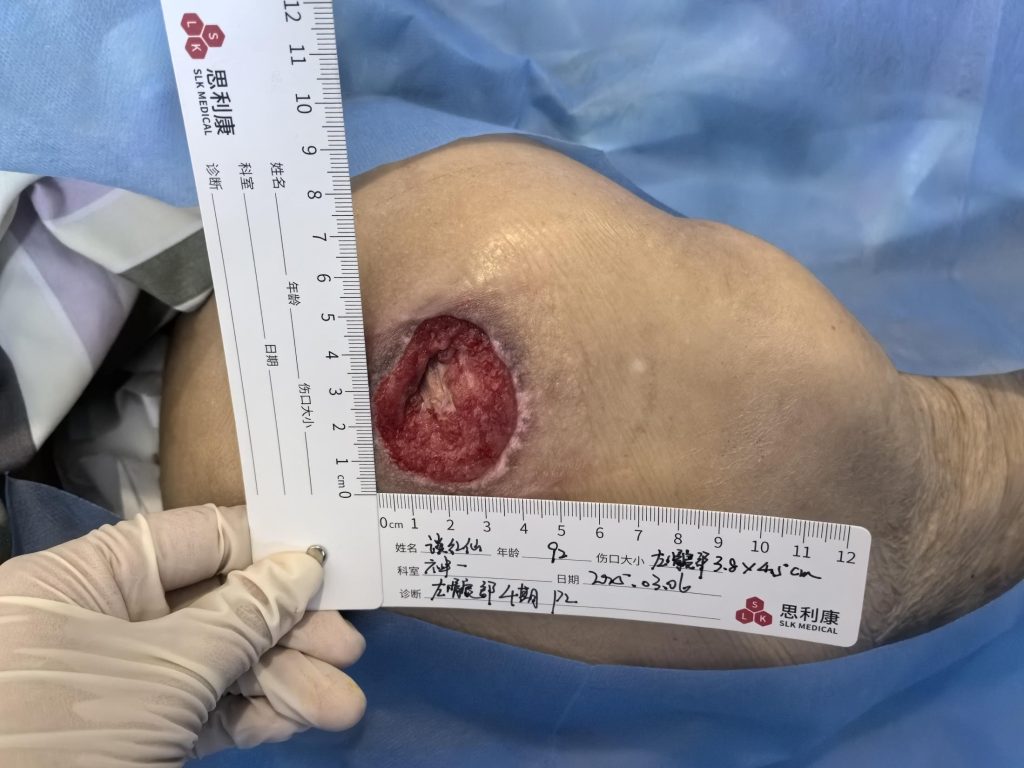 |
Mar 6, 2025 | Stage IV pressure injury after debridement. Moderate seropurulent exudate, 25% slough, 75% healthy granulation tissue. Silicone foam dressing applied to manage exudate and maintain a moist wound environment. | Initial Application |
| First Dressing Change | 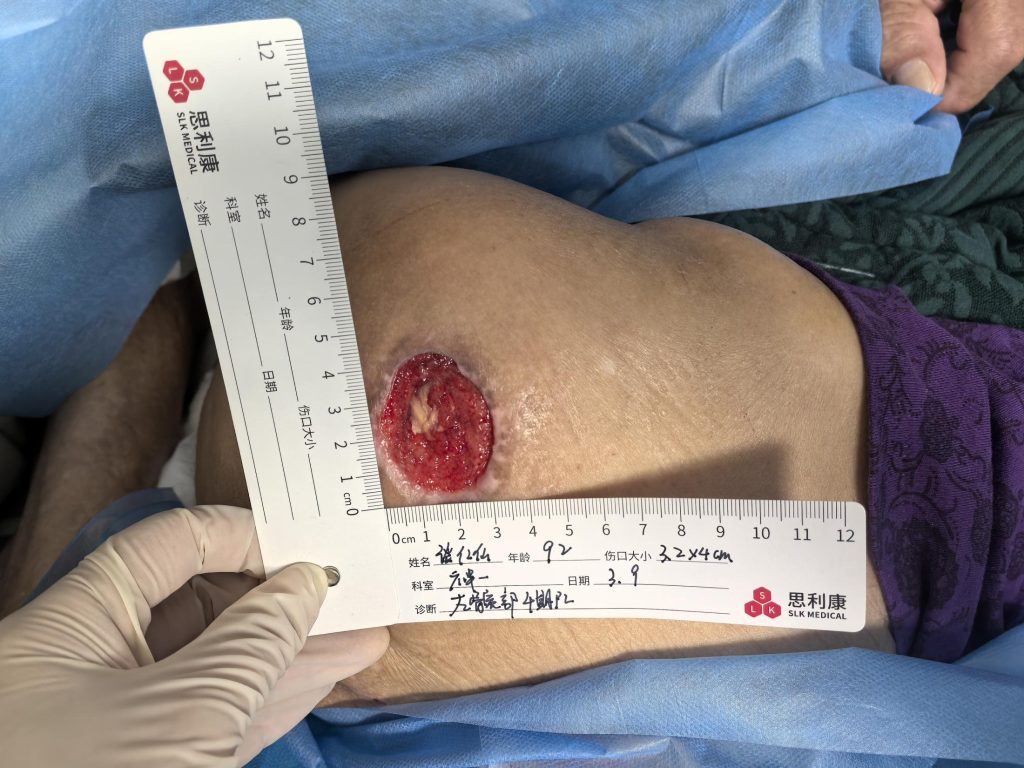 |
Mar 9, 2025 | Healthy granulation tissue increased. Exudate effectively controlled. Continued debridement followed by a new silicone foam dressing. | 3 Days |
| Second Dressing Change | 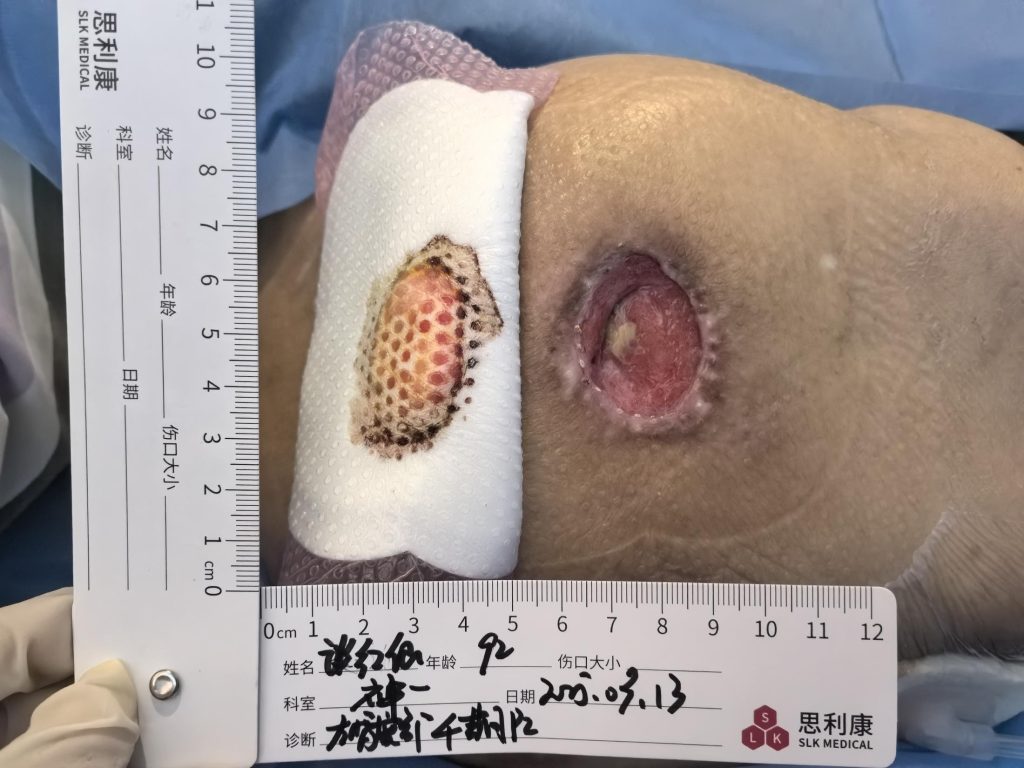 |
Mar 13, 2025 | Wound bed cleaner with further granulation. Reduced slough and stable periwound skin. Dressing reapplied after routine debridement. | 4 Days |
| Mid-Treatment Progress | 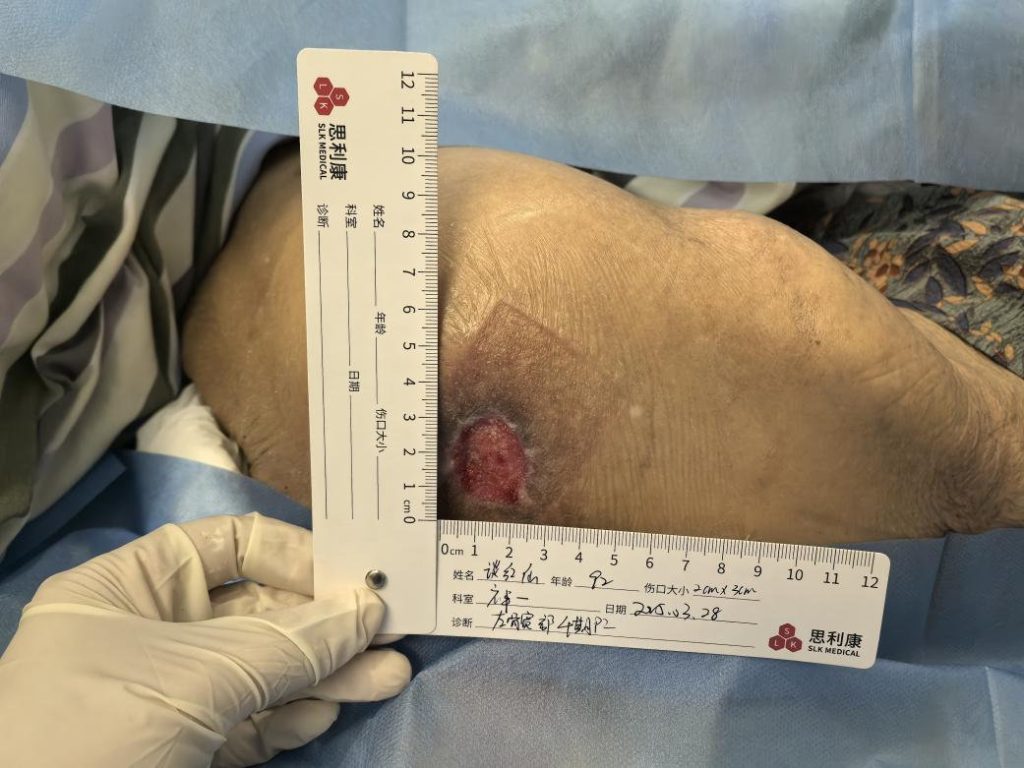 |
Mar 28, 2025 | Wound dimensions noticeably reduced. Granulation tissue continued to mature with decreasing exudate. | Ongoing Treatment |
| Late Healing Stage | 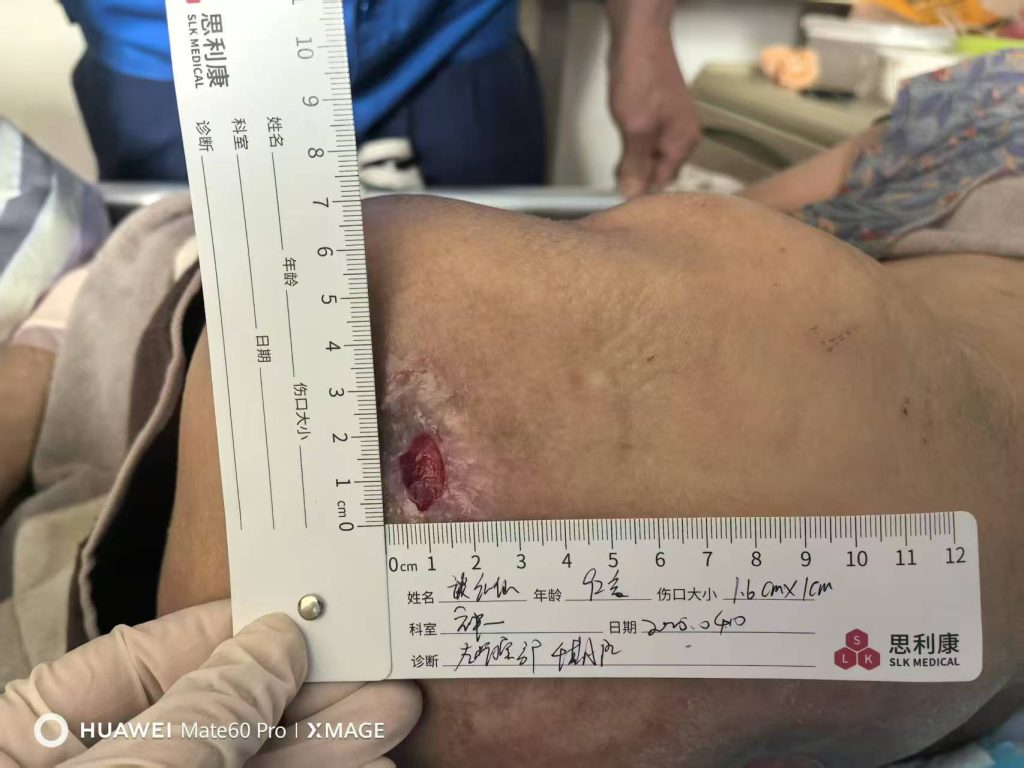 |
Apr 10, 2025 | Significant wound contraction and epithelial migration observed. Dressing wear time safely extended as exudate decreased. | 7 Days |
| Clinical Healing | 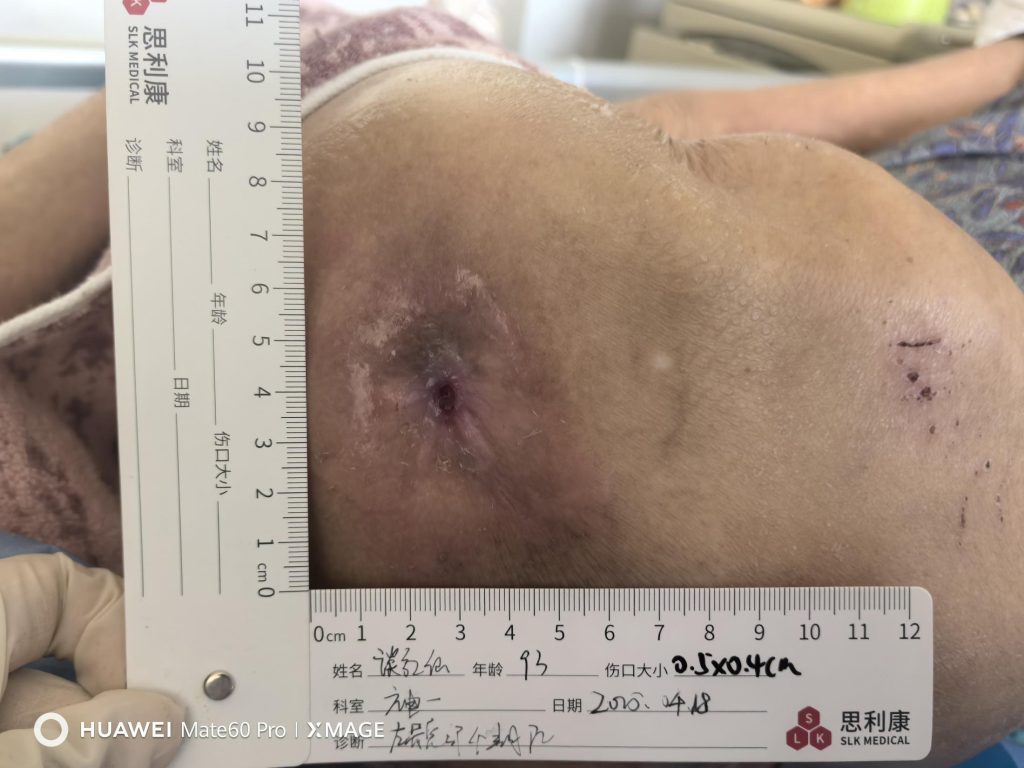 |
Apr 18, 2025 | Complete epithelialization achieved. No signs of infection. Surrounding skin remained healthy and intact. | 7 Days |
| Final Follow-up | 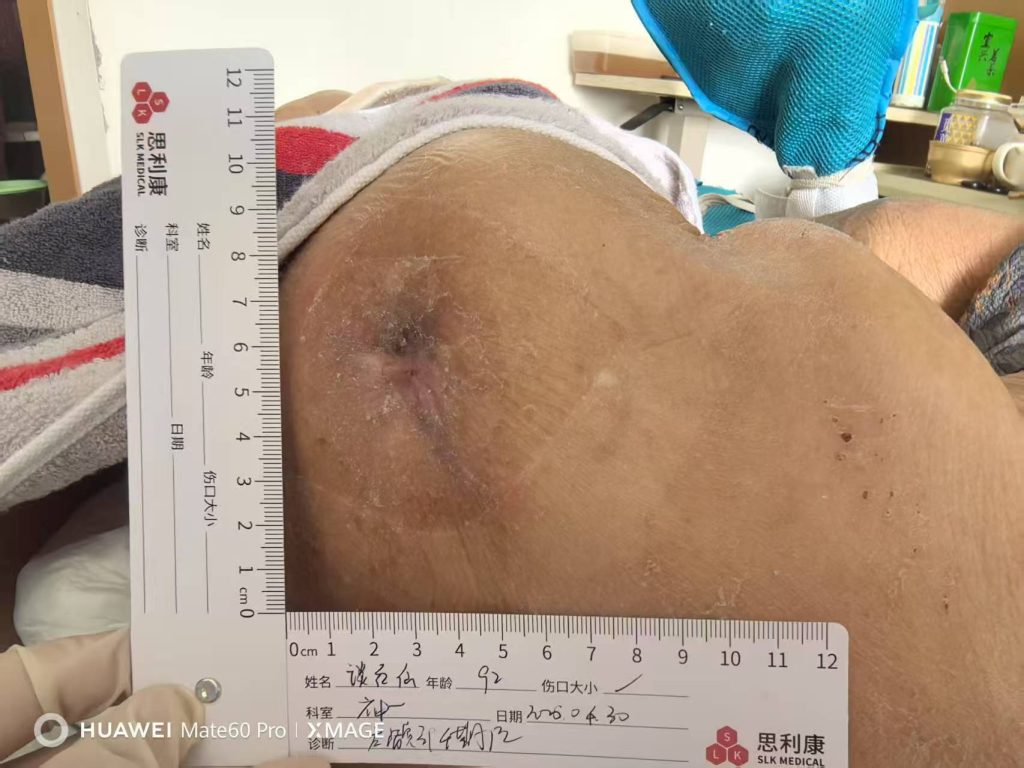 |
Apr 30, 2025 | Complete wound closure. Skin fully healed with no visible open wound. | Treatment Completed |
Recommended Brand: SLK Medical Silicone Foam Dressings
About SLK Medical
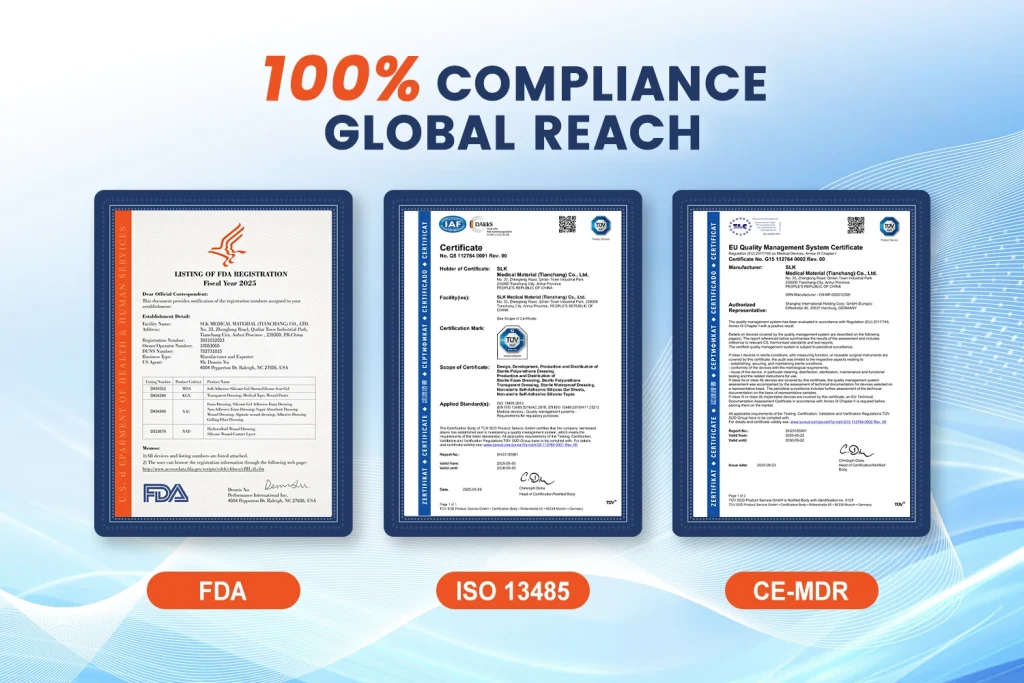
It is important to pick a trusted company for foam dressings. SLK Medical began in 2018. They make foam dressings for sensitive skin and chronic wounds. Their factory is modern and has FDA and ISO 13485 certificates. You can feel safe using their products. Here is a table showing how many dressings they make:
| Capability | What It Means for Your Business |
|---|---|
| In-House Core Technologies | Proprietary silicone coating, precision perforation, and polyurethane foaming technologies ensure consistent product performance, superior absorbency, and reliable quality across every production batch. |
| Global Compliance | Certified to ISO 13485, FDA, and CE standards. Manufacturing facilities are also audited under C-TPAT security protocols and BSCI social compliance standards, supporting global market access. |
| Stable Production Capacity | Automated production lines with a monthly capacity of 10 million dressings provide a stable and scalable supply chain for distributors, hospitals, and OEM partners. |
| Fast Lead Time | Standard bulk orders are delivered within 30 days, helping customers reduce inventory pressure and improve supply chain efficiency. |
| OEM & Customization Support | Comprehensive OEM/ODM services, including private labeling, customized sizes, packaging, and complimentary samples for product evaluation. |
| EO Sterilization Capability | In-house Ethylene Oxide (EO) sterilization ensures products meet stringent international medical safety and regulatory requirements for sterile wound care products. |
| Expanding Global Manufacturing | A new manufacturing facility in Cambodia is under renovation and is expected to be operational by the end of the year, enhancing production flexibility and global supply resilience. Factory visits are welcome upon completion. |
Key Features of SLK Silicone Foam Dressings
SLK Medical uses D-Pore® dual-dimensional pore technology. This design helps soak up fluid and lets air move through. It also spreads pressure on your wound. You will feel more comfortable and protected. The foam dressing works for wounds with medium or lots of fluid. You can use it on sensitive skin. If you need help putting on or taking off the foam dressing, ask your healthcare provider. The foam dressing stays in place and keeps your wound safe.
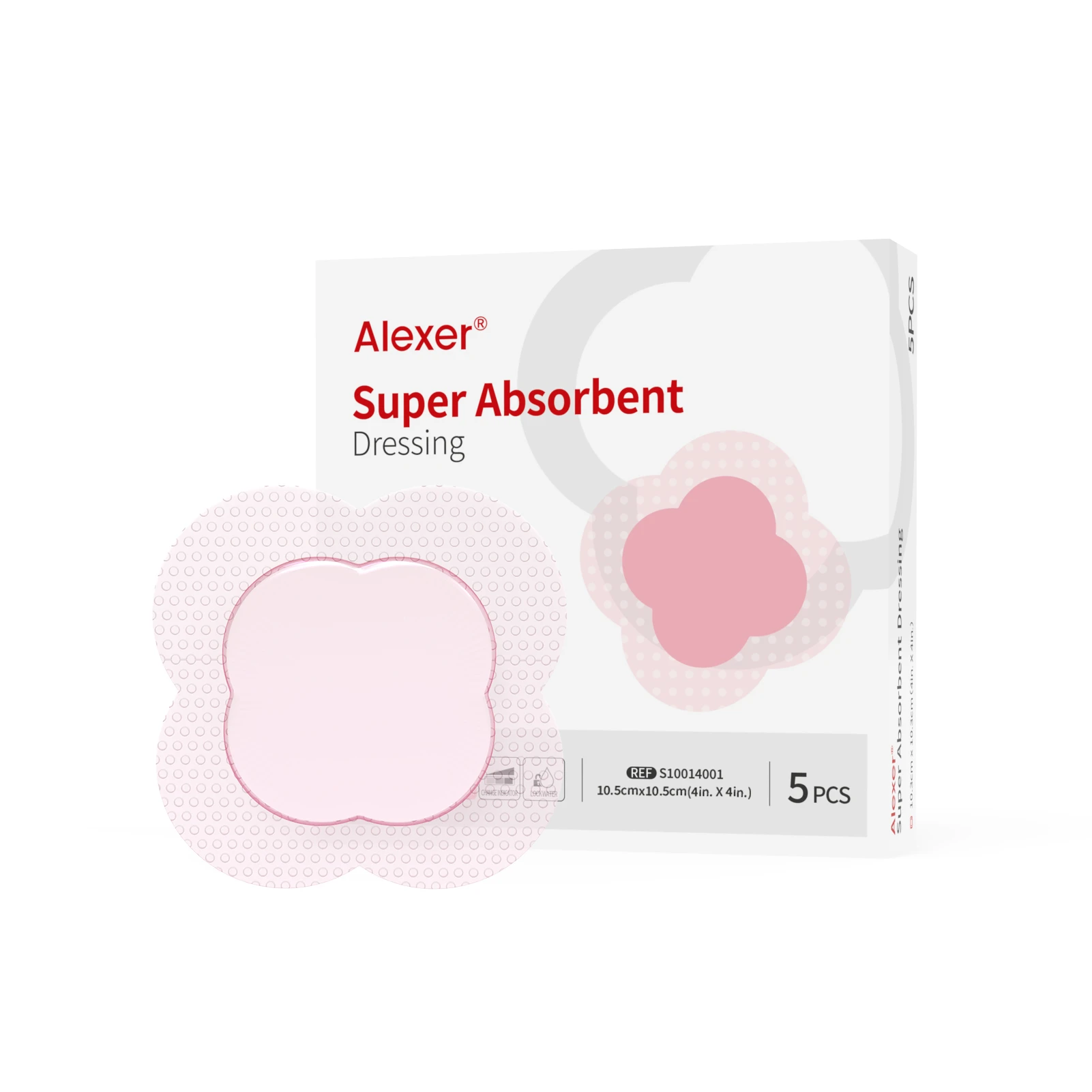
Recommended Product: Alexer® Silicone Foam Dressing

Silicone foam dressing border is designed for a wide range of exuding wounds such as pressure ulcers, leg and foot ulcers, traumatic wounds, surgical wounds and skin tears. The dressing may also be used as part of a prophylactic therapy to help prevent pressure ulcers. It is used to cover and care chronic and non-chronic wounds with exudate.
Alexer® Silicone Foam Dressing from SLK Medical gives strong absorption and protects your skin. You can use this foam dressing for wounds with medium or lots of fluid. If you would like to know details including dressing manufacturing process, production lead time, complete qualification certifications, minimum order quantity (MOQ), delivery lead time and transit time, etc. You can learn more at www.slkmedical.com.
Good dressing care helps wound heal faster and safe.
FAQ
How do you know when to change a silicone foam dressing?
You should change the dressing if you see leaks, peeling edges, or redness. Always check your wound and follow your healthcare provider’s advice.
Can you customize foam dressings for pressure ulcers under our own brand?
Yes. We support full OEM & ODM services, including custom wound dressing sizes, packaging design and private label printing to match your market demands.
What is your production process for foam dressings?
Our workflow covers raw material inspection, foam cutting, silicone/adhesive lamination, sterile converting, EO sterilization, quality testing and final packaging. Full process records are available for audit.
Can we adjust product formula/wound contact layer?
Yes, we have different wound contact layers, such as soft silicone with border/borderless and non‑adherent.
What certifications do your foam dressings hold?
We have complete regulatory qualifications such as CE MDR, ISO13485, FDA and domestic medical device registration certificates. All test reports are available for your review.
Can you provide documents for our local registration?
We can supply manufacturing files, sterilization records, technical documentation and clinical data to support your product registration overseas.
What is the minimum order quantity (MOQ) for OEM/ODM orders?
MOQ varies by specification and packaging type. We have Stable Production Capacity: Monthly capacity of 10 million units guarantees reliable supply.