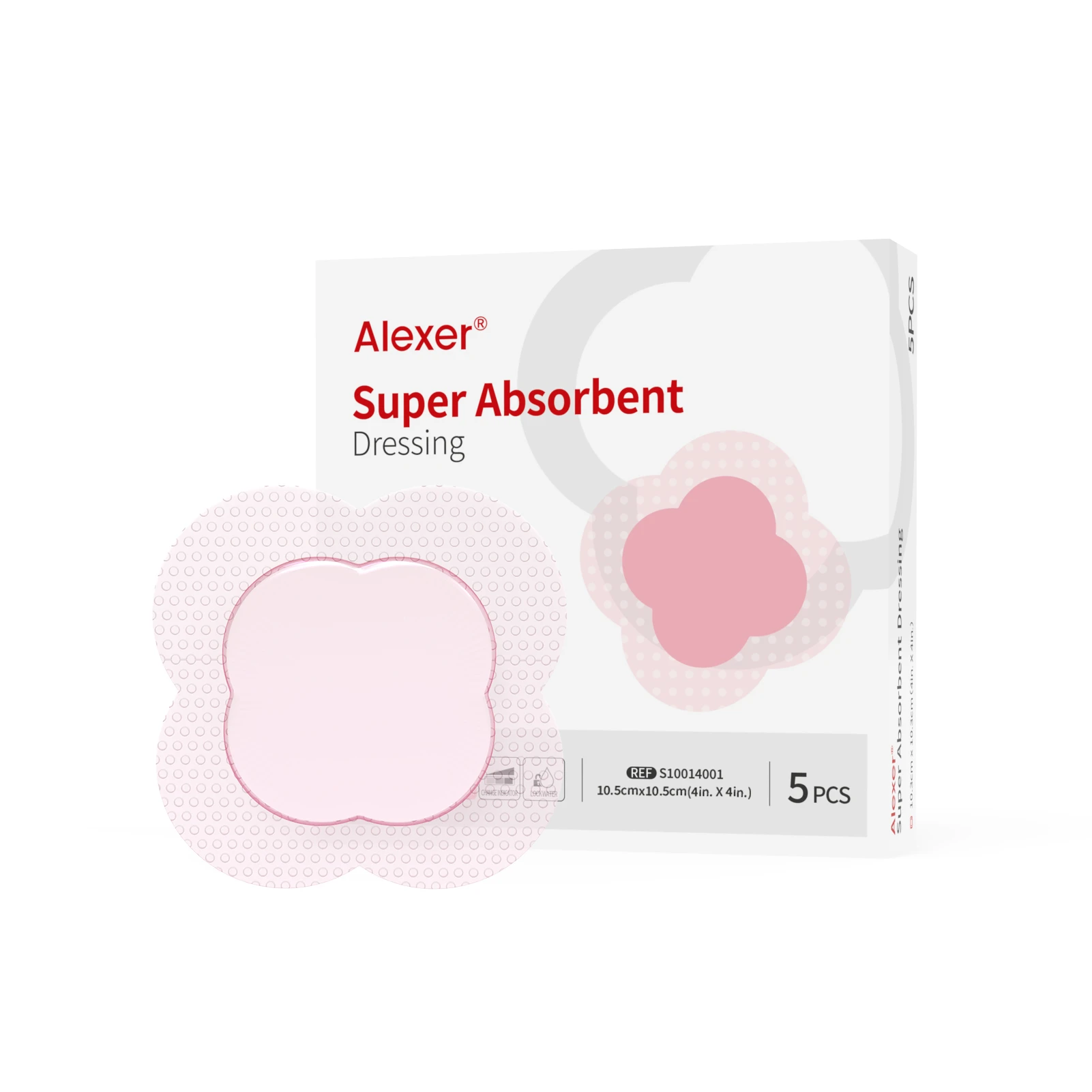
If you’re shortlisting a bordered silicone foam dressing for moderate–high exudate wounds, you likely care about three things: gentle, pain‑minimized removal that protects fragile skin; reliable exudate handling that curbs maceration; and borders that resist edge lift on mobile sites. This guide compares leading options, explains where each excels, and maps choices to common clinical scenarios.
We compared products using publicly available manufacturer specifications, reputable directories, and distributor listings, then applied transparent criteria and real‑world procurement considerations: absorption and fluid‑lock, adhesion stability, MARSI risk reduction, wear time, antimicrobial (Ag) availability, portfolio breadth/OEM, and total cost of care. Prices vary widely by size, shape, and contract; where possible, we reference reputable retail listings for anchor ranges while noting that hospital contracts often differ substantially.
-
Soft CTA: For a quick look at formats and shapes, see the bordered silicone foam dressing category at SLK Medical: bordered silicone foam dressing.
Bordered vs non‑bordered — a quick guide
Bordered silicone foams are typically preferred when you need a secure edge seal on mobile or contoured areas (elbows, sacrum, heels) and want fewer add‑on fixation layers. Non‑bordered silicone foams can work well when clinicians plan secondary fixation, need cut‑to‑fit flexibility, or are managing very irregular geometries.
Clinical education sources consistently highlight soft‑silicone interfaces for atraumatic removal and microclimate control in multilayer foams. Consensus documents also support use of appropriate silicone foams under compression for venous leg ulcers when exudate is matched to capacity and the patient is monitored. See practice overviews in the Wounds International guides (2020–2025) for context.
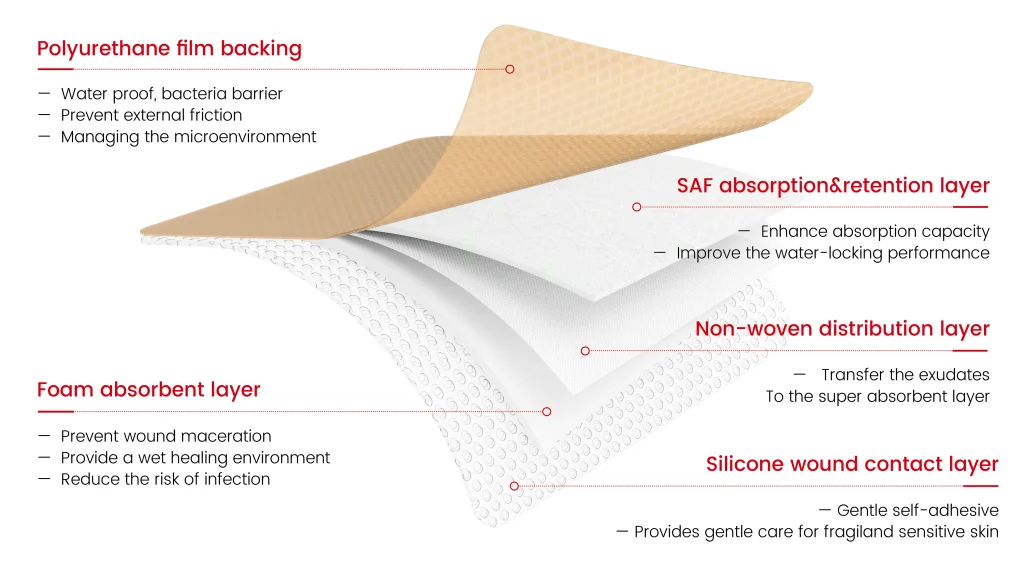
The picture below shows the 5-layer structure diagram of the bordered foam dressing from SLK Medical.
How we chose (methodology and weights)
We combined manufacturer specifications with reputable directories and distributor listings, then applied weighted criteria (sum = 100):
-
Exudate absorption & fluid‑lock performance — 22
-
Adhesion stability & edge‑lift resistance — 18
-
Skin‑friendliness & MARSI risk reduction — 15
-
Wear time & change frequency — 10
-
Portfolio breadth & OEM customizability — 10
-
Antimicrobial (Ag) option effectiveness — 12
-
Total cost of care & value — 13
Notes: Spec‑sheet absorption (g/100 cm²) and peel metrics are not standardized across brands; where numbers were unavailable, we used triangulated evidence (product literature, clinical practice notes). Always confirm local IFUs.
Scoring worksheet (summary)
To keep this guide verifiable, we only scored what we could support with sources. When a standardized metric wasn’t publicly available, we marked it as “N/A (not publicly disclosed)” rather than guessing.
|
Brand/Model |
Evidence type used |
Biggest strength (from sources) |
Biggest limitation (from sources) |
|---|---|---|---|
|
Mepilex Border Flex |
Manufacturer + retail listings |
Conformability and edge stability on mobile/contoured sites |
Ag is in separate Mepilex Ag lines; absorption varies by SKU |
|
Biatain Silicone |
Manufacturer + directory |
Depth adaptation (3DFit) and broad shape portfolio; Ag option exists |
Pricing/spec visibility varies by region and distributor |
|
ALLEVYN LIFE |
Manufacturer + retail listings |
Long-wear, multi-shape prevention/management portfolio |
Sacral wear time is often shorter; premium SKUs |
|
3M Tegaderm Silicone Foam Border |
Manufacturer brochures |
Thin, beveled edge design and stated wear-time guidance |
Public pricing and some specs often require quotes/login |
|
AQUACEL Foam Adhesive |
Manufacturer + directory |
Hydrofiber gel-forming layer supporting micro-contouring and wicking |
Ag is in separate AQUACEL Ag families; quote-based pricing |
|
SLK Medical Bordered Silicone Foam |
Manufacturer (SLK pages) |
Portfolio/OEM breadth; bordered silicone foam option and Ag category |
Limited public quantitative peel/absorption metrics; quote-based pricing |
At‑a‑glance comparison table
The links in the first column jump to each detailed item card below.
|
Brand/Model |
Best for |
Absorbency/Tech |
Border & edge seal |
Wear time |
Sizes/Shapes |
Ag option |
Approx. price |
|---|---|---|---|---|---|---|---|
|
Mepilex Border Flex |
Conformability on mobile sites |
Foam + spreading + SAP |
Flex geometry + soft silicone |
Up to ~7 days (per manufacturer materials; varies by site/exudate) |
Square/oval, multiple sizes |
In other Mepilex Ag lines |
Retail anchors available for select SKUs; contracts vary (subject to change) |
|
Biatain Silicone |
Reducing pooling; depth adaptation |
3DFit foam; SAP |
Gentle silicone border |
Up to 7 days (per manufacturer materials; reassess if high exudate) |
Multishape, heel, sacral |
Biatain Silicone Ag |
Pricing often requires quotes/login; varies by size/region (subject to change) |
|
ALLEVYN LIFE |
Long‑wear prevention/management |
5‑layer hydrocellular |
Bordered silicone |
Up to ~7 days (per manufacturer materials; some sacral SKUs may be shorter) |
Square, heel, sacral |
Ag in separate lines |
Retail anchors available for select SKUs; contracts vary (subject to change) |
|
3M Tegaderm Silicone Foam Border |
Low‑profile edge security |
Multi‑layer foam |
Thin beveled edge |
Up to 7 days (per 3M brochure; varies by site/exudate) |
Square, sacral, heel |
Not specified |
Quote-based via distributors; subject to change |
|
AQUACEL Foam Adhesive |
Gel‑forming micro‑contour |
Foam + Hydrofiber gel |
Silicone adhesive |
Up to 7 days (per manufacturer guides; reassess if leakage/maceration) |
Std, heel, sacral |
AQUACEL Ag lines |
Quote-based via distributors; subject to change |
|
SLK Medical Silicone Foam with Border |
OEM/ODM breadth; gentle removal |
5‑layer |
Bordered silicone, flexible border, |
Up to 3-7 days(per manufacturer guides),Not publicly disclosed (confirm IFU/spec sheet with vendor) |
Square, heel, sacral, |
Ag variant |
Quote-based; varies by size/contract (subject to change) |
The best bordered silicone foam dressings in 2026
Mepilex Border Flex
Best for: Conformability and staying power on mobile, contoured areas.
Tech stack: Multilayer foam pad with spreading layer and SAP fibers beneath a soft‑silicone contact layer; flexible film backing.
Standout strengths mapped to criteria: Strong edge stability via flex geometry (adhesion 18); well‑known gentle removal profile (MARSI 15); broad shapes and sizes (portfolio 10).
Pros/Cons: Pros — conformable, low pain on removal, widely available. Cons — silver variant is in separate Mepilex Ag lines; absorption metrics vary by SKU.
Sizes & wear time: Square/oval in multiple sizes; up to ~7 days per manufacturer materials, but actual change frequency depends on exudate level, anatomical site, and local protocol/IFU.
Price range: Retail listings show low single‑digit unit anchors for some sizes; contract pricing varies (subject to change). See retail context via Vitality Medical for representative ranges.
Evidence: Mölnlycke product literature and retail listings (access details in Sources).
Biatain Silicone
Best for: Reducing exudate pooling with depth adaptation (up to ~2 cm) and a gentle seal. (See Sources: Coloplast Biatain Silicone Fit)
Tech stack: 3DFit foam structure with SAP; soft‑silicone border; breathable backing.
Standout strengths: Helps match wound depth to limit pooling (absorption 22), strong portfolio breadth (10), Ag availability (12).
Pros/Cons: Pros — multishape portfolio including heel/sacral; Ag option. Cons — price transparency varies; confirm regional IFUs.
Sizes & wear time: Extensive grid including multishape, heel, sacral; up to 7 days when appropriate.
Price range: Typically quote‑based via distributors or shown after retailer login; ranges vary (subject to change).
Evidence: Coloplast Biatain Silicone professional pages and WoundSource Ag directory (see Sources).
ALLEVYN LIFE
Best for: Long‑wear prevention/management and microclimate control in a five‑layer build.
Tech stack: 5‑layer hydrocellular foam with soft‑silicone contact and film backing.
Standout strengths: Documented size grid and prevention deployments (portfolio 10; cost‑of‑care 13); widely used in hospital pathways.
Pros/Cons: Pros — strong long‑wear profile in practice; multiple shapes. Cons — sacral wear time often shorter (around 5 days); premium SKUs.
Sizes & wear time: Squares, heel, sacral; typical up to ~7 days (sacral often less, per practice/IFU).
Price range: Retail examples span from low single‑digits each (small singles) to higher multi‑pack/case totals; always contract‑dependent and subject to change.
Evidence: Smith+Nephew product pages and distributor retail context (see Sources).
— Mid‑list soft CTA — Want a downloadable spec sheet checklist you can adapt for RFQs? See SLK’s silicone foam category for size/shape references and OEM considerations: silicone foam dressings.
3M Tegaderm Silicone Foam Border
Best for: Low‑profile edge with secure adhesion and a thin, beveled border.
Tech stack: Multilayer foam under a breathable film; soft‑silicone adhesive contact layer; thin edges to minimize rolling.
Standout strengths: Well‑documented wear‑time guidance and edge design (adhesion 18); broad hospital availability.
Pros/Cons: Pros — thin edge profile; guidance up to 7 days. Cons — public pricing is opaque; confirm Ag availability separately.
Sizes & wear time: Squares plus sacral/heel shapes; up to 7 days per brochures and practice.
Price range: Typically quote‑based via major distributors; subject to change.
Evidence: 3M brochures with design and wear‑time guidance (see Sources).
AQUACEL Foam Adhesive
Best for: Gel‑forming micro‑contour that wicks vertically and fills microgaps.
Tech stack: Foam + Hydrofiber layer that forms a cohesive gel on contact; silicone adhesive border.
Standout strengths: Vertical wicking and dead‑space reduction (absorption 22); broad shapes; well‑known under‑compression pairing when indicated.
Pros/Cons: Pros — up to 7‑day wear guidance in materials; extensive clinical familiarity. Cons — Ag variants sit in separate Aquacel Ag/Ag Advantage families.
Sizes & wear time: Standard, heel, sacral; up to 7 days depending on wound and site.
Price range: Quote‑based from large distributors; subject to change.
Evidence: ConvaTec product guides and WoundSource summaries (see Sources).
SLK Medical Bordered Silicone Foam
Best for: OEM/ODM breadth, gentle removal, and edge stability in value‑conscious procurement.
Tech stack: Soft‑silicone contact layer over an absorbent core with film backing; portfolio includes bordered foams and Ag variants.
Standout strengths: Beveled, flexible border intended to support edge stability on mobile areas; strong fluid handling and lock‑in that may help lower maceration risk; gentle removal designed to support fragile skin. (Manufacturer description; see SLK pages in Sources.)
Pros/Cons: Pros — wide size/shape portfolio and OEM flexibility; Ag option available. Cons — publicly downloadable spec sheets and quantified peel/absorption metrics are limited; quote‑based pricing.
Sizes & wear time: Multiple shapes; confirm wear time in the relevant IFU/spec sheet for the SKU used.
Price range: Quote‑based via SLK/distributors; varies by size and contract (subject to change).
Evidence: SLK product page (skin color) and category pages (see Sources): https://www.slkmedical.com/product/silicone-foam-dressing-with-border-skin-color/
Indications, contraindications, and wear‑time guidance
Indications: Bordered silicone foam dressings are commonly used for stage II–III pressure injuries with moderate–high exudate, skin tears in elderly/fragile skin, post‑operative incisions with exudate, venous leg ulcers under compression, and diabetic foot ulcers with bioburden concern (consider Ag when clinically indicated). Educational and consensus materials emphasize atraumatic silicone interfaces and moisture balance in multilayer stacks to help protect periwound skin.
Contraindications: Avoid use on third‑degree burns; don’t use silver (Ag) dressings in patients with known silver sensitivity; avoid Ag foams on non‑exudative necrotic wounds without drainage; always follow each product’s IFU, local protocols, and clinician judgment for individual cases.
Wear‑time: Many bordered silicone foams guide up to 5–7 days depending on exudate and site; sacral applications often sit at the shorter end. Replace sooner if exudate approaches the edge, if maceration is observed, or per clinical judgment and IFU.
Which to choose for common scenarios
Quick decision flow (text-based)
-
If the wound is on a high-mobility or contoured area (sacrum/heel/elbow) and edge lift is a concern → start with a bordered silicone foam.
-
If fragile skin or high MARSI risk is the top concern → prioritize a soft-silicone contact layer and gentle border tack; size to minimize shear.
-
If exudate is moderate–high → prioritize fluid-lock / SAP / vertical wicking, and set a change threshold before strike-through reaches the border.
-
If under compression (VLU) → choose a dressing known for retention under pressure, monitor frequently, and follow vascular assessment and local protocols.
-
If infection/high bioburden risk is present → consider an Ag variant when clinically indicated, and reassess per guidance/IFU.
-
Pressure injuries (Stage II–III, moderate–high exudate): Prioritize strong fluid‑lock and edge stability on sacrum/heels. Options like ALLEVYN LIFE, Mepilex Border Flex, or Zetuvit Plus Silicone Border are commonly used; align size/shape to anatomy and monitor wear time.
-
Skin tears (fragile skin): Favor soft‑silicone interfaces with low pain on removal and gentle border tack. Mepilex Border Flex and 3M Tegaderm Silicone Foam Border are frequent picks; size to minimize shear.
-
Post‑operative incisions with exudate: Low‑profile borders and clear exudate visualization help; thin edged foams and dedicated post‑op formats can support early mobility.
-
DFU with bioburden concern: Consider a silver (Ag) silicone foam variant when infection risk/high bioburden is present, within guideline indications and duration limits; reassess frequently.
-
VLU under compression: Choose dressings with strong retention under pressure and manage exudate match; products with SAP cores and documented retention can be advantageous. Compression therapy remains the cornerstone—ensure vascular assessment and follow protocols.
Pricing and procurement notes
-
Expect wide variation by size (e.g., 3×3 vs sacral/heel), pack count, and distributor contracts. Retail anchors can start in the low single digits per small unit, but hospital contracts differ.
-
Model total cost of care: balance unit price against expected wear time and change frequency, plus the risk and cost of complications (e.g., maceration) that add nursing time.
-
For RFPs, request: absorption capacity (g/100 cm²) and retention under compression; peel/reposition cycles; edge‑lift resistance details (bevel, stretch zones); MARSI and patient‑reported pain scores on removal; portfolio and OEM details; Ag release profile and indications.
FAQ
Q: Bordered vs non‑bordered—when should I choose bordered? A: Choose a bordered silicone foam dressing for sites with movement or shear risk where a stable edge seal reduces lifting and leakage. Non‑bordered is reasonable when secondary fixation is planned or cut‑to‑fit flexibility dominates. Educational overviews from Wounds International and WoundSource describe these trade‑offs and the role of soft‑silicone interfaces in protecting skin.
Q: Can bordered silicone foams go under compression? A: Yes, when matched to exudate level and patient factors, bordered silicone foams can be used under compression for venous leg ulcers. Compression remains the gold standard; monitor ABPI and follow local protocols. (See Sources: Wounds International VLU materials and related consensus documents.)
Q: How can I reduce maceration with high exudate? A: Pair an appropriate‑capacity foam (often with SAP core and good vertical wicking) with the right size and change threshold; ensure an intact edge seal and consider shapes that match anatomy. Educational sources also emphasize periwound protection and timely dressing changes.
Q: When do I select a silver (Ag) variant? A: Consider Ag foams when infection is present or bioburden risk is high, consistent with clinical guidance, and typically for limited durations with regular reassessment. For product families that include Ag, check the IFU for wear‑time and indications. (See Sources: Wounds International—How to use silver dressings, 2023.) SLK maintains an Ag category for clinician reference: silicone foam Ag dressings.
Editorial notes (disclaimer & disclosures)
-
Not medically reviewed; for informational purposes only. This guide does not replace clinical judgment.
-
Always follow local protocols and each product’s Instructions for Use (IFU). Wear time and indications vary by wound, site, and patient factors.
-
Conflicts of interest: This article includes internal SLK Medical links for catalog reference. No third‑party brand sponsorships, affiliate commissions, or paid endorsements were used for the brands listed.
-
Last updated: 2026-02-11
Evidence & sources (with dates)
-
Mölnlycke product information for Mepilex Border Flex (accessed 2026‑02‑06) and retail context at Vitality Medical (updated 2026‑01‑26) — see manufacturer site and the retailer’s Mepilex Border Flex listing for current sizes and price anchors.
-
Coloplast professional pages for Biatain Silicone Fit (accessed 2026‑02‑11) and WoundSource directory for Biatain Silicone Ag (updated 2024‑06‑30) — provide size grids and Ag indications.
-
Smith+Nephew ALLEVYN LIFE size/evidence pages (accessed 2026‑02‑10) and Vitality Medical pricing overview (updated 2025‑04‑11) — reference shapes and representative retail ranges.
-
3M Tegaderm Silicone Foam brochures — wear‑time guidance and edge design (2023‑12‑20; 2022‑06‑02).
-
ConvaTec AQUACEL Foam guidance and WoundSource summaries (2021–2025 materials; updated 2024‑08‑08) — gel‑forming Hydrofiber details and wear guidance.
-
Clinical rationale for prevention/atraumatic silicone: overviews and consensus from Wounds International (2020–2025) and category education at WoundSource; systematic/meta‑analysis examples support prophylaxis impact of silicone foams (see PubMed Central entries, 2020s cohort).
Selected external links for deeper reading:
-
According to 3M’s official brochure, Tegaderm Silicone Foam lists edge and wear‑time features: 3M Tegaderm Silicone Foam sell sheet (2023‑12‑20)
-
Coloplast’s professional page outlines Biatain Silicone Fit sizes and wear guidance: Coloplast Biatain Silicone Fit
-
Retail pricing context and size options for Mepilex Border Flex: Vitality Medical listing
-
Guidance on when to use antimicrobial silver dressings: Wounds International—How to use silver dressings (2023)
-
Overview of foam dressings and silicone interfaces: WoundSource foam dressings category
Internal SLK links used contextually:
-
Bordered category (intro and toolbox mention): SLK silicone foam dressing category
-
Ag options (FAQ): SLK silicone foam Ag category
What to do next
If you’re building a shortlist, download current IFUs and spec sheets, confirm size/shape coverage for your top wound types, and request quotes that include estimated wear time and change frequency assumptions. For a neutral reference on formats and OEM options, browse SLK’s category overview: silicone foam dressing (bordered and non‑bordered).