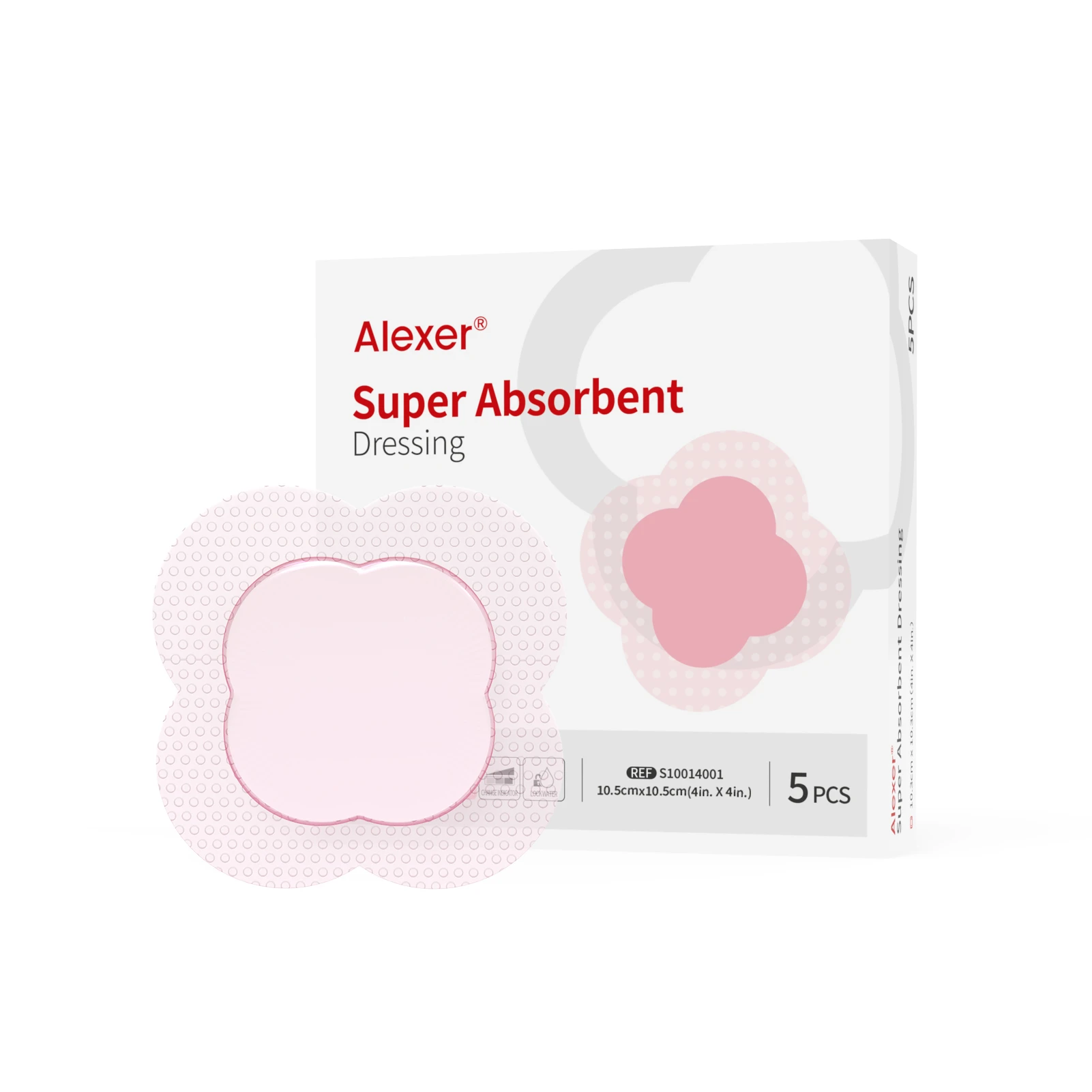
You want a soft way to help wounds heal. This is good for people with sensitive skin or wounds that last a long time. SLK Medical gives you this with new ideas and products you can trust. Silicone foam dressing helps wounds heal quicker and with less pain. Many people see their wounds get smaller faster than with regular dressings.
-
After four weeks, wounds with silicone foam dressing get 54.3% smaller on average.
-
Regular dressings make wounds 43.0% smaller.
|
Wound Type |
Description |
|---|---|
|
Pressure Injuries (PI) |
Often treated in hospitals and clinics. |
|
Diabetic Foot Ulcers (DFU) |
Often cared for in hospitals. |
|
Surgical Wounds |
Good for controlling fluid from wounds. |
|
Superficial Burns |
Used to help heal these burns. |
|
Partial-thickness Burns |
Helps heal these burns well. |
|
Donor Sites |
Used to help these spots heal best. |
|
Skin Tears |
Often treated with this dressing. |
|
Fungating Ulcers |
Used for these wounds too. |
Key Takeaways
-
Silicone foam dressings help wounds heal faster. They cause less pain. Wounds get 54.3% smaller in four weeks. This is better than regular dressings.
-
The special multi-layer design keeps wounds moist. It soaks up extra fluid. It protects wounds from infection. This helps wounds heal better.
-
Gentle adhesion lets you take off the dressing without pain. These dressings are good for sensitive skin. They lower the chance of skin damage.
-
SLK Medical’s D-Pore™ technology helps soak up fluid. It also lets air move around the wound. This makes healing more comfortable for many wound types.
-
Using silicone foam dressings means you change them less often. This saves time and money. It also helps patients feel better and heal well.
What Is a Silicone Foam Dressing?
Structure and Materials
You might ask why silicone foam dressing is different. This dressing uses special materials to help wounds heal fast and gently. The main parts work together to keep your skin safe and help it get better.
|
Component |
Description |
|---|---|
|
It soaks up fluid, bends easily, and keeps moisture in. It works well for wounds that leak. |
|
|
Polyurethane foam core |
This part soaks up more fluid and gives the wound a soft cushion. |
|
Vapor-permeable polyurethane membrane |
This layer stops liquid and germs but lets vapor out. It keeps the wound area comfy. |
This dressing is safe for your body and lasts a long time. It feels soft on skin that is sensitive. The surface does not stick, so taking it off does not hurt. Your skin can breathe, but germs stay out.
-
The soft silicone adhesive layer helps you not feel pain when you change it.
-
The foam pad soaks up fluid and keeps the skin around the wound healthy.
-
The layers keep the wound moist, which helps it heal faster.
-
The top layer blocks bacteria and dirt.
SLK Medical’s D-Pore™ Technology
SLK Medical uses D-Pore™ Dual-Dimensional Pore Foaming Technology. This new idea makes the silicone foam dressing work even better. It soaks up more fluid and lets air move through. The dressing is strong but still gentle on your wound. D-Pore™ technology keeps the wound moist and safe, which helps it heal.
SLK Medical has many types of silicone foam dressings. You can pick dressings with borders, without borders, or with Flex Technology. Each one uses special materials and design for different wounds and body parts. You can use them for wounds after surgery, ulcers, burns, and more.
If you want a gentle and good way to care for wounds, silicone foam dressing from SLK Medical gives you comfort, safety, and faster healing.
Gentle Healing Mechanisms
Moisture Balance and Absorption
You want your wound to heal in the best way possible. Moisture balance plays a big role in this process. Silicone foam dressing helps your wound stay moist but not too wet. This balance supports new skin growth and keeps the area comfortable.
-
The absorbent core inside the dressing pulls in extra fluid from your wound. This stops the skin around the wound from getting too soft or breaking down.
-
The top layer lets vapor out, so your wound can breathe. At the same time, it keeps germs and water from getting in.
-
The dressing creates a barrier that protects your wound from outside dirt and bacteria.
Tip: A moist wound heals faster than a dry one. You can see better results when you use a dressing that manages moisture well.
Here is a quick look at how silicone foam dressing works compared to other types:
|
Mechanism |
Description |
|---|---|
|
Gentle Adhesion |
The silicone layer sticks softly, so you do not hurt your skin when you take it off. |
|
High Absorbency |
The foam pad soaks up a lot of fluid, which keeps your skin healthy and dry. |
|
Moist Wound Environment |
The dressing keeps the wound moist, which helps it close faster and heal better. |
Pain-Free Removal for Sensitive Skin
You may worry about pain when you change your dressing. Silicone foam dressing uses a soft silicone layer that sticks gently to your skin. This means you can remove it without pulling or hurting your skin. People with sensitive or fragile skin find this very helpful.
|
Evidence Type |
Description |
|---|---|
|
Pain Reduction |
You feel less pain during dressing changes, which is important if your skin is sensitive. |
|
Atraumatic Removal |
The soft silicone lets you take off the dressing without damaging your skin. |
|
Clinical Guidelines |
Doctors say silicone foam dressings lower the risk of skin injury from medical adhesives. |
You can also check your wound without taking off the whole dressing. This helps you and your nurse see how your skin is healing. The dressing spreads out pressure and reduces rubbing, which keeps your skin safe.
|
Evidence Type |
Description |
|---|---|
|
Pressure Redistribution |
The dressing spreads pressure, so your skin does not get sore in one spot. |
|
Gentle Adhesion |
The silicone sticks softly and comes off easily, which is good for fragile skin. |
|
Skin Visualization |
You can look at your skin without removing the dressing, making care easier. |
Infection Protection and Comfort
You want your wound to stay clean and safe. Silicone foam dressing helps by trapping extra moisture and bacteria. The dressing keeps the area around your wound healthy and lowers the chance of infection.
-
The dressing manages the skin’s microclimate by soaking up extra fluid. This helps trap bacteria and keeps the wound clean.
-
The moist environment supports healing and protects the skin around the wound.
-
The silicone layer lowers the risk of spreading germs when you change the dressing.
Note: When you use a dressing that protects against infection, you help your wound heal faster and feel more comfortable every day.
Silicone foam dressing gives you a gentle, safe, and effective way to care for your wound. You get less pain, better healing, and more comfort with every use.
SLK Medical Silicone Foam Dressing Features
Multi-Layer Design
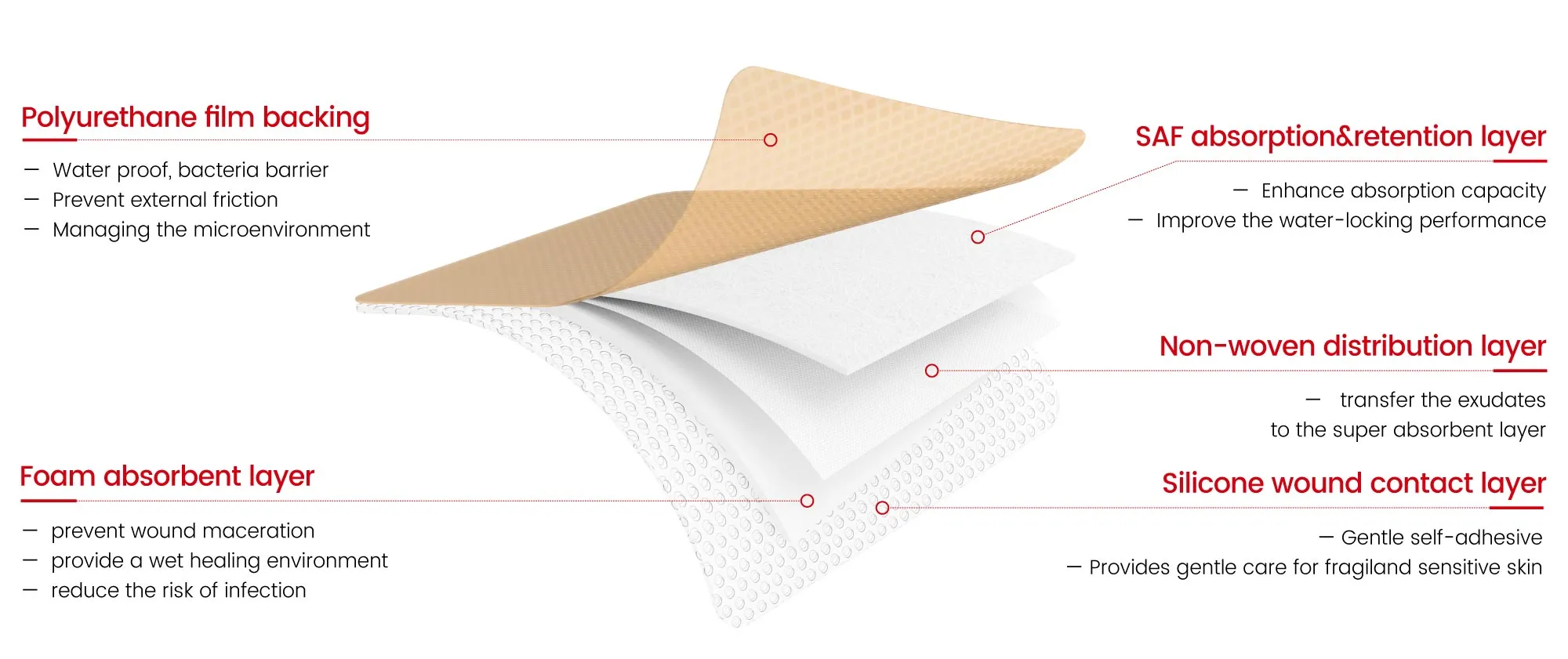
Dressings with many layers help wounds heal better. Each layer does something special. The foam layer makes your skin feel soft and lowers pressure. This helps you feel more at ease. The superabsorbent fiber layer takes in wound fluid and keeps it inside. This keeps the wound area clean. The nonwoven layer gives support and helps the dressing keep its shape. The polyurethane backing film stops germs and water from getting in. It lets vapor out, so the wound stays moist. The perforated silicone contact layer covers the wound and makes taking off the dressing easy. This helps lower pain when you remove it.
|
Layer Type |
Function |
|---|---|
|
Foam Layer |
Cushions and lowers pressure, making you more comfortable. |
|
Superabsorbent Fiber Layer |
Pulls in and holds wound fluid, keeping the area clean. |
|
Nonwoven Layer |
Gives extra support and shape to the dressing. |
|
Polyurethane Backing Film |
Blocks germs and water but lets vapor out, keeping a moist environment. |
|
Perforated Silicone Contact Layer |
Seals the wound and makes removal gentle, reducing pain. |
A moist wound helps your body fix itself and feels better. The dressing keeps the wound moist but not too wet. This helps wounds heal faster and lowers the chance of infection.
Flex Technology and Conformability
You want a dressing that fits your body and stays put. Some SLK Medical dressings use Flex Technology. This lets the dressing stretch in every direction. You can move around, and the dressing will not fall off. The flexible design helps the dressing stay on, even on hard places like heels or elbows. You feel safer and more comfortable when you do things each day.
Tip: Dressings with Flex Technology are great for wounds on joints or places that bend a lot.
Product Range and Applications
SLK Medical has many dressings for different wounds. Some work best for wounds with little fluid. Others are good for wounds with a lot of fluid. You can pick dressings with borders for extra hold or without borders for more movement. Some dressings have silver to help fight germs. Others use special materials for scars or after surgery.
|
Product Name |
Description |
|---|---|
|
Silicone Foam Dressing – Lite |
|
|
Silicone Foam Dressing – Transfer |
Moves fluid away and keeps the wound moist. |
|
Silicone Foam Ag Dressing |
Has silver to protect against germs. |
|
Silicone Foam Ag Dressing – with Border |
Stays on better with extra sticky edges. |
|
Silicone Foam Ag Dressing – without Border |
Soft and flexible with no sticky edges. |
|
Non-adhesive Ag Foam Dressing |
Good for sensitive skin with no sticky part. |
|
Super Absorbent Dressing |
Takes in a lot of fluid for big wounds. |
|
Silicone Post-Op Dressing – Border Flex |
Bends easily for after surgery care. |
|
Hydrocolloid Dressing |
Keeps wounds moist for many types of wounds. |
|
Alginate Wound Dressing |
Made from seaweed for wounds with lots of fluid. |
|
Gelling Fiber Dressing |
Soaks up fluid and turns into a gel for moist healing. |
|
Transparent Dressing |
Lets you see the wound without taking off the dressing. |
|
Silicone Scar Sheets |
Helps make scars look better. |
|
Silicone Scar Gel |
Helps treat and heal scars. |
SLK Medical dressings follow important world rules. They meet ISO 10993 for skin safety and ISO 11607 for clean packaging. They also follow FDA rules for how well they work. You can trust these silicone foam dressings to be safe and work well.
Benefits for Patients and Caregivers
Faster Healing and Fewer Changes
You want your wound to heal fast and with less hassle. Silicone foam dressing helps you do this. Its special design keeps your wound moist and safe. You feel less pain when you change the dressing. Many people say their wounds heal faster and need fewer changes. You spend less time worrying about your wound and more time feeling good.
Here is how different patient groups benefit:
|
Patient Group |
Outcome Description |
Evidence Supporting Outcome |
|---|---|---|
|
Chronic Ulcers |
Wounds heal faster, taking 20-30% less time than with regular dressings. |
Studies show healing is much better. |
|
Post-operative Wounds |
Patients feel more comfortable and have fewer skin problems from dressings. |
Hospitals see better recovery with these dressings. |
|
Burn Patients |
Pain from changing dressings drops by up to 40%. |
Clinical data shows less pain during dressing changes. |
|
Patients with Fragile Skin |
There are fewer skin tears and less discomfort, so patients feel better overall. |
Facilities see better results with silicone foam dressings. |
Tip: You do not have to check your wound as often. This means you change the dressing less and feel less worried.
Cost-Effectiveness and Patient Outcomes
You want care that works well and does not cost a lot. Silicone foam dressing helps you save money and time. You use fewer dressings because each one lasts longer. Hospitals and clinics spend less and patients get better results. You heal better and feel more comfortable without spending more.
Here are some findings from recent studies:
|
Study Title |
Findings |
Year |
|---|---|---|
|
Cost-effectiveness of multi-layered silicone foam dressings for prevention of sacral and heel pressure ulcers in high-risk intensive care unit patients |
2020 |
|
|
The cost-benefit of using soft silicone multilayered foam dressings to prevent sacral and heel pressure ulcers in trauma and critically ill patients |
Pointed out money-saving benefits in wound care |
2014 |
You go to the doctor less and feel less pain during care. Caregivers find it easier to help you get better. You get a gentle way to heal that is good for your health and your wallet.
Comparison with Other Dressings
Silicone Foam vs. Hydrocolloid and Gauze
You might wonder how silicone foam dressing is different from hydrocolloid and gauze. Each type helps wounds in its own way and has special benefits.
|
Dressing Type |
Absorption |
Comfort |
Removal Pain |
Infection Protection |
Wear Time |
|---|---|---|---|---|---|
|
Silicone Foam |
High |
Very Soft |
Minimal |
Strong Barrier |
Up to 7 days |
|
Hydrocolloid |
Moderate |
Soft |
Moderate |
Good |
3-5 days |
|
Gauze |
Low |
Basic |
Can Hurt |
Limited |
1-2 days |
Silicone foam dressing soaks up more fluid than the other two. It is softer and hurts less when you take it off. The silicone layer keeps your skin safe and the wound moist. Gauze can stick to wounds and cause pain. Hydrocolloid dressings keep wounds moist but do not soak up as much fluid. Silicone foam gives you more comfort and lasts longer on your skin.
Tip: If your wound leaks a lot or your skin is sensitive, silicone foam dressing is a better choice for comfort and protection.
Patient Experience and Healing Results
You want a dressing that helps you heal and feels nice on your skin. Many people say silicone foam dressings help them a lot.
-
You feel less pain when you change the dressing.
-
The dressing stays soft and gentle, even on weak skin.
-
You see fewer skin injuries and less redness.
-
Using silicone foam dressing lowers the chance of pressure ulcers, especially in hospitals and ICUs.
-
People who cannot move much, like those in intensive care, get fewer pressure injuries.
Studies show silicone foam dressings lower the risk of pressure ulcers more than other dressings. You heal in a safer way and feel more comfortable every day.
Note: Picking the right dressing can help you heal faster and feel better. Silicone foam dressing protects your skin and helps you get better with less pain.
How to Use Silicone Foam Dressings
Application Steps
You want to help your wound heal and stay safe. Follow these steps to apply a silicone foam dressing:
-
Wash your hands with soap and water.
-
Clean the wound and the skin around it as your healthcare provider tells you.
-
Dry the skin around the wound completely.
-
Pick a dressing that is at least one inch bigger than your wound on all sides.
-
Peel off the protective backing from the sticky side. Try not to touch the adhesive.
-
Place the dressing over the wound, making sure it is centered. Smooth it down gently without stretching.
-
When you need to remove the dressing, lift one corner and pull it slowly along the skin using the stretch release method.
Tip: Always check the wound before and after you change the dressing. This helps you see how well it is healing.
Tips for Best Results
You can get better results by following a few simple tips:
-
Look at the wound type and how much fluid it has. This helps you choose the right dressing.
-
Make sure you or your caregiver know how to put on the dressing the right way.
-
Keep the dressing in place but do not press too hard.
-
Change the dressing as often as your healthcare provider recommends.
Note: Training helps you use dressings correctly and keeps your skin healthy.
Common Mistakes to Avoid
You want to avoid problems when using silicone foam dressing. Watch out for these mistakes:
-
Using the wrong dressing for your wound. Always match the dressing to your wound’s needs.
-
Not changing the dressing often enough. Follow the schedule your provider gives you.
-
Skipping skin prep. Use a barrier film to protect the skin around your wound.
-
Securing the dressing too tightly. Make sure it sticks gently and does not press too hard.
Callout: Careful application and removal help you heal faster and feel less pain.
Real-World Results
Case Studies with SLK Medical Products
Typical Application Scenarios
You can see how these dressings help in real life. Many people with diabetic foot ulcers use silicone foam dressing. They say it hurts less when they change the dressing. Their wounds close faster too. After surgery, nurses pick SLK Medical’s silicone post-op dressing. It soaks up fluid and keeps the skin safe. This lowers the chance of skin problems and helps patients feel good. People with chronic ulcers use D-Pore™ technology. Their wounds stay moist, and the dressing does not stick to new skin. This helps wounds heal fast.
|
Study Type |
Findings |
Conclusion |
|---|---|---|
|
Randomized Study |
Pressure injuries dropped in areas covered by dressings |
Soft silicone foam dressings prevent pressure injuries |
|
Prospective Cohort |
ICU patients had fewer pressure injuries with dressings |
Prophylactic dressings help in critical care |
|
Vascular Surgery Analysis |
Lower injury rates in patients with dressings |
Dressings work well in surgical settings |
|
Computer Simulation |
Dressings reduced pressure injuries in models |
Dressings support injury prevention |
These dressings work for many kinds of wounds. Nurses and doctors use them in hospitals, clinics, and at home. The results show wounds heal better and patients feel less pain.
Testimonials from Healthcare Professionals
Professional Endorsements
You hear from nurses and doctors who use SLK Medical dressings.
-
Nurses say the dressings are simple to put on and fit many people.
-
Doctors see less skin damage when they use these dressings early, even before putting on medical devices.
-
Many professionals see fewer pressure ulcers because the dressings stop rubbing and pulling on the skin.
-
Clinicians think the dressings are comfortable and easy to use, and most tell their patients to use SLK Medical dressings.
“SLK Medical’s silicone foam dressings make patients more comfortable and help wounds heal in our clinic. Taking them off does not hurt, and they soak up a lot of fluid. This helps people with sensitive skin and wounds that last a long time.”
“The D-Pore™ technology lets air in and manages fluid well. We use these dressings for many kinds of wounds.”
“SLK Medical cares about quality and follows world rules. This makes us sure we can tell others to use their products.”
You can trust these dressings to give gentle care and good results. Many clinics say they save money and help patients get better after switching to SLK Medical products.
You want a way to heal wounds that is gentle and works well. SLK Medical silicone foam dressings help you feel comfortable and safe. Taking them off does not hurt. They protect your wound from germs and dirt. The soft silicone layer sticks softly to your skin. It also soaks up fluid from the wound. You can wear these dressings for a long time without feeling bad.
|
Feature |
Description |
|---|---|
|
Soft silicone keeps your sensitive skin safe. |
|
|
High Absorbency |
The dressing keeps your wound moist and healthy. |
|
Comfort and Extended Wear |
The flexible design lets you move around easily. |
Pick a dressing that fits your wound and what you need. For the best healing, ask your healthcare provider for help. Getting advice just for you helps you heal faster and feel better.
FAQ
How often should you change a silicone foam dressing?
You need to change the dressing every 3 to 7 days. Change it sooner if it gets full of fluid. Always listen to your healthcare provider about your wound.
Can you shower with a silicone foam dressing on?
Yes, you can take a shower with most silicone foam dressings. The waterproof top keeps your wound dry and safe while you bathe.
Is silicone foam dressing safe for sensitive skin?
Yes! The soft silicone layer sticks gently to your skin. You will not feel much pain when you take it off. This makes it a good choice for people with sensitive or fragile skin.
What types of wounds work best with silicone foam dressings?
You can use silicone foam dressings for pressure injuries, diabetic foot ulcers, surgical wounds, burns, and skin tears. They are good for wounds that have a medium or large amount of fluid.