


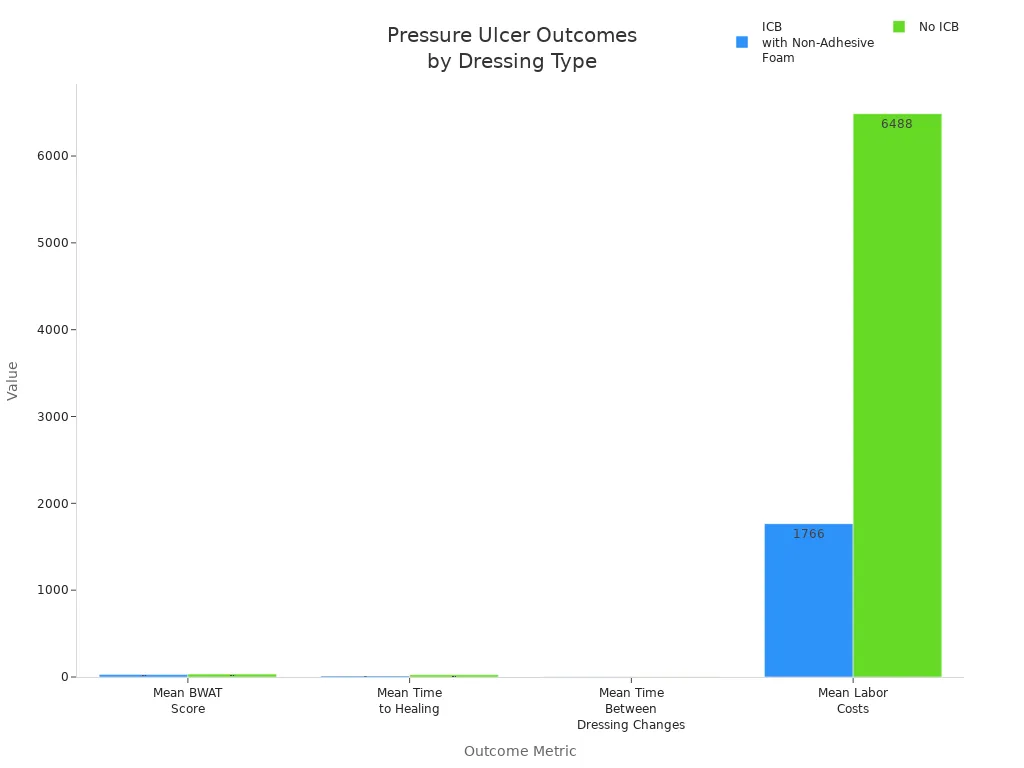
You get better healing with non adhesive foam wound dressing for pressure ulcers in 2025. SLK Medical’s Alexer® Non Adhesive Foam Dressing uses new technology and is gentle. Foam dressings help wounds by lowering trauma and keeping the right moisture. They also make wounds feel more comfortable. Patients and caregivers see fewer dressing changes and faster healing. New data shows wounds heal faster, labor costs go down, and there are no bad side effects.
Foam dressings are very comfortable. They manage moisture well and cause less pain when changed than other choices.
|
Benefit |
Non-Adhesive Foam Dressings |
Other Wound Care Solutions |
|---|---|---|
|
High |
Variable |
|
|
Moisture Management |
Effective |
Varies |
|
Pain During Dressing Changes |
Reduced |
Higher |
|
Wound Type Management |
Effective for chronic and acute wounds |
Limited effectiveness |
Key Takeaways
-
Non-adhesive foam dressings, like Alexer®, help wounds heal faster. They do this by stopping skin damage and keeping the wound moist. These dressings are soft on weak skin. They are good for people with sensitive skin. They do not stick, so they do not hurt when changed. Foam dressings can stay on for up to seven days. This means you do not need to change them often. This makes patients feel more comfortable. The waterproof back keeps dirt and germs out of the wound. Patients can take showers without worry. Advanced foam dressings help stop infections. They also help wounds heal better. This makes them a smart and affordable choice for wound care.
Healing Benefits of Non Adhesive Foam Dressings
Minimizing Skin Trauma
It is important to protect your skin when treating pressure ulcers. Foam dressings like Alexer® Non Adhesive Foam Dressing help with this. These dressings do not stick to your skin. This means less pain and less damage when you change them. You can use them on sensitive or fragile skin. Many people say foam dressings hurt less than other types. They also lower the chance of hurting the skin around the wound.
Example: Alexer® Non Adhesive Foam Dressing’s Gentle Design
Alexer® Non Adhesive Foam Dressing has a soft foam layer. This layer cushions the wound and does not stick. It touches your skin gently and is easy to take off. The design helps stop skin stripping and pain.
Suitable for Fragile Skin
If your skin is fragile, you need a gentle dressing. Foam dressings are good for older people and those with thin skin. Alexer® Non Adhesive Foam Dressing is safe for wounds that need extra care.
International guidelines say to use dressings that keep wounds moist for pressure ulcers. Foam dressings are best for wounds with fluid, like Category II and III ulcers.
Moisture Balance for Wound Healing
Wounds need to be moist but not too wet. Foam dressings help keep this balance. Alexer® Non Adhesive Foam Dressing soaks up extra fluid and keeps the wound moist. This helps wounds heal faster.
High Absorbency for Optimal Moisture Control
Alexer® Non Adhesive Foam Dressing absorbs a lot of fluid. This means better control of wound fluid and less risk of skin getting too wet. The foam core holds moisture and stops the wound from drying out.
Waterproof Backing Prevents External Contamination
You can shower or move without worrying about your wound. The waterproof backing on Alexer® Non Adhesive Foam Dressing keeps out water and germs. Your wound stays safe from outside bacteria.
Superior Absorption and Exudate Control
Foam dressings manage wound fluid very well. You do not need to change them as often. This makes you more comfortable. The special foam in Alexer® Non Adhesive Foam Dressing helps wounds heal faster.
Advanced Absorption Technology for Faster Healing
Studies show foam dressings spread out pressure and lower the risk of new ulcers. This means wounds heal better and faster.
|
Study Focus |
Findings |
Conclusion |
|---|---|---|
|
Pressure Redistribution |
Less pressure on heel with foam dressing |
Foam dressings help prevent pressure ulcers |
|
Randomized Controlled Trials |
Fewer pressure ulcers with silicone foam dressings |
Foam dressings improve healing outcomes |
Enhanced Patient Comfort with Reduced Dressing Changes
You do not have to change the dressing every day. Alexer® Non Adhesive Foam Dressing can stay on for up to seven days. This means less pain and more comfort. The foam soaks up fluid and keeps the wound moist.
Why Pick Non Adhesive Instead of Adhesive Foam Dressings
Keeping Fragile Skin Safe
It is important to protect fragile skin. Foam dressings help keep skin safe. Non-adhesive foam dressings do not stick to skin. You can take them off without pain. This helps people with thin skin or burns. Gentle care is needed for these wounds. Adhesive dressings can pull on skin or hair. That can hurt and cause damage.
Here is a table that shows how adhesive and non-adhesive foam dressings are different:
|
Feature |
Adhesive Sterile Dressings |
Non-Adhesive Dressings |
|---|---|---|
|
Sticks to skin? |
Yes |
No |
|
Best for |
Minor cuts, scrapes |
Sensitive skin, burns, high-exudate wounds |
|
Removal |
May tug on skin or hair |
Painless, ideal for fragile skin |
|
Fixation |
Self-adhesive |
Needs bandage or tape |
|
Use in childcare? |
Fast response, low-risk wounds |
Sensitive skin, infants, repeat dressings |
|
Allergy risk |
Possible |
Very low |
Non-adhesive foam dressings act like a shield. They protect wounds from germs and rubbing. Studies show foam dressings with high vapor permeability help skin stay healthy. They control moisture and stop damage. Dressings that do not stick give better results.
SLK Medical makes foam dressings to protect skin. Their products use new technology for a strong barrier. You get comfort and safety with every dressing.
Simple Dressing Changes
Changing dressings should be easy and gentle. Foam dressings make this happen. Non-adhesive foam dressings do not stick to wounds. You can change them without hurting the skin. This helps with wounds on moving body parts or places that rub on clothes.
Caregivers and patients say foam dressings work well. You spend less time changing dressings. Most people think the process is easy and comfortable. Many would tell friends and family to use foam dressings.
-
Caregivers say dressing changes are easier.
-
Fewer changes mean less pain and more comfort.
-
Most users would suggest foam dressings for wound care.
SLK Medical keeps making better wound care products. Their foam dressings help you heal faster and feel good. You get a strong shield and easy dressing changes every time.
Patient Comfort and Quality of Life in Wound Care
Enhanced Comfort and Mobility
You want wound care that lets you move easily. Foam dressings from SLK Medical help with this. These dressings feel soft and do not stick to your skin. You will not feel pain when you change them. You can wear them for up to seven days. This means you change dressings less often. You will feel less discomfort. The waterproof layer keeps water and germs away. You can shower and do daily things without worry.
Polyurethane foam dressings are simple to use. They control wound fluid well. They keep the wound moist, which helps you heal faster. You will feel more comfortable. Many patients say they have less pain. They can walk and move better with foam dressings. In one case, patients used compression bandaging with less pain. They healed fully because pain was lower. This shows foam dressings help you move and heal.
Foam dressings absorb pressure and lower friction. This helps stop new wounds and keeps your skin healthy.
Here is how foam dressings help you every day:
|
Mechanism |
Benefit |
|---|---|
|
Layer-on-layer sliding |
Takes in energy and lowers pressure on skin and tissue |
|
Non-bonded layers |
Lowers shear forces and stops pressure injuries |
|
Multi-layer design |
Makes pressure injury prevention work better |
Lower Risk of Irritation
You need wound care that keeps your skin safe from irritation. Foam dressings are gentle and soak up fluid well. They make a moist place for your wound to heal. They stop the skin around the wound from getting too wet. Some people react to adhesives, but foam dressings from SLK Medical do not use strong adhesives. This means you are less likely to get irritated skin.
Foam dressings give you better comfort and protection. They help you enjoy your daily life and support good wound care for pressure ulcers.
Clinical Evidence and Recommendations for 2025
Latest Research on Foam Dressings
Recent Studies Demonstrating Efficacy in Pressure Ulcer Healing
You might wonder if foam dressings help wounds heal. New studies say they work well. Scientists found non adhesive foam dressings protect wounds and help them heal. One study checked how dressings stop pressure ulcers from medical devices. Foam dressings gave better protection and helped wounds heal faster.
|
Title |
Authors |
Journal |
Year |
DOI |
|---|---|---|---|---|
|
Differences in Prophylactic Performance Across Wound Dressing Types Used to Protect From Device‐Related Pressure Ulcers Caused by a Continuous Positive Airway Pressure Mask |
Orlov A. and Gefen A. |
International Wound Journal |
2023 |
10.1111/iwj.13942 |
Comparative Outcomes: Non Adhesive vs. Adhesive Foam Dressings
You may ask how foam dressings compare to other types. Studies show non adhesive foam dressings heal more wounds and cause less trauma. Patients feel more comfortable and have fewer problems. The table below shows healing and comfort differences.
|
Dressing Type |
Proportion Healed Wounds |
Time to Healing |
Dressing-Related Trauma |
Patient Comfort |
|---|---|---|---|---|
|
Foam Dressings |
No significant difference |
Lower incidence of trauma |
Higher comfort reported |
|
|
Hydrocolloid Dressings |
33% (15 out of 46) |
No significant difference |
Higher incidence of trauma |
Lower comfort reported |
Expert Guidelines for Wound Healing
Recommendations from International Wound Care Societies
You can trust experts for wound care advice. Groups like EWMA and NPIAP say foam dressings are good for pressure ulcers. Foam dressings lower new wounds and help healing. The table shows foam dressings reduce pressure ulcers in different places.
|
Study Type |
Findings |
Statistical Significance |
|---|---|---|
|
Randomized Controlled Trial |
P = 0.002 |
|
|
Sacral Pressure Ulcers |
Fewer in dressing group (5 vs 20) |
P = 0.001 |
|
Heel Ulcers |
Fewer in dressing group (5 vs 19) |
P = 0.002 |
Alignment with 2025 Best Practice Protocols
You want the best care for your wounds. In 2025, experts say foam dressings should be your first pick for pressure ulcers. These dressings work well and feel comfortable. SLK Medical follows these standards. The company goes to big wound care meetings and follows FDA and ISO rules. You get foam dressings that meet high safety and quality standards. You can trust your wound care is effective.
Tip: Pick foam dressings that follow international rules for better healing and fewer problems.
Practical Tips for Using Non Adhesive Foam Dressings
Application and Wear Time
You want to get the best results when you use foam dressings for your wound. Follow these steps to help your skin heal and stay comfortable:
-
Wash your hands with soap and water. Dry them well.
-
Put on gloves before you touch the dressing or the wound.
-
Remove any old dressing gently.
-
Make sure the skin around your wound is clean and dry. Do not use creams or lotions.
-
Clean your wound with clean water or a wound cleanser.
-
Choose a foam dressing that is at least 1cm larger than your wound.
-
Open the package carefully. Try not to touch the foam pad.
-
Place the shiny side of the dressing over the center of your wound. Do not stretch the dressing.
-
Secure the foam dressing with a bandage or tape if needed.
Foam dressings like Alexer® can stay on your wound for up to seven days. You do not need to change them every day. This helps you feel less pain and gives your wound time to heal. Always check your wound for signs of infection or dryness. If you see redness or extra fluid, change the dressing sooner.
Tip: If your foam dressing gets wet or dirty, replace it right away to keep your wound safe.
Choosing the Right Dressing
You need a foam dressing that fits your wound and your needs. Foam dressings come in many shapes and sizes. You can cut them to fit hard-to-cover areas. Some foam dressings work better for wounds with lots of fluid. Others are soft and flexible for fragile skin.
Here is a table that shows how different foam dressings help with versatility and adaptability:
|
Product Name |
Versatility |
Adaptability |
Key Features |
|---|---|---|---|
|
ConvaFoam™ Non-Adhesive Foam Dressing |
Works for many wound types |
Can be cut for tough areas |
Patterned film for fluid monitoring |
|
ALLEVYN Non-Adhesive Foam Dressings |
Good for odd-shaped wounds |
Many shapes and sizes |
Conforms to body contours |
|
ActivHeal® Foam Non-Adhesive |
For moderate to heavy exudate |
Soft and flexible |
Low friction backing |
|
Optifoam® Non-Adhesive |
Absorbs fluid for many wound types |
Expands as it absorbs |
Good for pressure injuries and burns |
Sometimes you face challenges with foam dressings. You may need extra tape or bandages to keep them in place. You should check your wound often to make sure it does not dry out. If you cannot see your wound through the dressing, pick a foam dressing that matches your wound’s fluid level.
|
Challenge |
Solution |
|---|---|
|
Use bandages or tape |
|
|
Dressing may dry out wound bed |
Monitor wound and change dressing as needed |
|
Hard to inspect wound due to opacity |
Choose foam dressing based on fluid level |
Foam dressings protect your wound, help your skin heal, and make care easier for you and your caregiver. You can move, shower, and live your life while your wound heals.
You want every wound to heal well. Non adhesive foam wound dressings from SLK Medical protect wounds. They feel comfortable and are easy to use. These dressings keep wounds moist. This lowers the chance of infection. Healing happens faster with these dressings. The table below shows the main benefits:
|
Benefit |
Evidence |
|---|---|
|
Reduced infection rates |
Dressings with advanced materials lower infection risk for each wound. |
|
Improved healing outcomes |
Polyurethane foam dressings boost healing for pressure ulcers. |
|
Cost-effectiveness |
Lower cost per change than other wound dressings. |
|
Ease of application |
Less trauma and easy removal during wound care. |
|
Prevention of pressure ulcers |
Proven to prevent new wounds, especially in elderly patients. |
-
You feel less pain when you change dressings.
-
You see better control of wound fluid.
-
You protect new skin and help it heal faster.
Pick advanced foam dressings for all wounds. Your patients heal better and feel more comfortable.
FAQ

What wounds can you treat with non adhesive foam dressings?
You can use non adhesive foam dressings for pressure ulcers, diabetic foot ulcers, venous leg ulcers, burns, and post-operative wounds. These dressings work well for wounds with moderate to heavy fluid.
How long can you wear the Alexer® Non Adhesive Foam Dressing?
You can wear the Alexer® Non Adhesive Foam Dressing for up to seven days. The dressing absorbs fluid and protects your wound during this time.
Tip: Always check your wound for signs of infection or extra fluid. Change the dressing sooner if needed.
Can you shower while wearing this dressing?
Yes, you can shower with the Alexer® Non Adhesive Foam Dressing. The waterproof backing keeps water and germs out, so your wound stays safe.
Do you need to cut the dressing to fit your wound?
You can cut the dressing to fit your wound shape. This helps you cover hard-to-reach areas and get better protection.
|
Feature |
Benefit |
|---|---|
|
Cut to size |
Fits any wound shape |
|
Flexible foam |
Covers tough areas |


