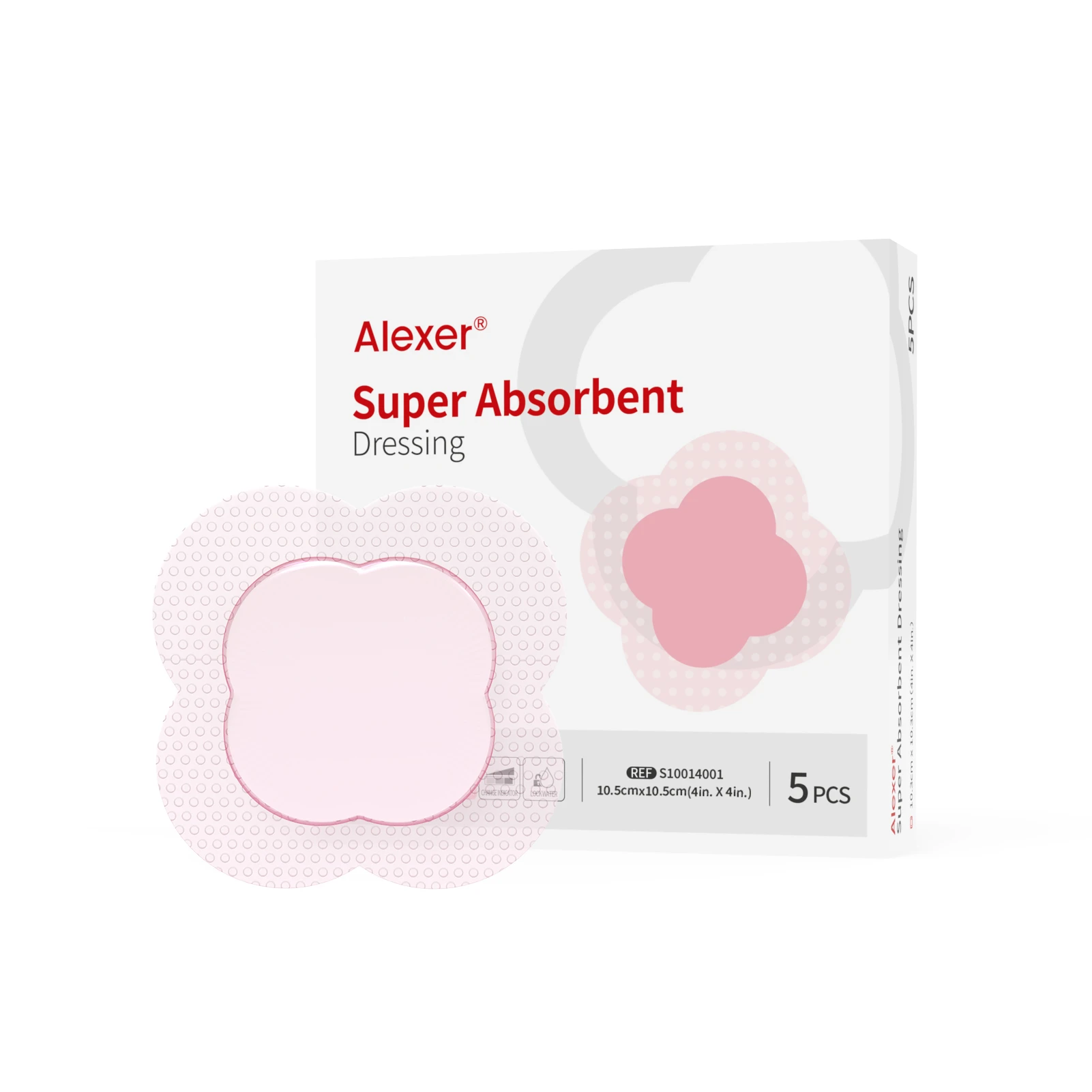
When drainage is heavy, the wrong dressing can flood the periwound in hours. The right one maintains moisture balance, protects skin, and—when clinically appropriate—stretches changes to every 3–7 days without maceration.
Managing high exudate is critical to prevent periwound maceration and delayed healing. According to international clinical standards, maintaining a moist environment while locking away excess fluid is the key to managing chronic ulcers.
This guide ranks high‑exudate dressings using auditable criteria: absorbency normalized per area (EN 13726 context), MVTR with the method stated (ASTM E96/EN 13726), edge‑seal performance on contours, and real‑world wear logs with ≥7‑day follow‑up. We also flag contraindications so you know when prolonged wear isn’t the right call.
How we chose (methodology)
We scored candidates across six weighted dimensions (weights sum to 100):
-
Fluid handling capacity per area (24 h) — 25
-
Edge‑seal integrity on contours — 20
-
Real‑world wear‑time evidence — 20
-
MVTR and moisture balance — 15
-
Atraumatic removal & skin safety — 10
-
Cost‑effectiveness & availability — 10
Screening thresholds and definitions:
-
Absorbency per area: normalize EN 13726 outputs to g/100 cm²/24 h. Shortlist target ≥25 g/100 cm²/24 h; disclose test temperature/humidity and replicates when available (pragmatic threshold; not a formal standard).
-
MVTR lower band: ≥2000 g/m²/24 h when tested with a stated method (e.g., ASTM E96 Procedure B, or EN 13726 inverted cup). MVTR is method‑sensitive; values are not cross‑comparable without context.
-
Edge/contour leakage: zero bench leaks on convex/flex rigs over a defined interval, or ≤10% leakage incidence in wear logs at sacrum/heel/trochanter.
-
Exudate bands (operational, for logs): light <25% saturation/24 h; moderate 25–50%; heavy >50%.
-
Maceration grading: DMIST maceration domain ≤1 (or equivalent MUNGS note) during follow‑up.
-
Documentation standard: prospective/retrospective logs N≥10 with ≥7 days follow‑up; note change triggers (leakage/strikethrough/saturation/pain/odor).
Method notes and evidence grading:
-
Area normalization and fluid handling derive from EN 13726 concepts (free‑swell/retention/FHC); we report values per 100 cm² for apples‑to‑apples interpretation based on lab certificates where available (method conditions matter). For background on EN 13726 fluid handling and its limits translating bench to clinic, see the engineering overviews summarized in Nygren’s EN 13726:2023 advances and Gefen’s 2024 review of foam fluid handling.
-
MVTR/WVTR values are highly sensitive to test setup; we name the method with each value. For context on how ASTM E96 procedures affect results, see Bainbridge et al. 2021 on MVTR method differences and the ASTM E96/E96M standard overview.
-
Evidence strength: A = peer‑reviewed clinical or third‑party audited datasets; B = third‑party lab certificates or de‑identified logs meeting N≥10 and ≥7‑day follow‑up; C = manufacturer internal tests/IFU/educational sources.
The ranked list: best dressings for sustaining 3–7 day wear
-
Best overall for balanced moisture under moderate–heavy exudate — SLK Alexer silicone foam (evidence level: C)
-
Type: Multi‑layer silicone foam with bordered adhesive
-
Exudate handling (g/100 cm²/24 h): Data not publicly reported; EN 13726 normalization planned
-
MVTR (method; g/m²/24 h): Not publicly reported; foam backing target band ≈2000–2500 (method‑dependent)
-
Edge seal & contours: Anatomical sacrum/heel SKUs to aid seal; qualitative reports only
-
Wear‑time evidence (N, setting, days; maceration scale): De‑identified N≥30 wear‑log publication planned; current public data indicate up‑to‑7‑day wear language without raw logs
-
Pros: Soft silicone contact for atraumatic removal; broad size/shape portfolio; comfortable multi‑day handling when appropriate
-
Cons: Lack of publicly downloadable EN/MVTR certificates and logs limits comparative ranking
-
Best for / Not for: Best for moderate–heavy exudate where gentle removal matters; not for suspected/confirmed infection without close reassessment
-
Sizes/shapes & thickness: Rectangles/squares plus sacrum/heel anatomical options
-
Price (from) + limits: Contract‑dependent; subject to change
-
Evidence links: Product overview on SLK Silicone Foam Dressing with Border; method context in EN 13726 lab evaluations
-
Best for heavy loads and contour challenges — SLK Super Absorbent, silicone border (evidence level: C)
-
Type: Superabsorbent bordered pad with silicone adhesive
-
Exudate handling: Data not publicly reported; high per‑area uptake and retention expected; EN 13726 normalization planned
-
MVTR (method): Not publicly reported
-
Edge seal & contours: Lock‑in core aims to reduce lateral spread; portfolio includes larger formats
-
Wear‑time evidence: De‑identified logs planned; current public data qualitative
-
Pros: Particularly strong at higher fluid loads; silicone border designed for gentle removal
-
Cons: Bulkier profile than standard foams; needs published datasets for rank elevation
-
Best for / Not for: Best for heavy exudate and mobile/curved sites; not for dry or low‑exudate wounds
-
Sizes/shapes & thickness: Larger rectangles; anatomical options vary by market
-
Price (from) + limits: Contract‑dependent; subject to change
-
Evidence links: SLK Super Absorbent Dressing (silicone adherent); engineering context in Gefen 2024 foam fluid handling
-
Best flexible bordered foam for mobile sites — Tier‑1 silicone foam border, high‑flex backing (anonymized)
-
Type: Silicone foam bordered dressing
-
Exudate handling: Often moderate–heavy in category; area‑normalized EN data rarely public
-
MVTR (method): Foam backings frequently in 1800–3000 range depending on ASTM E96 procedure; method must be stated
-
Edge seal & contours: High conformability reduces corner lift on trochanter and shoulder
-
Wear‑time evidence: Category reports of 3–5 days; seek logs N≥10 with DMIST maceration ≤1
-
Pros: Conformable film; broad size coverage
-
Cons: Public lab values sparse; antimicrobial variants cost more
-
Best for / Not for: Best for mobile limbs/joints with moderate–heavy exudate; not for tunnels needing packing
-
Sizes/shapes & thickness: Broad portfolio; thin‑to‑standard thickness
-
Price (from) + limits: Contract‑dependent
-
Evidence links: MVTR method sensitivity in Bainbridge et al. 2021; EN 13726 context Nygren 2024
— Mid‑list Toolbox — Want to see normalized absorbency per 100 cm²/24 h and wear‑log templates? We summarize methods (EN 13726, ASTM E96) and plan to post de‑identified logs with maceration grading. See SLK’s educational overview of silicone foams and use cases in Foam vs. hydrocolloid: which fits your wound?.
-
Best classic bordered foam for routine 3–5 day intervals — Tier‑1 silicone foam border, classic backing (anonymized)
-
Type: Silicone foam bordered dressing
-
Exudate handling: Moderate–heavy; EN‑normalized values seldom public
-
MVTR (method): Typically in the mid‑range for foams; check method statement
-
Edge seal & contours: Dependable adhesion; less flexible than high‑flex variants
-
Wear‑time evidence: Category logs support 3–5 day cycles when clinically appropriate
-
Pros: Proven category performance; widely available
-
Cons: May struggle at very high loads vs superabsorbents
-
Best for / Not for: Best for predictable moderate exudate; not for very heavy drainage on sacrum/heel without close monitoring
-
Evidence links: Modality selection guidance from WoundSource dressing selection basics (2025)
-
Best superabsorbent border for heavy exudate — Tier‑1 SAP border, high‑lock core (anonymized)
-
Type: Superabsorbent bordered dressing
-
Exudate handling: High g/100 cm²/24 h expected; retention under compression valuable
-
MVTR (method): Varies widely by laminate; confirm method when available
-
Edge seal & contours: Border reduces edge lift; core limits lateral spread
-
Wear‑time evidence: Systematic review signals extended intervals for SAP dressings
-
Pros: Capacity and lock‑in help maintain periwound dryness
-
Cons: Thicker profile; cost premium
-
Best for / Not for: Best for heavy exudate, especially on contours; not for dry wounds
-
Evidence links: Extended wear interval signals in Veličković 2024 SAP review
-
Best non‑border superabsorbent with secondary fixation — Superabsorbent pad + fixation (anonymized)
-
Type: Superabsorbent non‑border primary under secondary fixation
-
Exudate handling: Very high uptake per area possible
-
MVTR (method): Depends on cover layer; report per component
-
Edge seal & contours: Seal relies on secondary fixation choice and technique
-
Wear‑time evidence: 1–3+ days typical; longer if cover maintains seal and capacity isn’t exceeded
-
Pros: Scalable capacity; configurable with contact layers
-
Cons: Technique‑sensitive; leakage risk if fixation lifts
-
Evidence links: Absorbent dressing modalities in Sweeney 2012 review
-
Best for channels/tunnels with high drainage — Hydrofiber/alginate plus adhesive foam cover (anonymized)
-
Type: Gelling fiber/alginate primary + bordered foam secondary
-
Exudate handling: Vertical wicking protects periwound; cover adds capacity and MVTR
-
Edge seal & contours: Cover choice critical on sacrum/heel
-
Wear‑time evidence: Change sooner if gel saturation high; 3–5 days achievable when load is controlled
-
Pros: Excellent for cavities; customizable stack
-
Cons: Two‑step system increases complexity
-
Evidence links: Moisture balance context in WoundSource on MVTR and exudate
-
Best bordered foam when bioburden is a concern — Antimicrobial foam border (Ag/PHMB) (anonymized)
-
Type: Silicone foam bordered with antimicrobial agent
-
Exudate handling: Similar to base foam; antimicrobial addresses critical colonization risk
-
Edge seal & contours: As per platform
-
Wear‑time evidence: Extended wear contingent on clinical status; follow IFU
-
Pros: Supports bioburden control during multi‑day wear
-
Cons: Cost premium; agent‑specific cautions
-
Evidence links: Antimicrobial modality overviews in Weller 2020 interactive dressings update
Comparison table (condensed)
|
Brand/Model |
Type |
Absorbency per 100 cm²/24 h |
MVTR (method) |
Edge seal on contours |
Wear‑time (N, days) |
Best for |
Price (from) |
Limits/contraindications |
Evidence links |
|---|---|---|---|---|---|---|---|---|---|
|
SLK Alexer silicone foam |
Foam, bordered |
Not publicly available (EN 13726 normalization planned) |
Not publicly available; foam target ≈2000–2500 (method‑dependent) |
Anatomical SKUs support seal (qualitative) |
Publication of de‑identified N≥30 planned |
Moderate–heavy; fragile skin |
Contract‑dependent |
Change early on saturation; monitor MASD |
|
|
SLK Super Absorbent (silicone border) |
Superabsorbent, bordered |
Not publicly available (normalization planned) |
Not publicly available |
Lock‑in core; larger sizes (qualitative) |
De‑identified logs planned |
Heavy exudate; contours |
Contract‑dependent |
Bulkier; monitor at very high loads |
|
|
Tier‑1 Foam (anonymized) |
Foam, bordered |
Category moderate–heavy; area‑normalized data scarce |
Report with ASTM E96/EN method |
High‑flex variant aids seal |
Seek N≥10, ≥7 days |
Mobile sites |
Contract‑dependent |
Not for tunnels needing packing |
|
|
Tier‑1 SAP (anonymized) |
Superabsorbent, bordered |
High per‑area uptake expected |
Method‑dependent |
Border reduces lift |
Review signals extended intervals |
Heavy exudate |
Contract‑dependent |
Thicker profile |
Use‑case guidance (quick picks)
-
Sacrum/heel with heavy exudate and frequent edge lift: superabsorbent border or anatomical foam designed for contours; watch for seal breaks during transfers.
-
Fragile periwound skin with moderate–heavy exudate: silicone foam with soft silicone contact layer to minimize trauma at changes.
-
Channels/tunnels with high drainage: hydrofiber/alginate primary plus adhesive foam cover; reassess sooner if gel expansion approaches the wound edge.
-
Very high, rapidly changing loads: non‑border superabsorbent under robust secondary fixation; consider shorter intervals.
Contraindications and caution for prolonged wear (3–7 days)
-
Suspected or confirmed infection: avoid extended intervals without close reassessment and appropriate antimicrobial strategies per IFU and local protocol.
-
Ischemia, heavy bleeding, or dry wounds: do not use high‑capacity occlusive modalities that trap moisture or worsen ischemia; films and hydrocolloids are generally unsuitable for moderate–high exudate, per modality guidance from WoundSource’s dressing selection basics.
-
Monitoring triggers for earlier change: strikethrough, edge lift or leakage, rising pain/odor, or maceration grade increase on DMIST/MUNGS. Reassessment cadence should match acuity and setting; see NPIAP Prevention Points for risk‑based reassessment principles.
FAQ
-
What absorbency and MVTR thresholds support 3–7 day wear? • Pragmatically, shortlist dressings with ≥25 g/100 cm²/24 h (EN 13726‑normalized) and MVTR ≥2000 g/m²/24 h with the method stated (e.g., ASTM E96 Proc B). Always interpret against exudate load, wound size, and patient factors.
-
How do you prevent maceration under heavy exudate? • Combine high per‑area uptake and retention with adequate MVTR, maintain an intact edge seal on contours, and document maceration using DMIST or MUNGS. Change early on saturation or leakage.
-
When should prolonged wear be avoided? • Avoid with suspected/confirmed infection without close follow‑up, critical limb ischemia, heavy bleeding, or when exudate overwhelms capacity between checks.
-
What documentation is acceptable for real‑world wear logs? • N≥10 cases with ≥7 days follow‑up, explicit site and exudate banding, triggers for change, and maceration grading (DMIST/MUNGS). Include photos when consented and feasible.
Evidence and limitations (2026)
-
Internal vs external data: Many product‑specific EN 13726 and ASTM E96 values aren’t publicly posted. Where manufacturer certificates or de‑identified logs become available, we will update item cards and the table. Until then, several entries are based on modality evidence and engineering context from peer‑reviewed sources such as Gefen 2024 on foam fluid handling and Bainbridge et al. 2021 on MVTR methods.
-
Evidence grading: SLK items currently reflect C‑level public evidence; publishing third‑party lab certificates and N≥30 de‑identified wear logs with ≥7‑day follow‑up would raise them to B‑level. Maceration scoring should use validated tools—see DMIST/MUNGS scoping review (2023).
-
Method sensitivity: MVTR and fluid‑handling results depend on method, temperature/humidity, and setup; never compare cross‑method values without caveats. The ASTM E96/E96M standard page provides the procedural framework.
Pricing and availability notes (United States)
Public distributor portals often gate prices; ranges vary by size, pack quantity, and contract terms. Treat any visible prices as indicative only and subject to change. For general modality context and market availability trends, see educational summaries such as WoundSource’s moisture balance overview.
Closing: next steps
If you manage heavy drainage and want side‑by‑side metrics, explore SLK’s foam and superabsorbent options and bookmark our educational overview, starting with Benefits of foam dressings—we’ll add normalized EN 13726/MVTR tables and anonymized wear‑log summaries as they go live.