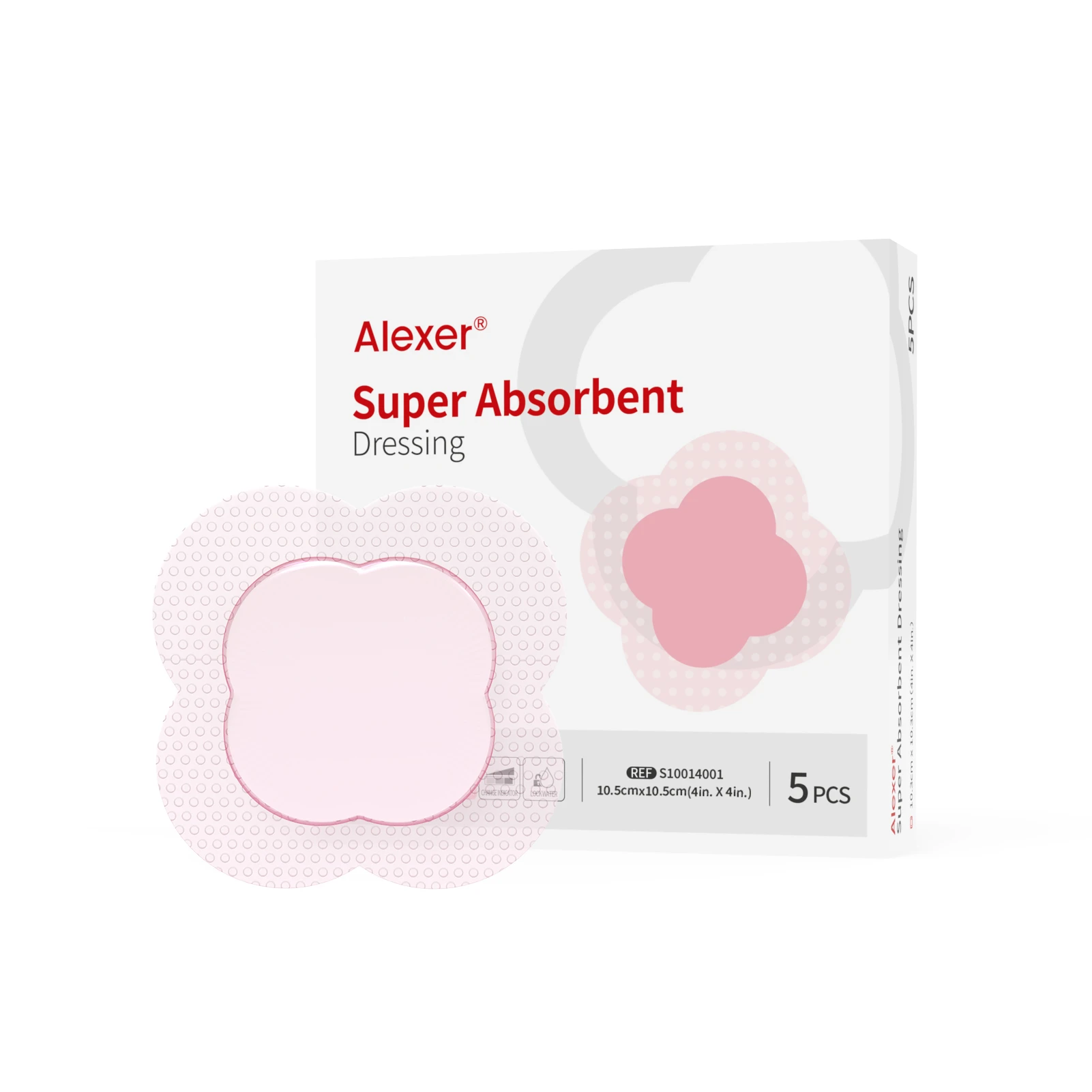
Pressure ulcers hurt many people every year. These wounds are common in hospitals. The rate can be as high as 12%. Foam dressings help stop and heal these wounds. Some top choices are SLK Medical’s Alexer Silicone Foam Dressing with Border, Composite Type, Non Adhesive, Border Flex, and Ag with Border. When you pick a foam dressing supplier, match the product to the wound and what the patient needs. SLK Medical has FDA and ISO 13485 certified products. They use advanced D-Pore technology and offer OEM customization. You should ask for samples to test in clinics. This helps make sure you get the best results.
Key Takeaways
-
Pressure ulcers happen a lot in hospitals. Many patients get them. Knowing the stages helps you pick the right foam dressing. This helps wounds heal better.
-
Foam dressings keep wounds moist. They soak up extra fluid. This helps wounds heal faster. Always use the right dressing for each wound.
-
Comfort matters. Non-adherent foam dressings lower pain when changed. They protect skin that is sensitive. These are good for patients with allergies.
-
Pick suppliers like SLK Medical. They have FDA and ISO certified products. This means the products are safe and high quality. You can get samples. Just ask.
-
Ask suppliers for samples to try in your clinic. This helps you find the best dressing for each patient’s needs.
Understanding Pressure Ulcers and Wound Types
What Are Pressure Ulcers?
Pressure ulcers are injuries that happen when skin and tissue break down from staying in one position for too long. You often see these wounds on bony areas like the hips, heels, and tailbone. People who spend a lot of time in bed or use wheelchairs face a higher risk. Pressure ulcers can cause pain and make healing harder. You need to know how these wounds start so you can choose the best treatment options.
Adhering to the latest NPIAP/EPUAP clinical guidelines, the cornerstone of pressure ulcer management lies in optimizing the wound microenvironment through moisture balance and vertical pressure redistribution. Grounded in Dr. George Winter’s seminal 1962 ‘Moist Wound Healing’ theory, SLK’s proprietary D-Pore™ technology represents a leap in material science. By utilizing a unique vertical pore structure, our dressings lock in excess exudate to prevent periwound maceration, while simultaneously maintaining the ideal humidity levels required for accelerated cellular regeneration.
Types of Wounds for Foam Dressings
Foam dressings help you care for many kinds of wounds. You can use them for diabetic foot ulcers, chronic leg ulcers, surgical wounds, and burns. These dressings work well because they match the stiffness of human skin. This helps protect fragile skin better than some other materials. Many clinicians do not realize that hydrocolloid dressings may not give enough support for sensitive skin. Foam dressings offer a moist environment and absorb extra fluid, which helps wounds heal faster. You should always match the wound type to the right dressing. For example, diabetic foot ulcers and chronic leg ulcers need dressings that can handle a lot of fluid. Surgical wounds need protection from bacteria and friction.
Tip: Nearly 35% of pressure ulcers come from medical devices. Picking the right foam dressing can help prevent these injuries.
Stages of Pressure Ulcers
Pressure ulcers have four main stages.
-
Stage I: The skin looks red but does not break.
-
Stage II: The skin breaks open or forms a blister.
3. Stage III: The wound gets deeper and may show fat tissue.
4. Stage IV: The wound reaches muscle or bone.
You must know the stage of the pressure ulcer before you choose a dressing. Early stages may need gentle foam dressings. Advanced stages need dressings that absorb more fluid and protect against infection. Matching the dressing to the wound stage helps you get better healing results.
In clinical reality, managing pressure injuries in high-pressure anatomical sites like the sacrum or heel presents a dual challenge. Beyond exudate control, clinicians frequently struggle with dressing displacement. When a dressing shifts, it creates secondary shear force—a leading cause of further tissue damage. The SLK Alexer® series is specifically engineered with an ergonomic, multi-layered design that ensures a secure, contoured fit. This stability is critical for maintaining skin integrity during high-frequency patient repositioning and transfers.
Key Criteria for Wound Dressing Selection
Absorption and Exudate Management
It is important to pick a dressing that controls fluid well. Foam dressings help keep wounds clean by soaking up exudate. Good absorption stops the skin from getting too wet. This helps wounds heal faster. The right dressing keeps moisture balanced. You should choose dressings that hold fluid and protect skin. Check the wound often and change the dressing when needed.
Comfort and Non-Adherence
Patients need comfort with their wound dressings. Dressings should not stick to the skin. Non-adherent dressings make changes less painful. They also protect weak skin. Foam dressings with silicone layers feel soft and help patients feel calm. The right care lowers stress and helps healing. The table below shows how comfort and non-adherence help patients:
|
Study |
Findings |
|---|---|
|
Santamaria et al. (2015) |
Foam dressings lowered pressure injuries in very sick patients before ICU transfer (≤10%). |
Infection Control in Wound Care
Wounds must be kept safe from germs. Dressings with waterproof layers block bacteria. Some foam dressings use silver to fight infection. Pick dressings that help keep wounds clean and lower infection risk. Clean wounds are important for good care.
Application, Removal, and Customization
Dressings should be easy to put on and take off. Gentle adhesives do not hurt the skin. Some foam dressings can be cut to fit the wound. Customizing dressings helps match each wound. Suppliers like SLK Medical offer OEM and bulk orders. International standards help make sure dressings are safe. The table below shows how these standards help with wound care:
|
Standard |
Impact on Quality and Safety |
|---|---|
|
ISO 13485 |
Makes sure products are made with strong quality rules for safety and effectiveness. |
|
FDA Approval |
Proves the product is safe and high quality for buyers. |
Always check for these certifications when picking dressings for wound care.
Best Wound Dressings by Type and Supplier

Picking the right wound dressing helps each patient heal better. SLK Medical has foam dressings for many wound types. These include pressure ulcers, diabetic foot ulcers, burns, and surgical wounds. You can find a dressing for every stage and spot. The list below shows which SLK Medical products work best for each wound type and why they are special.
Stage I-II Pressure Ulcers – SLK Medical Silicone Foam Dressings
Early-stage pressure ulcers need dressings that protect weak skin and keep it moist. SLK Medical’s Silicone Foam Dressing with Border (Skin Color) and Silicone Foam Dressing with Border (Pink Color) are great choices. These dressings use D-Pore technology to soak up fluid and let air in. The soft silicone layer sticks gently and comes off without pain. This is good for sensitive skin and early wounds.
Here is a table that shows what makes these foam dressings good for Stage I-II pressure ulcers:
|
Feature |
Description |
|---|---|
|
Advanced Silicone Foam |
D-Pore™ technology helps absorb fluid and lets air in. |
|
Gentle Adhesion |
Soft silicone layer makes removal easy and protects skin. |
|
High Absorbency |
Foam pad soaks up extra fluid and keeps skin healthy. |
|
Moist Wound Environment |
Keeps the wound moist to help it heal faster. |
|
Pain-Free Removal |
Comes off easily without hurting skin, good for sensitive areas. |
|
Infection Protection |
Traps moisture and bacteria, lowering infection risk. |
|
Multi-Layer Design |
Each layer helps keep the wound clean and comfortable. |
You can use these dressings for diabetic foot ulcers, burns, and surgical wounds. They also work as waterproof dressings to keep water and germs out.
Stage III-IV Pressure Ulcers – High Absorbency Solutions
Deep wounds like Stage III-IV pressure ulcers need dressings that soak up lots of fluid. SLK Medical’s Silicone Foam Dressing Composite Type (Pink Color) gives strong absorbency and fits well. The multi-layer design locks in fluid and keeps the wound moist. This helps wounds heal faster and lowers infection risk. The composite type fits many body shapes, so you can use it for hard-to-cover wounds.
This foam dressing also works for diabetic foot ulcers, burns, and chronic wounds. It absorbs well and has a gentle silicone layer for sensitive skin. You will find it easy to put on and take off, which helps care for deep wounds.
Exuding and Infected Wounds – Antimicrobial Foam Dressings (Ag)
Wounds with lots of fluid or infection need dressings that fight germs. The Silicone Foam Ag Dressing with Border from SLK Medical has silver ions. Silver helps kill germs and lowers infection risk. The foam soaks up fluid and keeps the wound moist, which helps healing. The gentle silicone border makes removal easy and painless.
You can use this dressing for diabetic foot ulcers, burns, and wounds with infection. Silver gives extra protection for wounds that heal slowly or have high infection risk.
Note: Silver dressings are good when you need more infection control for wounds with lots of fluid.
Difficult-to-Dress Areas – Flex and Composite Types
Some wounds are on body parts that move or have odd shapes. For these spots, you need dressings that stretch and stay in place. SLK Medical’s Silicone Foam Dressing – Border Flex uses Flex Technology for full stretch. The dressing fits well on heels, elbows, and tricky spots. The Silicone Foam Dressing Composite Type (Pink Color) also works for these areas.
Here is a table that shows why flex and composite foam dressings are helpful:
|
Advantage |
Description |
|---|---|
|
Absorbency |
Handles moderate to heavy fluid with strong absorbency. |
|
Moisture Control |
Keeps the wound moist and absorbs extra fluid. |
|
Protection from Contamination |
Blocks germs and keeps the wound clean. |
|
Comfort |
Soft and cushioned, these dressings fit gently and feel good. |
You can use these foam dressings for diabetic foot ulcers, burns, and wounds on joints or curved areas. The flexible design helps the dressing stay on, even when the patient moves.
Non-Adhesive and Sensitive Skin Solutions
Some patients have skin that reacts to sticky dressings or needs gentle care. For these cases, use the Non Adhesive Foam Dressing or the Silicone Foam Dressing without Border. These dressings do not stick to skin, so you can use another dressing or tape. They are gentle and safe for weak skin.
These dressings work for diabetic foot ulcers, burns, and wounds that need many changes. You can cut them to fit any shape, which helps with hard-to-reach wounds. They also help avoid pain and skin damage when changing dressings.
Tip: Non-adhesive foam dressings are good for patients with allergies or very sensitive skin.
SLK Medical gives you many wound dressings for every need. You get advanced foam dressings for early and late pressure ulcers, antimicrobial options for infected wounds, flexible dressings for hard-to-cover areas, and gentle choices for sensitive skin. These products help you give the best care for every wound.
Choosing a Foam Dressing Supplier

Why SLK Medical Leads in Wound Care
You want your patients to get the best care. SLK Medical is a top foam dressing supplier. They use D-Pore technology to help wounds heal faster. SLK Medical meets FDA and ISO 13485 rules. You can trust their products for safety and quality. They have foam dressings for diabetic foot ulcers, burns, and more. There are options for sensitive skin and hard-to-cover spots. SLK Medical also lets you order in bulk or get custom dressings. You can get free samples, just click here.
Comparing Wound Dressing Suppliers
It is smart to compare foam dressing suppliers first. Check what kinds of foam dressings each one has. Some only offer basic foam dressings. Others, like SLK Medical, have choices for many wounds. You want a supplier with dressings for every wound type. See if they use new technology and follow world standards. Ask about delivery speed and customer service. A good supplier helps you get foam dressings fast.
|
Supplier Feature |
SLK Medical |
Other Suppliers |
|---|---|---|
|
FDA/ISO Certified |
✅ |
Sometimes |
|
Advanced Foam Technology |
✅ |
Rarely |
|
OEM/Customization |
✅ |
Limited |
|
Bulk Ordering |
✅ |
Sometimes |
|
Range for Diabetic Foot Ulcers |
✅ |
Varies |
Evaluating Supplier Credentials and Support
You need to check if your supplier has the right certificates. Look for FDA and ISO 13485 approval. These show the supplier cares about safety and quality. Ask if they give clinical support. Good support helps you use foam dressings for many wounds. You should also ask for samples to test. Trying foam dressings in your clinic helps you find the best one.
Tip: Suppliers with good support and clear certificates help you avoid problems.
OEM, Customization, and Bulk Solutions
Sometimes you need a lot of foam dressings or special shapes. SLK Medical offers bulk and custom orders. You can get foam dressings for diabetic foot ulcers, burns, and more in the sizes you need. Buying in bulk saves money. New foam dressings need fewer changes than old ones. You spend less on each patient. Studies show foam dressings lower total costs by $466 per patient. You also save $92 on dressings and $1,517 for each ulcer healed. You get more days without ulcers for less money.
-
Fewer dressing changes mean less work for your team.
-
Lower costs help your budget.
-
Bulk orders make sure you always have enough dressings.
Picking the right foam dressing supplier helps you care for wounds better. You save time and money. Patients heal faster too.
When you pick the right foam dressing, wounds heal better. Research shows multi-layer foam dressings protect places like heels and sacrum.
New research says picking the right foam dressing is very important for pressure ulcers. Multi-layer foam dressings work well for high-risk spots like heels and sacrum. These dressings spread out body weight. This lowers pressure on the skin and helps stop pressure ulcers.
SLK Medical offers:
-
Advanced D-Pore™ technology
-
International certifications
-
Custom solutions for every wound
You can ask for samples or talk to an expert. This helps you choose the best dressing for your patients.
FAQ
How do you choose the right foam dressing for a pressure ulcer?
Pick a dressing that matches the wound’s stage and fluid level. Early ulcers need soft dressings that soak up some fluid. Deep wounds need dressings that hold more fluid and fight germs. Ask your supplier for samples to try out.SLK Medical
Can you shower with SLK Medical foam dressings?
Most SLK Medical foam dressings let you shower. The waterproof polyurethane film keeps water away from the wound. Always read the product instructions before you take a bath or shower.
What makes silicone foam dressings the “gold standard” for pressure ulcer management?
Silicone foam dressings, like the Alexer® series, provide a critical balance of three factors: moisture management, pressure redistribution, and skin protection. Unlike traditional dressings, the medical-grade silicone adhesive ensures trauma-free removal, which is vital for patients with fragile skin or chronic pressure injuries.
At what stage of pressure injury should a foam dressing be applied?
Foam dressings are highly effective for Stage I and II pressure ulcers as a preventative and protective barrier. For Stage III and IV ulcers with moderate to high exudate, our D-Pore™ technology is recommended to manage fluid levels effectively while maintaining the moist environment necessary for cellular regeneration.
How often should SLK Alexer® foam dressings be changed?
The wear time depends on the wound’s exudate levels. However, Alexer™ dressings are engineered for durability, offering a wear time of up to 7 days. This reduces the frequency of dressing changes, minimizing patient discomfort and lowering overall clinical costs.
Can SLK Medical support private label (OEM) requirements for specific shapes?
Yes. As a direct manufacturer, we offer full OEM/ODM services. We can customize the thickness, absorption capacity, and anatomical shapes (such as Sacrum, Heel, or Multisite) to meet your brand’s specific market needs and clinical requirements.
Are SLK Medical products compliant with international medical standards?
Absolutely. All SLK Medical wound care solutions are produced in Class 100,000 cleanrooms and are fully compliant with FDA registration, CE (MDR), and ISO 13485 standards, ensuring global market access and patient safety.