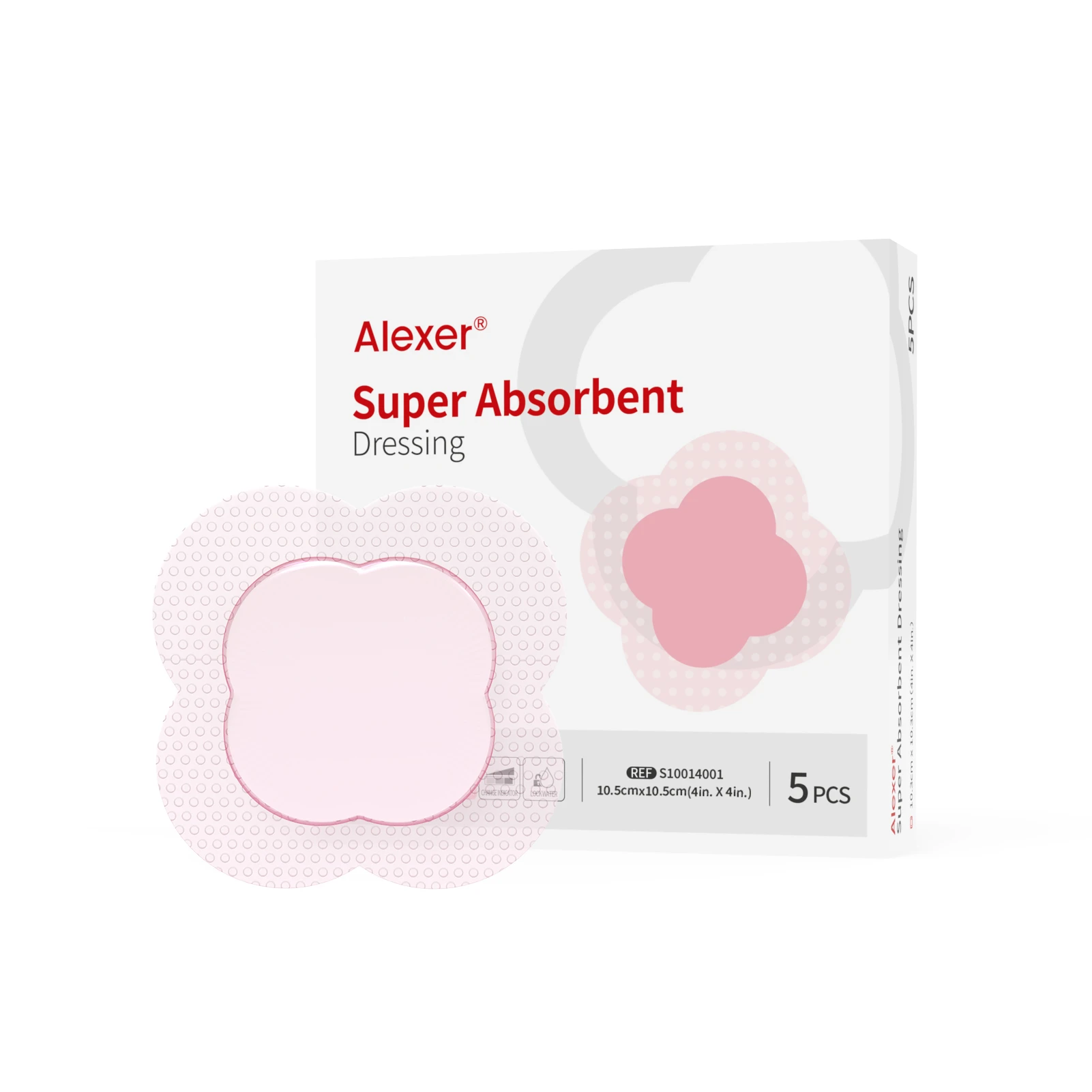
You rely on foam dressing to manage wounds and promote healing. These dressings use advanced materials to absorb exudate, keep the area moist, and protect skin. Choosing the right foam dressing improves wound care, reduces pain, and lowers costs. Studies show that using foam dressings can cut dressing changes by nearly half and decrease weekly expenses by 59%. When you match the dressing to both the wound and patient needs, you support faster recovery and greater comfort.
Key Takeaways
-
Choosing the right foam dressing can significantly improve wound healing and reduce pain, leading to better patient comfort.
-
Foam dressings come in various types, including standard, bordered, antimicrobial, and silicone options, each designed for specific wound care needs.
-
Effective exudate management is crucial; foam dressings absorb moisture while maintaining a balanced environment, reducing infection risks.
-
Patient factors, such as skin sensitivity and wound characteristics, should guide the selection of foam dressings for optimal outcomes.
-
Regular assessment and timely dressing changes enhance healing, with many foam dressings allowing for wear times of up to seven days.
Foam Dressing Types
You will find many foam dressing types available for wound care. Each type offers unique features that help you manage wounds more effectively. The main categories include standard foam dressings, bordered foam dressings, antimicrobial foam dressings, silicone foam dressings by SLK Medical, and non adhesive foam dressings by SLK Medical. The table below shows how the market defines these categories:
|
Category Type |
Examples |
|---|---|
|
By Type |
Adhesive Foam Dressing |
|
|
Non-adhesive Foam Dressing |
|
By Application |
Chronic Wounds |
|
|
Acute Wounds |
|
By End-use |
Hospitals |
|
|
Home Healthcare |
|
|
Others |
|
By Region |
North America |
|
|
Europe |
|
|
Asia-Pacific |
|
|
South America |
|
|
Middle East and Africa |
Standard Foam Dressings
Standard foam dressings use a soft, absorbent foam layer to manage exudate and protect the wound. You can use these dressings for both acute and chronic wounds. They help maintain a moist environment, which supports wound healing. The foam structure provides mechanical protection and adapts to body contours. You will notice that these dressings do not stick to the wound bed, making them suitable for complex wounds. They also offer thermal insulation and can be worn for up to seven days, reducing dressing change frequency and treatment costs.
-
Foam dressings maintain a moist wound healing environment by transporting wound exudate into the foam.
-
They provide mechanical protection for the wound through tensile stiffness and strength.
-
Lower risk of adhesion to fragile wound bed tissue makes them suitable for complex wounds.
-
Foam dressings offer thermal insulation and adapt to body contours.
-
You can use them on both acute and chronic wounds, as well as partial and full thickness wounds.
Bordered Foam Dressings
Bordered foam dressings include an adhesive border that secures the dressing to the skin. This design prevents displacement and leakage. You do not need a secondary dressing, which reduces the risk of skin irritation. These dressings are ideal for high-risk areas and patients who need longer wear times. The table below compares bordered and non-bordered foam dressings:
|
Feature/Aspect |
Bordered Foam Dressings |
Non-Bordered Foam Dressings |
|---|---|---|
|
Adhesive Border |
Yes, secures to skin, prevents displacement and leakage |
No, requires additional fixation |
|
Flexibility |
Less flexible, ideal for high-risk areas |
More flexible, suitable for hard-to-dress areas |
|
Clinical Indications |
Preferred for pressure ulcer prevention |
Used for wounds needing frequent inspection |
|
Wear Time |
Longer, up to seven days |
Shorter, may require more frequent changes |
|
Comfort during Changes |
Painless removal, reduces trauma |
May cause discomfort during changes |
|
Recommended Use |
High-risk patients, intensive care, surgical settings |
General wounds, especially those needing monitoring |
SLK Medical offers the Alexer Silicone Foam Dressing with Border in both skin and pink colors. These dressings feature a waterproof polyurethane film backing, a highly absorbent foam layer, and a gentle silicone contact layer. You can use them for post-operative wounds, pressure ulcers, diabetic foot ulcers, and burns. The self-adhesive border ensures a secure fit and minimizes the risk of leakage.
Antimicrobial Foam Dressings
Antimicrobial foam dressings contain agents such as silver or polyhexamethylene biguanide (PHMB) to reduce infection risk. You should consider these dressings for wounds at high risk of infection or those showing signs of critical colonization. Clinical studies show that silver-containing silicone foams can lead to significant wound closure in diabetic ulcers, with no clinical signs of infection at follow-up. Soft silicone foam dressings have also reduced the incidence and severity of hospital-acquired pressure injuries in intensive care patients. These dressings help manage exudate while providing antimicrobial protection.
|
Study Reference |
Findings |
|---|---|
|
Li et al., 2016 |
Use of a soft silicone foam dressing significantly reduced the incidence and severity of hospital-acquired pressure injuries in intensive care patients compared to standard care. |
|
Alven et al., 2022 |
Silver-containing silicone foams led to significant wound closure in diabetic ulcers, with no clinical signs of infection at follow-up. |
|
Coutts and Sibbald, 2014 |
Co-loaded PVA foam dressings improved critical colonization and pain scores in diabetic foot ulcers, with 57% of patients showing a decrease in wound size by week four. |
Silicone Foam Dressings by SLK Medical
SLK Medical’s silicone foam dressings stand out for their gentle adhesive, strong absorption, and soft silicone wound contact layer. The Alexer Silicone Foam Dressing with Border and Composite Type use a multi-layer structure. You will find a polyurethane film backing, a SAF absorption and retention layer, a non-woven distribution layer, and a foam absorbent layer. The soft silicone contact layer does not stick to the wound bed, which helps reduce pain during dressing changes and protects fragile skin. These dressings are waterproof and allow moisture vapor to escape, supporting optimal wound healing.
|
Feature |
SLK Medical’s Silicone Foam Dressings |
Other Silicone Foam Dressings |
|---|---|---|
|
Adhesive Type |
Gentle adhesive minimizing trauma |
Standard adhesive |
|
Absorption Capability |
Strong absorption for moderate to heavy exudate |
Varies by brand |
|
Wound Contact Layer |
Soft silicone that does not stick to the wound bed |
May stick to the wound bed |
|
Core Material |
Absorbent polyurethane foam |
Varies by brand |
|
Outer Layer |
Waterproof, allows moisture vapor escape |
Varies by brand |
You can use these foam dressings for a wide range of wounds, including post-operative wounds, pressure ulcers, diabetic foot ulcers, venous leg ulcers, and burns. The flexibility and gentle adhesion make them ideal for sensitive skin and hard-to-dress areas. The composite type offers extra conformability for awkward wound locations.
Non Adhesive Foam Dressings by SLK Medical
Non adhesive foam dressings by SLK Medical provide a versatile solution for wounds that require frequent inspection or for patients with fragile skin. These dressings do not have an adhesive border, so you can cut them to fit any shape or size. The waterproof polyurethane film backing acts as a bacteria barrier and prevents external friction. The foam absorbent layer manages exudate and maintains a moist environment. You can use these dressings for post-operative wounds, pressure ulcers, diabetic foot ulcers, venous leg ulcers, and burns.
|
Clinical Scenario |
Recommended Dressing Type |
|---|---|
|
Management of skin tears (STs) |
Non-adhesive foam dressings |
|
Patients at risk for ST development |
Silicone dressings |
|
Acute wounds healing in 7 to 21 days |
Non-adherent dressings |
You will find these foam dressings especially useful for managing skin tears and acute wounds. The ability to cut the dressing and its multi-way stretch ensure a comfortable fit, even on difficult-to-dress areas. The high absorption capacity allows for extended wear time, supporting patient comfort and reducing dressing changes.
Tip: When you select a foam dressing, always consider the wound type, exudate level, and patient needs. SLK Medical’s innovative foam dressings offer solutions for a wide range of clinical scenarios, helping you achieve better outcomes in wound care.
Key Features of Foam Dressings
Material and Structure
You will notice that foam dressings use advanced materials to support wound healing. The structure of each foam dressing affects its clinical performance. SLK Medical’s D-Pore™ technology creates dual-dimensional pores, which improve fluid absorption and breathability. This design also provides mechanical support for wounds. The table below shows how different properties of foam dressings influence their performance:
|
Property |
Effect on Performance |
|---|---|
|
Porosity |
Controls absorbency and manages exudate |
|
Compressive Stiffness |
Protects the wound by providing mechanical support |
|
Tensile Strength |
Maintains dressing integrity during use |
|
Bending Stiffness |
Allows the dressing to conform to body contours |
|
Coefficient of Friction (COF) |
Affects how the dressing interacts with the wound bed and skin |
You can see that the right material and structure help maintain moisture balance and protect both acute and chronic wounds.
Absorption Levels
Absorption is a key feature in foam dressings. You want a dressing that can handle different levels of exudate. The absorption capacity varies among leading foam dressings. SLK Medical’s foam dressings use advanced layers to lock in moisture and prevent leakage. The chart below compares the absorption capacities of popular foam dressings:

You will find that high absorption and retention help maintain moisture balance, reduce infection risk, and support clinical outcomes in wound care.
Adhesion and Borders
Adhesion and borders play a major role in the effectiveness and comfort of foam dressings. Silicone-bordered dressings, like those from SLK Medical, provide secure adhesion without sticking to the wound. This design allows for pain-free removal and easy repositioning. The table below highlights the impact of borders and adhesive layers:
|
Evidence Description |
Impact on Effectiveness and Comfort |
|---|---|
|
Silicone-bordered dressings provide secure adhesion without damaging the wound area. |
Enhances patient comfort during dressing changes. |
|
They conform to body shapes, ensuring a secure fit even in high-movement areas. |
Crucial for effective wound management. |
|
Silicone only sticks to the surrounding skin and not the wound. |
Reduces pain during dressing change, important for chronic wound management. |
|
Designed for pain-free, non-traumatic removal. |
Minimizes trauma to sensitive skin. |
You can choose bordered or non-bordered foam dressings based on clinical needs and patient comfort.
Patient Comfort and Skin Protection
Patient comfort and skin protection are essential in wound care. Advanced foam dressings, such as those with D-Pore™ technology, offer several benefits:
-
Painless dressing changes for both patients and nurses
-
No adherence to the wound surface, reducing pain during removal
-
Effective moisture management for optimal healing
-
Minimal pain upon removal, improving the experience for patients
You will see that these features help protect sensitive skin and support faster recovery. The right foam dressing can make a significant difference in both clinical results and patient comfort.
Foam Dressing in Wound Care

Exudate Management
You play a key role in exudate management when you select the right foam dressing. Foam dressings absorb exudate from wounds and keep the area clean. You can use these dressings for wounds with moderate to high exudate. Foam dressings help with exudate containment, which prevents maceration and reduces the risk of infection. You will notice that foam dressings provide cushioning and protect the wound from outside forces. Clinical trials show that foam dressings outperform hydrogels and antimicrobial dressings in exudate management.
-
Foam dressings absorb high to moderate exudate.
-
They maintain moisture and offer protection.
-
Clinical studies confirm their superior exudate management compared to other dressings.
Moisture Balance
You need to maintain moisture balance for effective wound healing. Foam dressings help you achieve this by allowing moisture vapor to escape while locking in excess exudate. This balance supports the healing process and reduces the risk of infection. The table below shows how different foam dressings perform in terms of moisture vapor transmission rate (WVTR):
|
Dressing Type |
WVTR (g/m2/24h) – Dry |
WVTR (g/m2/24h) – Wet |
|---|---|---|
|
Tegaderm |
980 |
12,750 |
|
Allevyn |
1,620 |
11,340 |
|
Mepilex |
1,360 |
11,040 |
|
Biatain |
80 |
1,730 |
|
Optifoam |
570 |
1,540 |
|
Versiva |
150 |
830 |

You can see that foam dressings support moisture balance in both dry and wet conditions. This feature is important for wounds that need a stable environment for healing.
Clinical Performance Compared to Other Dressings
You will find that foam dressings offer several advantages in clinical settings. Foam dressings provide semipermeability, thermal insulation, and moisture retention. These properties are essential for wound healing. Clinical studies show that foam dressings reduce the incidence of pressure ulcers, especially in at-risk patients. A randomized controlled trial found that multi-layered soft silicone foam dressings led to fewer pressure injuries in critically ill patients. The table below summarizes the evidence:
|
Evidence Type |
Description |
|---|---|
|
Foam Dressings |
Provide semipermeability, thermal insulation, and moisture retention, essential for wound healing. |
|
Clinical Studies |
Indicate that foam dressings can reduce the incidence of pressure ulcers, particularly in at-risk patients. |
|
Specific Study |
A randomized controlled trial showed significant reductions in pressure injuries with the use of multi-layered soft silicone foam dressings in critically ill patients. |
You can rely on foam dressings for both acute and chronic wounds. They help you manage exudate, maintain moisture, and improve patient comfort. Foam dressings support better clinical outcomes and reduce signs of infection.
Clinical Applications for Patient Needs
Acute and Chronic Wounds
You encounter both acute and chronic wounds in daily wound care practice. Foam dressings support moist wound healing and atraumatic removal, which helps minimize tissue damage. You see better patient-centred outcomes, especially for chronic wounds, because patients experience less pain and stress. Clinical studies show that foam dressings help manage exudate and reduce signs of infection. In a study with 180 patients, 92% showed no infection after six weeks of treatment. You notice improvement in wounds, with many progressing toward healing. Foam dressing use leads to high patient comfort and satisfaction.
Cavity and Deep Wounds
You often treat wounds with cavities or depth. Foam dressings with adhesive layers provide moisture and high absorption, making them suitable for packing cavities. You select dressings based on wound size and exudate management needs. The table below helps you match foam dressing features to wound characteristics:
| Characteristics — Advantages — Indications | | Polyurethane foam dressing with adhesive layer — Moist, highly absorbent, protective — Can be used to pack cavities | | Set size of foam may be limited by wound size — Needs daily change — Wounds with mild to moderate exudate, dry wounds, wounds that need frequent review |
You achieve better exudate containment and moisture balance when you choose the right foam dressing for cavity wounds.
Use Under Compression
You use foam dressings for venous leg ulcers under compression therapy. Studies show that foam dressings perform similarly to other dressings in healing outcomes. You do not see significant differences in patient-centred outcomes, pain, or dressing performance. You focus on exudate management and moisture balance to support wound healing.
-
Foam dressings work under compression but show no major advantage over other dressings.
-
You monitor wounds for signs of infection and adjust dressing choice as needed.
Practical Examples with SLK Medical Products
You improve patient-centred outcomes by using SLK Medical foam dressings. Patients report fewer dressing changes and lower weekly wound care costs. You see high satisfaction among patients and healthcare professionals. The chart below shows the impact of SLK Medical foam dressings:

“Our team noticed faster healing and fewer dressing changes. Patients felt more comfortable and confident.”
“I used Alexer foam dressing after surgery. It stayed in place and did not hurt when removed.”
You select SLK Medical silicone foam dressings for sensitive skin and wounds with high exudate. You achieve better moisture balance, exudate management, and patient comfort. Foam dressings from SLK Medical help you deliver optimal wound care and improve clinical applications for every patient.
Choosing the Right Foam Dressing
Assessing Wound and Patient Factors
You need to look at both the wound and the patient before you select a foam dressing. Each patient brings unique needs to wound care. The right choice supports wound healing and improves patient comfort. Use the table below to guide your assessment:
|
Factor |
Considerations |
|---|---|
|
Exudate level |
Choose dressings based on the wound’s exudate level (high, medium, low). |
|
Condition of the wound |
Use non-adhesive or silicone dressings for fragile skin. |
|
Wound depth |
For deeper wounds, consider alginate or gelling fiber dressings. |
|
Location on the body |
Assess the wound’s location for appropriate dressing size and adhesive strength. |
|
Wound infection or pain |
Use antimicrobial foam dressings for infected wounds. |
|
Wear time |
Consider how often the dressing needs to be changed and ease of application. |
You should always match the foam dressing to the wound’s exudate and the patient’s skin condition. This approach helps prevent infection and supports better clinical outcomes.
Practical Considerations (Cost, Ease of Use, Limitations)
When you compare foam dressings, you want to balance cost, comfort, and clinical performance. The table below shows how leading brands stack up:
|
Brand / Parameter |
Absorbency |
Comfort |
Value & Cost-Effectiveness |
|---|---|---|---|
|
SLK Medical Silicone Foam Dressings |
High |
Gentle silicone adhesive |
Cost-effective |
|
Mepilex Border Flex |
High |
Advanced flexibility |
Good value |
|
Biatain Silicone |
Superior |
Soft, flexible |
Cost savings |
|
Allevyn Life |
Good |
Gentle |
Competitive price |
|
Alexer |
High |
Comfortable |
Cost-effective |
|
Smith & Nephew |
High |
Some stiffness |
Higher cost |
|
Coloplast |
High |
Flexible |
Moderate cost |
|
3M, Medline, Cardinal Health |
Good |
Standard comfort |
Affordable |
You will find that some foam dressings offer higher absorbency or better patient comfort. Cost-effective options like SLK Medical and Alexer help you manage chronic wounds without sacrificing quality. Always consider how easy the dressing is to apply and remove, especially for patients with sensitive skin.
Tips for Optimal Selection
You can optimize your foam dressing selection by following expert tips:
-
Foam dressings provide a protective cushion that shields wounds from trauma and pressure.
-
They absorb significant exudate, keeping the wound moist but not overly wet.
-
Foam dressings work well for moderate to severe wounds, such as venous leg ulcers and traumatic wounds.
-
You can use foam dressings for surgical wounds to create a barrier and absorb exudate.
To get the best results, follow these steps:
-
Clean the wound before applying the foam dressing.
-
Trim the dressing to fit the wound size.
-
Place the dressing over the wound, smoothing out any air bubbles.
-
Secure the dressing with an appropriate secondary dressing if needed.
-
Monitor the dressing and wound regularly, replacing as needed.
Tip: Always assess the patient’s needs and the wound’s characteristics. The right foam dressing supports moisture balance, reduces infection risk, and improves clinical performance. Your careful selection leads to better patient comfort and faster healing.
You see that choosing the right foam dressing type makes a real difference in wound care. The table below highlights how silicone foam dressings show high efficacy in pressure injury prevention, though more long-term research is needed.
|
Dressing Type |
Efficacy in Pressure Injury Prevention |
Cost-Effectiveness Considerations |
Long-Term Outcomes Research Needed |
|---|---|---|---|
|
Silicone Foam Dressings |
High |
Limited |
Yes |
Matching foam dressings to each patient and wound leads to better healing, less infection, and improved patient comfort. Studies show that dressings tailored to patient needs can reduce wound area by nearly 94% at 12 weeks. SLK Medical’s innovative foam dressings help you manage exudate, protect against infection, and support clinical outcomes. For complex wounds, seek guidance from wound care specialists or explore training programs that focus on practical skills and ongoing support.
FAQ
What types of wounds can you treat with foam dressings?
You can use foam dressings for many wounds. These include pressure ulcers, diabetic foot ulcers, surgical wounds, burns, and traumatic injuries. Foam dressings work well for wounds with moderate to heavy exudate.
How often should you change a foam dressing?
You should change the dressing every 3 to 7 days. The exact timing depends on the wound’s exudate level and your healthcare provider’s advice. Always check for signs of leakage or infection.
Can you shower while wearing a foam dressing?
Most foam dressings from SLK Medical have a waterproof backing. You can shower without removing the dressing. Make sure the edges stay sealed to keep water out.
Are foam dressings safe for sensitive skin?
Yes, foam dressings with a silicone contact layer protect sensitive skin. They do not stick to the wound bed. You will feel less pain during dressing changes and avoid skin damage.
How do you choose the right size and shape of foam dressing?
|
Wound Area |
Recommended Shape |
|---|---|
|
Sacrum/Heel |
Sacrum or heel shape |
|
Large wounds |
Rectangle or square |
|
Small wounds |
Small square/rectangle |
You should pick a dressing that covers the wound and a small area of healthy skin.