


You do not want to worry about exudate leaking through your bandage. You also do not want it to slow down wound healing. Gelling fiber wound dressing makes things better for you. When you use a gelling fiber wound dressing, like SLK Medical’s Alexer® Gelling Fiber Dressing, you get strong absorption. This keeps your skin safe. Clinical studies show gelling fiber wound dressings soak up much more fluid than regular dressings:
-
They control wound exudate better, so the area stays clean and dry.
-
Gelling fiber wound dressings can hold up to twice as much fluid as regular dressings, even after many hours.
With this technology, wound care is easier and more comfortable. Your wound gets the best chance to heal.
Key Takeaways
-
Gelling fiber wound dressings soak up exudate well. They help keep wounds clean and dry. This helps wounds heal better.
-
Managing exudate the right way stops skin damage. It lowers the chance of infection. This helps you get better faster.
-
The Alexer® Gelling Fiber Dressing works for many wound types. It fits well and feels comfortable when you wear it.
-
Taking off the dressing gently causes less pain. This makes caring for wounds easier and less scary.
-
Check and change the dressing often. This helps wounds heal well and stops problems from happening.
Understanding Wound Exudate

What Is Exudate
Sometimes, you see liquid coming out of a wound. This liquid is called exudate. Exudate helps your body clean dead cells. It also helps fight germs. The kind of exudate depends on the wound and its stage. Chronic wounds often make more exudate than other wounds.
Here’s a simple chart showing the main types of exudate:
|
Type of Exudate |
Description |
|---|---|
|
Sanguineous |
Fresh, bright red, thick liquid. It is normal early in healing. |
|
Serous |
Clear or light yellow, thin liquid. It is common in new wounds. |
|
Seropurulent |
Cloudy, yellow or tan liquid. It might mean infection. |
|
Purulent |
Thick, milky, pus-filled liquid. It usually means infection is there. |
You can tell the type by its color and thickness. Each kind gives clues about how your wound is healing.
Why Exudate Management Matters
Taking care of exudate helps you feel better. It also helps your wound heal. Too much exudate can hurt your skin or cause infection. You need to keep the wound clean and dry.
Here are some problems if exudate is not managed:
-
Leaking can damage skin. This is called maceration.
-
Infection risk goes up because germs like wet places.
-
Healing takes longer, so healthcare costs go up.
You might feel embarrassed if your wound smells or leaks. Some people skip social events because of this. Good exudate care helps you heal faster and feel more confident.
When you control exudate, your wound heals better. Doctors can check your wound more easily. They can choose the best treatment. Dressings that soak up exudate, like gelling fiber dressings, help a lot.
How Gelling Fiber Wound Dressing Works
Absorption and Gel Formation
When you put a gelling fiber wound dressing on, something cool happens. The hydroactive fibers inside start working right away. They pull fluid from your wound and hold it deep inside. This is called absorption. The fibers change into a soft gel. The gel keeps the fluid locked in so it does not leak out.
The gel in gelling fiber dressings soaks up exudate and makes a gel. This gel helps control how wet the wound is, which is important for healing. This step is needed to keep the wound moist.
You might ask how this is different from hydrogel wound dressings. Hydrogels let water vapor out fast. They do not soak up as much fluid as gelling fiber dressings. Hydrogels are best for wounds with less exudate. Gelling fiber dressings work better for wounds with more exudate. They keep the wound moist by holding the fluid inside.
Here’s a quick look at the differences:
|
Dressing Type |
Exudate Management |
Additional Features |
|---|---|---|
|
Gelling Fiber Dressings |
Made for wounds with more exudate |
Holds exudate, makes a gel, fits the wound, stops skin damage, helps clean the wound |
|
Hydrogel Dressings |
Lets water vapor out, soaks up less exudate |
High WVTR, loses water vapor over time, may not soak up exudate well |
Moisture Balance and Skin Protection
You want your wound to stay moist but not too wet. Gelling fiber dressings help you get the right balance. The fibers are packed close together and act like a pump. They move liquid into the middle of the dressing. This stops fluid from sitting on your skin and keeps the area dry.
-
The dressing keeps the wound moist for healing.
-
It protects your skin from getting too wet and hurt.
-
It fits well, even in wounds with odd shapes or deep spots.
SLK Medical’s Alexer® Gelling Fiber Dressing uses smart technology to give these benefits. The fibers soak up exudate fast and turn into a soft gel. This gel keeps the wound moist, helps clean out dead tissue, and makes changing the dressing less painful. You get better healing and feel more comfortable every day.
Benefits of SLK Medical Gelling Fiber Dressing
Superior Absorption
You want a dressing that can handle whatever your wound throws at it. The Alexer® Gelling Fiber Dressing stands out for its exudate absorption. When you place it on a wound, the hydroactive fibers quickly soak up exudate and lock it inside. This action keeps the area around your wound dry and safe from maceration. You do not have to worry about leaks or skin damage.
-
The dressing uses advanced technology to trap exudate, blood, and even bacteria deep inside the gel.
-
It holds more fluid than many other modern wound dressings, so you can trust it for both chronic wounds and acute wounds.
-
Clinical results show that 93.3% of clinicians rate its absorption and retention as good or very good. Almost all users say it keeps its shape and strength, even when wet.
You get peace of mind knowing your wound treatment is working hard for you. The dressing supports the wound healing process by keeping the environment just right for tissue regeneration.
Tip: A dressing with high absorption means fewer changes and less disruption to your healing.
Non-Traumatic Removal
Changing dressings can make anyone nervous, especially if you have sensitive skin or a painful wound. The Alexer® Gelling Fiber Dressing makes removal easy and gentle. When it is time to change, the gel-like texture helps the dressing lift away from the wound bed without sticking or pulling.
-
Most patients rate their comfort during wear as good or very good.
-
The mean pain score during removal is only 1.3 out of 10, so you can relax during dressing changes.
-
The dressing keeps its integrity when wet, so you do not have to worry about pieces sticking to your wound.
You will notice less pain and less stress every time you change your dressing. This comfort helps you stay on track with your wound care and supports better healing.
Versatility for Wound Types
No two wounds are the same. Some are shallow, some are deep, and some have odd shapes. The Alexer® Gelling Fiber Dressing adapts to all of them. The flexible fibers let you fit the dressing into irregular wounds, cavities, or tunnels. It works for both chronic and acute wounds, making it a smart choice for many situations.
-
The dressing conforms closely to the wound bed, which 96.8% of clinicians rate positively.
-
It helps with autolytic debridement, so your wound stays clean and ready for regeneration.
-
You can use it for donor sites, surgical wounds, trauma, or any wound that needs strong exudate management.
You get a dressing that fits your needs, no matter the wound type. This flexibility means you can trust it for every stage of wound treatment, from the first day to full healing.
Note: The right dressing can make wound care easier and more comfortable for you and your care team.
With the Alexer® Gelling Fiber Dressing, you get the best of modern wound dressings: strong absorption, gentle removal, and a fit for any wound. You support your healing and make every step of your wound care routine easier.
Using Gelling Fiber Dressings
Application Steps
Getting the most out of your gelling fiber dressing starts with the right application. You want to make sure your wound gets the best possible care. Here’s a simple step-by-step guide:
-
Wash your hands and clean the wound with a gentle saline solution.
-
Pat the area dry. Make sure the skin around the wound is not wet.
-
Select a dressing that matches the size and shape of your wound. The right fit helps with absorption and keeps the dressing in place.
-
Place the dressing directly onto the wound bed. Smooth it out so it touches every part of the wound.
-
Cover the gelling fiber dressing with a secondary dressing for extra protection and moisture control.
-
Secure everything with medical tape or a silicone border if needed.
Tip: Always choose a dressing that absorbs and retains fluid well. This helps prevent maceration and keeps your skin healthy.
Common mistakes to avoid:
-
Picking a dressing that shrinks too much when wet, which can leave gaps.
-
Using a dressing that breaks apart during removal, which may leave pieces behind.
-
Forgetting to use a secondary dressing for wounds with heavy exudate.
Best Practices for Removal
Removing your dressing should be easy and comfortable. You want to avoid pain and keep your wound safe. Here are some best practices:
-
Gently lift the edge of the dressing. Move slowly to avoid pulling on the skin.
-
If you use a foam dressing with a silicone border, you’ll notice less pain during removal.
-
Make sure the dressing comes off in one piece. This helps prevent debris from staying in the wound.
-
If the dressing feels stuck, moisten it with saline before removal.
Note: Keeping the wound moist but not too wet helps with healing and makes removal easier.
Wound care specialists recommend checking the dressing often. If you see excess fluid or the dressing looks loose, change it sooner. Good absorption and gentle removal support your treatment and help you heal faster.
Real-World Results
Case Examples
You may wonder how gelling fiber dressings help in real life. Let’s look at some examples to see their effect. Doctors use these dressings for many kinds of wounds. They work for both long-lasting and new wounds.
|
Case Study |
Wound Type |
Patient Outcomes |
|---|---|---|
|
1 |
Chronic Wound |
Managed exudate well, improved quality of life |
|
2 |
Diabetic Foot Ulcer |
Two patients healed 50%, one patient healed 100% |
|
3 |
Various Aetiologies |
Clinical benefits and positive patient outcomes |
-
Two out of three people with diabetic foot ulcers healed halfway.
-
One person’s wound healed all the way.
-
These examples show that the right dressing helps a lot, even for hard-to-treat wounds.
Picking the best dressing helps you avoid problems and heal faster.
Patient Testimonials
You want to know what other people think about SLK Medical’s gelling fiber dressing. Many share good reviews about comfort and how well it works. Most say the dressing stays strong when worn and taken off. Patients also like that it works with compression therapy and moves fluid to another dressing.
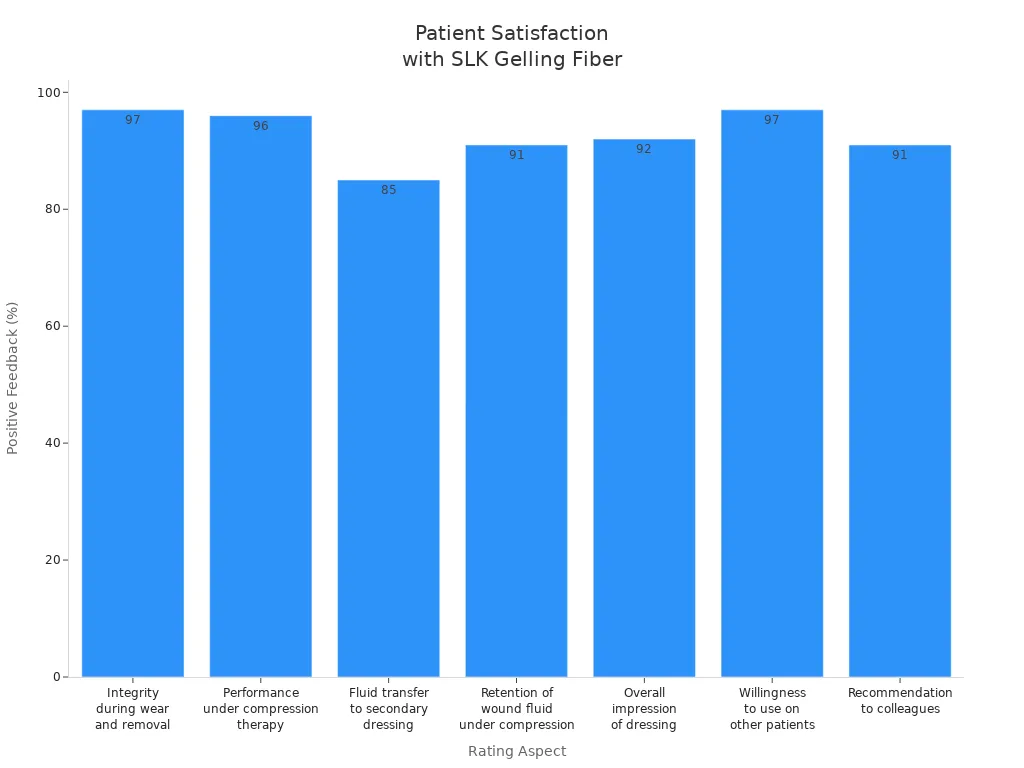
Here’s what patients and doctors say:
-
97% think the dressing stays together during use and removal.
-
96% say it works great with compression.
-
91% would tell others to use it.
-
97% would use it for more patients.
You get a dressing that helps you heal. Patients feel safer and more at ease during wound care.
When you pick a dressing that works for many wounds, you help yourself heal better and faster.
You need a dressing that makes wound care easy. SLK Medical’s Gelling Fiber Dressing helps control exudate well. It gives comfort and helps wounds heal faster. Clinical studies show it absorbs fluid 99.3% of the time. It also helps wounds get smaller by 55% on average. You can see these changes in chronic wounds.
|
Benefit |
Result |
|---|---|
|
Absorption |
99.3% effective |
|
Pain Reduction |
67% less pain |
|
Wound Size Reduction |
55% mean reduction |
If you want better healing, try advanced dressings like this. They can make your wound care much better.
FAQ
How often should you change a gelling fiber dressing?
You should change your dressing every 1 to 3 days. If you see heavy exudate or the dressing looks soaked, change it sooner. Always follow your healthcare provider’s advice.
Can you shower with the dressing on?
You can shower if you cover the dressing with a waterproof barrier. Water can weaken the dressing if it gets wet. Ask your nurse for tips on keeping it dry.
What wounds work best with Alexer® Gelling Fiber Dressing?
Alexer® Gelling Fiber Dressing works best for wounds with moderate to heavy exudate. You can use it for ulcers, surgical wounds, trauma, and wounds with tunnels or cavities.
Tip: Always pick a dressing that matches your wound’s needs.
Does removal hurt?
Most people say removal feels gentle. The gel texture helps the dressing lift off easily. You feel less pain compared to regular dressings.
|
Comfort Level |
Percentage of Patients |
|---|---|
|
Good/Very Good |
90% |
|
Mild Pain |
10% |


