


Introduction
Heavy exudate is where “good enough” dressing timing becomes a real problem: leakage onto linens, periwound maceration, painful removals, and higher total cost in use (more supplies plus more nursing time).
This article offers practical, bedside-friendly ranges and reassessment triggers for silicone foam dressings. The goal is simple: change early when the dressing is failing, and extend wear time only when exudate is controlled and the seal is intact.
Scope: moderate-to-heavy exudate wounds across hospital, long-term care, and clinic settings. This article is for clinician education and supports (not replaces) local protocols and clinical judgment. Recommendations are grounded in widely used wound-care consensus and guidance on exudate control, periwound protection, and reassessment timeframes; manufacturer links are provided only as supplemental background reading.
Change intervals and reassessment triggers
Practical wear-time ranges
Consensus guidance emphasizes that dressing wear time should be planned around exudate amount and type, then adjusted as drainage changes, consistent with Wounds International’s Best practice recommendations for the prevention and management of periwound skin maceration (PDF).
These ranges are best treated as starting points: shorten wear time when containment fails, the seal lifts, the periwound shows moisture damage, or infection is suspected; extend only when the dressing remains intact and the periwound stays protected.
For pressure injury contexts (e.g., sacrum/heel), align reassessment and escalation with the NPIAP/EPUAP/PPPIA Prevention and Treatment of Pressure Ulcers/Injuries: Clinical Practice Guideline (International Guideline).
A practical starting point for silicone foam dressings:
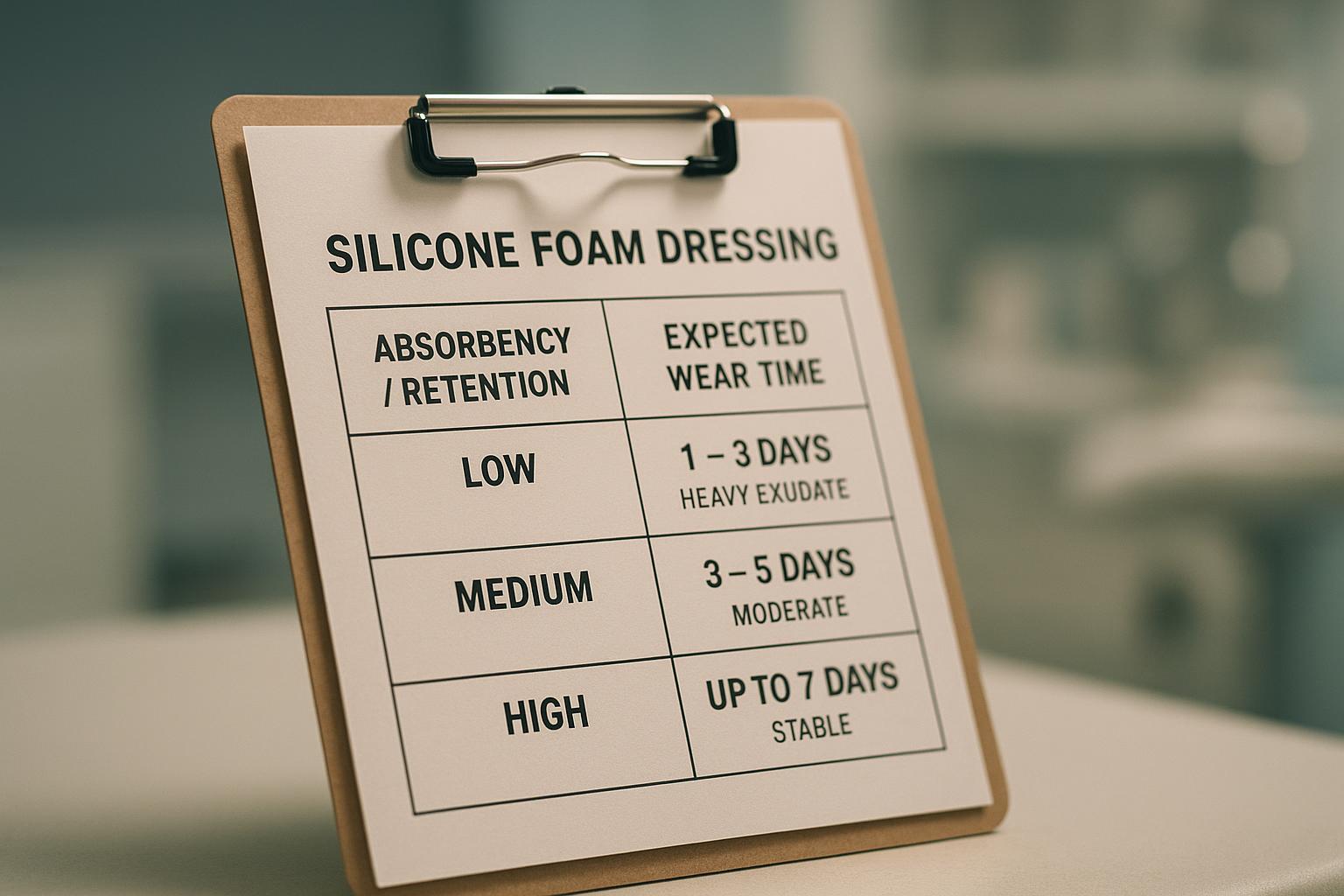
Heavy exudate: plan 1–3 day changes initially.
Moderate exudate (contained, stable edges): consider extending toward 3–5 days.
Stable/low drainage with intact border and healthy periwound: some foams can remain in place longer—up to about 7 days—as long as the dressing stays intact and the wound remains appropriate for that plan.
The goal isn’t to “stretch wear time.” It’s to match dressing capacity and fit to the exudate load so you’re not forced into repeated unscheduled changes.
Early-change indicators to act on
Treat these as triggers to inspect the wound and strongly consider changing the dressing before the planned interval:
Strike-through dressing: exudate reaching the outer surface or tracking close to the edge
Leakage: fluid escaping beyond the border onto surrounding skin/linens
Edge lift: rolling, tenting, or gaps that compromise the seal
Periwound maceration: whitening, bogginess, fragility, or expanding moisture-associated skin damage
New or worsening odor (odor is a cue to reassess, not something to mask)
New or worsening pain during wear or at removal
Infection concern: increasing erythema/warmth/swelling, purulence, systemic symptoms, or sudden deterioration
If you suspect spreading infection or systemic illness, escalate promptly per local policy (e.g., urgent clinical review and appropriate diagnostics) rather than simply increasing dressing-change frequency.
Key takeaway: If you’re changing early because of strike-through, leakage, or edge lift more than once, assume a mismatch between exudate load and dressing capacity/fit—and adjust the plan.
Weekly and two-week reassessment rules
Use two timeframes so you don’t drift into “same change schedule forever.”
For pressure-injury prevention contexts, NPIAP’s practical checklist of Prevention Points can help standardize skin inspection and early identification alongside your facility protocol.
Weekly: reassess wound progress and exudate pattern at least weekly (and at every dressing change). Track size, tissue type, exudate character, and periwound condition.
Two weeks: if there’s no meaningful improvement after ~2 weeks of appropriate care (or the wound worsens), reassess contributors such as pressure/shear, edema, infection/bioburden, glycemic control, nutrition, or vascular status, and revise the plan.
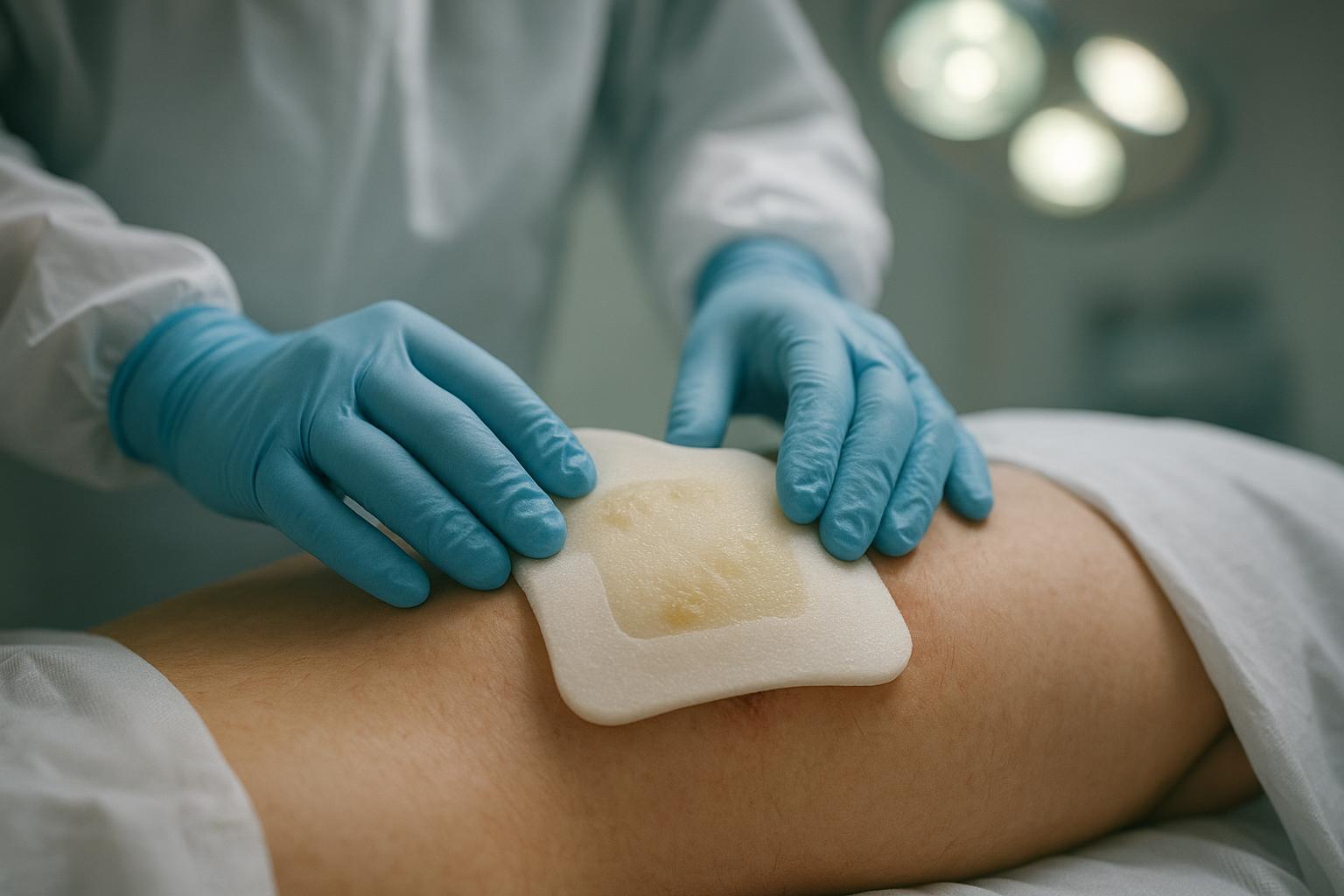
Match dressing to exudate and anatomy
Absorbency and fluid handling
When drainage is heavy, change frequency is often limited by fluid-handling capacity.
A quick interpretation framework:
Repeated strike-through in <24 hours suggests the dressing may not have enough absorbency/retention for the current load.
Contained fluid but wet periwound suggests a fit/seal problem (channels, dead space, movement), not just absorbency.
The exudate consensus report highlights using exudate assessment to guide both dressing choice and the frequency of dressing changes, with the aim of moisture balance and periwound protection, as outlined in Wounds International’s Closing the gap between the evidence and clinical practice – a consensus report on exudate management (PDF).
For product-oriented bedside education (e.g., dressing features and practical application reminders), SLK Medical’s overview on exudate management with silicone foam is provided as supplemental reading.
Seal, edge integrity, and periwound protection
Heavy drainage is an edge problem as much as it is an absorbency problem.
Two practical rules:
Protect the periwound first. If exudate is contacting intact skin, address it immediately (barrier protection and better containment) to prevent maceration.
Treat edge lift as a failure mode. Once the seal is compromised, wear time drops quickly and leakage risk rises.
Under-compression and offloading contexts
Under compression (e.g., venous leg ulcers): pressure can drive fluid laterally and challenge edge integrity. Confirm the dressing system can contain drainage under compression and that the border isn’t channeling fluid.
Offloading (e.g., sacrum/heel): movement and shear can cause early lift. Conformable shapes and careful smoothing of borders can help maintain a seal.
In both cases, extending wear time is only reasonable if the dressing remains intact and the periwound stays dry.
Apply, monitor, escalate or de-escalate
First 24–72 hours monitoring plan
This window is where you learn the wound’s true exudate pattern.
At application (day 0): document wound size, tissue type, periwound status, and exudate amount/character.
First 24 hours (heavy exudate): check for strike-through, leakage, edge lift, and early maceration.
By 48–72 hours: decide whether the interval is realistic or whether you need higher capacity, better fit, or more frequent reassessment.
Educational note for staff: MARSI (medical adhesive–related skin injury) is skin damage associated with medical adhesives. Soft silicone adhesives are commonly used to support gentler removal. Briefly, SLK Medical describes its silicone foam dressings as designed for gentle removal and comfortable wear; in heavy exudate workflows, that can support appropriate wear time extension when the wound is stable—without forcing unnecessary early changes driven by painful removals.what a silicone foam dressing is
Escalation for persistent saturation or leakage
Escalate when you see a pattern, not just a one-off:
Two changes in a row due to saturation/strike-through
Leakage events despite correct application
Worsening periwound maceration
Escalation options depend on the wound and local formulary, but typically include: higher-capacity absorbency, resizing/reshaping for anatomy, improved periwound protection, and reassessing drivers such as edema or infection.
For a simple training link, see SLK Medical’s guide on match foam dressings to exudate levels.
De-escalation as drainage decreases
When drainage decreases and the periwound remains intact:
extend intervals gradually (e.g., q24h → q48–72h)
consider whether a lower-capacity option is now appropriate
keep reassessing at each change; don’t “set and forget”
Cost and documentation for value analysis
Track frequency, leakage, maceration, nurse time
If you’re building a value analysis story, track what actually drives cost:
planned vs unplanned changes (frequency)
leakage events (linen changes, extra cleanup)
periwound maceration/MASD episodes and barrier product use
approximate nursing time per change
This helps answer the real question procurement cares about: total cost in use.
Align with AMS and infection control cues
Changes in exudate, odor, pain, or wound trajectory should trigger reassessment for infection/bioburden per local protocol. If antimicrobial dressings (including silver-containing options) are being considered, document the specific indication, define a review date, and reassess response and ongoing need to support antimicrobial stewardship (AMS). Avoid “set-and-forget” antimicrobial use when the clinical picture does not support infection or problematic bioburden.
Standardize protocols and ordering
Standardization reduces variability:
define a default heavy-exudate pathway (24–72h review; 1–3 day changes until controlled)
define early-change triggers clearly
specify when to involve the wound team
Conclusion
Key takeaways: plan 1–3 days for heavy exudate; extend toward 3–5 days when stable; and only consider longer wear (up to ~7 days) when the dressing remains intact and the wound/periwound stay stable.
Use bedside triggers to drive early changes: strike-through, edge lift, maceration, odor change, pain change, and infection concern. Reassess weekly, and revise the plan at about two weeks if there’s no improvement.
If you’re standardizing practice across units, consider assembling a protocol packet (spec sheet, IFU, certifications pack, and a small sampling plan) so teams can compare wear time, leakage events, and skin tolerance consistently.
References and clinical review note
This article was prepared by the SLK Medical Clinical Education Team for educational purposes. It summarizes commonly used wound-care guidance and consensus concepts related to exudate control, periwound protection, and reassessment triggers. Always follow local policy, product IFUs, and clinician judgment for individual patients.


