




Pressure injury prevention fails most often in the gap between care that is documented and care that is actually delivered. Nurses chart turns that never happened, risk scores that were never recalculated, and skin assessments compressed into a shift that ran short. The 2026 VA/DoD pressure injury guideline responds to that gap by requiring risk screening of every new admission with a validated instrument, the Braden Scale among them, then rescreening at intervals the organization sets rather than intervals left to memory (VA/DoD Clinical Practice Guideline for Prevention and Management of Pressure Injuries, 2026).
The stakes are measurable. The CMS Hospital Harm pressure injury measure counts new deep tissue and Stage 2 injuries alongside Stage 3, 4 and unstageable wounds, and allows only one qualifying harm per hospitalization, so a single avoidable injury can mark an entire stay (CMS Hospital Harm pressure injury measure, retrieved 2026-06-09). Prevention works when it is delivered as a connected sequence: risk score, then surface, then repositioning interval, then prophylactic dressing. The International Guideline’s preventive skin care recommendations put a number on one link in that chain, reporting that multilayer soft silicone foam dressings reduced pressure injuries versus no preventive dressing at a risk ratio of 0.46, or 53 fewer injuries per 1,000 patients across 18 randomized trials (International Guideline, Preventive Skin Care, retrieved 2026).
This guide follows that sequence from assessment through surface selection, repositioning and dressing choice, and it states where the evidence is thin. Clinical decisions remain with the qualified care team and the facility’s own protocol.
Disclosure: SLK Medical is a manufacturer of advanced wound care dressings. This article is published by SLK Medical and is intended as a general clinical reference, not as a product recommendation, promotional claim, or substitute for professional judgement. Product references, where they appear, describe manufacturing and classification facts only. Any clinical decision should be made by the qualified care team in line with the facility’s own protocol and current guideline indications.

Reviewed by the SLK Medical clinical team. Last updated: September 2026.
In Brief
The core problem: most pressure injuries are not knowledge failures but handoff failures — care that is documented but not delivered.
Risk assessment: screen every admission with a validated tool (e.g. Braden), read the subscales, record the drivers, and rescreen after any significant worsening.
Surfaces and repositioning: choose the surface and the turning interval together; there is no proven best fixed interval, and routinely stretching to 4–6 hours is advised against.
Dressings: prophylaxis is a class-level decision at high-risk sites (sacrum, heels); silicone foam is the format most commonly used, and it layers on top of turning rather than replacing it.
Where the evidence is thin: head-to-head comparisons of dressing formats are limited and often manufacturer-sponsored.
Measure both sides: track process metrics and the CMS Hospital Harm outcome measure.
SLK Medical is a manufacturer of advanced wound care dressings with in-house research and development and production capabilities. Its work centres on dressing design and materials for wound and skin management, which is the part of its expertise that touches the dressings discussed in this guide. The clinical content below is written independently of any specific product; brand information is kept to this note and the disclosure above, so that the guidance can be read on its own merits.
Introduction
Pressure injuries remain one of the most stubborn harms in US hospital care, and the teams dealing with them already know the frustration: the turning log is signed, the Braden score is charted, and a Stage 2 injury still appears on the sacrum five days into the stay. That gap between documented care and delivered care is where most hospital-acquired pressure injuries (HAPIs) live, and it is the problem this guide addresses.
Pressure injuries are localized damage to skin and underlying tissue caused by sustained pressure, shear, friction, or moisture, and they most often form over bony prominences where a patient’s weight concentrates against a support surface. Two sites account for a disproportionate share of the burden: the sacrum and the heels. Heels are especially easy to miss because they are small, frequently offloaded only by a pillow that shifts, and easy to overlook during a shift handoff. Device-related injuries add a third category, caused by tubing, oxygen masks, cervical collars, and other equipment pressing against skin for hours at a time.
The scale of the problem is visible in how regulators now count it. The CMS Hospital Harm pressure injury measure is broader than the older PSI-03 indicator: it counts new pressure injuries including deep tissue pressure injury and Stage 2 alongside Stage 3, Stage 4, and unstageable wounds, and it counts only one qualifying harm per hospitalization, using present-on-admission status and the timing of diagnosis relative to admission (CMS Hospital Harm pressure injury measure, retrieved 2026-06-09). In practical terms, a facility that prevents Stage 3 and 4 injuries but still produces Stage 2 and deep tissue injuries is not out of the measure’s reach.
This guide is a practical, evidence-based walkthrough of pressure injury prevention and treatment for US acute and long-term care teams, written for the nurses, wound care clinicians, and quality leads who own the outcome. It follows one connected decision path rather than three parallel checklists: how risk assessment identifies who needs what, how support surfaces and repositioning reduce the pressure and shear a patient experiences, and how prophylactic dressings add protection at the sites most likely to break down. Each section names the guideline basis for its recommendations and states where the evidence is thinner than the confidence around it.
How to Read the Recommendations in This Guide
Guideline statements carry different weights, and knowing the difference matters when you apply them at the bedside. The NPIAP/EPUAP/PPPIA international guideline expresses its recommendations as a strength of recommendation (strong or conditional) paired with a level of evidence (A, B, or C, running from higher to lower certainty), so that a strong recommendation backed by level A evidence carries more weight than a conditional one resting on level C evidence. The VA/DoD guideline uses a comparable approach, grading both the strength of each recommendation and the overall quality of the supporting evidence. Where the two bodies differ in strength, this guide notes it rather than blending the two into a single claim.
Three reading rules follow from that structure.
First, a strong recommendation means the benefits clearly outweigh the harms for most patients and most clinicians should follow it; a conditional recommendation signals that the balance is closer, and that the right choice depends on patient values, resources, or setting. Second, evidence level describes certainty, not importance: a strong recommendation resting on limited evidence is still meant to be followed, while a high-certainty conditional recommendation still leaves room for judgement. Third, expert consensus fills gaps where trials are absent, and it is the weakest basis on which to act. Where this guide flags that the evidence is thin, that flag reflects the level behind the statement.
The recommendations in this guide are drawn from the following authoritative sources, and citations are keyed to them throughout:
EPUAP/NPIAP/PPPIA, Prevention and Treatment of Pressure Ulcers/Injuries: Clinical Practice Guideline (International Guideline) — the 2019 edition and its 2026 update, including the 2019 International Guideline recommendations on preventive skin care (International Guideline).
VA/DoD Clinical Practice Guideline for the Prevention and Management of Pressure Injuries (2026) (VA/DoD).
Cochrane systematic reviews, including the review of repositioning for pressure ulcer prevention (Cochrane Library).
NPIAP/EPUAP/PPPIA 2026 Quick Reference Guide (Quick Reference).
CMS Hospital Harm — Pressure Injury measure (eCQM), for the regulatory definition of harm and the one-qualifying-harm rule (CMS).
These are independent professional and regulatory bodies. Where this guide cites them, the recommendation reflects their published position, not a product claim.
The evidence base here is the current international and VA/DoD guidance rather than vendor material. The 2026 VA/DoD pressure injury guideline requires risk screening of every new admission with a validated instrument, with the Braden Scale as its named example tool, followed by rescreening at intervals set by local policy; sub-epidermal moisture and thermography are adjuncts, not replacements (VA/DoD 2026 clinical practice guideline, retrieved 2026-09-08). Where a dressing class has measurable effect, the numbers are reported with their trial conditions, including the International Guideline’s preventive skin care recommendations, which found multilayer soft silicone foam versus no preventive dressing reduced pressure injury risk with a risk ratio of 0.46 (95% CI 0.32 to 0.65, p<0.0001) and 53 fewer pressure injuries per 1,000 patients across 18 randomized trials (International Guideline preventive skin care recommendations, retrieved 2026). Clinical decisions remain with the qualified care team and facility protocol; this guide summarizes evidence, it does not replace either.
From Risk to Action: Bundles That Work
Pressure injury prevention works as one connected decision path, not three parallel checklists. A risk score tells you who needs what; the support surface sets how much repositioning the patient can tolerate; the turning interval follows from the surface and the patient’s own tissue tolerance; and the dressing decision comes last, layered on top of the other three. Run those as separate workflows owned by separate people and the gaps between them are exactly where injuries develop.
That is the practical complaint behind most prevention programmes that look compliant on paper. Turning is documented but not done. A Braden score is filed at admission and never revisited when the patient’s condition changes. A reactive mattress is ordered for a patient who needed an active one three days earlier. Each of those failures is a handoff failure, not a knowledge failure.
Key Takeaway: Treat prevention as a sequence. Screen and reassess risk, match the support surface to that risk, set an individualized repositioning schedule the surface and the patient can actually support, then add a prophylactic dressing where the risk profile and the guideline indication justify one.
The table below summarises that sequence as a single reference. It is an original synthesis of the guideline position set out in this guide, not a substitute for the guidelines themselves, and it is meant to be read alongside the facility’s own protocol.
Step | What to decide | Guideline basis | What it prevents |
|---|---|---|---|
1. Assess risk | Screen every admission with a validated tool (e.g. Braden), then read the subscales and record the drivers | VA/DoD 2026; NPIAP/EPUAP/PPPIA | Missed or stale risk identification |
2. Reassess on change | Rescreen after any significant worsening (sepsis, vasopressors, new oxygen, ICU transfer, incontinence, poor intake) | VA/DoD 2026; International Guideline | Risk that changes faster than the review cycle |
3. Match the surface | Choose reactive vs. active based on mobility, self-repositioning, tissue tolerance and existing damage | International Guideline 2019/2026 | Pressure and shear the patient cannot tolerate |
4. Set the interval | Individualise the turning schedule and revisit it; do not routinely stretch to 4–6 hours | Cochrane review; International Guideline | Injury from intervals set by convenience |
5. Add prophylaxis | Apply a silicone foam dressing at high-risk sites (sacrum, heels) with correct technique; inspect at every change | International Guideline (class-level) | Breakdown at the sites most likely to fail |
6. Layer AMS where indicated | Consider whole-body pressure and microclimate support when risk escalates, and revisit steps 3–4 | International Guideline | Escalating risk treated as an add-on only |
7. Measure both sides | Track process metrics and the CMS Hospital Harm outcome measure | CMS Hospital Harm measure | A bundle that runs but does not work |
Identify Risk and Drivers
Screen every patient as soon as possible after admission, then rescreen periodically and again after any significant worsening of condition. That is the sequence set out in the 2026 International Guideline quick reference, published by NPIAP, EPUAP and PPPIA. When screening flags risk, the guideline calls for a full structured risk assessment that includes a comprehensive skin assessment, not a score alone.
The detail that changes practice is how the guideline frames risk scales themselves: as supplementary tools, not sufficient on their own. A Braden total of 18 does not clear a patient. A subscale of 1 for moisture combined with 1 for mobility describes a patient whose skin is being exposed to both pressure and maceration at the same time, and that combination is the driver you act on. Read the subscales, note which ones are driving the total, and let that shape what you do next.
Risk assessment is also a moving target. A patient admitted for an elective procedure and a patient admitted with sepsis may arrive with identical scores and diverge within 48 hours. The guideline’s instruction to rescreen after significant worsening exists because the drivers change faster than the scheduled reassessment cycle. Sepsis, vasopressor support, a new oxygen requirement, an unplanned ICU transfer, a period of incontinence, or a sudden drop in oral intake all qualify as reasons to reassess before the next scheduled review.
Two practical habits make this work. First, record the drivers, not just the number, so the next clinician can see why the patient is at risk. Second, make the reassessment trigger explicit in the chart so it is not dependent on someone remembering. A score without its drivers is a data point; a score with its drivers is a care plan.
Surfaces and Repositioning

The support surface and the repositioning schedule are one decision, not two. The 2026 International Guideline quick reference frames the surface as a factor that shapes the repositioning schedule, which means choosing a mattress and then applying a fixed turning protocol to it gets the logic backwards.
Start with the distinction that matters clinically. Reactive surfaces redistribute pressure through the material itself and respond to the patient’s movement. Active surfaces change their own pressure distribution over time, typically through alternating cells or powered adjustment. The choice between them follows from the risk assessment in the previous section: a patient who can reposition independently needs something different from a patient who cannot, and a patient with existing tissue damage needs something different again from a patient being prophylaxed.
Repositioning intervals are where the evidence is most often misread. The Cochrane review of repositioning intervals reports that there is no proven best fixed interval, and current guidance favours individualized schedules. The 2019 edition of the International Guideline reached a similar position, and its 2026 update keeps individualised repositioning as the recommended approach rather than a fixed clock. Those schedules are set from activity, mobility, the patient’s ability to self-reposition, tissue tolerance, clinical condition, comfort, sleep, goals of care, and the support surface in use. The same review advises against routinely extending intervals to four to six hours.
That last point deserves emphasis because it is the one most often ignored under staffing pressure. Extending to four to six hours is not a validated efficiency measure; it is a practice the evidence advises against. If a unit is stretching intervals to cover a shortfall, that is a staffing problem showing up as a clinical decision, and it should be escalated as one.
Individualized does not mean arbitrary. A defensible schedule names the factors it was built from and the point at which it will be reviewed. A patient on an active surface who self-repositions and has intact tissue tolerance is a different schedule from a patient on a reactive surface with limited mobility and existing erythema. Write the reasoning down. When the schedule is challenged, the reasoning is the defence.
The surface also determines what turning can achieve. On a surface that is doing part of the work, the interval can be set by tissue response rather than by a default clock. On a surface that is not, the interval is carrying the entire load, and it will not hold. That is why the surface decision and the interval decision belong in the same conversation, with the same clinician, at the same time.
Dressings: Prophylaxis and AMS
Prophylactic dressings sit on top of the decisions already made, not in place of them. The International Guideline recommends a dressing class for prophylaxis at high-risk anatomical sites, and it does not recommend a brand — the 2019 edition sets out this class-level recommendation, and its 2026 update maintains it (International Guideline). That distinction matters for procurement and for clinical honesty: selecting a dressing is a class decision first, a product decision second.
The sites that drive most prophylactic dressing use are the sacrum and the heels, because those are where pressure concentrates and where the anatomy makes repositioning least effective. A dressing applied at either site works alongside the surface and the turning schedule. It does not replace turning, and it does not compensate for a surface that is wrong for the patient.
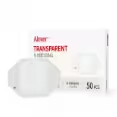
Silicone foam is the format most often used for prophylaxis, and the design logic is straightforward. A silicone adhesive layer holds the dressing in place without the aggressive adhesion that damages fragile skin on removal, which matters when the same site is dressed and redressed over days. Foam construction manages moisture and distributes shear across the dressing rather than concentrating it at the wound margin. Anatomical formats for the sacrum and heel exist because a flat rectangle does not conform to either site reliably, and a dressing that lifts at the edge stops doing its job.
For transparency, SLK Medical manufactures wound care dressings, including silicone foam and silver foam formats, and its manufacturing is certified to ISO 13485. Those are manufacturing and classification facts, not performance claims, and the guideline recommendations in this section are based on class-level evidence rather than on any specific product. Whether a specific dressing from any manufacturer is appropriate for a specific patient remains a clinical decision for the care team, made against the facility’s protocol and the guideline indication.
Two practical points on prophylactic dressings. First, application technique determines whether the dressing performs as designed; a dressing applied with wrinkles or tension creates the shear it was meant to reduce. Second, inspect the site at every dressing change and document what you see, because a dressing that hides early tissue change defeats its own purpose.
A Clinical Case in Practice
A de-identified case illustrates how a dressing step fits inside the wider bundle rather than replacing it. A patient with a Stage IV pressure injury on the left hip presented with moderate exudate and a wound bed of roughly 25% slough and 75% granulation tissue, with no tunnelling and no periwound infection. Management combined regular debridement, exudate control, and a bordered silicone foam dressing to maintain a moist wound environment; as the wound bed improved, the dressing change interval was gradually extended from 3 days to 4 days and then to 7 days. Progressive contraction and epithelialization were observed across the treatment period, and the wound reached complete closure at final follow-up, approximately eight weeks after the start of care.
The case is presented as an illustration of how dressing wear time can be extended in step with wound progress, not as a guarantee of any outcome. Individual healing trajectories vary with perfusion, nutrition, infection control, and adherence to the surrounding bundle. Clinicians should judge dressing selection and wear time against the wound’s own trajectory and the facility’s protocol.
AMS, or alternating pressure and microclimate support, is a distinct category from prophylaxis and should not be conflated with it. Where a prophylactic dressing addresses a localized high-risk site, AMS addresses the whole-body environment by managing both interface pressure and the microclimate at the skin surface. The two can be used together, and the decision to add AMS follows from the same risk assessment that set the surface and the schedule. If a patient’s risk profile has escalated to the point where AMS is indicated, that is also a signal to revisit the surface decision and the turning interval, not just to add another layer.
The record on dressing selection is thinner than the record on surfaces and repositioning. Published head-to-head comparisons of prophylactic dressing formats are limited, and much of the available evidence is manufacturer-sponsored or conducted in single centres. Where that is the case, say so. A care team choosing between formats should know that the class-level recommendation is well supported while the format-level comparison is not, and should weight its own facility data accordingly.
What the section must establish is the order of operations. Screen and reassess risk with the drivers recorded. Match the surface to that risk. Set an individualized interval the surface and the patient can support, and do not stretch it to four to six hours to cover a staffing gap. Then add a prophylactic dressing at the high-risk sites the guideline identifies, choosing a format that conforms and holds, and inspect the site at every change. Each step feeds the next, and the injury prevention programme that works is the one where the steps are owned by people who talk to each other.
Conclusion
Pressure injury prevention works as a connected bundle, not a checklist of separate tasks. The bundle that holds up in the guidelines runs in one sequence: assess risk and skin on admission and every shift, choose a support surface that matches the score, turn on an individualized schedule, keep moisture and nutrition under control, and add prophylactic silicone foam at the sites the risk assessment flags.
Two details decide whether the bundle actually functions. The Cochrane review of repositioning intervals found that individualized turning schedules outperform fixed ones, and it warns against routinely stretching intervals to four to six hours on the assumption that a high-specification surface replaces repositioning. And where bioburden drives the risk, silver foam dressings aligned with antimicrobial stewardship principles belong in the plan with a defined reassessment point and stop criteria, not as an open-ended addition.
Pro Tip: Track both sides of the picture. Process metrics (risk assessment completion, turning documentation, surface appropriateness) tell you whether the bundle is running. Outcome metrics such as the CMS Hospital Harm pressure injury measure, which counts deep tissue pressure injury and Stage 2 or worse as one qualifying harm per hospitalization, tell you whether it is working.
Focus resources where the risk concentrates. The highest-risk patients, those with limited mobility, poor perfusion, or moisture-associated skin damage, drive most of the harm, and the bundle pays back fastest when it is tightest there.
This guide reflects the evidence available as of March 2026 and should be refreshed as the NPIAP/EPUAP/PPPIA and VA/DoD guidelines are updated.
To evaluate surfaces and dressings against your own protocol, the technical documentation you will need is the product spec sheet, the instructions for use (IFU), the certifications pack, and — where available — a sampling plan. These documents, not marketing copy, are what support an evidence-based procurement decision. For clinical questions about the guidelines cited here, refer to the NPIAP/EPUAP/PPPIA and VA/DoD sources listed above.