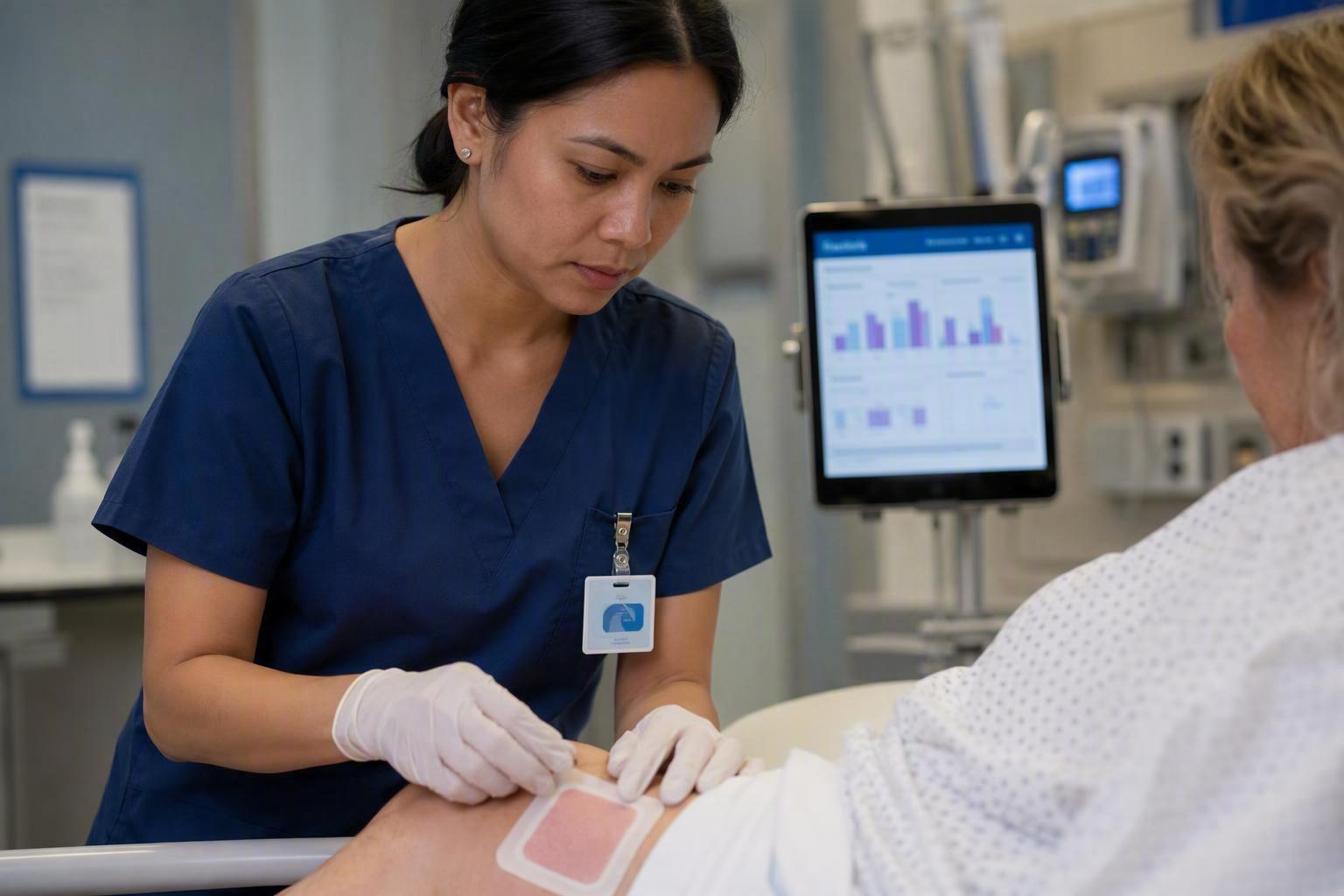
Foam dressing technology uses scientific principles that help you manage wounds more effectively. You benefit from easy application and removal, strong skin adherence, and excellent fluid absorption. Foam dressings suit many conditions, like pressure ulcers and diabetic foot ulcers. You also gain extra protection from their cushioning effect and reduced pain during dressing changes. SLK Medical’s expertise in advanced foam microstructure brings innovation to wound healing.
|
Principle |
Description |
|---|---|
|
Fluid Absorption |
You get superior exudate management for cleaner wounds. |
|
Moisture Retention |
The moist environment helps your wounds heal faster. |
|
Mechanical Cushioning |
Dressings protect your wounds from trauma. |
|
Minimization of Damage |
You experience less pain and trauma during dressing changes. |
Key Takeaways
-
Foam dressings provide excellent fluid absorption, keeping wounds clean and promoting faster healing.
-
These dressings create a moist environment, which is essential for effective wound healing and tissue regeneration.
-
Foam dressings offer cushioning and protection, reducing pain during dressing changes and preventing further injury.
-
Choosing the right foam dressing can improve healing outcomes, especially for chronic and exudative wounds.
-
Foam dressings are cost-effective in the long run, as they require fewer changes and provide reliable wound management.
Foam Dressing Science
Mechanical Properties
Structural and Physical Characteristics
You experience the benefits of foam dressing technology through its advanced structural design. SLK Medical’s foam dressings use hydrophilic polyurethane and silicone-based materials. The D-Pore™ dual-dimensional pore foaming technology controls the micro-nano structure of the foam. This precise engineering supports gas exchange and moisture retention. You notice superior elasticity and conformability. The foam dressing closely adheres to your wound surface, reducing dead space and distributing pressure evenly. These properties of foam help support tissue regeneration and lower the risk of pressure injuries.
The microcellular architecture of SLK Medical’s foam dressings maintains optimal wound temperature and oxygen tension. You get a stable moist wound environment that aligns with Dr. Winter’s moist wound healing theory. This environment accelerates cellular activity and supports faster wound healing. SLK Medical’s commitment to innovation ensures that you receive foam dressings with high mechanical performance and comfort. The company’s products meet FDA and ISO 13485 standards.
Tip: When you choose foam dressings with balanced mechanical performance, you protect your wound and improve healing outcomes.
|
Consequences of Low Levels |
Consequences of High Levels |
|
|---|---|---|
|
Compressive material stiffness |
Reduced protection against external forces and impacts. |
Risk of skin imprinting, increasing inflammation and damaging peri-wound viability. |
|
Structural (bending) stiffness |
Similar to compressive stiffness, leading to compromised protection and durability. |
Similar to compressive stiffness, leading to increased risk of skin damage and detachment. |
|
Adhesive strength |
Frequent detachment, exposing the wound to infection risks. |
Potential for adhesive-related skin injuries, increasing inflammation and damaging viability. |
Absorption and Fluid Handling
Exudate Management and Moisture Balance
You rely on foam dressings for excellent exudate management. The open-cell structure enhances fluid transport, allowing effective absorption and retention of exudate. The foam’s porosity determines how much exudate you can manage without leakage. SLK Medical’s foam dressings use D-Pore™ technology to boost fluid absorption efficiency and breathability. You avoid maceration of the surrounding skin and maintain the moisture needed for wound healing.
The vapor-permeable outer layer of the foam dressing allows controlled moisture vapor transmission. You keep the wound hydrated and supply oxygen to the wound bed. This balance supports optimal healing. Products like the Alexer® Silicone Foam Dressing offer high absorbency and antimicrobial protection. You benefit from anti-microbial and antimicrobial features that help prevent infection and support healing.
-
The open-cell structure of foam dressings enhances fluid transport and retention.
-
Porosity influences exudate management and prevents leakage.
-
Moisture-vapor transmission rate keeps moisture levels optimal and prevents saturation.
|
Brand / Parameter |
Absorbency |
Pros |
|---|---|---|
|
SLK Medical Silicone Foam Dressings |
High, multi-layer design, supports faster healing |
Versatile, durable, suitable for many wounds |
|
Mepilex Border Flex |
High, adapts to wound contours (3DFit™) |
Excellent for sensitive skin, high-risk areas |
|
Biatain Silicone |
Superior absorbency, fewer dressing changes |
Reliable for chronic wounds, cost-effective |
|
Allevyn Life |
Good, suitable for moderate exudate |
Widely available, easy to use |
|
Alexer |
High, antimicrobial protection |
Antimicrobial, supports healing |
|
Smith & Nephew |
High, some silver-infused options |
Specialized for complex wounds |
|
Coloplast |
High, durable, reliable |
Durable, trusted brand |
|
3M, Medline, Cardinal Health |
Good, standard absorbency |
Budget-friendly, easy to source |
You see that SLK Medical’s foam dressings stand out for their mechanical performance, exudate management, and antimicrobial protection. You get reliable wound dressings that help maintain the optimal balance of moisture, temperature, and oxygen tension. These features support the principles of moist wound healing and improve your healing outcomes.
Wound Healing Process

Stages of Healing
You experience wound healing as a series of distinct stages. Each stage requires specific support from wound dressings to help your body repair itself.
Here is how foam dressings interact with each phase:
|
Stage of Wound Healing |
Role of Foam Dressings |
|---|---|
|
Hemostasis |
Provides cushioning to protect the wound site during initial clot formation. |
|
Inflammation |
Absorbs exudate, reducing the risk of maceration and maintaining a moist environment. |
|
Proliferation |
Supports granulation tissue formation by keeping the wound moist and protected. |
|
Maturation |
Maintains a suitable environment for scar formation and healing completion. |
You notice that foam dressings play a vital role in every stage. During hemostasis, you get extra protection from trauma. In the inflammation phase, foam dressings absorb fluid and keep the wound moist. When your wound enters proliferation, foam dressings help new tissue grow. In the final maturation stage, foam dressings maintain a stable environment for scar formation.
Role of Wound Dressings
You rely on wound dressings to create the best conditions for wound healing. Foam dressings stand out for their ability to manage moisture, protect against infection, and cushion the wound.
Clinical studies show that foam dressings accelerate epithelialization and improve healing rates.
-
A randomized controlled study found that foam dressings improved healing compared to simple gauze for superficial pressure ulcers with partial skin loss.
-
You see limited evidence for foam dressings outperforming hydrocolloid dressings, but foam dressings still offer significant benefits.
You can compare foam dressings and hydrocolloid dressings using the following chart:

|
Outcome Type |
Foam Dressings |
Hydrocolloid Dressings |
Statistical Significance |
|---|---|---|---|
|
Proportion of wounds healed |
33% (15/46) |
p=0.045 |
|
|
Improvement in ulcer condition |
74% |
50% |
p≤0.05 |
|
Reduction in wound area |
90% (44/49) |
70% (33/47) |
p=0.028 |
You benefit from foam dressings in many clinical situations.
|
Study Focus |
Findings |
|---|---|
|
Radiation Dermatitis |
Complete healing in 7 patients within 2 weeks with foam dressings and rhEGF spray. |
|
Post-Surgical Healing |
Improved outcomes in areola skin grafts with multilayered hydrocellular foam dressings. |
|
High-Energy Soft Tissue Injury |
New granulation observed after using foam dressings with NPWT after traditional NPWT failed. |
|
Pressure Ulcer Prevention |
Statistically significant decrease in pressure on heels with foam dressings. |
|
Pressure Ulcer Development |
Significant reduction in pressure ulcers with silicone foam dressings in RCTs. |
|
Venous Leg Ulcers |
42% reduction in wound area and pain relief with silver- and ibuprofen-releasing foam dressings. |
|
Chronic Venous Leg Ulcers |
Significant decrease in wound area and odor with silver-releasing foam dressings after 4 weeks. |
Tip: You can choose foam dressings to support wound healing at every stage and improve your outcomes.
Foam Dressing Structure

Materials and Layers
You benefit from foam dressings because of their advanced materials and layered design. Manufacturers use polyurethane and silicone to create foam dressing products that support wound healing. Polyurethane offers high absorbency and moisture retention. It blocks bacteria and allows water vapor to pass through. Silicone provides a waterproof or hydrophobic outer layer and enhances adhesion. You find foam dressings in different sizes and shapes, which helps you match the dressing to your wound.
|
Material |
Benefits |
|---|---|
|
Polyurethane |
High absorbency, moisture retention, protection against bacteria |
|
Silicone |
Non-adherent, waterproof, enhances adhesion, allows vapor transmission |
Foam dressings often feature multiple layers. The inner foam layer absorbs exudate and maintains a moist environment. The outer layer controls moisture vapor transmission and protects your wound from contaminants. You notice that this layered structure helps you manage moderate to heavy drainage and keeps your wound healing on track.
Tip: You can choose foam dressings with multi-layer designs for better exudate management and skin protection.
Vapor Permeability
You rely on foam dressings to maintain the right moisture balance for wound healing. The vapor permeability of a foam dressing determines how much moisture vapor escapes from the wound surface. A dressing with an appropriate moisture vapor transmission rate (WVTR) keeps your wound moist without causing dehydration or excess exudate buildup.
-
Hydrocellular foam dressings promote the synthesis of hyaluronan, which supports the extracellular matrix and speeds up wound healing.
-
These dressings increase the expression of genes like Has3 and PPARα, which are important for tissue repair.
-
Maintaining a moist wound environment with foam dressings helps you recover faster and improves your outcomes.
Foam dressings stand out from other wound dressings because their vapor-permeable backing allows moisture vapor to escape. This feature prevents maceration and creates a healthy wound environment. You see that foam dressings manage moderate to heavy drainage better than many other advanced wound dressings.
Note: You should select foam dressings with balanced vapor permeability to support optimal wound healing and prevent complications.
Wound Dressing Mechanisms
Moisture Management
You depend on wound dressings to keep your wound healing on track. Foam dressings play a key role in moisture management. These dressings help you maintain the right balance of moisture at the wound site. You see that foam dressing technology uses a porous structure to absorb exudate and retain moisture. This feature supports faster wound healing and reduces the risk of skin breakdown.
When you compare foam dressings to hydrocolloid wound dressings, you notice a difference in moisture retention. The following table shows how foam dressing performance stands out:
|
Dressing Type |
Moisture Retention (%) |
Other Data Points |
|---|---|---|
|
Hydrocolloid |
44 |
|
|
Polyurethane foam |
50 |
59.6 |
|
Polyurethane foam |
68 |
62.8 |
|
Hydrocolloid |
38 |
33.2 |
|
Hydrocolloid |
58 |
36.4 |

You see that polyurethane foam dressings retain more moisture than hydrocolloid dressings. This higher moisture retention helps you create a moist wound environment, which is essential for optimal wound healing. You also benefit from foam dressings that keep the wound interface hydrated, even when fluid levels change. Some composite hydrofibre dressings maintain moisture throughout the healing process, while areas of foam dressings may dry quickly if fluid is not replenished.
Tip: You should select foam dressings with high moisture retention for wounds that need a stable, moist environment.
Autolytic Debridement
You rely on wound dressings to support autolytic debridement, which is your body’s natural way of removing dead tissue. Foam dressings help you achieve this by maintaining a moist wound environment. You benefit from their high absorbency, which manages exudate and prevents maceration. The design of foam dressings allows for gentle removal, so you experience less pain and trauma.
-
Foam dressings keep your wound moist, which is crucial for autolytic debridement.
-
You get effective exudate management, reducing complications.
-
The dressing conforms to your wound bed, filling gaps and preventing infection.
-
You avoid surgical intervention because foam dressings help break down necrotic tissue naturally.
|
Key Aspect |
Description |
|---|---|
|
Moist Environment |
Essential for supporting autolytic debridement in chronic wounds. |
|
Conformity |
Dressings must conform to the wound bed to fill gaps and prevent infection. |
|
Exudate Management |
Effective absorption and retention of excess exudate are crucial to reduce complications. |
You notice that foam dressing clinical performance supports autolytic debridement in chronic wounds. You get a moist environment, strong exudate management, and gentle removal. These features improve dressing performance and help you heal faster.
Note: You should choose foam dressings for wounds with necrotic tissue to promote natural healing and comfort.
Cushioning and Protection
You need wound dressings that protect your skin and prevent further injury. Foam dressings provide cushioning and distribute pressure, which helps you avoid pressure ulcers. Pressure ulcers develop when skin and tissue experience prolonged pressure and shear stress. Foam dressings help you by redistributing pressure and enhancing tissue tolerance.
-
Pressure ulcers are localized injuries caused by pressure and shear.
-
Foam dressings distribute pressure and provide cushioning.
-
You increase tissue tolerance and reduce the risk of injury.
You also benefit from foam dressings that manage friction and shear forces. These dressings protect your skin from breakdown and ease pain during dressing changes. Many foam dressings include a silicone layer that adheres gently to your skin. This feature allows for atraumatic removal, reducing irritation and maintaining a secure seal around your wound.
|
Evidence Description |
Key Points |
|---|---|
|
Management of Friction |
Foam dressings help manage frictional forces, reducing shear risk. |
|
Microclimate Management |
They manage temperature and humidity at the skin-dressing interface. |
|
Atraumatic Removal |
Silicone layer allows gentle adherence and removal, minimizing trauma. |
-
Foam dressings protect against friction and shear.
-
You prevent skin breakdown and pressure injuries.
-
You experience less pain and trauma during dressing changes.
-
Silicone layers promote atraumatic removal and reduce irritation.
Tip: You should use foam dressings with silicone layers for sensitive skin and wounds at risk of pressure injury.
You see that foam dressing clinical performance includes strong protection, pressure redistribution, and gentle removal. These features make foam dressings a top choice for wound healing and patient comfort.
Clinical Use of Foam Dressings
Indications and Contraindications
You use foam dressings for many types of wounds. Foam dressings help you manage leg ulcers, surgical wounds, skin grafts, minor burns, abrasions, infected wounds, lacerations, draining peristomal wounds, pressure ulcers (stages 2 to 4), wounds needing negative pressure wound therapy, tracheotomy and gastrostomy tubes, wound cavities, and wounds with softened necrotic tissue. Foam dressings also offer insulation and protect bony prominences. You should avoid foam dressings on third-degree burns or dry, non-draining wounds.
|
Clinical Indications |
Contraindications |
|---|---|
|
Leg ulcers |
Third-degree burns |
|
Surgical wounds |
Dry or non-draining wounds |
|
Skin grafts |
|
|
Minor burns |
|
|
Abrasions |
|
|
Infected wounds |
|
|
Lacerations |
|
|
Draining peristomal wounds |
|
|
Pressure ulcers/injuries (stages 2 to 4) |
|
|
Wounds needing negative pressure wound therapy |
|
|
Tracheotomy and gastrostomy tubes |
|
|
Wound cavities |
|
|
Wounds with softened necrotic tissue |
|
|
Flexible and can be cut to fit |
|
|
Insulation for warmth |
|
|
Protection for bony prominences |
|
Patient Comfort
You notice that foam dressings provide exceptional comfort and cushioning. Patients often prefer foam dressings for painful wounds like pressure ulcers. The soft, flexible structure of foam dressings conforms to your wound site, reducing pressure and friction. You experience less pain during dressing changes because foam dressings are easy to remove. Over 90% of patients and wound care professionals recommend SLK Medical’s foam dressings for their comfort and effectiveness in wound healing. You also find that foam dressings soak up extra fluid and keep wounds moist, which helps wounds heal faster. Most patients feel satisfied with their wound care, exudate control, and comfort when using foam dressings.
-
Foam dressings provide comfort and cushioning.
-
The flexible structure reduces pressure and friction.
-
You experience easy, painless removal.
-
Most patients and wound care professionals recommend foam dressings for wound management.
Tip: You should choose foam dressings for wounds that need extra comfort and gentle care.
Cost and Accessibility
You see that foam dressings may have a higher upfront cost than other wound dressings. However, foam dressings last longer and require fewer dressing changes, which saves you money over time. The table below shows how foam dressings compare to other advanced wound dressings.
|
Dressing Type |
Cost Implication |
Notes |
|---|---|---|
|
Foam Dressings |
Higher upfront cost but longer wear times lead to overall cost savings |
Reduced dressing changes and improved healing outcomes contribute to cost-effectiveness. |
|
Other Advanced Dressings |
Varies, but often requires more frequent changes, increasing overall costs |
May not provide the same level of drainage management as foam dressings. |
You find foam dressings widely available in many healthcare settings. The global foam dressing market continues to grow, driven by the need for better wound management and the rise in chronic wounds. In some countries, access to foam dressings may be limited due to cost and reimbursement policies. Wound care professionals choose foam dressings for their effectiveness and value in wound healing.
-
Foam dressings offer cost savings through longer wear times.
-
The market for foam dressings is growing worldwide.
-
Wound care professionals rely on foam dressings for effective wound management.
Note: You should consider both cost and accessibility when selecting foam dressings for wound care.
Advances and Challenges
Limitations
You face several challenges when using foam dressings for wound healing. Many clinical studies highlight the lack of international performance standards for foam dressings. You may notice that decisions often rely on marketing rather than solid research. This can lead to delayed wound healing and more complications, especially in chronic wounds and exudative wounds. The wide variety of patients, wound types, and treatment protocols makes it hard to evaluate the true performance of wound dressings. You need clinically relevant testing standards to compare foam dressings objectively.
-
No global standards for foam dressing performance.
-
Marketing influences clinical choices more than evidence-based research.
-
Delayed wound healing and increased complications can occur.
-
Patient and wound variability complicates evaluation.
-
Testing methods sometimes do not reflect real clinical situations.
You also see limitations in the revised EN 13726:2023 standard for testing wound dressings. The focus on simple testing methods has moved away from real-world clinical scenarios. This can affect your ability to select the best foam dressing for chronic wounds and exudative wounds.
|
Evidence Type |
Description |
|---|---|
|
Inappropriate Dressing Choice |
Limits wound healing and increases costs. |
|
Lack of Education |
Affects dressing selection and change frequency, causing unnecessary trauma. |
|
Ritualistic Practices |
Frequent changes based on habit, not clinical need. |
|
Need for Education |
Training improves decision-making and care quality. |
|
Holistic Approach |
Optimizes dressing performance and reduces costs. |
Future Technology
You benefit from ongoing research and development in foam dressing technology. SLK Medical leads the way by focusing on advanced wound care products. You can choose customizable wound dressings in many sizes and shapes to fit your needs. SLK Medical offers OEM and ODM services, so healthcare organizations can create private label wound dressings for specific clinical requirements. Their hydrophilic foam dressing absorbs exudate and keeps the wound moist, which helps you heal faster. Strict manufacturing controls and certifications like ISO 13485 and FDA approval ensure high product quality.
New technologies are changing how you manage chronic wounds and exudative wounds. Nanotechnology helps create smart foam dressings that adapt to your wound’s environment and monitor healing biomarkers. These dressings can control the release of anti-microbial substances, giving you targeted treatment for chronic wounds. Hydrofiber® Technology improves moisture management and comfort. The AQUACEL® Foam dressing uses hydrophilic polyurethane foam for better fluid transmission and a moist wound environment. Advances in adhesive properties, such as atraumatic silicone-based adhesives, make foam dressings easier to use and remove.
Recent material innovations focus on the microarchitecture of foam dressings. Adding silver nanowire increases durability and biocompatibility, making wound dressings more effective for wound healing. You see that these advances help you manage chronic wounds and exudative wounds with greater success. The integration of anti-microbial substances in foam dressings supports infection control and faster healing.
Tip: You should stay informed about new foam dressing technologies to improve wound healing outcomes and patient comfort.
You see how foam dressings support wound healing through science and innovation. Foam dressings manage moisture, absorb exudate, and protect your skin. You benefit from foam dressing technology that creates the best environment for wound healing. SLK Medical leads in developing foam dressings with strong wound healing properties. You choose foam dressings for comfort and reliable results. Foam dressing design improves healing and patient care. You trust foam dressings as advanced wound dressings for many wounds. Foam dressings help you heal faster and stay comfortable.
You can expect ongoing innovation in foam dressings from SLK Medical. Foam dressings will continue to improve wound healing for you.
FAQ
What makes foam dressings effective for different wound healing processes?
You benefit from foam dressings because they support many wound healing processes. Foam dressings maintain moisture, absorb exudate, and protect wounds. Wound care specialists recommend them for their healing properties and ability to create a stable environment for tissue repair.
How do wound care specialists choose the right foam dressing?
Wound care specialists use wound assessment to select foam dressings. They look at wound size, depth, and exudate level. You get better results when specialists match the dressing’s healing properties to your wound’s needs. They also consider antimicrobial properties for infection control.
Why are antimicrobial properties important in foam dressings?
You need antimicrobial properties to reduce infection risk. Wound care specialists often choose foam dressings with these features for chronic wounds. Antimicrobial properties help you heal faster and keep the wound clean during the wound healing processes.
How often should you change foam dressings?
Wound care specialists advise you to change foam dressings every one to four days. The frequency depends on wound assessment and exudate levels. You should follow your specialist’s instructions to maintain healing properties and prevent complications.
Who can help you with wound assessment and dressing selection?
Wound care specialists guide you through wound assessment and dressing choices. You get expert advice on healing properties, antimicrobial properties, and the best foam dressing for your wound healing processes. You should consult them for personalized care.