



You are choosing a PHMB foam dressing OEM manufacturer to qualify, and that decision is a documentation exercise, not a price comparison. This PHMB foam dressing manufacturer checklist gives you binary checks and, for each one, the named verification method that settles it. The method has limits you should accept up front: certification is not product approval, and a company-level certificate scope does not automatically cover the SKU you are sourcing. The checks are grouped into four phases, regulatory and legal-manufacturer status, PHMB-specific evidence, product performance and quality control, then supply, commercial and change-control terms. Last updated: 8 October 2026.
Commercial-interest disclosure. This guide is published by SLK Medical, a manufacturer of advanced wound care dressings that makes and sells PHMB foam dressings — the same product category you are sourcing here. That means we have a commercial interest in the outcome of your decision, and you should read our guidance with that in mind. We have aimed to keep every check verifiable against independent registries (the FDA 510(k) database, eCFR, NANDO, ISO and ASTM), so the checks stand or fall on the evidence you retrieve yourself, not on our word. Treat this as a documented starting point for your own qualification, not as a neutral third-party endorsement.
What regulatory and legal-manufacturer status must a PHMB foam dressing OEM manufacturer prove?

The first gate is legal-manufacturer identity plus the market-access pathway the product actually took, because a PHMB foam dressing does not sit in the general wound-dressing classification. The FDA states that most Class I devices are exempt from Premarket Notification 510(k), most Class II devices require it, and most Class III devices require Premarket Approval (FDA, Overview of Device Regulation, retrieved 2026-10-08), but that ladder does not predict this product’s route. The Class I hydrophilic wound dressing rule is explicit that it “does not include a hydrophilic wound dressing that contains added drugs such as antimicrobial agents” (21 CFR 878.4018, current eCFR), so a PHMB foam falls outside it. Cleared PHMB foams instead carry product code FRO, “Dressing, Wound, Drug”, classified unclassified (pre-amendment) under the General and Plastic Surgery panel, as the record for K192463 in the FDA 510(k) database shows. In the EU, MDCG 2021-24 Rev.1 sets out Rule 4’s three class outcomes for dressings regardless of wound depth, with Class IIa for micro-environment management and Class IIb for injuries that have breached the dermis and heal only by secondary intent (MDCG 2021-24 Rev.1, April 2026). Classification follows intended purpose and claims, not the word “antimicrobial”, and the Commission publishes designated notified bodies in NANDO, filterable by MDR 2017/745 (European Commission, notified bodies, page dated 2024-10-01).
Status claim | Evidence to demand | Where you verify it |
|---|---|---|
US pathway | 510(k) number, product code, decision date | FDA 510(k) database record |
EU class | Annex VIII rule and justification | MDCG 2021-24 Rev.1 |
Notified body | Body name and four-digit number | NANDO, filtered to MDR 2017/745 |
Legal manufacturer | Establishment registration and listing | FDA registration and listing pages |
How do I verify an ISO 13485 certificate actually covers the PHMB foam SKU and production site?
Run the certificate number through the issuer’s own lookup rather than accepting a PDF, because TÜV SÜD directs buyers to tuvsud.com/ps-cert to verify a certificate and its validity (TÜV SÜD China Mark, current).
Go one step beyond the issuer lookup and confirm the body itself is independently accredited for the scope it claims. The International Accreditation Forum’s IAF MD 9 sets out how ISO/IEC 17021-1 applies to ISO 13485 medical-device certification, covering auditor competence, impartiality and certification-body process (IAF MD 9, Issue 5, 2023). National accreditation directories let you confirm the body is accredited for ISO 13485 within the relevant scope — DAkkS (Germany), UKAS (UK), ANAB (US) and RvA (Netherlands) all publish searchable registers. On the EU side, the Team-NB Code of Conduct for Notified Bodies signals the transparency and competence commitments a body has signed up to (Team-NB Code of Conduct, current). The distinction matters: a body can hold ISO 13485 accreditation without being designated under MDR, so check the NANDO listing and the accreditation register as two separate verification steps.
Then read the scope line character by character. A certificate can name “sterile foam dressing” production and distribution without naming the PHMB SKU, and that gap is yours to close, not the supplier’s to gloss.
Two patterns recur in practice. In one qualification exercise, the certificate scope named “sterile foam dressings” for a site address that differed from the address on the shipping and invoice documents by a single building — a separate legal entity with its own registration. The buyer only found the gap because the scope line was read against the shipping paperwork, not against the PDF alone. In another, a foam-source substitution during a costing exercise quietly invalidated the prior antimicrobial report, and the revalidation added several weeks to the timeline because it had not been priced in.
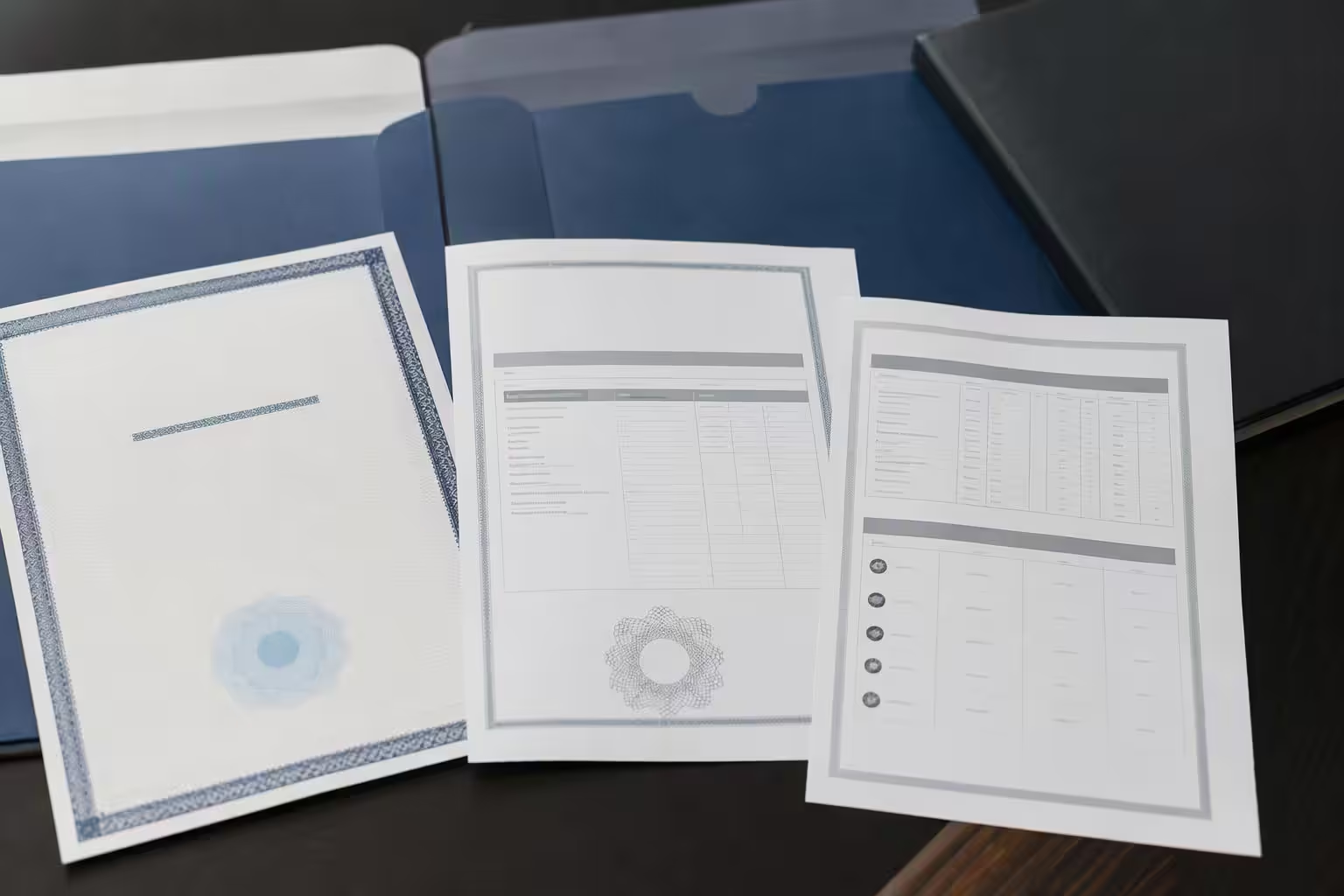
The revision trap is real: Rev. 01 of the same certificate number carries a wider scope than Rev. 00, so a buyer holding the earlier revision may be holding a superseded document. This is the ISO 13485 wound dressing manufacturer verification step that separates a QMS floor from product access. MDR Annex IX Chapter I requires the notified body to issue an EU quality management system certificate only where the system ensures conformity at every stage, and the certificate scope must identify the devices covered unambiguously (Regulation (EU) 2017/745, Annex IX, 2017). Ask three questions: does the scope name your construction, does the site address match the shipping documents, and is this the latest revision of that certificate number?
What PHMB-specific evidence should the OEM provide?
Request the loading as a value or band with units, the layer it sits in, and the test method by designation and edition. Cleared products differ: the K192463 summary states about 0.5% w/w PHMB in the polyurethane foam (FDA 510(k) K192463, cleared 2020-05-14), while the 2023 clearance (K223310) lists 0.8-1.1% w/w PHMB in a trilaminate foam with a silicone contact layer, EO sterilised to SAL 10⁻⁶ (FDA 510(k) K223310, cleared 2023-04-05). Neither figure is a standard. PHMB irrigation solutions are commonly 0.01% to 0.04%, and dressing loadings are product-specific, not a substance constant (Wounds International, understanding the role of PHMB, 2023). If a supplier quotes a log reduction without the method, you cannot compare it to anything. Ask for the SKU-level antimicrobial report, the declaration of conformity with its applied-standards annex, and the layer drawing that shows where the agent sits.
The table below puts the cleared PHMB foam figures side by side so the point is visible in one view: loading and method vary by product, and none of it is a standard.
Cleared product (example) | PHMB loading | Construction | Antimicrobial method cited |
|---|---|---|---|
K192463 | ~0.5% w/w | Microporous hydrophilic polyurethane foam | Modified AATCC TM 100 |
K223310 | 0.8-1.1% w/w | Trilaminate foam with silicone contact layer | Modified AATCC TM 100 (incl. mould) |
K163062 (family pred.) | Not stated as a band | PHMB-impregnated hydrophilic foam | Bench antimicrobial testing |
PHMB alginate (K201016) | Up to 0.8% w/w | Calcium alginate fibre (not a foam) | Modified AATCC TM 100 |
Read across the rows: the loading is a product-specific design value, not a substance constant, and the method is named per submission. A higher number does not mean a stronger product, and a “log reduction” is only comparable when the organism, inoculum, contact time and acceptance criterion match. This is precisely why the comparison table — not the headline percentage — is the evidence to request.
How we apply this at SLK Medical, the publisher of this guide. Our Alexer® PHMB foam dressing is a sterile antimicrobial dressing with a hydrophobic silicone contact layer, which covers the step of confirming the PHMB-containing foam layer and its stated configuration. It does not replace your own review of the loading value, test method and certificate scope, which you still verify against the issuer and the FDA database.
How is antimicrobial activity proven after sterilization, aging, and shelf life?
It must be demonstrated on the finished, sterilised device in final packaging, after the validated sterilisation cycle and at the end of aging, with real-time aging run in parallel. The claim is configuration-specific, and the same product family proves it. The 2017 clearance for this family claimed only temporary management under 24 hours (FDA 510(k) K163062 record, decision 2017-07-25); the K192463 summary states up to 7 days against named organisms including S. aureus, E. coli, C. albicans, P. aeruginosa, MRSA, VRE and Klebsiella (FDA 510(k) K192463, 2020-05-14); the 2023 clearance (K223310) claims up to 7 days including a mould challenge organism (FDA 510(k) K223310, 2023-04-05). Method is not the claim. Both mirrored clearances used AATCC 100 or modified AATCC TM 100, not ISO 20743, so the standard used, the organism list, the inoculum, the contact time and the acceptance criterion must all be reported before any “log reduction” or “7 days” claim is comparable. ASTM E2315’s own scope warns that antimicrobial activity “may vary significantly depending on variables selected” and that in-vitro comparisons across different parameters are limited (ASTM E2315, E2315-23 active).
Independent clinical bodies echo this caution without a commercial stake in the product. The European Wound Management Association’s Antimicrobial Stewardship programme publishes guidance on antiseptic use and on the limits of current antimicrobial-dressing evidence (EWMA, antimicrobial stewardship publications, current). The Maillard, Kampf and Cooper review, published in JAC-Antimicrobial Resistance, examines the difficulty of comparing in-vitro dressing efficacy and translating it to clinical outcomes (EWMA resource: antimicrobial stewardship of antiseptics pertinent to wounds, 2021), and Wounds International’s international consensus documents — including the International Wound Infection Institute’s 2025 therapeutic cleansing document — set out where antiseptics and antimicrobial dressings belong in practice (Wounds International, IWII 2025 consensus, 2025). These sources reinforce the same point from an independent angle: an in-vitro percentage is not a clinical promise.
What quality-system and manufacturing controls should I audit?
Audit process evidence, not certificate possession. ISO 11607-1:2019 governs the sterile barrier system, covering packaging materials, preformed systems and the requirement that the system maintain sterility to the point of use, permit the sterilisation process, protect against damage and permit aseptic presentation, while ISO 11607-2:2019 covers validation of the forming, sealing and assembly processes (ISO 11607-1:2019, 2019, current). K223310 shows the sterilisation configuration to ask for: ethylene oxide at SAL 10⁻⁶ (FDA 510(k) K223310, 2023-04-05). Ask for the dose-setting or cycle-validation report, the seal-strength and dye-penetration records, and the biological evaluation endpoints the technical file is built on: cytotoxicity, irritation and sensitisation, systemic toxicity and EO residuals, as listed in the applied-standards annex of a declaration of conformity. Keep the cleanroom question open rather than accepting a class number: ask the supplier to justify the class against the product, the open processing steps and the sterility claim. A weak answer names a certificate. A strong answer names the process, the validation report and the acceptance criterion.
What supply, MOQ, and hidden-cost terms should I expect and verify?
Expect MOQ and lead time to be quotation-dependent rather than published, and get them in writing against your size range. Sampling takes two to six weeks once specifications and artwork are frozen, and first production lots run 8-12+ weeks, as one manufacturer’s own OEM planning guide states (private label wound dressings guide, 2026-03-27). Treat those as that guide’s practical planning range, not an industry benchmark. For private label PHMB foam dressing programs, the hidden costs cluster in four places: tooling and artwork changes, sterilisation and packaging revalidation after any material change, minimum order quantity per size rather than per SKU, and the cost of re-testing antimicrobial performance if the foam source changes. Ask who owns the artwork files, what triggers a new validation, and whether the MOQ is quoted per size or per order. If the supplier cannot state the change-control trigger in writing, the commercial risk sits with you.
What is the verification workflow — samples, factory audit, certificate and test-report checks?
Run PHMB dressing OEM supplier qualification in a fixed order so a late failure does not waste a sample round. First, verify the legal manufacturer and the market-access pathway against the FDA database and NANDO. Second, run every certificate number through the issuer’s lookup and compare the scope line and site address to your shipping documents. Third, read the test reports for method, organism, inoculum, contact time and acceptance criterion, and confirm the antimicrobial testing was done on the finished, sterilised, aged device. Fourth, audit the process records: sterilisation validation, sterile barrier validation, and the biological evaluation endpoints. Fifth, request samples and confirm the physical construction against the layer drawing. Sixth, obtain MOQ, lead time, artwork ownership and change-control triggers in writing. Request the specification sheet, the instructions for use, the certification pack and the sampling plan at the start of step two, because those four documents answer most of the checks above and their absence is itself a finding. A supplier who cannot produce an aged-device antimicrobial report has an open item, not a pass.
Frequently Asked Questions
Is ISO 13485 certification enough to source a PHMB foam dressing?
No. ISO 13485 is a quality-management floor, not product approval. The certificate scope must name the devices covered unambiguously, and MDR Annex IX Chapter I ties the EU certificate to a system that ensures conformity at every stage (Regulation (EU) 2017/745, Annex IX, 2017). Verify the scope line and revision against the issuer’s lookup before treating it as coverage.
Can I compare log-reduction numbers between two suppliers?
Only if the methods match. The two mirrored FDA clearances used AATCC 100 or modified AATCC TM 100, and ASTM E2315’s scope warns that results vary with the parameters chosen (ASTM E2315, E2315-23 active). Ask for the standard, organism list, inoculum, contact time and acceptance criterion before comparing any figure.
What if the supplier cannot produce an aged-device antimicrobial report?
Treat it as an open item, not a pass. Antimicrobial activity is a shelf-life characteristic and must be shown on the finished, sterilised device after the validated cycle and at the end of aging, with real-time aging in parallel. The 2023 clearance tested a real-time aged predicate device for its mould claim (FDA 510(k) K223310, 2023-04-05), which is the evidence pattern to request.
Which EU class should I expect for a PHMB foam dressing?
It depends on the intended purpose and claims, not the word “antimicrobial”. MDCG 2021-24 Rev.1 places micro-environment management in Class IIa and injuries that have breached the dermis and heal only by secondary intent in Class IIb (MDCG 2021-24 Rev.1, April 2026). Ask the supplier for the Annex VIII rule and the justification behind it.
Conclusion
A reliable PHMB foam dressing OEM manufacturer is one whose paperwork survives a lookup, not one whose price is lowest. The four phases give you a sequence: confirm the legal manufacturer and pathway, verify every certificate against the issuer’s registry and check its revision, read the PHMB and antimicrobial evidence for method and configuration, then audit the process records and lock the commercial terms in writing. The binary checks are the ones that matter, and the named verification method is what makes each one settleable. Start by requesting the specification sheet, the instructions for use, the certification pack and the sampling plan, then run the certificate numbers before you run the samples. The PHMB foam dressing manufacturer checklist only works if you complete it before award, not after.