You want the best way to care for pressure ulcers. Silicone foam dressing helps you with wounds that leak some fluid. It soaks up more and sticks gently. You feel less pain when you change it. Hydrocolloid dressing or alginate wound dressing can hurt more. A new survey shows soft silicone dressings hurt the least. They also cause the least damage. Many patients say changing dressings hurts the most. Silicone foam dressing needs fewer changes. This makes things easier for you.
Key Takeaways
-
Silicone foam dressings soak up more fluid. They cause less pain when changed. This makes them good for wounds with some exudate.
-
Using silicone foam dressings means fewer changes. This saves time and lowers infection risk.
-
Hydrocolloid dressings work for wounds with little exudate. They can hurt when you take them off. Do not use them on infected wounds.
-
Alginate dressings are best for wounds that drain a lot. They need extra help to stay in place.
-
Picking the right dressing can make you more comfortable. It helps wounds heal. It may also lower medical costs.
Dressing Types
Silicone Foam Dressing
Silicone foam dressing helps with many wounds. It has a soft foam layer and gentle silicone adhesive. This dressing absorbs fluid and keeps the wound moist. You feel less pain when you take it off. Doctors use silicone foam dressing for pressure ulcers and surgical wounds. It also helps with chronic wounds. Studies show it can stop pressure ulcers, especially on heels and lower back. Do not use it on dry wounds. Do not use it on wounds with bone or muscle showing. If you see infection, talk to your doctor.
Tip: Silicone foam dressing works well for wounds with some fluid. It does not stick to the wound bed. You feel less pain when you change it.
|
Dressing Type |
Material Properties |
Suitable For |
|---|---|---|
|
Silicone Foam Dressings |
Gentle adhesion, effective absorption, minimizes pain during changes. |
Pressure injuries, chronic wounds, surgical wounds. |
Hydrocolloid
Hydrocolloid dressings help keep wounds moist for healing. They use materials like sodium carboxymethylcellulose. These dressings make a gel when they touch wound fluid. You can use hydrocolloid dressings for wounds with light or moderate fluid. They soak up exudate and block germs. Some hydrocolloid dressings have a fibrous layer for more fluid. Do not use them on infected wounds. Do not use them on wounds with lots of fluid.
|
Property/Use |
Description |
|---|---|
|
Composition |
Made of sodium carboxymethylcellulose or similar materials forming a gel. |
|
Moisture Maintenance |
Maintains a moist wound environment, essential for healing. |
|
Exudate Absorption |
Absorbs exudate while preventing external contaminants. |
|
Heavy Exudate Management |
Fibrous hydrocolloids are designed for wounds with heavy exudate. |
Alginate
Alginate dressings come from seaweed. They work for wounds with lots of fluid. When alginate touches wound fluid, it turns into a soft gel. This gel keeps the wound moist and helps healing. Alginate dressings help with pressure ulcers and diabetic foot ulcers. They also help with surgical wounds that leak a lot. Do not use alginate dressings on dry wounds. Do not use them on wounds with little fluid.
-
Alginate dressings are good for:
-
Venous ulcers
-
Diabetic foot ulcers
-
Surgical wounds after surgery
-
Traumatic wounds
|
Dressing Type |
Material Properties |
Suitable For |
|---|---|---|
|
Alginate Dressings |
Derived from seaweed, highly absorbent, forms a gel to keep wound moist. |
Chronic wounds with high exudate. |
Mechanisms
Absorption
You need a dressing that controls wound fluid well. Each dressing type absorbs fluid in its own way. Silicone foam dressings pull in exudate and keep wounds moist. Hydrocolloids make a gel when they touch fluid, but they do not soak up as much. Alginates take in a lot of fluid and change into a soft gel.
|
Dressing Type |
Absorption Mechanism |
Suitable For |
Limitations |
|---|---|---|---|
|
Absorb exudate while keeping a moist environment; high absorption capacity. |
Various exudative wounds |
Not for low-exuding wounds; may need frequent changes. |
|
|
Hydrocolloids |
Create a gel-like cover; limited absorption. |
Lightly to moderately exuding wounds |
Not for dry wounds or exposed bone. |
|
Alginates |
Absorb much fluid and form a gel; interact with wound ions for protection. |
Heavily exuding wounds |
Not for severe wounds with exposed bone; may dry out the wound. |
Tip: Use alginate dressings for wounds with lots of fluid. Pick silicone foam for wounds with some fluid. Choose hydrocolloids for wounds with light or moderate fluid.
Moisture Control
It is important to keep wounds moist but not too wet. Silicone foam dressings control moisture better than hydrocolloids. A new study shows foam dressings work best for moisture control. Hydrocolloids do not control moisture as well. The chart below shows how foam dressings compare to other types.
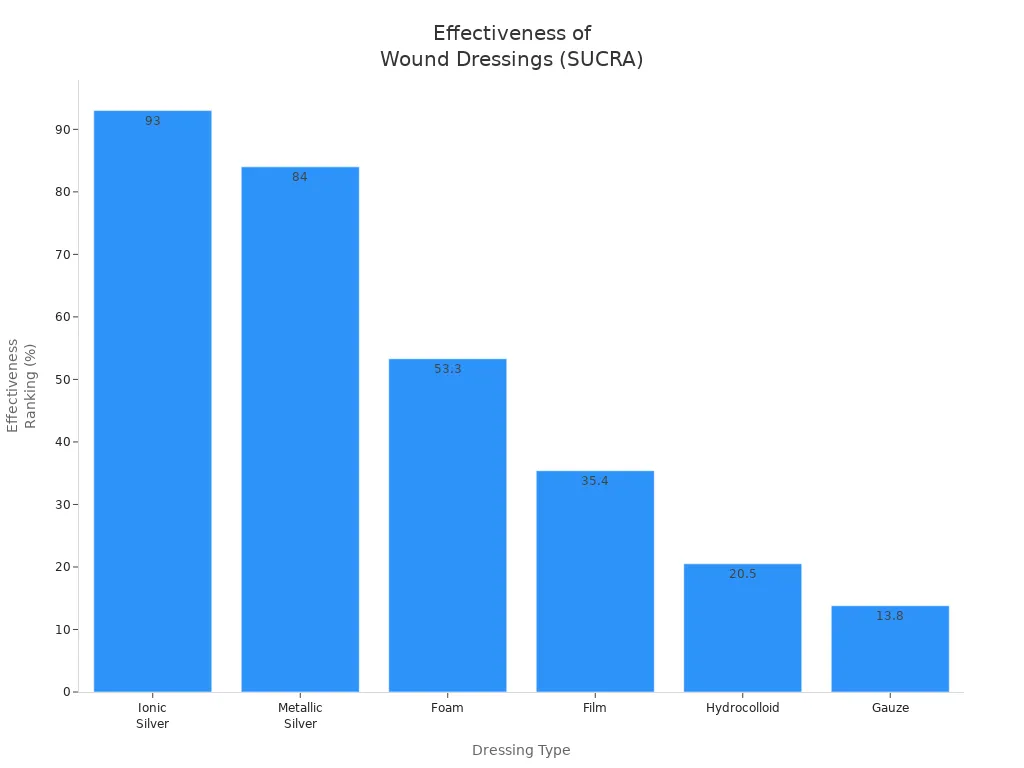
Foam dressings, including silicone foam, scored 53.3% for moisture control. Hydrocolloids scored only 20.5%. Foam dressings help keep wounds balanced with moisture.
Adhesion
You want a dressing that sticks but does not hurt your skin. Silicone foam dressings use gentle silicone. They cause less pain and less skin damage when you take them off. Hydrocolloids stick more and can hurt your skin. Alginates do not have adhesive, so you need another dressing to hold them in place.
|
Dressing Type |
Skin Damage (%) |
TEWL Increase (after removal) |
Pain on Removal |
|---|---|---|---|
|
Hydrocolloid |
70% |
21.6 ± 8.01 |
Higher |
|
Silicone |
11.3 ± 4.89 |
Lower |
Silicone foam dressings protect your skin and make dressing changes less painful. You feel more comfortable and heal faster.
Silicone Foam Dressing Benefits

Absorbency
You need a dressing that controls wound fluid well. Silicone foam dressing takes in more exudate than most others. The foam layer grabs moisture and keeps it inside. This helps the wound bed stay moist but not too wet. It stops skin from breaking down and getting soft. Nurses often pick silicone foam dressing for wounds with some fluid. You see less mess and fewer leaks on clothes or sheets.
Tip: If you see fluid under your dressing, try silicone foam dressing for better soaking power.
|
Dressing Type |
Absorbency Level |
Best For |
|---|---|---|
|
Silicone Foam Dressing |
High |
Moderate exudate wounds |
|
Hydrocolloid |
Medium |
Light exudate wounds |
|
Alginate |
Very High |
Heavy exudate wounds |
Pain Reduction
You feel less pain when you use silicone foam dressing. The soft silicone layer sticks gently to your skin. It does not pull or hurt when you take it off. Many people say dressing changes hurt less with silicone foam. You avoid skin damage and redness. You also lower your chance of new wounds near the ulcer. If your skin is sensitive, silicone foam dressing gives comfort and protection.
-
Less pain when you change dressings
-
Lower chance of skin tears
-
More comfort for sensitive skin
Changing dressings should not hurt. Silicone foam dressing helps you heal with less pain.
Frequency of Change
You do not need to change silicone foam dressing as much as other types. The high absorbency lets you keep the dressing on longer. You save time and feel less stress. Nurses say they change dressings less with silicone foam dressing. You also lower your risk of infection because you touch the wound less. If you want an easy routine, silicone foam dressing makes wound care simple.
-
Fewer dressing changes needed
-
Less trouble for healing
-
Lower infection risk
⏰ Save time and help your wound heal by picking a dressing that lasts longer.
Comparison
Silicone Foam Dressing vs Hydrocolloid
Silicone foam dressing and hydrocolloid are different. Silicone foam dressing absorbs more fluid than hydrocolloid. In one study, most foam dressings did well with absorbency. Only a few hydrocolloid dressings did as well. Silicone foam dressing has less leakage. Only a few patients had leaks with foam. Many more had leaks with hydrocolloid. Clothes stayed cleaner with foam. Hydrocolloid caused more soiling.
-
Silicone foam dressing keeps skin dry and clothes clean.
-
You change foam dressings less often.
-
Hydrocolloid dressings can stick more and hurt to remove.
-
Silicone foam dressing uses gentle silicone, so it hurts less.
If your wound has moderate fluid, silicone foam dressing works better and feels more comfortable.
Both dressings heal wounds at about the same speed. Studies show healing rates are similar. Both are comfortable, but silicone foam dressing causes less pain and fewer leaks.
|
Feature |
Silicone Foam Dressing |
Hydrocolloid |
|---|---|---|
|
Absorbency |
High |
Moderate |
|
Leakage |
Rare |
More common |
|
Comfort |
High |
Moderate |
|
Pain on Removal |
Low |
Higher |
|
Healing Rate |
Similar |
Similar |
Silicone Foam Dressing vs Alginate
Silicone foam dressing and alginate both manage moisture. They work best for different wounds. Silicone foam dressing helps all grades of pressure ulcers. It controls fluid and keeps pain low. Alginate dressings come from seaweed. They soak up lots of fluid and turn into gel. Alginate works best for wounds with heavy drainage.
|
Dressing Type |
Moisture Management Description |
Suitability for Wounds |
|---|---|---|
|
Silicone Foam Dressing |
Handles fluid, less pain, good for all pressure ulcers |
All grades of pressure ulcers |
|
Alginate Dressing |
Soaks up lots of fluid, forms gel, best for heavy fluid |
Moderate to heavily exuding wounds |
-
Alginate dressings fit deep or odd-shaped wounds.
-
You need another dressing to hold alginate in place.
-
Silicone foam dressing sticks by itself.
-
Silicone foam dressing is more comfortable to remove.
-
Alginate dressings control bleeding and soak up more fluid.
-
Alginate may dry out wounds with little fluid.
Pick silicone foam dressing for moderate fluid and easy changes. Use alginate for wounds with lots of drainage.
Hydrocolloid vs Alginate
Hydrocolloid and alginate dressings help wounds heal. They have different strengths. Hydrocolloid works best for wounds with light or moderate fluid. It sticks to skin and forms a gel. Alginate absorbs more fluid and helps wounds with heavy drainage.
|
Dressing Type |
Absorption Capacity |
Healing Rates |
Comfort During Changes |
Adverse Events |
|---|---|---|---|---|
|
Hydrocolloid |
Moderate |
Lower |
High |
Moderate |
|
Alginate |
High |
Higher |
Moderate |
Lower |
-
Hydrocolloid dressings feel comfortable and block germs.
-
Alginate dressings fit deep wounds and control bleeding.
-
You need another dressing to keep alginate in place.
-
Hydrocolloid is easier for shallow wounds.
-
Alginate works better for deep or odd-shaped wounds.
For wounds with lots of fluid, alginate dressings absorb more and help healing. For comfort and easy use, hydrocolloid dressings work well for lighter wounds.
Evidence
Research
You want to know if silicone foam dressing works best. Scientists studied this in hospitals and clinics. They checked how dressings help prevent and heal pressure ulcers. Here are some key studies:
|
Study Title |
Population |
Intervention |
Control |
Outcome |
|---|---|---|---|---|
|
A randomised controlled trial of the effectiveness of soft silicone multi‐layered foam dressings in the prevention of sacral and heel pressure ulcers |
440 trauma and critically ill patients |
Mepilex® Border Sacrum and Mepilex® Heel dressings |
Usual pressure ulcer prevention strategies |
Fewer hospital-acquired pressure ulcers in the group using silicone foam dressings |
|
Efficacy of silicone foam dressings in preventing pressure injuries in the sacral and heel areas of patients: a meta-analysis |
High-risk ICU patients |
Two silicone dressings |
No dressings |
Silicone foam dressings helped stop pressure injuries |
|
The effectiveness of two silicone dressings for sacral and heel pressure ulcer prevention compared with no dressings in high-risk intensive care unit patients |
High-risk ICU patients |
Two silicone dressings |
No dressings |
Pressure ulcers happened less often with silicone foam dressings |
Hospitals use checklists and daily skin checks to help patients. Staff learn how to use dressings and follow safety rules. Nurses look at skin every day and use computers to track healing.
|
Step |
Description |
|---|---|
|
1 |
|
|
2 |
The manager worked with the supply team to get silicone foam dressings. |
|
3 |
Staff learned how to use the dressings and the Braden scale. |
|
4 |
Nurses checked skin every day under the dressing. |
|
5 |
The manager gave help and feedback to nurses during safety meetings. |
|
6 |
Computer records were checked to make sure dressings were used right. |
Outcomes
You want comfort and fast healing. Patients say silicone foam dressing feels soft and does not hurt when taken off. Many people say their comfort is excellent or good. You can move easier and feel less pain when changing dressings. Nurses see fewer new ulcers and less skin damage. Silicone foam dressings help you heal faster and lower your chance of new wounds.
You spend less time changing dressings. Foam dressings can last up to four days. You do not need to change them as much. This means less pain and fewer stops in your day. Hydrocolloid dressings may last longer on wounds with less fluid, but they can hurt more when removed. You get better results when your dressing is gentle and easy to use.
Patient comfort and quick healing are important. Silicone foam dressing helps you heal with less pain and fewer problems.
Practical Tips
Application
You want to apply silicone foam dressings the right way. Start by cleaning the wound and drying the skin around it. Place the dressing gently over the pressure ulcer. Make sure the foam covers the wound and a small area of healthy skin. Press the edges down so the dressing sticks well. Hospitals use silicone foam dressings for high-risk patients. Nurses often choose these dressings to help prevent pressure ulcers, especially in people who stay in bed for long periods. Many experts believe silicone foam dressings work better than standard care for stopping new ulcers from forming.
-
Silicone foam dressings help prevent pressure ulcers in high-risk patients.
-
These dressings may work better than regular methods for stopping ulcers.
-
Researchers continue to study how silicone foam dressings help in different situations.
Tip: Always check the skin before you apply a new dressing. Look for signs of redness or infection.
Removal
You want to remove silicone foam dressings without hurting your skin. Follow these steps to make dressing changes easier and less painful:
-
Check the skin and wound before you start.
-
Lift one edge of the foam dressing gently.
-
Peel the dressing back slowly, keeping it close to your skin.
-
Use adhesive remover if the dressing sticks too much.
-
Clean the skin after you take off the dressing.
You protect your skin and feel less pain when you remove dressings slowly and carefully.
Cost
You may wonder about the cost of silicone foam dressings. Hospitals and clinics look at both the price of the dressing and the cost of treating pressure ulcers. Studies show that using multi-layer silicone foam dressings can save money in the long run. These dressings help prevent ulcers, which means you spend less on treatment. One study found that the cost to avoid a single pressure ulcer was about €1945.30. Researchers published these findings in the International Wound Journal, showing that silicone foam dressings are a smart choice for patients at risk.
-
Multi-layer silicone foam dressings help prevent costly pressure ulcers.
-
Hospitals save money by using these dressings for high-risk patients.
-
Experts say silicone foam dressings offer good value for pressure ulcer care.
Choosing the right dressing can help you heal faster and lower your medical costs.
You want good care for pressure ulcers with some fluid. Silicone foam dressing is special because it helps your skin and protects weak spots. You have fewer problems than with other dressings.
-
It lowers pulling forces and keeps your skin healthy.
-
You can move it and look at your skin without hurting.
Foam dressings fit better than hydrocolloids. This makes them a smart pick for healing and comfort.
FAQ
What dressing should you use for a pressure ulcer with moderate fluid?
Pick a silicone foam dressing for a pressure ulcer with moderate fluid. It soaks up fluid and keeps your skin safe. You will not feel as much pain when you change it. Nurses like to use silicone foam for wounds with some exudate.
Can you use hydrocolloid dressings on infected wounds?
Do not use hydrocolloid dressings on wounds that are infected. These dressings keep in moisture and can make infection worse. Always talk to your doctor before using any dressing on an infected wound.
How often should you change a silicone foam dressing?
Change a silicone foam dressing every three or four days. If it gets wet or dirty, change it sooner. Always look at your skin and listen to your nurse’s advice.
Do alginate dressings stick to your skin?
Alginate dressings do not stick to your skin at all. You need another dressing to keep them in place. Alginate is best for wounds with lots of fluid.
Are silicone foam dressings expensive?
Silicone foam dressings can cost more than some other types. You save money because you do not change them as much and heal faster. Hospitals use them to help stop pressure ulcers that cost a lot to treat.
Tip: Ask your nurse if your insurance pays for silicone foam dressings.