

Introduction
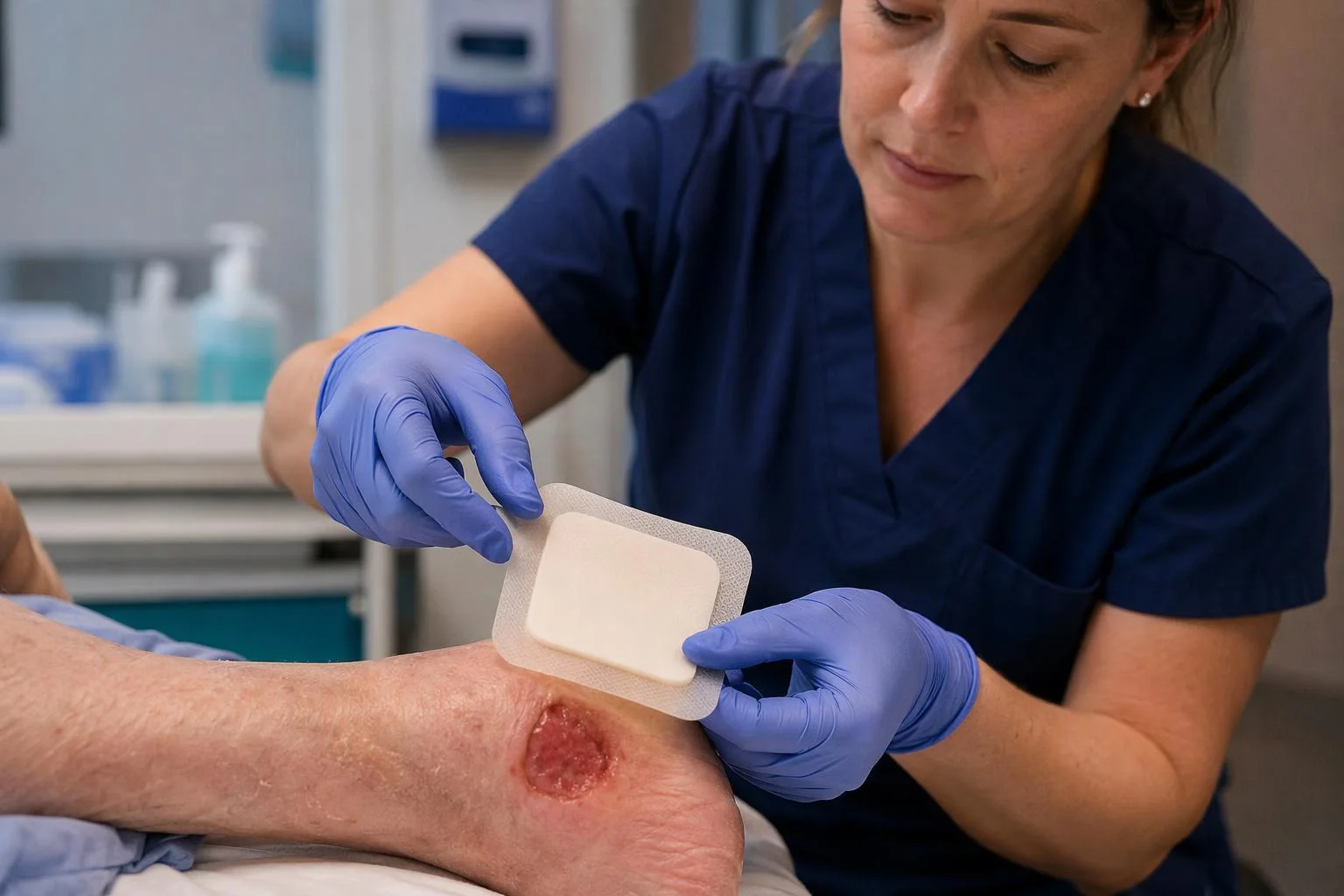
The short answer is no — not as a general claim. Silver’s evidence base is strongest for bioburden and odor management in wounds with localised infection or a documented high risk of infection, and weakest for routine healing acceleration. That distinction is the one distributors need to hold onto, because it determines what a product manager can defensibly write into a tender response, a clinical education deck, or a payer letter.
This FAQ is organised in four parts: the healing evidence, the practical start-and-stop rules, payer and stewardship questions, and class comparisons. It draws on the Cochrane review of silver-containing dressings and creams, NICE’s evidence summary on chronic wounds (ESMPB2), the PrescQIPP silver dressings bulletin, Wounds UK’s best practice statement on silver, the malodor literature, and the 2024 BMJ Open meta-analysis of silver versus iodine. SLK Medical’s Ag foam range is discussed inside that same evidence frame rather than above it.
Last updated: October 2026.
Healing evidence: does silver actually heal wounds faster?
Does silver actually heal wounds faster than standard dressings, or is that claim overstated?
As a general statement, the claim is overstated. The Cochrane review of silver-containing dressings and creams identified 26 trials with 2,066 participants and concluded there was not enough evidence to support the use of silver-containing dressings or creams, because in general these treatments did not promote wound healing or prevent infection. Twenty of the 26 trials were in burns, and most studies were small and of poor quality. One compound, silver sulfadiazine, showed no effect on infection and actually slowed healing in partial-thickness burns.
That conclusion is often quoted more broadly than the review supports. Three qualifications matter for anyone citing it:
The comparison matters. Cochrane compared silver against non-silver dressings and creams as a category. It did not establish that every silver product performs identically, and it did not test dressing-to-dressing differences within the silver class.
The population matters. A result dominated by burn trials does not automatically transfer to chronic leg ulcers, pressure injuries, or diabetic foot ulcers.
Narrower findings point the other way in places. NICE’s summary of the Carter et al. meta-analysis (10 RCTs, n=1,356) found no difference between silver and control dressings in complete healing of leg wounds and ulcers, but a greater short-term reduction in wound size with silver. In burns, several trials of modern silver dressings reported shorter healing times and less pain than silver sulfadiazine — a comparison against an older cream, not against standard care.
The defensible formulation for a tender document is therefore: silver dressings are not indicated to accelerate healing in uninfected wounds, and the evidence does not support a general healing-rate claim. Any healing benefit observed in trials tends to appear in infected or critically colonised wounds, where controlling bioburden removes an obstacle to healing rather than stimulating it directly.
What does silver genuinely add beyond odor control?
The strongest defensible addition is reduction of bioburden in wounds with localised infection or suspected biofilm. Wounds UK’s best practice statement frames silver as an antimicrobial to be used once localised infection has been identified — for example with the Therapeutic Index for Local Infections (TILI) score — and notes that silver dressings aim to manage bioburden and improve wound conditions rather than to have a direct effect on healing.
On odor specifically, the mechanism is bacterial control rather than masking. The review of malodour management describes silver among the antimicrobial options that act indirectly on odor by reducing bacterial bioburden in the wound bed, in contrast to charcoal dressings that adsorb volatile compounds. That is a more useful claim than “odor control” alone, because it links the odor benefit to the same mechanism as the infection benefit.
Two caveats should travel with it. First, the malodor evidence base is thin: the review found only two randomized, placebo-controlled, double-blind trials across the entire malodor literature (both of metronidazole) and two further RCTs (one silver, one medical-grade honey), with small samples, short follow-up, and no validated instrument for grading malodor that has gained widespread clinical acceptance. Second, products containing silver rarely claim to increase healing rates, and the Wounds UK statement is explicit that bioburden management is the objective. Odor control is a reasonable, mechanistically plausible benefit; it is not a strongly proven one.
Practical use: starting, stopping, and documenting silver
When is it defensible to start a silver dressing, and what has to be documented?
Initiation is defensible when there are clinical signs of localised infection — overt or covert — or a documented high risk of infection or re-infection, or suspected biofilm. That is the position of the Wounds UK best practice statement, which draws on IWII guidance, and it is consistent with the BNF position summarised by PrescQIPP: silver dressings should only be used when clinical signs and symptoms indicate a localised infection, with systemic antibacterials considered if appropriate.
The documentation expectation is specific. The record should capture baseline observation data, treatment aims and objectives, the treatment decision itself, and a review date. In practice that means a distributor’s clinical support materials should prompt the clinician to write down what the wound looked like at baseline, what the silver is intended to achieve, why silver rather than another option, and when the decision will be revisited.
The “when not to use” side is equally important, because a start criterion read in isolation becomes permission for routine use. Silver dressings should not be used in the absence of localised, spreading, or systemic infection unless there are clear indicators of high infection risk or suspected biofilm. Additional cautions from the same guidance:
Clean, low-risk surgical wounds and wounds healing as expected.
Known silver allergy.
Wounds undergoing enzymatic debridement.
Pregnancy and lactation, and newborns, for dressings containing silver sulfadiazine — which should also be avoided in patients with sulfonamide sensitivity or hepatic or renal impairment.
Manufacturer contraindications, including use in patients undergoing MRI or radiotherapy where the IFU specifies it.
Children and very large wounds, where silver dressings should be used with caution.
How long should silver stay on, and what triggers discontinuation?
The default review point is two weeks — the “two-week challenge.” The critical nuance, and one that is frequently misquoted in formulary summaries, is that the wound should be reviewed at two weeks but the dressing should not be automatically stopped at that point. Continued use requires regular review and a documented reason.
Concrete stop triggers are:
Resolution of infection signs. Once bioburden is under control and the wound is improving, switch to a non-antimicrobial dressing selected on the needs of the wound.
Adverse effects. Discontinue if the patient experiences adverse effects from the antimicrobial.
Failure to progress. If the wound bed has not reduced by at least 40% within four weeks — 50% for diabetic foot ulcers — a full reassessment is needed and a new treatment regimen should be commenced, with another antimicrobial considered.
PrescQIPP adds the prescribing mechanics that make the two-week rule work in practice: silver dressings should be prescribed as acute prescriptions rather than added to repeat prescriptions, a prescription for five dressings should be sufficient for the recommended two-week maximum at three-day changes, and prescriptions should ideally be for up to five and not more than ten dressings. NHS Nottinghamshire guidance gives 7–14 days for infected wounds until infection resolves, with longer specialist-supervised use possible for chronically colonised wounds. That longer-use pathway is a specialist decision, not a default.
Payer and formulary acceptance
Will a payer or formulary accept silver use, and what documentation supports medical necessity?
Acceptance is conditional and varies by market. Four reference points illustrate the range:
NICE states there is no robust clinical or cost-effectiveness evidence for antimicrobial dressings over non-medicated dressings in chronic wounds, and advises avoiding overuse because of concerns about bacterial resistance and toxicity. NICE’s ESMPB2 summary reports that silver dressings did not statistically significantly improve wound healing compared with non-silver dressings in the VULCAN trial (n=213; moderate strength of evidence).
SIGN does not recommend silver for routine treatment of venous leg ulcers, advising simple non-adherent dressings instead.
US Medicare takes a different route. The surgical dressing LCD L33831 lists silver among materials whose safety and effectiveness have not been established, and states that materials lacking sufficient clinical evidence are not recognised as effective or considered reasonable and necessary. This is a coverage determination about the material category, not a clinical trial result, and distributors should read it as a coding and reimbursement constraint rather than as evidence of ineffectiveness.
PrescQIPP restricts silver to acute prescriptions for wounds with signs of infection, for short duration, with review.
What tends to support a medical-necessity argument is therefore less about the product and more about the record: documented signs of localised infection, a stated treatment rationale, defined review dates, a short defined duration, and evidence that the dressing was stopped or stepped down when the infection resolved. A file that shows a silver dressing was selected for a specific documented indication and discontinued on schedule is far stronger than a file that argues silver is generally effective.
One countervailing line of evidence is worth knowing. NICE’s summary of the Jemec et al. cost-effectiveness analysis, built on the Leaper et al. meta-analysis, estimated that the initial four weeks of treatment in primary care was about £90 more expensive with silver dressings, but that shorter time to healing and less need for specialist referral made the average total treatment cost per person about £140 lower with silver. NICE notes two limitations: it is unclear how time to healing was derived from Leaper’s outcomes, which were primarily reduced ulcer area, and the limitations of the underlying meta-analysis affect the quality of the cost-effectiveness estimate. Treat this as a hypothesis worth testing locally, not as a settled economic case.
Resistance, cytotoxicity, and stewardship
Does silver use risk resistance or harm tissue, and how should stewardship weigh that?
On resistance, the picture is reassuring but not a licence for unrestricted use. The Nottinghamshire guidance states that resistance to silver is extremely rare, and the review of commercial silver dressings attributes this to silver’s multimodal mode of antimicrobial action, in contrast to antibiotics that generally have a single target site. The same guidance notes, however, that silver released into the wound is absorbed systemically, creating a risk of toxicity as well as resistance — which is why long-term use should be avoided and why the two-week review exists.
On cytotoxicity, the honest answer is that laboratory data show real effects. The commercial dressings review reports acute cytotoxic responses towards HaCaT keratinocytes and primary human dermal fibroblasts for several silver dressings tested in cell culture, and notes that additives can contribute: surfactants used in some dressings have demonstrated severe cytotoxicity and adverse effects on cell proliferation, and surfactant accumulation at the wound site may delay healing. Two practical implications follow:
Higher silver content does not automatically mean a more effective dressing. The Nottinghamshire guidance says this explicitly, and the review’s comparison table shows wide variation in silver release profiles and biofilm activity that does not track simply with silver loading.
In vitro data are not clinical outcomes. A dressing that kills bacteria in a dish, or that shows cytotoxicity in a fibroblast culture, has not thereby been shown to harm or heal a patient. Both directions of inference are unsupported.
The stewardship framing that follows is straightforward: silver is one tool inside an antimicrobial-stewardship-informed pathway that includes debridement, cleansing, and reassessment, not a substitute for them. Wounds UK notes that antimicrobials often will not work as effectively on a wound with slough, necrosis, or surface debris, so the wound should be cleaned and debrided where appropriate before treatment begins. Antibiofilm strategies should always include thorough cleansing and debridement alongside topical antimicrobial treatment.
Silver versus iodine, honey, and PHMB
How does silver compare with iodine, honey, or PHMB dressings?
Head-to-head evidence is limited and heterogeneous, so class-level statements are more defensible than product rankings. The 2024 BMJ Open meta-analysis by Jiang et al. included 17 studies and found that silver dressings significantly reduced healing time compared with iodine dressings (SMD −0.95, 95% CI −1.62 to −0.28, I²=92%, p=0.005, moderate-quality evidence), with no significant difference in healing rate (RR 1.29, 95% CI 0.90 to 1.85, I²=91%, p=0.16, low-quality evidence). The high heterogeneity means the healing-time estimate should be presented with its confidence interval, not as a single number.
On the secondary outcomes, the same review found:
Anti-infective efficacy (11 studies): 6 showed equivalence between silver and iodine, 4 favoured silver, 1 favoured iodine. No meta-analysis was possible because bacterial load, sterility duration, and infection ratios were assessed differently across studies.
Pain (7 studies): 4 found no significant difference, 3 favoured silver. No meta-analysis was possible because pain scoring criteria differed.
Exudate (3 studies): 2 favoured silver. Too few studies to pool.
NICE’s position is that systematic reviews have identified little good-quality RCT evidence to support advanced or antimicrobial dressings — iodine, honey, or silver — for chronic wounds, and that estimates of effect are uncertain. That is a statement about the whole class, not a ranking within it.
PHMB sits somewhat differently. Wounds UK describes PHMB as a surfactant antimicrobial with low-to-no cytotoxicity that disrupts biofilm attachment, is highly effective against Gram-negative biofilm with 15-minute exposure, and does not promote bacterial resistance. Much of that evidence comes from cleansing and biofilm-disruption studies rather than from dressing-versus-dressing RCTs, so it is not a like-for-like comparison with the silver literature.
The practical conclusion for a formulary shortlist: selection should follow wound characteristics, exudate level, contraindications, and cost rather than a blanket class preference. Silver’s case is strongest where localised infection or biofilm is documented and where the dressing’s handling properties suit the wound; on most other outcomes it is roughly equivalent to iodine.
SLK Medical’s Ag options in evidence context
Where do SLK Medical’s silver foam dressings fit, and what should a distributor verify?
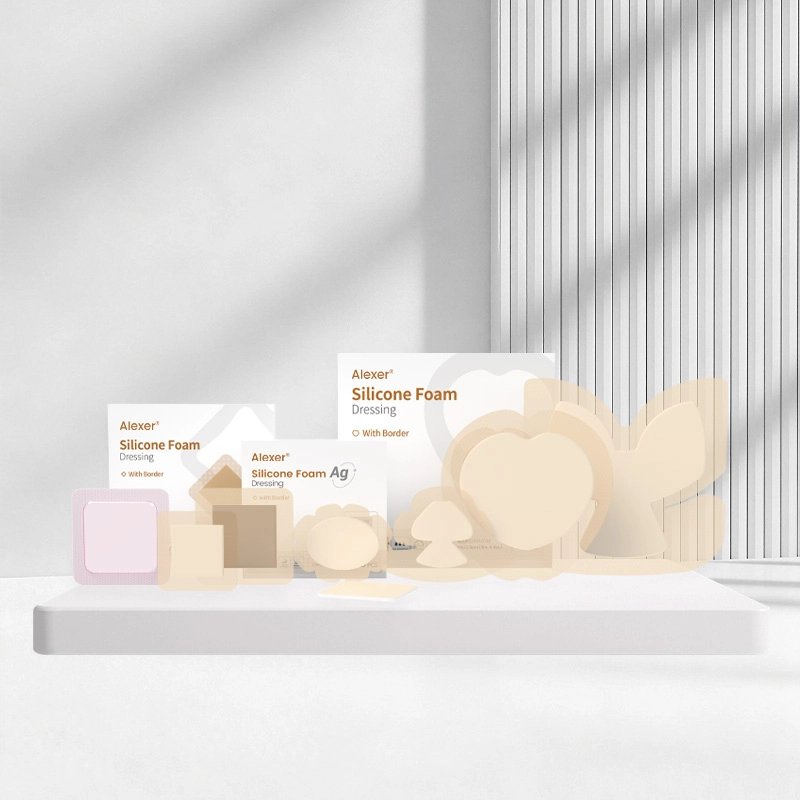
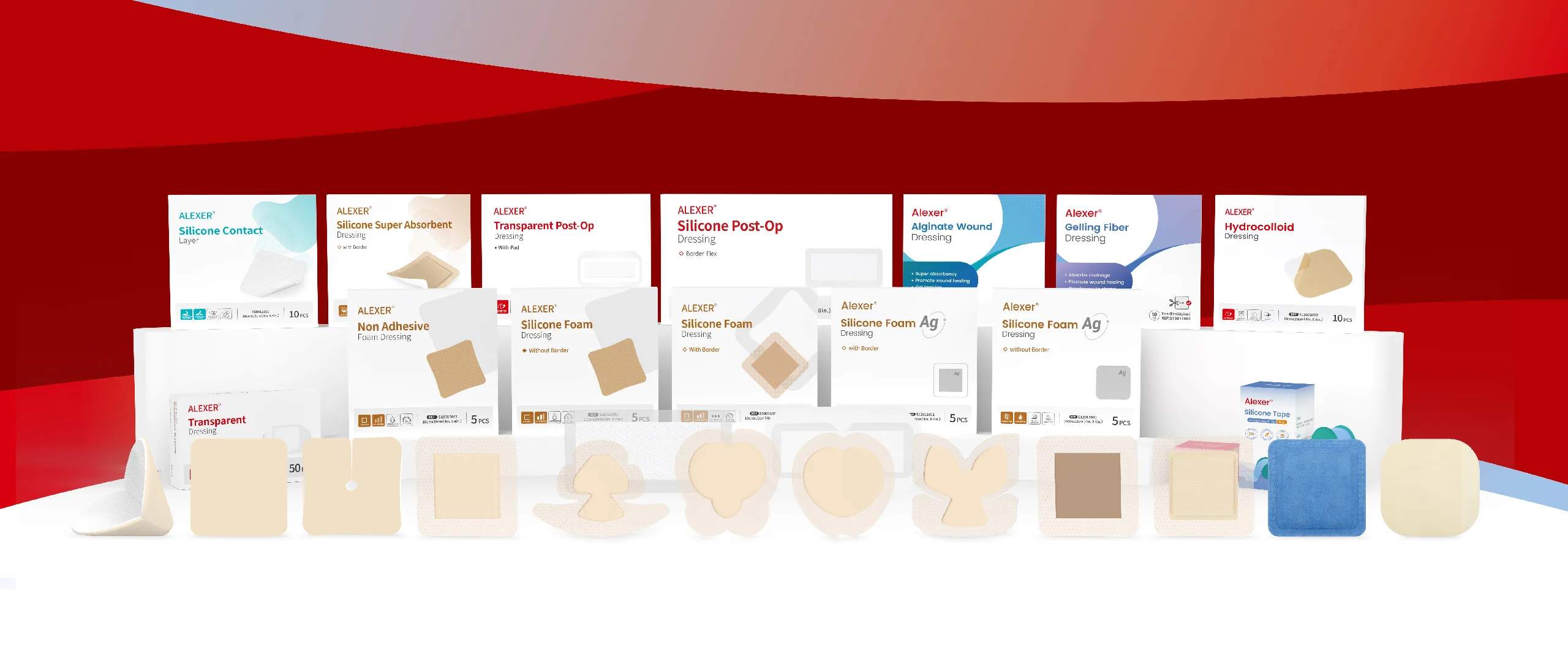
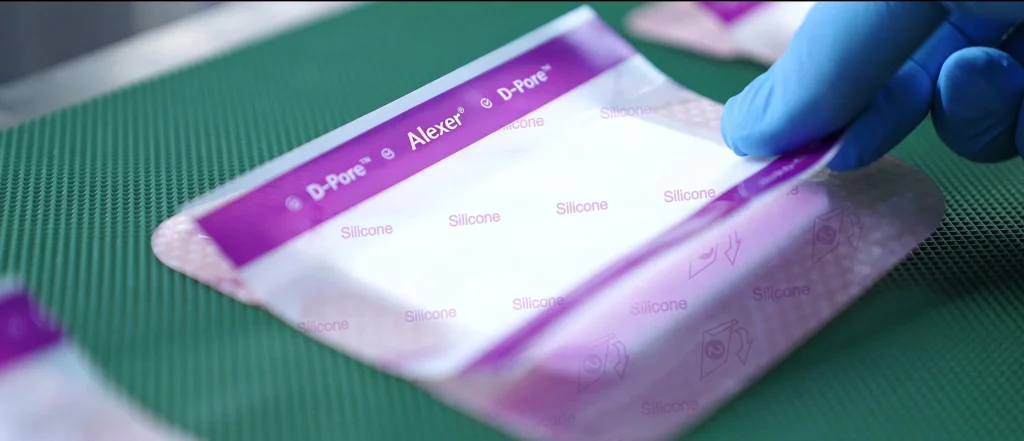
SLK Medical manufactures three silver foam formats: an Ag foam dressing (non-adhesive) in 10×10 cm and 15×15 cm squares; an Ag silicone foam dressing with border in a wide size range including square, sacral, and heel shapes; and an Ag silicone foam dressing without border in 10×10 cm and 15×15 cm. The bordered range’s sacral and heel configurations are relevant to the pressure-injury and diabetic-foot segments where silver use is most often documented.
The manufacturer’s stated product characteristics are rapid sustained release of ionic silver with sustained effect up to seven days, and in vitro antibacterial testing showing action within 5 to 10 minutes of application and sustained inhibitory effect over 125 hours against organisms including S. aureus, E. coli, P. aeruginosa, S. epidermidis, E. faecium, B. subtilis, C. albicans, and K. pneumoniae. These are manufacturer statements and laboratory findings. They describe antibacterial performance in a test system; they are not clinical healing evidence, and they should not be converted into outcome claims in a tender or a clinical deck. The correct framing is that the dressing is designed to reduce bacterial load in the dressing environment, with clinical benefit established — or not — by the evidence discussed above.
Before a tender or catalogue submission, a distributor should confirm:
IFU indications and contraindications, including any MRI or radiotherapy warnings, and the intended-use wording in each target language.
Quality management certification. SLK Medical Material (Tianchang) Co., Ltd. holds ISO 13485:2016 certification under TÜV SÜD certificate Q5 112764 0001 (Rev. 01, valid 2026-06-30 to 2028-05-08) and an EU MDR Annex IX Chapter I quality management system certificate, G15 112764 0002 Rev. 00 (valid 2025-09-23 to 2030-09-22), covering Class IIb adhesive dressings with absorbent pad. Certificate scope and device-group coverage should be checked against the specific SKU being submitted, since the QMS certificate scope and the individual device’s technical documentation are separate questions.
Market-specific registration status. CE MDR and FDA pathways are not interchangeable, and registration status in one market does not establish it in another. Confirm the actual registration or listing for each market you intend to serve.
The evidence file you will cite. Decide in advance which published studies you will reference for the clinical claims in your submission, and keep manufacturer in vitro data clearly separated from them.
To support that process, SLK Medical can provide the product spec sheet, IFU, and certification pack on request, along with sampling arrangements for evaluation.
Key takeaways
The healing claim is overstated as a general proposition. Cochrane’s 26-trial review found insufficient evidence that silver dressings or creams promote healing or prevent infection, and silver sulfadiazine slowed healing in partial-thickness burns.
The defensible role is bioburden and odor in locally infected or high-risk wounds. Silver is indicated where localised infection, high infection risk, or suspected biofilm is documented — not for routine use on clean, healing wounds.
Start and stop rules are two weeks plus objective triggers. Review at two weeks without automatically stopping; discontinue on resolution of infection signs, adverse effects, or failure to reduce the wound bed by 40% at four weeks (50% for diabetic foot ulcers).
Payer acceptance is conditional and documentation-dependent. NICE and SIGN are restrictive, US Medicare does not recognise silver as established, and PrescQIPP limits silver to acute prescriptions — so the clinical record, not the product brochure, carries the argument.
Stewardship and cytotoxicity concerns argue for short, targeted use. Silver resistance is rarely encountered, but systemic absorption, additive-related cytotoxicity, and in vitro effects on keratinocytes and fibroblasts all support defined-duration use.
Class comparisons show rough equivalence with a possible healing-time edge. Silver versus iodine showed significantly reduced healing time on moderate-quality evidence but no significant difference in healing rate on low-quality evidence.
Related resources
Cochrane review: silver-containing dressings and creams for wound healing and infection
NICE ESMPB2: chronic wounds — advanced wound dressings and antimicrobial dressings
Wounds UK best practice statement: use of silver in practice
Jiang et al., BMJ Open 2024: silver versus iodine dressings meta-analysis
SLK Medical Ag foam range: Ag foam dressing non-adhesive, Ag silicone foam with border, Ag silicone foam without border
Still have questions?
For market-specific registration questions, documentation requests, or sampling arrangements, contact SLK Medical directly. This page will be reviewed as payer policies and clinical guidance are updated.
FAQs
Is silver still worth stocking if the healing evidence is weak?
Yes, provided it is positioned correctly. The demand driver is infection and bioburden management in hard-to-heal wounds, not healing acceleration. Distributors who sell silver as a healing product will struggle in clinical evaluations; those who sell it as a short-duration antimicrobial with clear start and stop criteria fit the guidance that payers and tissue-viability teams already use.
Do all silver dressings perform the same?
No. Silver content, release profile, and dressing matrix vary considerably, and higher silver content does not automatically indicate a more effective dressing. Cochrane’s category-level conclusion should not be read as a finding about every individual product — but equally, no individual product should be assumed to escape it without its own evidence.
Can we cite the seven-day sustained release claim in a tender?
You can cite it as a manufacturer statement about the dressing’s silver release characteristics. It is not a clinical outcome claim, and it should not be presented as evidence of seven-day infection control in patients.
What is the single most common documentation failure?
Missing review dates and missing stop rationale. A file that shows silver was started for a documented indication but never shows a decision to continue or stop is the easiest one for a payer reviewer to challenge.