


Introduction
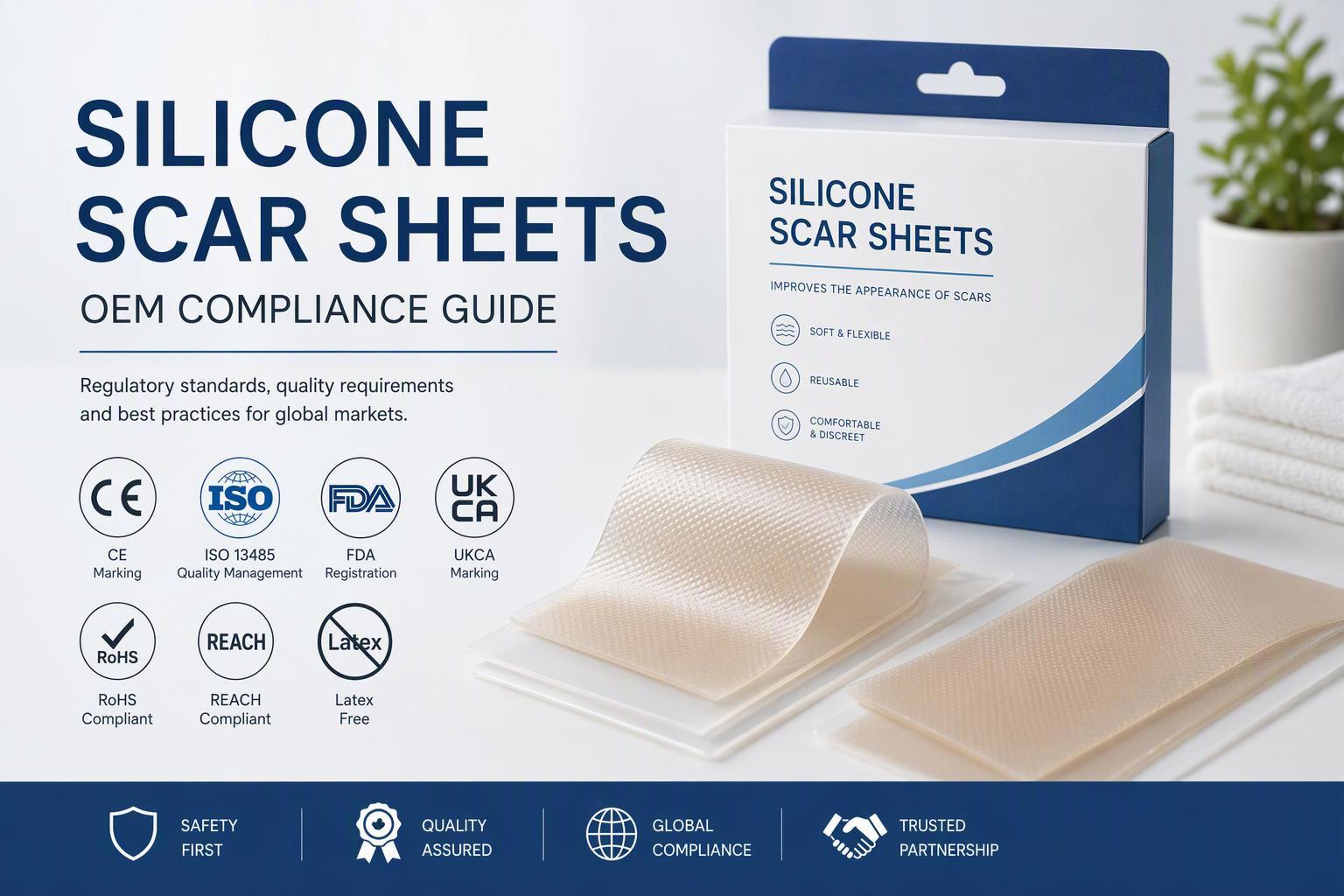
Silicone scar sheets are a deceptively simple product to source and a surprisingly demanding one to qualify. The finished article is a thin, adhesive silicone sheet, but the evidence behind it sits in a chain of decisions: which silicone and carrier construction you specify, what the label is allowed to say, whether the manufacturer’s quality system covers the operations it actually performs for you, and whether the validation file describes the device you will sell rather than a device it sold someone else.
This guide is written for the OEM buyer or private-label owner preparing to shortlist silicone scar sheet manufacturers for the U.S. market. It walks through the qualification sequence in the order the work actually happens: define specifications and claims, confirm regulatory and quality management system (QMS) readiness, then review validation, packaging and contractual governance. The emphasis throughout is on finished-device evidence — documentation that ties test results, labeling and manufacturing records to the specific product bearing your brand.
Four checkpoints recur in each section and are worth carrying into every supplier conversation:
Specification fit. Can the manufacturer meet your material, dimensional and performance requirements, and can it show test data at those requirements rather than at its catalogue defaults?
Claim boundaries. Does the intended use you want to market stay inside the cleared or exempt boundaries of the regulatory pathway the product relies on?
QMS coverage. Does the manufacturer’s quality system cover the operations it performs for your order — including repacking, relabeling or specification development, if those are part of the arrangement?
Finished-device evidence. Can it produce validation, labeling and traceability records for the finished device, not only for an upstream material or a sister product?
Define specs and claims
Specifications come first because they determine everything downstream: which tests are required, which labeling statements are defensible, and what the manufacturer must be able to reproduce batch after batch. A specification written after the supplier is chosen tends to describe whatever that supplier already makes.
Materials and performance scope
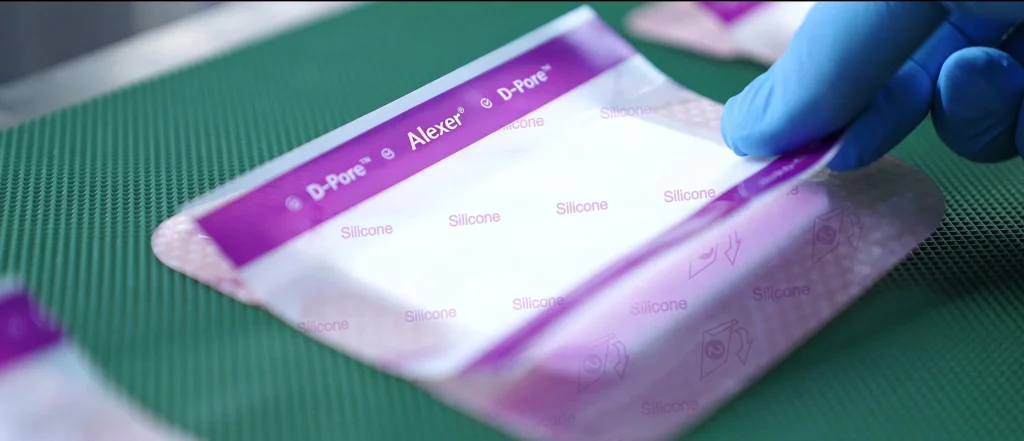
A silicone scar sheet specification typically needs to pin down the silicone chemistry and cure system, the carrier or backing construction, the adhesive surface and its release liner, sheet thickness and dimensional tolerances, and the intended duration and site of skin contact. Each of these choices has a performance consequence. Thickness and silicone formulation affect how the sheet conforms to curved or moving skin; the liner affects handling and aseptic presentation; the adhesive affects how the sheet stays in place over days of wear and how it releases.
Write the specification as measurable requirements rather than descriptive adjectives. “Soft and comfortable” is not a specification; a thickness range with a tolerance, a stated adhesion test method and a defined liner type are. Where you rely on a standard test method, name it and state the acceptance criterion in the purchase specification so that incoming inspection and supplier qualification use the same yardstick.
Ask for the test reports behind the offered product, and check that the sample tested matches the construction you are buying — same silicone, same carrier, same thickness, same liner. A report for a thicker sheet or a different backing does not establish performance for your configuration. If the manufacturer proposes a material substitution to meet a price target, treat it as a new specification requiring its own evaluation rather than a like-for-like swap.
Private-label boundaries and claims
Claims are where private-label projects most often go wrong, because the marketing language is written by the brand owner while the regulatory positioning belongs to the device’s intended use. Under U.S. rules, silicone sheeting is identified as a device intended for use in the management of closed hyperproliferative (hypertrophic and keloid) scars and is classified as Class I, exempt from premarket notification subject to the limitations in 21 CFR 878.9 (21 CFR 878.4025). That identification is the anchor for claim review: language that stays within scar management on closed scars is a different proposition from language that promises wound healing, infection control or treatment of open wounds.
Before design artwork is finalized, agree in writing which claims the manufacturer will support with its technical file and which claims you are adding. A claim the manufacturer cannot trace to its own documentation becomes your regulatory exposure, not theirs. This is also the point to settle whether the product will be marketed for professional or lay use, since a change in intended user can affect the applicability of an exemption.
Formats, MOQs, and lead times
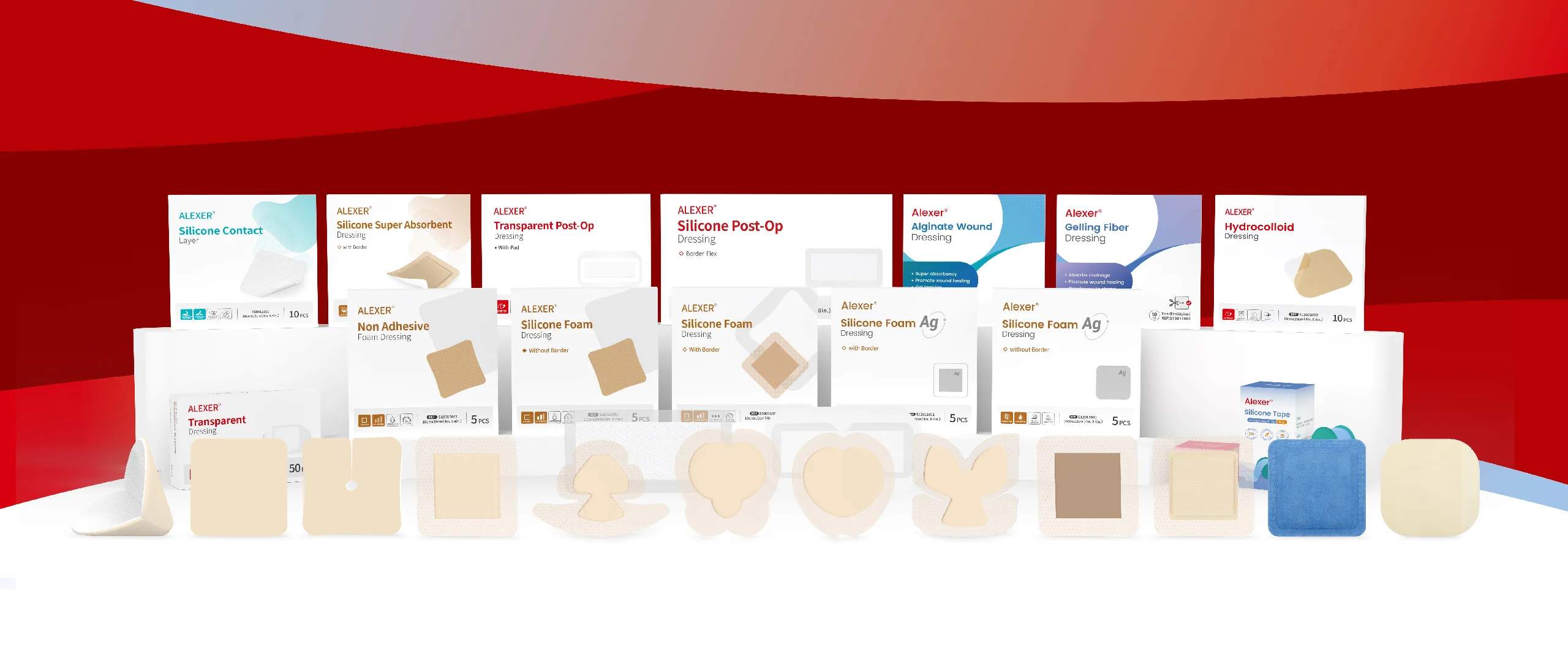
Silicone scar sheets are sold in several configurations — individual sheets in a range of sizes, multi-sheet packs, strips and rolls, and shaped pieces for specific scar sites. Format decisions interact with manufacturing economics more than buyers expect: die-cutting, folding and pouch format all consume line time, and a new size is not simply a new SKU on an existing run.
Build the commercial comparison around total cost in use rather than unit price. Ask each candidate to quote:
Cost element | What to request |
|---|---|
Unit price | Price at your expected annual volume and at the minimum order quantity (MOQ) |
Tooling and setup | One-time die, print plate and artwork charges, stated separately |
MOQ per SKU | Minimum run by size and pack configuration, and whether mixed-SKU orders are accepted |
Lead time | Sample lead time, first-article approval time and production lead time after approval |
Change costs | Cost and notice period for artwork revisions, size additions and material changes |
Logistics | Incoterms, packaging for export, and who bears transport validation |
MOQs that look attractive at the SKU level can hide a larger commitment once minimum run quantities per size are added together. Ask for the MOQ in the units you will actually order. On lead times, separate the first order from repeat orders: the first order includes artwork approval, tooling and possibly a first-article inspection, while repeat orders should be quoted against a stable specification.
Regulatory and QMS readiness
Regulatory readiness is not a certificate you file and forget. For an OEM buyer it is a set of questions about which rules apply to the finished device, which quality system requirements the manufacturer must meet, and who is responsible for each labeling and identification obligation.
FDA classification and exemptions
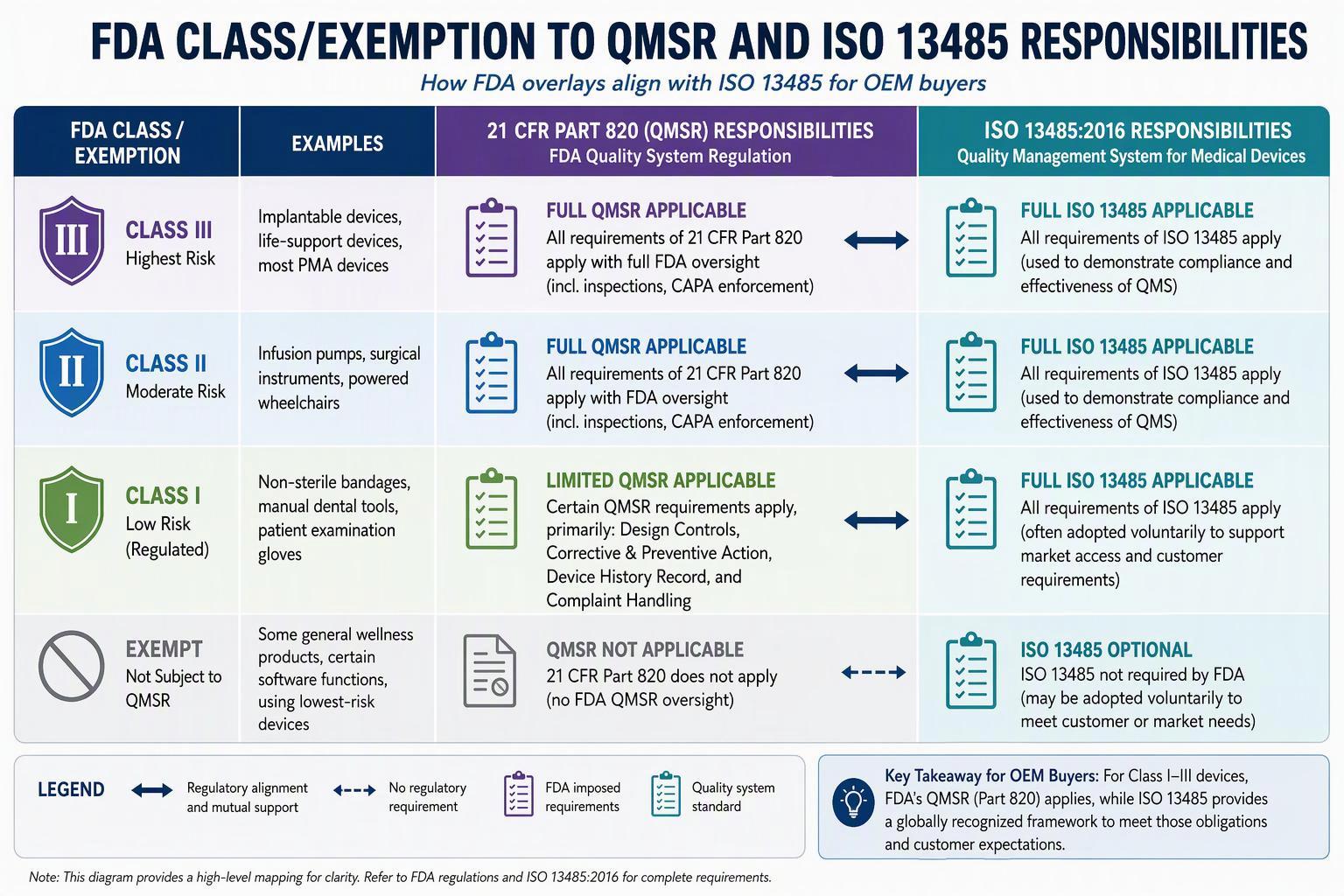
The FDA product classification database lists silicone sheeting for scar management under product code MDA, regulation 878.4025, Class I, with a submission type of 510(k) exempt and a GMP exempt status of “No” (FDA product classification, MDA). Two consequences follow directly. First, premarket notification is not required for a device within that generic type, but establishment registration and listing obligations still apply. Second, the exemption from good manufacturing practice requirements does not extend to this device type, so the manufacturer remains subject to the quality management system requirements of 21 CFR Part 820.
The 510(k) exemption is also conditional. Under 21 CFR 878.9, the exemption applies only to the extent the device has existing or reasonably foreseeable characteristics of commercially distributed devices within that generic type. A manufacturer must still submit a premarket notification before commercial distribution when the device is intended for a use different from the intended use of a legally marketed device in that generic type, or when the modified device operates using a different fundamental scientific technology. The FDA’s own guidance on Class I and Class II exemptions makes the same point: a 510(k)-exempt device must still comply with other applicable regulatory controls unless expressly exempted.
For an OEM buyer, this means the classification question is really an intended-use question. Confirm the regulation and product code the manufacturer positions its scar sheet under, then check that your intended use, target user and any added functionality stay within that positioning. If your product concept drifts toward a different medical purpose, the exemption analysis has to be redone rather than assumed.
QMSR alignment with ISO 13485
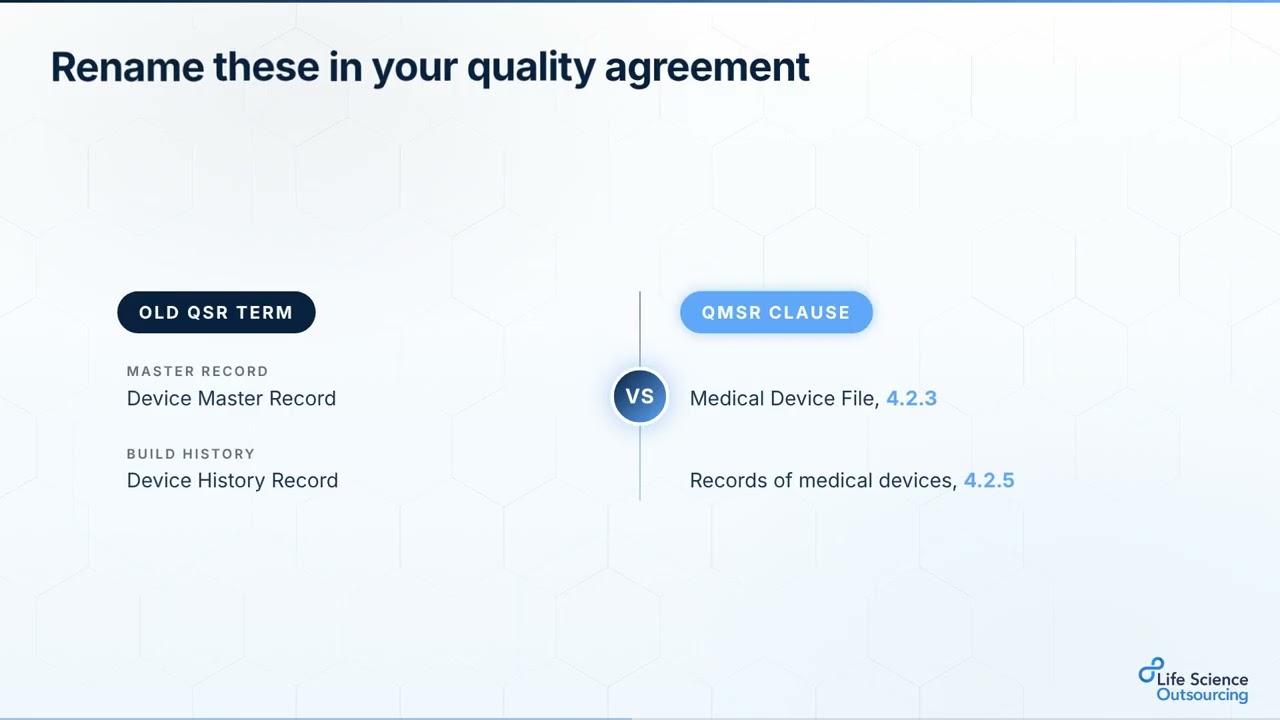
The FDA’s Quality Management System Regulation (QMSR) became effective on February 2, 2026, amending the device current good manufacturing practice requirements of 21 CFR Part 820 and incorporating by reference ISO 13485:2016 (FDA QMSR page). The incorporation is specific: 21 CFR 820.7 lists ISO 13485:2016 as incorporated by reference for §§ 820.1, 820.3, 820.10, 820.35 and 820.45, alongside clause 3 of ISO 9000:2015 for definitions. The FDA describes the change as harmonizing its CGMP framework with the framework used by other regulatory authorities and notes that the QMSR specifically requires risk management.
In practice, an ISO 13485:2016 certificate is now the closest single indicator of QMSR readiness, but it is not self-proving. Three checks narrow the gap:
Scope coverage. The certificate scope must cover the operations performed for your order. 21 CFR 820.1 states that manufacturers subject to the part include those performing contract sterilization, installation, relabeling, remanufacturing, repacking or specification development, and that a manufacturer engaged in only some operations need only comply with the requirements applicable to those operations. If your supplier repacks or relabels under your brand, confirm those activities sit inside the certified scope.
Certificate validity and site. Check the certificate number, issuing body, facility address and validity dates directly with the certification body rather than relying on a PDF supplied in a sales deck.
QMSR-specific gaps. ISO 13485 certification does not by itself demonstrate conformity with the QMSR provisions that sit outside the incorporated clauses. Ask how the manufacturer has addressed the transition, including records and complaint-file obligations that continue even where CGMP exemptions apply.
Roles, UDI, and labeling control
Private label splits responsibilities in ways that are easy to leave undocumented. The manufacturer may hold the design and technical file, the brand owner may hold the label and the FDA establishment registration, and a contract packer may perform final labeling. Each role carries specific obligations, and the contract should name who does what.
Labeling control is a QMSR requirement in its own right. 21 CFR 820.45 requires each manufacturer, in addition to Clause 7.5.1 of ISO 13485, to document and maintain procedures that describe the activities ensuring the integrity, inspection, storage and operations for labeling and packaging through processing, storage, handling, distribution and, as appropriate, use. For an OEM arrangement, that means agreed procedures for artwork approval, label inventory control, line clearance and reconciliation of labeled units.
Unique device identification (UDI) obligations depend on whether the device is excepted. Under 21 CFR 801.30, a Class I device that FDA has by regulation exempted from the CGMP requirements of Part 820 is excepted from the UDI labeling requirement — but silicone sheeting is not GMP-exempt, so that exception does not apply here. The FDA’s UDI compliance policies page sets out the phase-in dates for Class I devices required to bear a UDI, and 21 CFR 801.40 provides that a Class I device bearing a Universal Product Code on its label and packages is deemed to meet the subpart B requirements, with the UPC serving as the UDI. Confirm with the manufacturer which route your product will use, who submits device data to the Global Unique Device Identification Database, and how a label change is controlled so that the identifier on the pack matches the record.
Validation, packaging, and governance
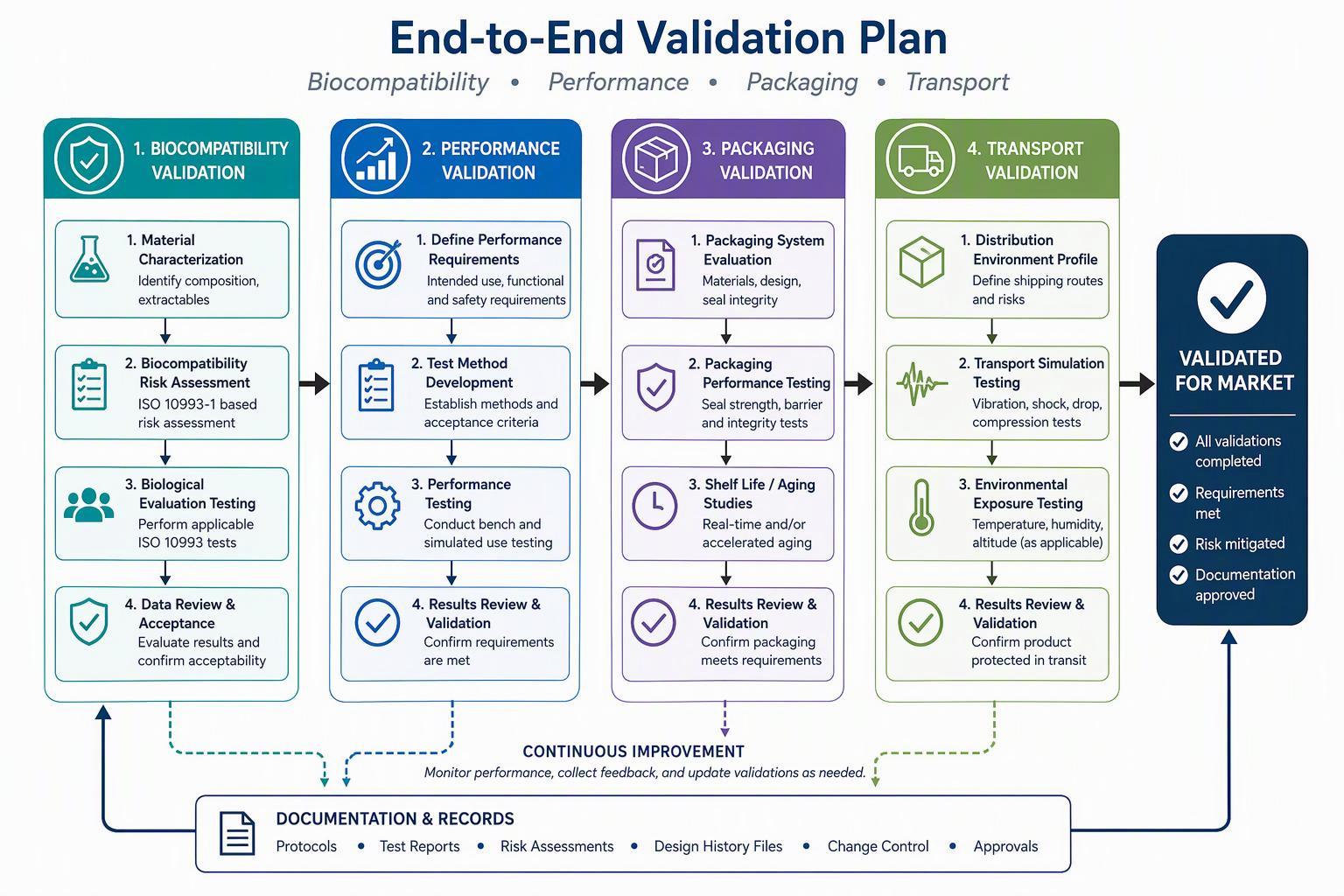
Validation is the part of due diligence that most directly tests whether the manufacturer can support a finished device rather than a material. Ask for the validation plan before the test reports, because the plan shows whether the manufacturer thought about your configuration or is recycling a file.
Biocompatibility and performance testing
Biocompatibility evaluation for a skin-contact silicone sheet is normally structured around ISO 10993-1, with the specific endpoints selected according to contact site and duration. Cytotoxicity, irritation and skin sensitization are the usual starting points for a device of this type; the evaluation should be documented as a risk-based assessment rather than a fixed test list, and the test articles should be the final, sterilized (if applicable) device in its final packaging wherever the standard requires it. Ask for the test laboratory’s accreditation, the sample identification, and confirmation that the tested article matches your construction.
Performance testing should mirror the claims and the specification. Depending on the product, this can include adhesion and peel strength, thickness and dimensional verification, conformability, and — where the manufacturer makes such statements — moisture handling characteristics. If the manufacturer’s marketing references clinical use, ask what evidence sits behind the statement and whether it can be cited in your labeling. Claims that cannot be traced to a document you can hold should be removed from the artwork rather than softened.
Manufacturers with a wound-care portfolio often bring relevant depth to this stage. SLK Medical, for example, manufactures silicone-based wound care products including silicone scar sheets, works to ISO 13485 and describes its facility as operating under FDA and ISO 13485 standards, and maintains regulatory affairs and quality assurance functions that support OEM and private-label projects. That context is useful when comparing candidates, but it does not substitute for reviewing the specific certificates, scopes and test reports that will apply to your product. Treat any supplier’s stated capabilities as a reason to request documents, not as the documents themselves.
Packaging, transport, and sterility (if applicable)
Silicone scar sheets are commonly supplied non-sterile, and the packaging question is then about protection, shelf life and label integrity rather than sterile barrier performance. If your product will be sterile, the validation burden expands substantially: sterile barrier system validation under ISO 11607-1 and 11607-2, sealing process validation, and sterilization validation with the associated microbiological methods. Confirm early which route applies, because a non-sterile line cannot simply be switched to sterile supply without new validation.
For either route, request:
Packaging specification and drawings, including pouch or carton materials, print and any child-resistant or tamper-evident features.
Seal or closure validation where a sealed pack is used, with the process parameters and acceptance criteria.
Accelerated and real-time aging data supporting the shelf life you intend to claim, with the study start date and the configuration tested.
Transport validation covering the distribution route you will use, including any temperature or humidity extremes relevant to your market.
Labeling and artwork control records, showing the approved version and how obsolete artwork is withdrawn.
A shelf-life claim is only as good as the aging study behind it. If the manufacturer offers a shelf life longer than its completed real-time data support, ask what the basis is and whether the claim is appropriate for your market.
Agreements, verification, and common pitfalls
A quality agreement and a supply agreement do different jobs and both are needed. The supply agreement fixes price, volume, lead time, Incoterms and liability. The quality agreement fixes who is responsible for specifications, change control, deviations, complaints, recalls, retention of records and access for audit. Vague language in either document tends to surface as a dispute at the worst possible moment — during a batch failure or a labeling correction.
Build the following into the agreement set:
Change control. Notification periods and re-qualification requirements for material, process, site and artwork changes, with your written approval before implementation.
Specification ownership. Which party holds the master specification, and how revisions are issued and acknowledged.
Deviation and complaint handling. Timelines for notification, investigation and corrective action, and the interface between the manufacturer’s complaint file and your post-market obligations.
Audit rights. Notice period, scope and access to sub-tier suppliers where relevant.
Record retention. Retention periods for batch records, test data and labeling records, and the format in which records will be provided if the relationship ends.
Business continuity. Tooling ownership, minimum notice for discontinuation, and a plan for transferring or duplicating production.
Common pitfalls in silicone scar sheet OEM projects cluster around a few themes. Specifications written as descriptions rather than measurable requirements leave incoming inspection with nothing to check. Claims drafted by marketing without a regulatory review cross the intended-use boundary. Certificates are accepted at face value without checking scope or validity. Validation files describe a catalogue product rather than the private-label configuration. And MOQ or lead-time assumptions are made from a quotation rather than confirmed against a production schedule. Each of these is cheaper to resolve before the first purchase order than after.
Conclusion
The qualification decision comes down to two tests that should be applied together. The first is regulatory: keep the intended use and every label claim within the exempt boundaries that apply to silicone sheeting for scar management, and confirm that the manufacturer’s classification, registration and labeling responsibilities are documented for your specific product. The second is evidentiary: verify finished-device evidence — test reports, validation studies, aging data and labeling records that describe the construction you will sell, not an adjacent product.
Governance is what sustains both. A quality agreement with clear change control, deviation handling, audit rights and record retention, paired with supply terms that address tooling ownership and continuity, protects the compliance position you established during due diligence. Shortlist manufacturers that can answer the specification, claim, QMS and evidence questions with documents, and treat the ones that answer only with assurances as candidates for further verification rather than immediate award.