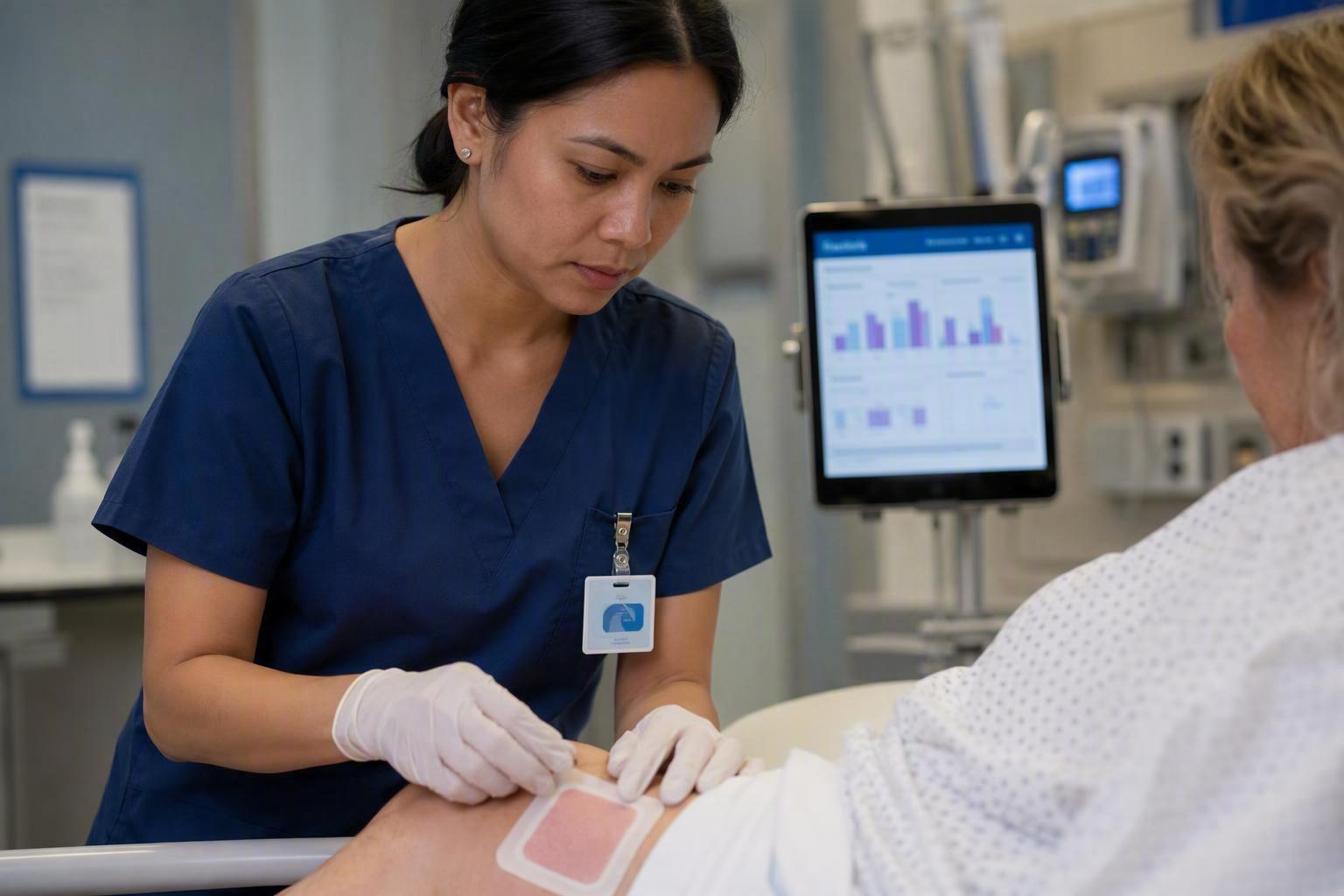
You notice a big change in wound care as foam dressings take the place of gauze. Hospitals use new dressing types because foam dressings help wounds heal quicker and lower the chance of infection. Many studies show foam dressings lessen pain and pressure on wounds. These dressings give more comfort and control to people with chronic wounds.
-
The foam dressing market was $2.07 billion in 2023 and is still growing.
-
Chronic wounds and injuries make people want better dressing choices.
Key Takeaways
-
Foam dressings work better than gauze. They soak up more fluid. They help wounds stay moist. This helps wounds heal faster.
-
The foam dressing market is growing fast. It may reach $2.5 billion by 2032. People want better ways to care for wounds.
-
Patients feel less pain with foam dressings. They are more comfortable. Foam dressings are good for chronic wounds.
-
Foam dressings have antimicrobial agents. These help lower the chance of infection. This makes wound care better.
-
Picking the right dressing is important. Foam dressings are best for wounds with lots of fluid. This helps healing and keeps patients comfortable.
Evolution of Wound Dressings

Ancient to Modern Dressing
People have used wound dressings for thousands of years. Ancient Egyptians found smart ways to protect wounds.
-
The Edwin Smith Papyrus from 1600 BCE tells how doctors used bandages and poultices to treat wounds.
-
The Ebers Papyrus from 1500 BCE shows that lint, animal grease, and honey helped wounds heal. Grease-soaked gauze kept germs away.
Over time, new materials and ideas came along. Early dressings kept wounds covered and clean. Later, scientists learned that moist places help wounds heal faster. This changed how people cared for wounds. Today, dressings use advanced materials for better protection and comfort.
Key Milestones
Looking at important moments helps you see how wound care got better.
Here is a table with some big milestones:
|
Year/Period |
Milestone Description |
|---|---|
|
Ancient Times |
Egyptians used grease-soaked gauze bandages for wounds. |
|
Doctors started moist wound healing and changed care. |
|
|
Late 1980s – Early 1990s |
New products and research proved moist healing works better than dry dressings. |
Materials for dressings have changed a lot.
Here is another table showing steps that led to foam dressings:
|
Advancement Type |
Description |
|---|---|
|
Polyurethane makes foam dressings bend easily and safe for skin. |
|
|
Improved Absorption Capacity |
Natural polyols like alginate help foam dressings soak up more fluid and handle pressure. |
|
Integration of Antimicrobial Agents |
Silver nanoparticles fight germs and help wounds heal. |
Researchers have looked at many dressing types to find what works best. There is more interest in new materials and ways to heal wounds. Studies from the United States, United Kingdom, and China show how important new ideas are in wound care. These efforts explain why foam dressings are now very important in medicine.
Gauze vs. Foam Dressings
Limitations of Gauze
Gauze dressings have many problems. Gauze does not soak up fluid well. If your wound makes a lot of fluid, gauze gets wet fast. Wet gauze can make the skin around the wound too soft. This is called skin maceration. The skin may break down and get worse. Your wound might get bigger or heal slower.
Gauze does not block bacteria well. This means you can get an infection more easily. You need to change gauze often to keep the wound clean. Gauze does not keep the wound moist. Moist wounds heal faster. Sometimes, gauze sticks to the wound. Taking it off can hurt and cause bleeding. This can harm new skin and slow healing.
Here are some problems with gauze dressings:
-
Gauze cannot handle wounds with lots of fluid. Wet gauze can cause skin maceration.
-
Gauze does not stop bacteria well. Infection risk goes up.
-
Gauze does not keep wounds moist. Dry wounds can form eschar and heal slowly.
-
Gauze can stick to wounds. Taking it off may hurt and bleed.
-
Poor fluid control can slow healing and cause pain.
Tip: If your wound gets bigger or hurts more, check if the gauze is too wet or sticking.
Benefits of Foam Dressing
Foam dressings fix many problems that gauze has. Foam dressings soak up more fluid. They work well for wounds with lots of exudate. Foam dressings keep wounds moist. This helps new skin grow and heal faster. You do not need to change foam dressings as much. This saves time and hurts less.
Foam dressings have open cells. This lets moisture vapor out but keeps the wound moist. Foam dressings give good thermal insulation. They protect wounds from hot or cold. Foam dressings can stay on for up to seven days. You change them less and feel less pain.
Patients say foam dressings hurt less. You can use foam dressings as the main or extra dressing. They soak up fluid and protect wounds from pressure. Foam dressings help stop skin maceration by controlling fluid well.
Here is a table comparing cure rates for different dressings:
|
Dressing Type |
Cure Rate Comparison with Sterile Gauze |
Notes |
|---|---|---|
|
Foam Dressing |
Improved |
Foam dressing worked better than sterile gauze (Boyko et al., 2018). |
|
Hydrocolloid Dressing |
Improved |
Hydrocolloid also did better than sterile gauze (Boyko et al., 2018). |
|
Polymeric Membrane |
Best Cure Rates |
Ranked highest for PI cure rates (Bluestein & Javaheri, 2008). |
|
Silver Ion Dressing |
N/A |
No special comparison in the study. |
|
Biological Wound Dressing |
N/A |
Not included in the study for comparison. |
|
Moist Dressings |
No Statistical Difference |
No big difference in cure rates for moist dressings (Reddy et al., 2006). |
Foam dressings work better than gauze in studies. Foam dressings control fluid and help wounds heal faster.
Here are more good things about foam dressings:
-
Foam dressings soak up different amounts of fluid.
-
They keep wounds moist and help healing.
-
Foam dressings let moisture vapor out.
-
They keep wounds warm and can stay on for up to seven days.
-
Patients say foam dressings hurt less.
-
Bordered foam dressings give extra protection and soak up fluid as main or extra dressings.
Studies show foam dressings last longer and feel better.Patients felt less pain and needed fewer changes.
Here is a chart showing comfort for patients with venous leg ulcers (VLU) and diabetic foot ulcers (DFU) using foam dressings:

Most patients said foam dressings felt “good” or “very good.” Foam dressings give better comfort and healing.
Note: If you want less pain and fewer changes, foam dressings may be the best choice.
Foam Dressing and Wound Healing
How Foam Dressings Work
Foam dressings are used in hospitals and clinics. They help wounds heal faster and feel more comfortable. Foam dressings have a special design that makes them work well.
Foam dressings use hydrophobic polyurethane foam sheets. These sheets are soft and soak up fluid easily. They fit the shape of your wound and feel gentle. The top layer is a protective polyurethane film. This layer lets moisture vapor out but keeps bacteria away. The foam core pulls wound exudate in and keeps it off the wound. This keeps the wound moist and helps new skin grow.
Here is a table that shows the main parts of foam dressings and how they help wounds heal:
|
Structural Component |
Contribution to Effectiveness |
|---|---|
|
Compressive and tensile stiffness |
Gives mechanical protection to the wound. |
|
Bending stiffness |
Helps the dressing fit the wound shape. |
|
Apparent density and porosity |
Improves absorbency for managing wound exudate. |
|
Coefficient of friction (COF) |
Affects how the dressing interacts with the wound surface. |
|
Durability and integrity |
Keeps the dressing working well during use. |
Foam dressings also have anti-microbial substances. These substances, like silver nanoparticles, fight bacteria and lower infection risk. Some foam dressings have a Hydrofiber interface. This design moves fluid from the wound contact layer to the foam layer. It keeps the wound moist and helps healing.
You can see how foam dressings soak up wound exudate and control moisture by looking at the water vapor transmission rate (WVTR). WVTR shows how much moisture vapor goes through the dressing. Higher WVTR means better moisture control. Here is a chart that compares WVTR for different foam dressings in dry and wet conditions:

Foam dressings like Allevyn and Mepilex have high WVTR when wet. This helps keep the wound moist and stops too much fluid from building up. In a study, foam dressings soaked up over 12 mL of saline, which is more than alginate or hydrocolloid dressings. This shows foam dressings work well for wounds with a lot of exudate.
You find foam dressings used for many kinds of wounds: pressure ulcers, venous ulcers, arterial ulcers, diabetic foot ulcers, surgical wounds, traumatic wounds, donor sites, partial-thickness burns, abrasions, and lacerations.
Foam dressings give pressure relief and cushion bony spots. They do not stick to the wound, so you can take them off easily. The absorbent core keeps wound exudate away from the skin, which lowers leakage and infection risk. Anti-microbial substances in foam dressings block bacteria and help wounds heal faster.
Tip: Pick foam dressings for wounds with a lot of exudate. They keep the wound moist and protect against infection.
Clinical Impact
Foam dressings help wounds heal better. You see good results when foam dressings are used for tough wounds. The mix of absorbent foam, anti-microbial substances, and a protective top layer helps wounds heal faster and lowers pain.
Foam dressings lower pain early in treatment. They keep the wound moist, which helps new tissue grow. The barrier blocks liquids and bacteria, so infection rates go down. You change foam dressings less often, so there is less pain and fewer problems with healing.
Bordered foam dressings work well for chronic wounds. How well they work depends on the dressing’s structure and the anti-microbial substances. Doctors recommend foam dressings for wounds with some or a lot of exudate, red wounds, softened dead tissue, and shallow draining wounds. You can use foam dressings to fill empty spaces or under compression.
Here are some good things about foam dressings for wound healing:
-
They soak up wound exudate and keep the wound moist.
-
Anti-microbial substances lower infection risk.
-
Foam dressings keep wounds warm and protect from temperature changes.
-
They do not stick to the wound, so removal is easy.
-
You can use foam dressings for many wound types, like ulcers, burns, and surgical wounds.
Note: Foam dressings are not good for dry wounds, third-degree burns, or sinus tracts.
Foam dressings help wounds heal faster and lower infection risk. You feel less pain and more comfort with foam dressings. Anti-microbial substances in foam dressings help healing and block bacteria.
Foam dressings have changed wound care. You get better healing, less pain, and fewer infections. The design of foam dressings makes them a great choice for many wounds.
Dressing Market Value
Foam Dressings Market Share
Foam dressings are becoming more important in wound care. In 2020, they made up almost a quarter of advanced wound dressings. By 2025, experts think foam dressings will be about 30% of the market. This means hospitals and clinics trust foam dressings more now. In 2022, the foam dressing market was worth $1.7 billion. By 2032, it could reach $2.5 billion. The market is growing at about 4.1% each year from 2023 to 2032. Another report says the growth rate is 5.02% from 2024 to 2032. The market could go from $2.11 billion in 2024 to $3.12 billion in 2032.
Foam dressings are a top pick for diabetic wounds and pressure ulcers. They work well and soak up fluid, so hospitals and homes use them a lot.
Trends and Drivers
There are many reasons why foam dressings are used more now. More people have diabetic wounds and chronic wounds. This means more people need dressings that help healing and feel comfortable. Foam dressings keep wounds moist, which helps them heal faster. They soak up fluid well, so they work for wounds with lots of exudate. Silicone-coated foam dressings hurt less when you take them off, so patients feel better.
Here are some main reasons the foam dressing market is growing:
-
More people have diabetic wounds and pressure ulcers
-
New technology makes foam dressings better
-
More people want antimicrobial foam dressings
-
Wound care is getting better in new places
Foam dressings are used for diabetic foot ulcers, venous ulcers, and pressure ulcers. They help wounds heal and soak up fluid, so they are a good choice. Foam dressings also help stop infections by handling wound exudate. Hospitals like foam dressings because they last long and save money. Polymeric membrane dressings might cost less, but foam dressings are still popular because they work well.
|
Year |
CAGR (%) |
|
|---|---|---|
|
2024 |
1631.27 |
N/A |
|
2033 |
17637.9 |
30.0 |
Foam dressings are leading the way in wound care. They are used more for diabetic wounds and pressure ulcers. The market for foam dressings will keep growing as more people need better wound care.
You have seen how wound dressings changed from simple gauze to advanced foam. Foam dressings help wounds heal faster and keep infections away. Hospitals use them because they last longer and feel more comfortable.
Foam dressings now combine with materials like alginates and silver to improve healing. You can find dressings made with 3D printing for a better fit.
Smart dressings use sensors to track wound changes. These new technologies help doctors act quickly and keep wounds healthy. The market for foam dressings will grow as more people need better care. Staying updated on new wound care solutions helps you choose the best option for healing.
FAQ
What is a foam dressing?
You use a foam dressing to cover wounds that leak fluid. The soft material absorbs extra fluid and keeps the wound moist. Foam dressings help protect the wound and make healing faster.
How often should you change a foam dressing?
You usually change a foam dressing every three to seven days. If the dressing becomes soaked or dirty, you should replace it sooner. Always follow your healthcare provider’s advice for best results.
Can you use foam dressings on all types of wounds?
You use foam dressings for wounds with moderate to heavy fluid, like ulcers or burns. Do not use them on dry wounds or wounds with very little fluid. Ask your doctor if foam dressings are right for your wound.
Why do foam dressings help with wound management?
Foam dressings control moisture and protect the wound from germs. You get better healing and less pain. Good wound management means using the right dressing for your wound type.
Are foam dressings painful to remove?
You usually feel less pain when you remove a foam dressing. The soft surface does not stick to the wound. This makes dressing changes easier and more comfortable for you.