

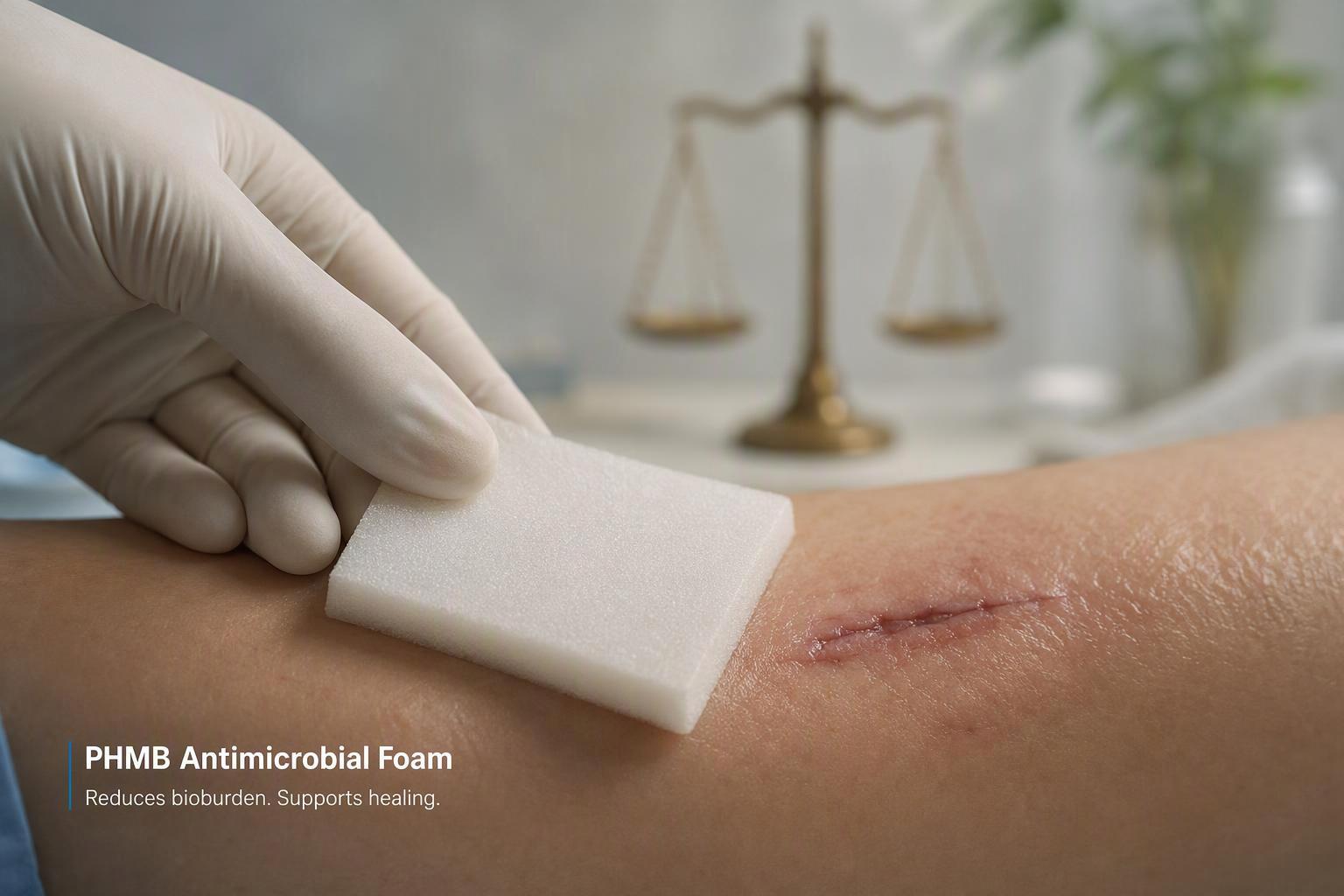
Short answer: PHMB foam is designed to reduce wound bioburden, and the in-vitro case for PHMB as a broad-spectrum antiseptic is strong. The clinical case is real but thinner than the marketing around it — the best-known randomised trial of a PHMB foam ran to 45 patients over five weeks, and the wider evidence base is graded low quality. On the healing side, the tissue-safety literature does not support a blanket verdict either way: cytotoxicity tracks concentration, contact time and the finished formulation, not the letters “PHMB”.
That matters if you are an overseas distributor carrying a PHMB foam line into hospital committees, tender evaluations and clinical gatekeepers. The questions you will be asked are not “is PHMB antimicrobial?” but “what exactly does the evidence show, at what strength, and what happens when the wound does not improve?” This FAQ separates what the published literature establishes from what it leaves open, and flags where a claim belongs to a manufacturer rather than to a study.
Jump to the question group you need:
Question group | What it covers |
|---|---|
Bioburden reduction | Strength and limits of the antimicrobial evidence, organism spectrum, and whether a lower PHMB percentage means a gentler dressing |
Tissue safety | Cytotoxicity, what the PHMB-specific safety data show, and what clinical trials measured for healing |
Reassessment and stopping rules | Review cadence, what to look at, and when PHMB foam is the wrong choice |
Product and procurement | SLK Medical’s Alexer® PHMB foam specifications and the certification records behind them |
SLK Medical’s Alexer® PHMB foam specifications appear in this article as reference data for formulary and tender work. They are manufacturer product information, not clinical evidence, and they are labelled as such throughout.
Bioburden reduction: what the evidence actually shows
Does PHMB foam actually lower bacterial burden, and how strong is that evidence?
The honest answer has two halves that are often collapsed into one. On the bench, PHMB has broad-spectrum antimicrobial activity against Gram-positive and Gram-negative bacteria, including biofilms and MRSA, fungi and viruses — this is Level 5 bench research in the Wounds Pacific Region evidence summary. In the clinic, Level 1 and Level 2 evidence reports mixed findings on whether PHMB delivers a significant reduction in bacterial load in chronic wounds, with some studies showing superiority to control cleansers and others finding no statistically significant difference. The same summary states plainly that this clinical evidence is generally of low quality.
That grading is the one to quote to a formulary committee, because it is the summary’s own assessment rather than a competitor’s. It does not say PHMB fails; it says the clinical evidence is not strong enough to carry a definitive claim.
The most specific clinical signal for a PHMB foam comes from the Sibbald randomised, controlled, double-blind trial comparing PHMB-impregnated foam with foam alone in chronic wounds (PubMed abstract). Forty-five subjects with chronic wounds, stratified to foot or leg ulcers, were followed for five weeks. Use of the PHMB foam was a significant predictor of reduced superficial bacterial burden at week 4 (P = .016). Polymicrobial organisms were recovered at week 4 in 5.3% of the PHMB group versus 33% of the control group (P = .04). Size the result accordingly: a single trial, 45 subjects, five weeks, one product formulation.
The IWII 2022 international consensus tabulates PHMB evidence for reducing microbial burden across chronic wounds, burns and acute wounds — including reduced polymicrobial counts and MRSA in chronic wounds with PHMB dressings and irrigation, and a greater reduction in critical bacterial load over 28 days with a PHMB dressing versus a silver dressing. The same consensus records limited impact on biofilm in venous leg ulcers for a PHMB-surfactant cleanser. That is a different formulation from a foam dressing, and the distinction should travel with the claim.
Which organisms does PHMB cover, and where does that coverage stop?
The spectrum claim is well supported at bench level. A review in Membranes describes PHMB as effective against a wide spectrum of Gram-positive and Gram-negative bacteria, including MRSA and vancomycin-resistant enterococci, and also active against yeasts and other fungi. Minimum inhibitory and minimum bactericidal concentrations against common wound bacteria sit in the low µg/mL range, though the review notes significant discrepancies between laboratories, partly attributable to different strains.
Where coverage narrows is in biofilm. The same review notes that MIC and MBC values may be higher when bacteria form biofilms. A separate in-vitro study of biofilms cultured in wound-milieu conditions found that biofilms generally showed higher tolerance to antiseptics than those grown in standard media, and that Candida albicans biofilms exposed to PHMB showed tolerance levels a few dozen times higher (PMC10744066).
Bench spectrum is not clinical predictability. The IWII consensus records a paucity of high-level research linking topical antimicrobials to laboratory-confirmed biofilm reduction — so a distributor should present spectrum data as what the molecule does in the laboratory, not as a forecast of what will happen in a particular wound.
Does a lower PHMB percentage mean a gentler or weaker dressing?
No — and this is one of the most useful corrections to carry into a tender discussion, because concentration ranking is intuitive and wrong. The Frontiers in Microbiology cytotoxicity study states directly that a lower stated active-agent concentration does not necessarily predict better cytocompatibility: the 0.04% PHMB formulation caused strong cytotoxicity during 24-hour exposure, in some conditions comparable with or greater than the 0.1% formulation. The tested products differ in complete composition — carrier solution, surfactants, ionic content, pH and other excipients — and the study’s experimental unit was the finished formulation at a defined dilution, not PHMB in isolation.
A parallel finding appears in the surgical-antiseptic literature: in one comparison, the 0.1% polyhexanide product displayed higher cytotoxicity than a 0.04% polyhexanide product at the same concentrations tested, and the authors attributed the difference to formulation rather than to the active percentage alone (Dudek et al., Int J Mol Sci).
The practical implication for a distributor: do not let a procurement comparison reduce two PHMB dressings to their stated percentages. The defensible comparison is finished-product testing data, not the number on the label.
Tissue safety: can an antimicrobial dressing work against healing?
Can an antimicrobial dressing delay healing or damage new tissue?
Yes, in principle, and this is a property of the antiseptic class rather than a finding about PHMB foam specifically. The IWII 2022 consensus states that topical antiseptics are non-selective and may be cytotoxic — they may kill skin and tissue cells involved in repair, including neutrophils, macrophages, keratinocytes and fibroblasts, thereby impairing healing — and that cytotoxicity can be dose (concentration) and/or time (duration of exposure) dependent. The same consensus notes that newer-generation antiseptics are generally low or non-cytotoxic, and that several older antiseptics are no longer recommended for open wounds because of tissue-damage risk.
The most detailed recent data come from the Frontiers study, and its conditions matter as much as its conclusions. The authors tested six commercial antiseptic and wound-irrigation solutions in HaCaT keratinocytes and CRL-2522 human dermal fibroblasts, assessing viability after 24 hours using an ISO 10993-5-based assay (the 70% viability threshold marks cytotoxicity) and after 1, 5 and 15 minutes using an application-oriented exposure-and-washout assay, plus repeated treatment over 15 days in a full-thickness ex-vivo skin wound model. Both PHMB formulations were strongly cytotoxic under 24-hour continuous exposure but substantially less harmful after brief contact and washout, particularly at 1 and 5 minutes; despite better short-term tolerance, they impaired epithelial continuity after repeated treatment.
Those are in-vitro and ex-vivo results. They do not establish a clinical healing effect in either direction, and they should not be presented as one.
What do the tissue-safety data say specifically about PHMB?
The literature splits, and the split is explainable once formulation, concentration and exposure time are held constant.
On the tolerability side, the Membranes review reports that PHMB is well tolerated when administered topically to wounds, showing low cytotoxicity and poor skin penetration, and that sensitization has been reported at 2% under repeated prolonged exposure — a concentration four times higher than the highest used for antisepsis. A long-standing Wounds UK PHMB review reports low skin sensitization (approximately 0.5%) across studies totalling 3,529 patients, even though the tested concentrations were five to ten times those normally used in wound applications.
On the cytotoxicity side, the Frontiers study found pronounced 24-hour cytotoxicity for both the 0.04% and 0.1% PHMB formulations, with the lower concentration in some conditions comparable with or greater than the higher one. The Dudek comparison likewise found dose-dependent cytotoxicity for both polyhexanide liquids tested against osteoblasts and keratinocytes.
These findings are not contradictory. One set describes brief or topical exposure at antisepsis concentrations; the other describes continuous 24-hour contact with specific finished products in cell culture. Neither establishes how a PHMB-impregnated foam behaves in a clinical wound, where the dressing sits in an exuding wound bed and the active agent is released over time. That gap is the honest answer to a clinical reviewer who asks for the healing-safety data on the foam itself.
Does PHMB foam help or hinder healing in clinical use?
Report what the trials measured, and keep two different numbers apart.
In the Sibbald trial, subjects randomised to the PHMB foam had a 35% median reduction in wound size by week 4, compared with 28% in the control group. The change in wound surface area itself was non-significant. Those two statements are compatible — a reported median reduction in size and a non-significant change in surface area are different summaries of the same data — but they must not be merged into “PHMB foam significantly improved healing.” The trial’s own conclusion was that the PHMB foam reduced chronic wound pain and bacterial burden.
The IWII 2022 consensus records higher rates of chronic wound healing with a PHMB dressing versus a silver dressing, and separately notes mixed findings on the efficacy of PHMB dressings in achieving improvements in tissue type indicative of healing. It also records improvement in tissue type for chronic wounds with a PHMB gel versus standard care and an improved BWAT score for venous leg ulcers with PHMB solution versus saline — different formulations again.
For a distributor, the defensible formulation is: PHMB foam has clinical data showing reduced superficial bacterial burden and reduced pain in chronic wounds, with healing outcomes that are encouraging but not statistically established in the pivotal trial. Anything stronger will not survive a well-briefed clinical reviewer.
Reassessment and stopping rules
How often should I reassess a wound on PHMB foam, and when should I stop it?
The published guidance is specific, and it is worth quoting element by element rather than as a single protocol, because the sources differ in scope.
The Wounds UK best practice statement advises that the wound be reviewed at each dressing change and fully at two weeks. Its decision logic runs as follows: if the wound has improved and there are continuing signs of infection, continue with the same or a new topical antimicrobial and review again at two weeks; if the wound has improved and signs of infection have resolved, discontinue the antimicrobial dressing and revert to standard wound care; if the wound has not improved and signs of infection continue, discontinue treatment and reassess underlying conditions to determine what factors may have changed. The statement also cautions clinicians to check whether the product can be used for longer than four weeks, and if not, to reconsider dressing choice.
The IWII 2022 consensus adds the efficacy-timing rule: use a topical antiseptic for at least two weeks before evaluating its efficacy in managing wound infection. Duration should be individualised and based on regular wound assessment; a two-week challenge is often recommended because it allows sufficient time for observable activity, but in the step-down/step-up approach to biofilm-based wound care, treatment may be required for up to four weeks to attain results.
A separate Wounds UK PHMB review sets a firmer line: no treatment should extend beyond 14 days without discussion with a local specialist unless previously agreed or indicated by clinical need. Note that this is a different document from the best practice statement and applies its own scope.
What should I actually look at when I reassess?
The Wounds UK two-week review lists the observable checkpoints directly: is the wound improving according to treatment goals; have exudate, odour and pain decreased; has necrotic or sloughy tissue decreased; has wound size decreased. Those four questions convert the cadence into something a clinical customer can document.
The IWII consensus adds an important limit on interpretation: duration of topical antiseptic use should be individualised on regular wound assessment, and attributing either improvement or treatment failure to a topical antimicrobial is currently not possible — it is a matter of reasoned opinion based on good clinical assessment, as the Wounds UK statement puts it. That is not a reason to skip reassessment; it is a reason to document the clinical rationale alongside the outcome.
When is PHMB foam the wrong choice?
Four boundaries a formulary or infection-control committee will expect to see stated:
Not for wounds healing as expected without signs of infection. The Wounds UK statement is explicit that topical antimicrobials should not be used “just in case” in a wound that is healing as expected, unless clinically justified by a patient’s high risk, and that using antimicrobials inappropriately increases the risk of selecting for bacterial resistance.
Not as prophylaxis against a hypothetical infection. The same statement advises against use in patients receiving standard care who have no signs of infection.
Not combined with a second topical antimicrobial. The Wounds UK statement advises against using more than one topical antimicrobial product in combination, since multiple agents on the same wound are likely to contradict manufacturers’ guidance and might compromise the patient.
Not a substitute for systemic antibiotics in spreading infection. The statement distinguishes local infection, managed topically, from spreading infection, for which systemic antibiotics are normally selected.
Add the label-compliance point: use products in line with the manufacturer’s licence and instructions for use, and document the rationale where clinical need requires a departure. That is the answer that survives an audit.
Product reference: SLK Medical’s PHMB foam specifications
What exactly is in SLK Medical’s PHMB foam, and what do the specifications tell me for formulary purposes?
The following is manufacturer product information published by SLK Medical, presented as reference data for formulary and tender work rather than as clinical evidence.
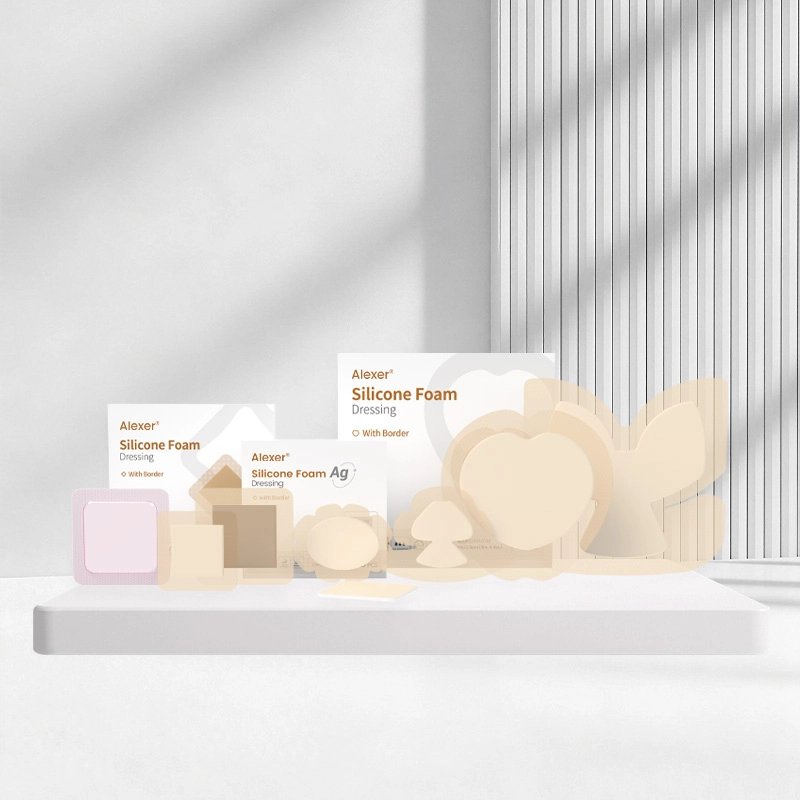
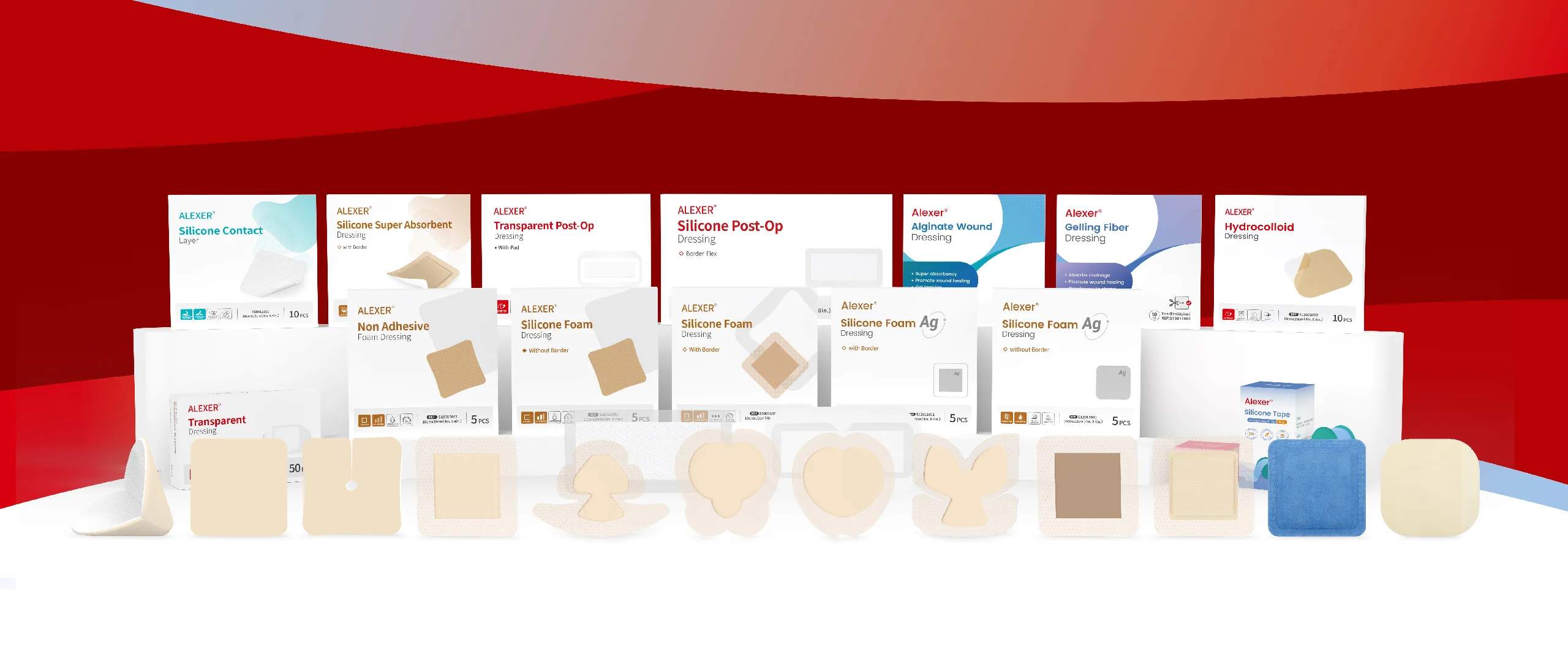
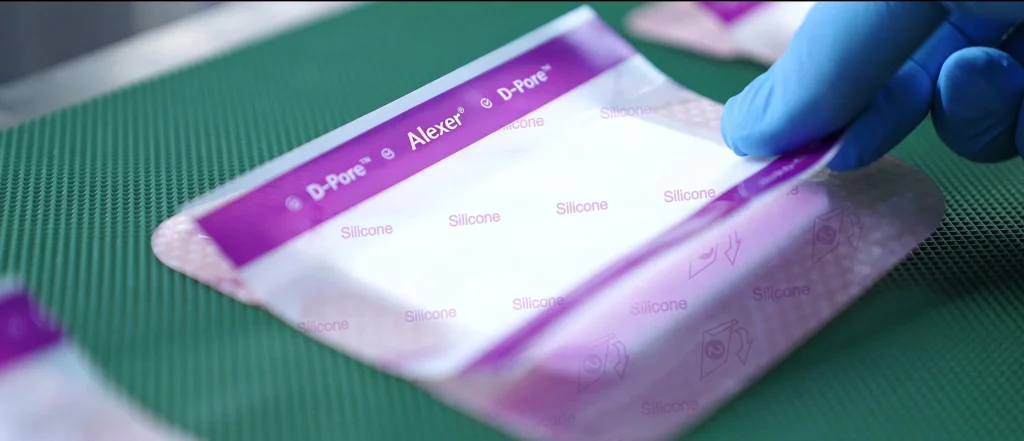
The Alexer® PHMB foam range is described as sterile antimicrobial wound dressings that absorb exudate; the foam contains polyhexamethylene biguanide (PHMB, polihexanide). The published construction has three functional layers: a polyurethane film backing (waterproof, bacteria barrier, protects against external friction, manages the micro-environment); a foam absorbent layer containing PHMB (prevents maceration, maintains a moist wound environment, provides antimicrobial protection for up to 7 days); and, in the silicone variants, a silicone contact layer suitable for sensitive skin that reduces pain and secondary damage at dressing change. The range is published in bordered and non-bordered silicone variants, with a non-adhesive variant also listed.
Published features across the range: a protective microbial barrier, high absorbency of exudate, reduced risk of maceration, and sustained antimicrobial release and effectiveness for up to 7 days.
Published indications: moderate to heavily exuding chronic and acute wounds, including pressure ulcers, leg ulcers, foot ulcers, diabetic ulcers and surgical wounds.
Published sizes and packaging, with reference numbers as listed per variant:
Variant | Size | Packaging | Reference no. |
|---|---|---|---|
Non-border silicone (product page) | 10×10 cm | 5 pcs/box, 40 boxes/carton | S12015001 |
Non-border silicone | 15×15 cm | 5 pcs/box, 40 boxes/carton | S12015002 |
Non-border silicone | 20×20 cm | 5 pcs/box, 40 boxes/carton | S12015003 |
Non-adhesive (product page) | 10×10 cm | 5 pcs/box, 40 boxes/carton | S12016001 |
Non-adhesive | 15×15 cm | 5 pcs/box, 40 boxes/carton | S12016002 |
Non-adhesive | 20×20 cm | 5 pcs/box, 40 boxes/carton | S12016003 |
Two cautions for tender use. First, the “up to 7 days” figure is a manufacturer product claim about antimicrobial protection in the dressing, not a recommended wear time and not a clinical outcome; dressing-change frequency remains a clinical decision based on exudate, wound condition and the instructions for use. Second, confirm the reference numbers and packaging configuration for the bordered variant against the current bordered product page and the specification sheet issued with your quotation, since published tables can be revised.
What certifications and documentation can I expect for procurement and audit?
SLK Medical Material (Tianchang) Co., Ltd. holds an ISO 13485:2016 quality management system certificate issued by TÜV SÜD Product Service GmbH. Two certificate records are relevant, and they should be read at their actual scope and validity.
The ISO 13485:2016 certificate Q5 112764 0001 was issued at Rev. 00 with report number SH23185901, valid from 2025-05-09 to 2028-05-08. A Rev. 01 of the same certificate number, report number SH26185902, is recorded as valid from 2026-06-30 to 2028-05-08 and expands the certified scope to include design, development, production and distribution of sterile polyurethane, gelling fiber and super absorbent dressings, and production and distribution of sterile foam, transparent, waterproof, hydrocolloid, alginate and silicone absorbent fiber dressings, plus non-sterile scar gel, medical tape, silicone gel sheets and silicone tapes. Where a customer’s file holds Rev. 00, the Rev. 01 record is the one to request.
The EU quality management system certificate G15 112764 0002 Rev. 00 was issued under Regulation (EU) 2017/745, Annex IX Chapter I, by TÜV SÜD Product Service GmbH as notified body 0123. It covers Class IIb, device group M040101 (adhesive dressings with absorbent pad), with a stated intended purpose covering a wide range of exuding wounds including pressure ulcers, leg and foot ulcers, traumatic wounds, surgical wounds and skin tears, and prophylactic use to help prevent pressure ulcers. The manufacturer SRN is CN-MF-000012390; the authorized representative is Shanghai International Holding Corp. GmbH (Europe), Eiffestraße 80, 20537 Hamburg, Germany. The certificate is recorded as valid from 2025-09-23 to 2030-09-22, report number SH23185901, initial issuance.
Keep one distinction clear in any tender file: a QMS certificate under MDR Annex IX Chapter I evidences a certified quality management system and, where Class IIa or IIb devices are covered, assessment of technical documentation on a representative basis. It is not itself a product-level CE mark for a specific dressing, and it does not replace the EU declaration of conformity or the device-specific technical documentation. Verify current validity directly on the TÜV SÜD certificate lookup (the certificate records point to tuvsud.com/ps-cert with the certificate number) rather than relying on the dates printed in this article.
Stewardship and resistance
Is PHMB associated with resistance or stewardship concerns?
The answer has two parts, and a credible distributor should present both.
The long-standing position is that PHMB has been in general use for approximately 60 years with no evidence of the development of resistance, as stated in the Wounds UK PHMB review. A Scientific Reports study makes the same point with an explicit caveat: despite extensive use over several decades and efforts to identify acquired resistant mutants, resistance to PHMB has not been reported, but the evidence for a lack of acquired resistance is necessarily negative and the possibility of mutation to resistance remains.
The countervailing laboratory finding comes from Renzoni et al. 2017. Three clinical MRSA strains were subjected to a stepwise training method in polyhexanide broth cultures with increasing concentrations over several passages of two days each. Two of the three strains, with initial polyhexanide MICs of 0.5 and 1 µg/mL, ultimately grew at concentrations of 2, 4 and 8 µg/mL; prolonged exposure did not increase MICs further. Reduced susceptibility was associated with genomic changes in the mprF and purR genes and with concomitant decreased susceptibility to daptomycin and other cell-wall-active antibiotics such as vancomycin and teicoplanin.
Present that as what it is: an in-vitro observation generated by prolonged stepwise exposure to low concentrations in broth culture, not a clinical resistance phenomenon. The Membranes review makes the same distinction — no PHMB-resistant MRSA could be isolated in clinical cases where decolonization with PHMB was attempted, whereas decreased susceptibility could be artificially induced in vitro by repeated exposure to very low concentrations (0.1–1 µg/mL, or 0.00001–0.0001%).
Both parts point to the same stewardship conclusion, which the Wounds UK statement states directly: antimicrobials should not be used where there is no sign of infection, because inappropriate use increases the risk of selecting for bacterial resistance. For a distributor, the strongest position is to present PHMB foam as an indication-driven dressing with a defined review point, not as a routine or default choice.
Key takeaways
PHMB has credible broad-spectrum in-vitro activity, including against MRSA, fungi and biofilms, but the clinical evidence for bioburden reduction is graded mixed and generally low quality; the pivotal PHMB foam trial enrolled 45 patients over five weeks.
Cytotoxicity is exposure- and formulation-dependent. A lower stated PHMB percentage does not reliably predict a gentler dressing, so compare finished-product data rather than label percentages.
The defensible review cadence is assessment at each dressing change and formally at two weeks, with at least two weeks before judging efficacy, up to four weeks in biofilm-based care, and discontinuation once infection signs resolve and the wound is progressing.
SLK Medical’s Alexer® PHMB foam specifications and TÜV SÜD certificate records are reference data for formulary and tender files; verify current certificate validity on the TÜV SÜD lookup and confirm reference numbers against the current specification sheet.
Stewardship arguments are strongest when PHMB foam is positioned as indication-driven and reviewed, not used routinely or prophylactically.
Related resources
IWII 2022 international consensus, Wound Infection in Clinical Practice — clinical guidance. The evidence tables for topical antiseptics in healing, microbial burden, biofilm, infection signs and tissue type, plus the two-week efficacy rule and the stewardship chapter.
Wounds UK best practice statement, The use of topical antimicrobial agents in wound management (3rd edition) — clinical guidance. The two-week review logic, the review checkpoints, and the rules on combination use and prophylaxis.
Wounds Pacific Region evidence summary on PHMB in chronic wounds — evidence summary. The Level 1 to Level 5 grading of PHMB evidence, useful when a committee asks how strong the case is.
Sibbald et al., PHMB foam versus foam in chronic wounds (PubMed abstract) — peer-reviewed trial. The 45-subject, five-week randomised double-blind data on bacterial burden, pain and wound size.
Frontiers in Microbiology cytotoxicity study — peer-reviewed in-vitro and ex-vivo study. The exposure-time and formulation findings behind the tissue-safety discussion.
SLK Medical PHMB foam product pages — manufacturer material. Construction, features, indications, sizes, packaging and reference numbers for the Alexer® range.
Still have questions?
If you are preparing a tender file, a formulary submission or a clinical training pack, SLK Medical can provide the documentation behind the product reference section: the specification sheet for the Alexer® PHMB foam variants, the instructions for use, the certification pack including the current ISO 13485 and EU MDR QMS certificates, and a sampling plan for evaluation. Requests are handled as documentation access, so specify the variant, sizes and destination market and the relevant regulatory file requirements will be matched to the request.
This FAQ is reviewed as guidance and certificate records are updated as new revisions are issued; where a certificate revision or specification change postdates this article, the current issued document governs.
FAQs
Does PHMB foam kill bacteria in a wound?
PHMB has broad-spectrum in-vitro activity against Gram-positive and Gram-negative bacteria including MRSA, fungi and viruses, and the Sibbald trial found PHMB foam a significant predictor of reduced superficial bacterial burden at week 4. The wider clinical evidence is graded mixed and generally low quality, so “reduces bioburden” is supportable while “eliminates infection” is not.
Can I use PHMB foam on a wound with no signs of infection?
Published guidance advises against it. Topical antimicrobials should not be used “just in case” in a wound healing as expected, unless clinically justified by high patient risk, because inappropriate use increases the risk of selecting for resistance.
How long before I can judge whether the dressing is working?
At least two weeks, per the IWII consensus, with formal review at two weeks per the Wounds UK statement. In biofilm-based care, up to four weeks may be required. Check whether the product is licensed beyond four weeks before extending use.
Is a 0.04% PHMB dressing gentler than a 0.1% dressing?
Not necessarily. Cytotoxicity data show that a lower stated active concentration does not reliably predict better cytocompatibility, because finished formulations differ in carrier, surfactants, pH and excipients. Compare finished-product testing data, not label percentages.
Does the “up to 7 days” antimicrobial protection claim mean I can leave the dressing on for seven days?
No. It is a manufacturer claim about antimicrobial protection in the dressing, not a recommended wear time. Dressing-change frequency remains a clinical decision based on exudate, wound condition and the instructions for use.
Does the EU MDR certificate mean the product carries a CE mark?
Not by itself. Certificate G15 112764 0002 Rev. 00 certifies the quality management system under Annex IX Chapter I and covers a Class IIb device group with representative technical documentation assessment. Product-level CE marking requires the EU declaration of conformity and the device-specific technical documentation; verify current certificate validity on the TÜV SÜD lookup.