

Wear time is where a dressing’s specification meets a hospital’s budget. A distributor who can show a value analysis committee how a dressing’s design maximum, a wound’s actual exudate, and a nursing roster interact holds a stronger position than one quoting absorbency figures alone. This guide sets out the factors that shorten wear time, how to define and track leakage so comparisons hold across accounts, when antimicrobial foam is justified and when it must stop, how to calculate the staffing impact of a change frequency using the buyer’s own inputs, and how to assemble all of it into a local policy that survives tender review.
SLK Medical’s published wear-time figures appear throughout as illustrative benchmarks — manufacturer design statements used to show how an upper bound enters a policy or specification. They are not clinical guarantees, and the interval for any individual patient is set by the clinician’s assessment and the product’s instructions for use (IFU).
Key takeaways
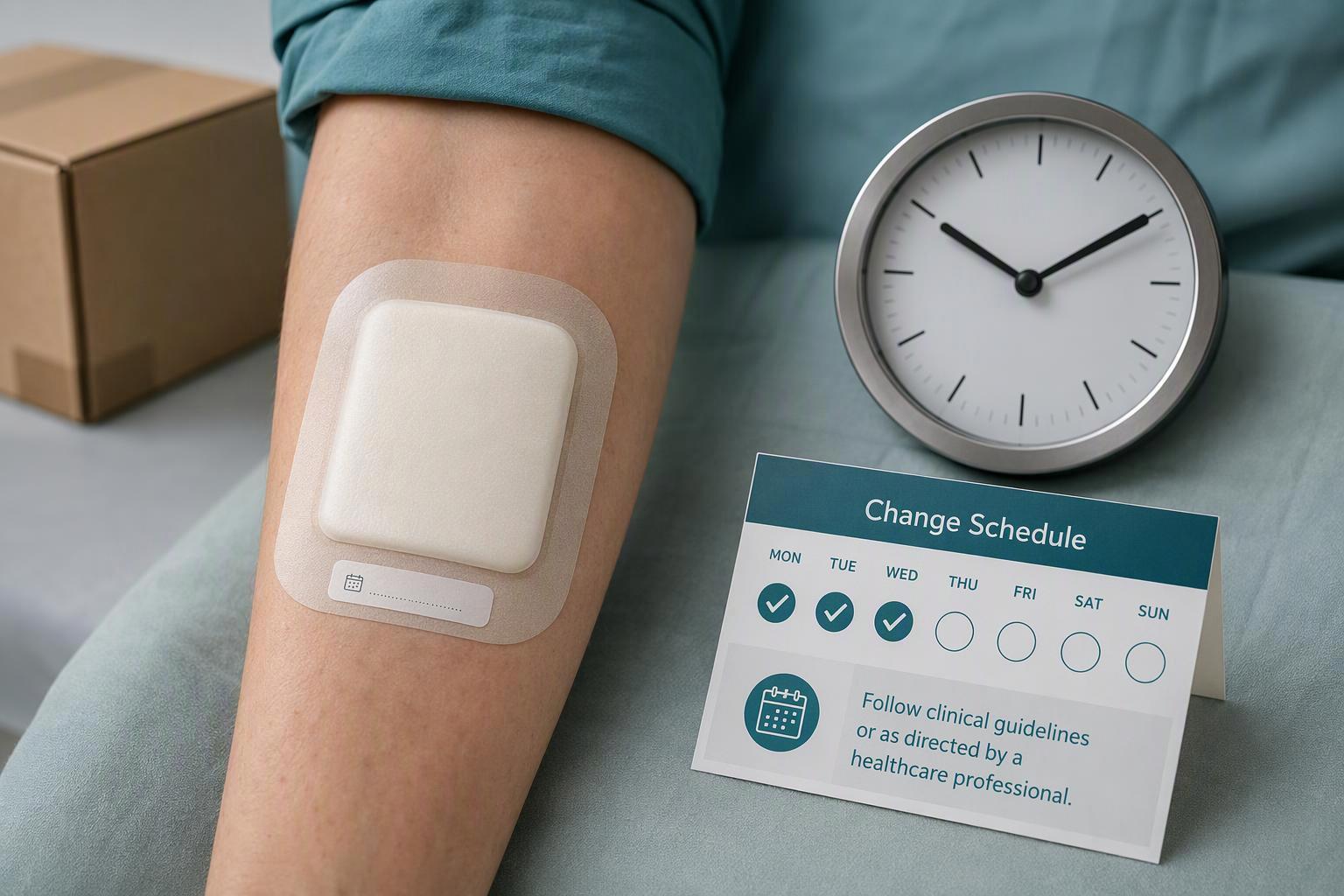
A manufacturer’s maximum wear time is an upper bound, not a default change interval; the wound shortens it.
Leakage is only comparable across accounts when the definition is written down and graded, not counted as a yes/no.
Silver foam is indicated for wounds with clinical signs of infection and should be reviewed at two weeks, with a documented stop rule.
Change frequency converts into nursing hours and cost; the calculation only persuades when the buyer’s own inputs are used.
A draft local policy with definitions, review dates and an audit schedule opens formulary conversations that a brochure cannot.
Why wear time is a commercial argument, not just a clinical one
Dressing unit price is the visible line in a supplies budget, which is why it attracts attention. It is not where most of the money sits. A widely cited review of wound-management economics estimates that nursing time and hospital costs together account for around 80–85% of the total cost of managing wounds, with healing time, frequency of dressing change and complications as three important cost drivers (Lindholm & Searle, International Wound Journal).
The same review reports that between 70% and 80% of wound patients are treated in the community, predominantly by community nurses, and that one study estimated over 60% of community nurses’ time was spent on dressing changes. Studies in the UK and Denmark found dressings were changed around three times per week on average, generating three home health visits per week. In a Danish community-care survey, at least half of the patients surveyed had their wounds dressed three or more times per week, and 23% had daily changes.
Keep the scope of those numbers in view. They are community-care observations from specific UK and Danish settings, published in a health-economics review; they are not a universal benchmark for hospitals, nursing homes or other markets. What transfers is the structure of the argument, not the number: every change avoided is a visit, a dressing pack and a slot of clinical time released, and released visits are the quantity a procurement committee can actually budget against. That is why a distributor’s wear-time evidence belongs in the value-analysis conversation rather than the product brochure.
The review also illustrates the mechanism at patient level: a patient with a wet, leaking leg being re-dressed twice daily generated 14 nurse visits and dressing changes per week, and after a switch to an advanced dressing the frequency fell to four changes per week. That is a single reported case, not a trial result — but it shows the shape of the calculation a buyer will run.
Practice 1: Set wear time from the dressing’s design limit, then let the wound shorten it
The most common source of both waste and failure is treating the maximum wear time as the default change interval. Three different numbers get conflated in practice, and separating them is the first discipline:
The manufacturer’s maximum wear time — a design statement, published in the product documentation and IFU.
The clinician’s assessed interval — the plan written at the bedside after assessing exudate, site and skin.
The actual interval recorded at removal — what the audit captures, in hours.
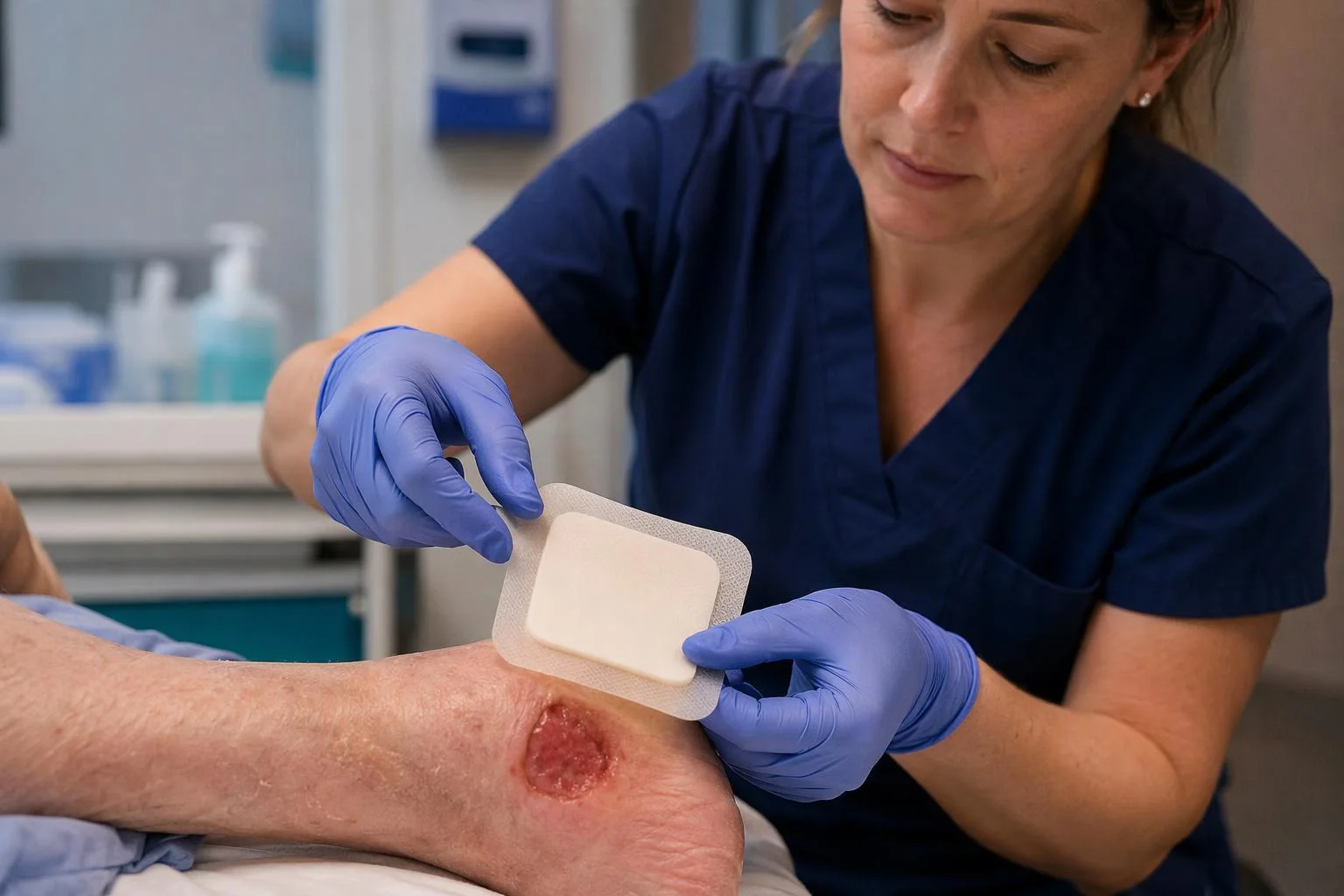
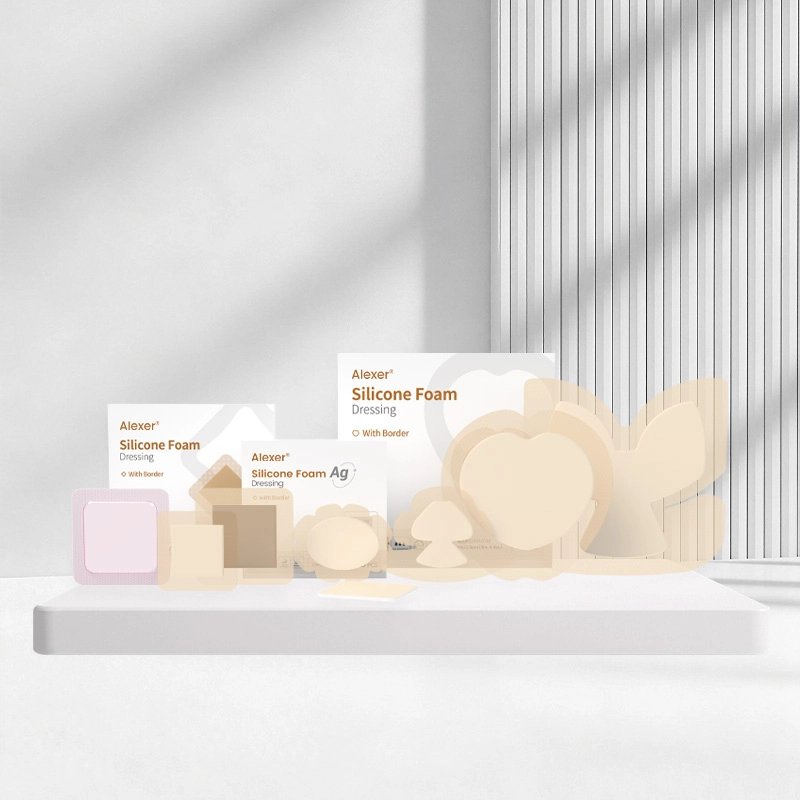
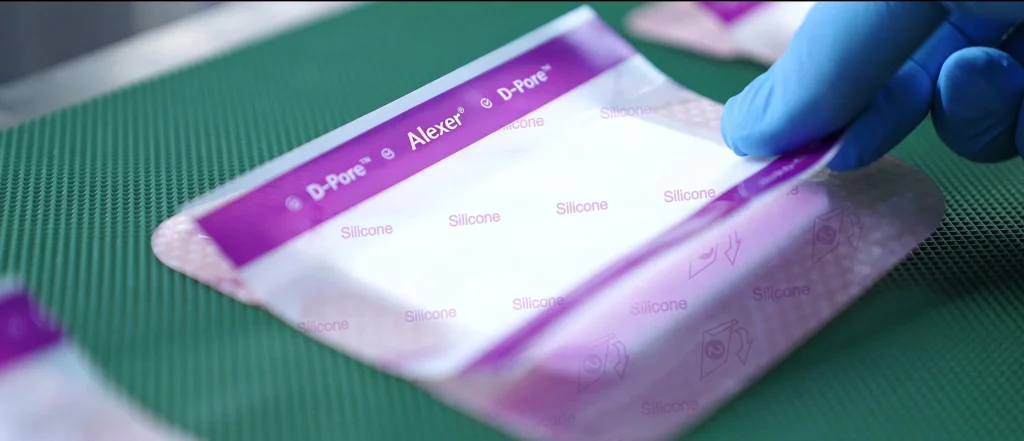
As an illustrative upper bound, SLK Medical publishes that the highly absorbent polyurethane foam core of its silicone foam dressings — in the bordered, non-adhesive and borderless variants — facilitates a wear time of up to 7 days (bordered, without border, non-adhesive). That aligns with the general clinical position that foam dressings can be left in place for up to a week and should be changed when full of exudate (StatPearls, wound dressings).
The failure mode is contractual. A tender response that quotes “7 days” as an expected interval rather than a maximum becomes an expectation the product cannot meet on a heavily exuding sacral wound — and the resulting complaint lands on the distributor, not the specification writer. The difference in practice is small but decisive: a clinic that standardises on “up to 7 days, reassess at each change” has a defensible protocol; one that writes “change weekly” has converted a design ceiling into a performance promise.
The factors that shorten the interval
A training sheet for clinical staff can carry this list directly:
Exudate volume and viscosity. Thick, viscous exudate moves more slowly through the dressing’s structure and can pool at the edges rather than spread into the core; thin exudate flows faster and can overwhelm capacity sooner. Both shorten usable wear time, for different reasons.
Wound location and mechanical forces. NICE notes that pressure ulcers commonly occur on the sacrum, coccyx and heels, and that these are the most challenging areas to protect because dressings tend to slip, bunch up or get soiled (NICE ESMPB2). Friction, shear and bodyweight compression all reduce effective absorbency.
Strikethrough and edge lift. Once exudate reaches the backing or the border lifts, the dressing is no longer containing fluid.
Periwound maceration. Moisture exposure reduces skin barrier function and raises the risk of breakdown, which in turn forces earlier changes and complicates the next dressing.
Infection or rising bioburden. Increased exudate and odour typically accompany deterioration and change the management plan, not just the interval.
Patient factors. Sweating, incontinence, mobility and self-care capacity all affect how long a dressing stays intact.
Dressing size relative to the wound. An undersized dressing saturates faster; a border that overlaps healthy skin poorly will lift earlier.
One technical point is worth carrying into every hospital query. The EN 13726 fluid-handling test specifies a maximum test duration of 48 hours, while dressings are used clinically for up to 7 days. The test can also overestimate capacity because the dressing reaches full saturation quickly under test conditions, and it cannot capture leakage or pooling behaviour (Fluid handling by foam wound dressings, PMC). A laboratory absorbency figure is therefore not a wear-time promise, and a distributor who says so plainly earns more credibility than one who implies otherwise.
Practice 2: Define leakage in writing before you measure it
“Leakage rate” means nothing across accounts unless the definition is fixed. One hospital counts only visible strikethrough on clothing; another counts any moisture at the border. The distributor who supplies the definition shapes the comparison — and takes on the responsibility of making it honest.
A graded scale is more useful than a binary. NHS wound-management guidance describes exudate in four levels that can serve as the template (ELFT Wound Management Guidelines):
Grade | Description |
|---|---|
Low / moist | Small amounts of fluid visible at removal; primary dressing lightly marked; change frequency appropriate for the dressing type |
Medium / wet | Primary dressing extensively marked, but no strikethrough; change frequency appropriate for the dressing type |
High / saturated | Primary dressing wet and strikethrough occurring; change required more frequently than usual for the dressing type; surrounding skin may be macerated |
Leaking | Dressings saturated and exudate escaping onto clothes or beyond; change required much more frequently than usual |
The failure mode is an account that counts only visible strikethrough on clothing as leakage, reports a low rate, and then discovers maceration-driven skin damage that never entered the metric. The four-level scale catches the middle grades where the clinical problem actually starts.
Turning the definition into a trackable local metric
The following is operational design rather than a published method, and should be presented to clinical teams as a proposal they adapt. A one-page leakage log can capture:
dressing type and product code;
wear time actually achieved, in hours;
leakage grade at removal, using the four levels above;
reason for removal — scheduled, saturated, leaked, slipped, painful, soiled, suspected infection;
periwound skin condition at removal.
Run a two-to-four-week baseline audit before any product change, so the comparison has a denominator and a pre-change reference. This is not an invented expectation: NICE calls for regular audit of which dressings are used, in what quantities and whether their use is appropriate, and notes that a formulary needs regular review. A distributor’s audit offer therefore aligns with an existing expectation rather than adding a new burden — a useful framing when proposing it to a tissue viability lead.
Practice 3: Justify antimicrobial foam narrowly, and write the stop rule into the protocol
Silver-containing foam is a higher-cost line, and under antimicrobial stewardship pressure unjustified use becomes a tender liability as well as a cost problem. The indication is narrow and can be stated plainly: NICE advises that silver dressings should be used only when there are clinical signs or symptoms of infection. International consensus guidance similarly recommends silver dressings for wounds where infection is established or excessive bioburden is delaying healing, used for short periods before re-evaluation (Leaper et al., Appropriate use of silver dressings in wounds).
The operating rule is the two-week challenge. UK antimicrobial stewardship guidance for wound management sets it out as: use the antimicrobial dressing for a minimum of two weeks, then re-evaluate and either discontinue if signs and symptoms of infection have resolved, continue with regular review if the wound is progressing but signs persist, or consider an alternative antimicrobial and referral to a wound care specialist if there is no improvement (Wounds UK, Antimicrobial stewardship strategies for wound management). The international consensus adds the transition step: once bioburden is under control and the wound is improving, move to a non-antimicrobial dressing.
The failure mode is silver foam continued for months because nobody wrote a review date. That is precisely the usage pattern criticised in the Cochrane reviews and the VULCAN trial discussed in the consensus document — dressings applied for extended periods, in one case 12 weeks, and sometimes on wounds that were not infected. The consensus authors note that the goal of care when using silver is control of wound bioburden, not healing, which is why healing rate is an inappropriate measure of whether the dressing worked. A care-home group that adds a “silver start date” field to its dressing chart has done more for stewardship than a policy document sitting in a folder.
What this means for the distributor’s evidence pack
Weak silver claims undermine clinical acceptance, which is one of the practical obstacles distributors report in tender and formulary work. A pack that holds up under clinical review presents the product as designed for exuding wounds, with a silver option for indicated cases; cites the stewardship framework and the two-week review rather than implying outcome superiority; and includes the IFU so the clinical team can read the intended use and the wear-time statement for itself.
On the compliance layer, SLK Medical holds ISO 13485:2016 certification from TÜV SÜD covering the design, development, production and distribution of sterile dressings, and an EU MDR Annex IX Chapter I quality management system certificate (Class IIb, device group M040101 — adhesive dressings with absorbent pad). These are certification facts that support a regulatory-readiness conversation; they are not clinical evidence, and the pack should keep the two clearly separated.
Practice 4: Calculate the staffing impact with the buyer’s own numbers
The change-frequency argument only lands when it is expressed in the buyer’s currency and hours. The worksheet below uses inputs the buyer supplies, so the output is theirs to defend.
Inputs
patients per week on the relevant dressing;
current changes per patient per week;
minutes per change, including travel, setup, cleansing and documentation;
loaded hourly cost of the staff member performing the change;
dressing unit cost under the current and proposed products.
Arithmetic
Annual changes = patients × changes per week × 52
Nursing hours = annual changes × minutes per change ÷ 60
Nursing cost = nursing hours × loaded hourly rate
Total = nursing cost + (annual changes × dressing unit cost)
Then run the proposed scenario with fewer changes and a higher unit price, and solve for the break-even unit price — the price at which the proposed dressing’s total equals the current total.
For a public reference point on the loaded rate, the U.S. Bureau of Labor Statistics reports employer compensation costs for registered nurses in private health care and social assistance of $76.80 per hour worked in December 2024, and $79.53 per hour worked in hospitals (BLS). That is a US employer-cost average covering wages and benefits; readers in other markets should replace it with their own loaded cost, and US readers should replace it with their own payroll figure rather than treating the national average as a local rate.
Illustrative worked example (round numbers, for method only): 100 patients, currently 3 changes per week at 20 minutes each, loaded rate $70/hour, dressing at $4 per change.
Annual changes = 100 × 3 × 52 = 15,600
Nursing hours = 15,600 × 20 ÷ 60 = 5,200
Nursing cost = 5,200 × $70 = $364,000
Dressing cost = 15,600 × $4 = $62,400
Total = $426,400
Now suppose the proposed dressing achieves 2 changes per week at a unit price of $7.
Annual changes = 100 × 2 × 52 = 10,400
Nursing hours = 10,400 × 20 ÷ 60 ≈ 3,467
Nursing cost ≈ 3,467 × 70 ≈242,667
Dressing cost = 10,400 × $7 = $72,800
Total ≈ $315,467
The saving comes almost entirely from the released nursing hours, not the dressing line — which is the point the worksheet exists to make. The break-even unit price in this example is the price at which the proposed total equals $426,400 at 10,400 changes: roughly $17.67 per dressing. Any proposed price below that produces a lower total on these assumptions.
The failure mode is presenting a saving without stating the assumed minutes per change. That single number drives the result, and it collapses under the first procurement challenge if it is left implicit. State it, source it from a time-and-motion observation if possible, and show the sensitivity: what happens at 15 minutes, and at 25.
Practice 5: Convert the inputs into a local policy that survives value analysis
The distributor who arrives with a draft policy, not a brochure, gets into the formulary conversation. The document does not need to be long; it needs to be complete enough that a tissue viability lead can adapt it and a value analysis committee can read it without asking what a term means.
Sections to specify
Scope and definitions — including the four-level leakage scale, so every later number has a fixed meaning.
Dressing selection by exudate level — which product category is appropriate at low, medium, high and leaking, and when a secondary dressing is needed.
Maximum wear time per product, with the source cited — the manufacturer statement and the IFU reference, clearly labelled as a maximum.
Reassessment triggers — strikethrough, edge lift, pain, odour, periwound change, suspected infection.
Antimicrobial start and stop rule — the indication, the two-week review date, and the three outcomes at review.
Documentation fields — including the silver start date and the reason for removal.
Audit schedule and review date — who owns the policy and when it is next reviewed.
Two NICE positions support the commercial conversation around this document. First, where a specific dressing cannot be adequately justified on clinical grounds, it is appropriate to choose the least costly dressing of the type that meets the required characteristics for the wound and its stage of healing. Second, prescribing the minimum quantity of dressings necessary to meet a person’s needs can avoid wastage and stockpiling. Both point toward right-sized packs and order proposals rather than volume-driven ones — a positioning a distributor can offer credibly, and one that tends to survive value analysis better than a discount-led pitch.
The failure mode is a policy with no review date and no owner, which drifts out of line with the formulary and quietly stops being followed. A one-page policy plus a one-page audit form, offered as a starting template the clinical team adapts and owns, is a more durable contribution than a finished document imposed from outside.
Where SLK Medical’s ranges fit — and where they don’t
Consolidating the brand position honestly is more useful than scattering claims through the article.
What SLK Medical publishes
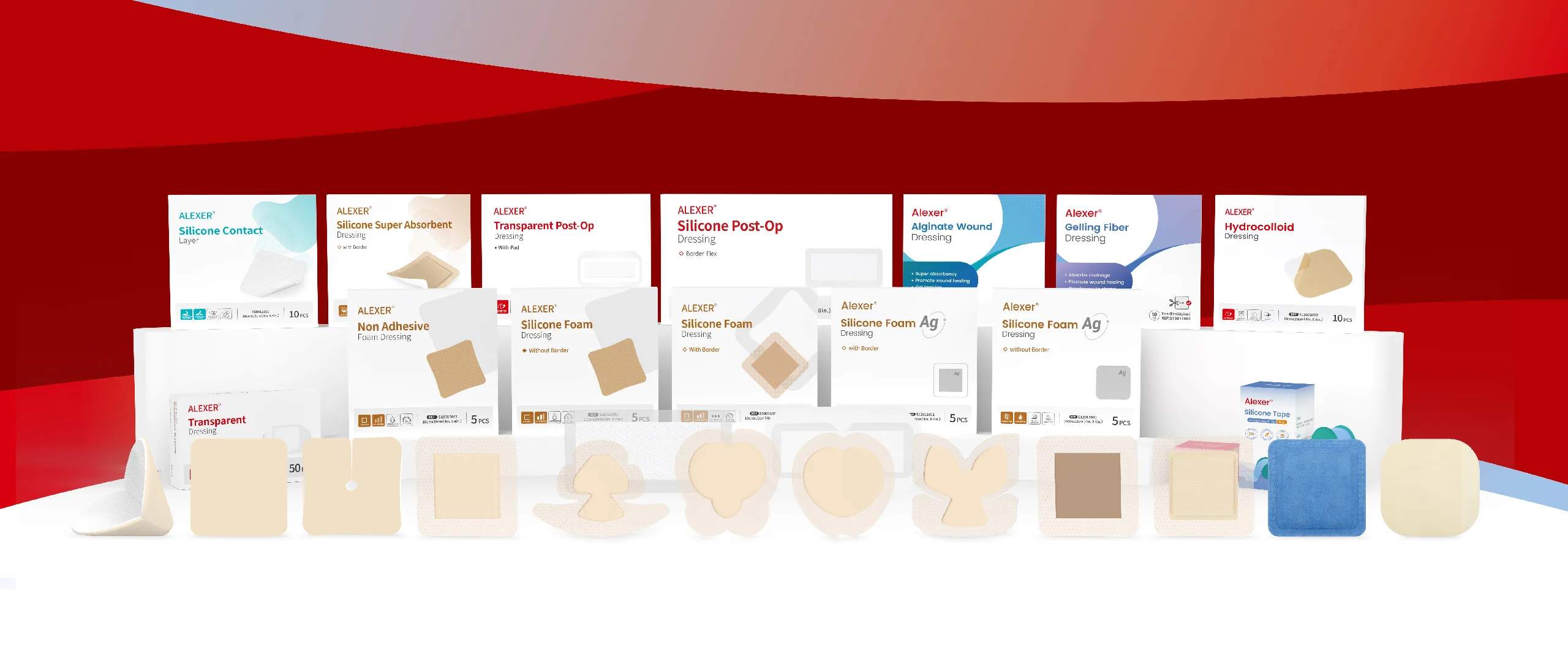
A wear time of up to 7 days for its silicone foam dressings, attributed to the highly absorbent polyurethane foam core, across bordered, non-adhesive and borderless variants.
A silicone contact layer designed for gentle, atraumatic removal, intended to reduce pain at dressing change and avoid secondary damage on sensitive or fragile skin.
A silver (Ag) foam option within the range, for wounds where antimicrobial foam is indicated under the stewardship rules above.
A super absorbent range for higher-exudate wounds where foam alone is not the right category.
What those figures are
They are manufacturer design statements. In a policy or a tender specification they function as an upper bound — the ceiling against which a clinician’s assessed interval is set. They are not a predicted interval for a given wound, not a clinical outcome claim, and not evidence of superiority over another product. The definitive statement for any product code is the IFU and specification sheet, and a distributor’s technical response should point there rather than paraphrase.
The compliance layer
ISO 13485:2016 certification and the EU MDR Annex IX Chapter I quality management system certificate are the documents a distributor needs for market-access conversations in Europe. They describe the manufacturer’s quality system and the device groups covered; they do not substitute for clinical evidence, and the two should be presented separately in any pack.
Where the ranges do not fit: a heavily exuding sacral wound, a heel under shear in a patient who is repositioned frequently, or a wound with thick viscous exudate may all require changes well inside 7 days. Quoting the maximum in those settings without the reassessment language is the failure mode described in Practice 1, and it is the distributor who absorbs the consequence.
Frequently asked questions
Can a foam dressing really stay on for seven days?
Up to seven days is a design maximum, conditional on exudate level and wound site. It is not a default interval. The clinician sets the assessed interval and reassesses at each change.
Does a longer wear time always cost less?
No. It costs less only when the dressing actually handles the exudate. A cheaper dressing changed twice as often can cost more once nursing time is counted, and a premium dressing changed early is pure waste. The worksheet in Practice 4 is the way to test which case applies.
How do we compare two foam dressings fairly?
Use the same leakage definition, the same audit period and the same recorded wear hours for both. Without those three held constant, the comparison measures the accounts, not the products.
When must silver foam stop?
At the two-week review, under the challenge rule: discontinue if signs and symptoms have resolved, continue with regular review if the wound is improving but signs persist, and switch agent with specialist referral if there is no improvement.
Do we need our own cost model?
Yes. The BLS figure is a US employer-cost average and a reference point only; the loaded rate, minutes per change and patient numbers must come from the buyer’s own setting.
To run the calculations in Practice 4 and draft the policy in Practice 5, a distributor needs the underlying documents rather than a summary. SLK Medical can provide the specification sheet, IFU, certification pack and a sampling plan for a local wear-time and leakage audit on request — the inputs a clinical team needs to set its own intervals and test them against recorded data. Availability and scope of any sampling arrangement are confirmed at the time of enquiry.