


Introduction
Silicone foam dressings are not a first-line answer to every wound, and treating them that way is how a useful product becomes an expensive habit. They earn their place in a narrower set of situations: wounds producing moderate to high exudate, fragile or already-damaged periwound skin, and sites where a secure seal matters more than a low unit price. The decision is driven by exudate volume and skin tolerance first, and by wound aetiology second.
This article works through when a silicone foam dressing is appropriate across the wound types most wards and clinics actually see — pressure injuries, diabetic and venous leg ulcers, skin tears, closed incisions, donor sites and minor burns — then covers sizing, wear time, leakage control, compression and offloading compatibility, silver stewardship and cost. The framing throughout is adjunctive: a foam dressing supports a plan; it does not replace pressure redistribution, offloading, compression, debridement or infection management.
Key takeaways
A silicone foam dressing is an adjunct. It manages exudate and protects skin; it does not substitute for relieving pressure, offloading a diabetic foot, applying therapeutic compression, or treating infection.
Selection is exudate-driven. Match absorbency and border configuration to how much the wound is producing and where it sits on the body, not to habit or formulary convenience.
The evidence base is real but bounded. A Cochrane review of dressings for preventing pressure ulcers found it still unclear whether any included dressing or topical agent makes a difference, with certainty rated low to very low — so prophylactic use should be justified by local risk data, not by marketing.
Silicone adhesives are generally associated with lower rates of medical adhesive-related skin injury (MARSI) than more aggressive adhesives, which matters for older, frail and repeatedly-taped patients.
One caution before the detail: product behaviour varies substantially between brands and configurations. A bordered sacral dressing, a thin non-bordered foam and a super-absorbent silicone-adherent dressing are not interchangeable, and the manufacturer’s instructions for use (IFU) govern indications, contraindications and change intervals for the specific product in your hand.
When to use: by condition
The conditions below share a common thread — exudate that needs containing and skin that needs protecting — but the reasoning differs enough that each deserves separate treatment. In every case, the dressing sits inside a broader plan, and the plan is what determines whether the foam helps or merely hides a problem.
Pressure injuries (treatment and prophylaxis)
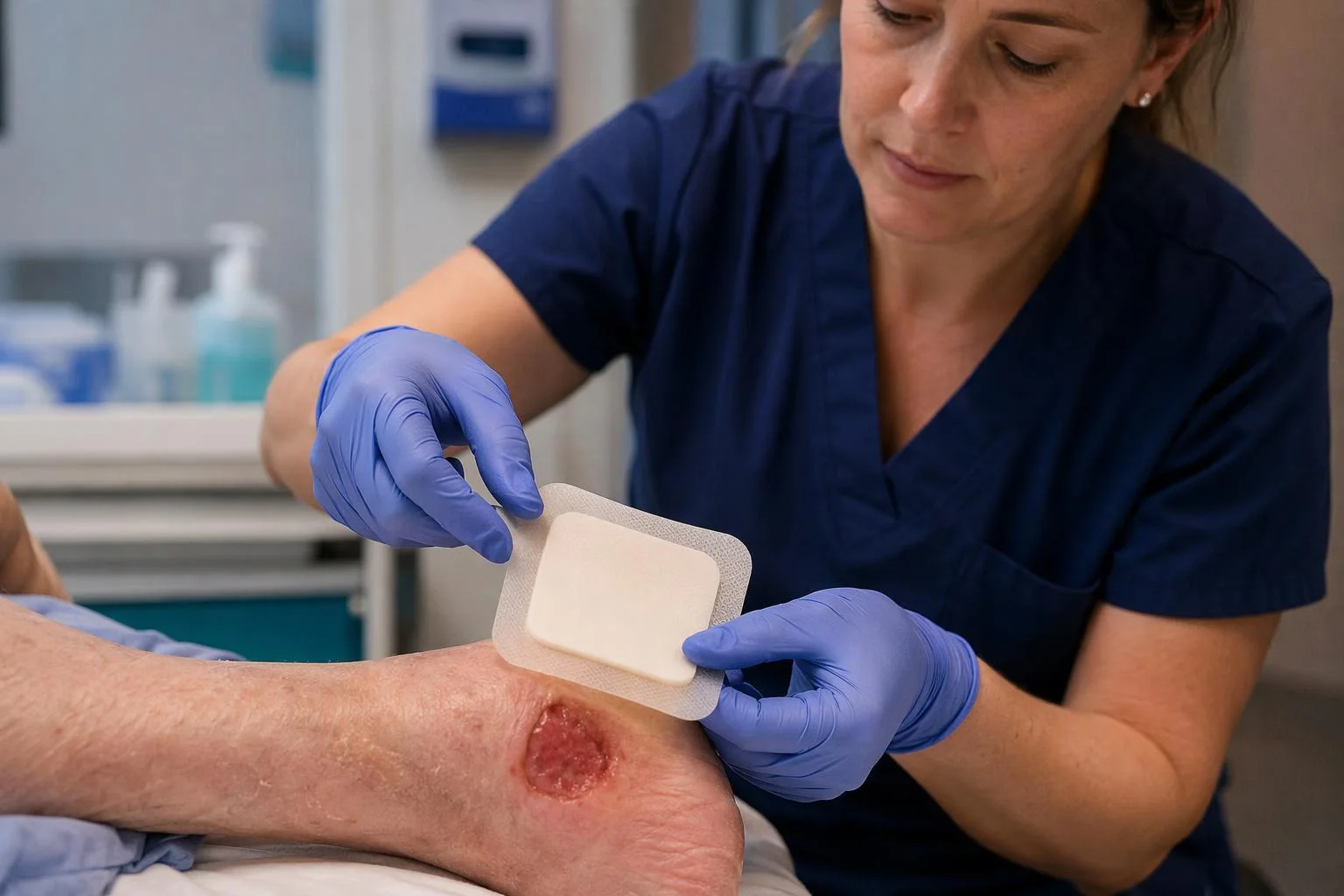
For treatment, silicone foam is a reasonable choice for partial- and full-thickness pressure injuries with moderate exudate, particularly when the periwound skin is intact but fragile or when the wound sits over a bony prominence where a conformable bordered dressing will hold. Manufacturer IFUs commonly list pressure ulcers among indicated wounds and note that the dressing may form part of prophylactic therapy to help prevent skin damage.
For prophylaxis, the case is more conditional than it first appears. Silicone foam dressings are widely used on sacrum, heels and trochanters in high-risk patients, and several trials have tested multilayer silicone-adhesive foam against standard care for pressure injury incidence. But the Cochrane review of dressings and topical agents for preventing pressure ulcers concluded that it remains unclear whether any of the included dressings or topical agents make a difference, with certainty of evidence low to very low. It also notes that commercially available prophylactic dressings differ substantially in design and composition, which determines their biomechanical performance, and that international guidelines recommend prophylactic dressings as an adjunct to offloading and repositioning rather than as a standalone measure.
Practically: use prophylactic foam where local risk assessment identifies a patient who will not tolerate or reliably receive repositioning, where shear and friction at a specific site are unavoidable, and where the skin is intact enough to tolerate an adhesive. Do not use it as a substitute for a working pressure-redistribution surface or a turning schedule.
DFU and VLU (under optimized care)
In diabetic foot ulcers and venous leg ulcers, the dressing is the least influential part of the plan. Offloading — a total contact cast or equivalent — determines whether a plantar DFU heals; compression determines whether a VLU heals. Foam’s job is to manage exudate and protect skin underneath those interventions.
For VLUs, compression consensus guidance is explicit that sufficient pressure is needed to improve chronic venous insufficiency and reduce oedema, that a delay of even one month in reaching therapeutic compression may delay healing and prolong symptoms, and that some compression is better than none. A foam dressing that is bulky enough to interfere with bandage application, or that adds pressure over the malleolus, works against that goal. A thin, conformable foam under the compression layer is usually the better fit.
For DFUs, foam is appropriate for the exudative, non-plantar or post-debridement wound, and for protecting skin around the offloading device. It is not a substitute for debridement of hyperkeratotic tissue, for infection control, or for revascularization assessment when perfusion is inadequate. Both ulcer types should be reassessed if they show no reduction in size at one month, or remain unhealed at three months — at that point the dressing is not the variable to change first.
Skin tears, closed incisions, donor/graft sites, minor burns
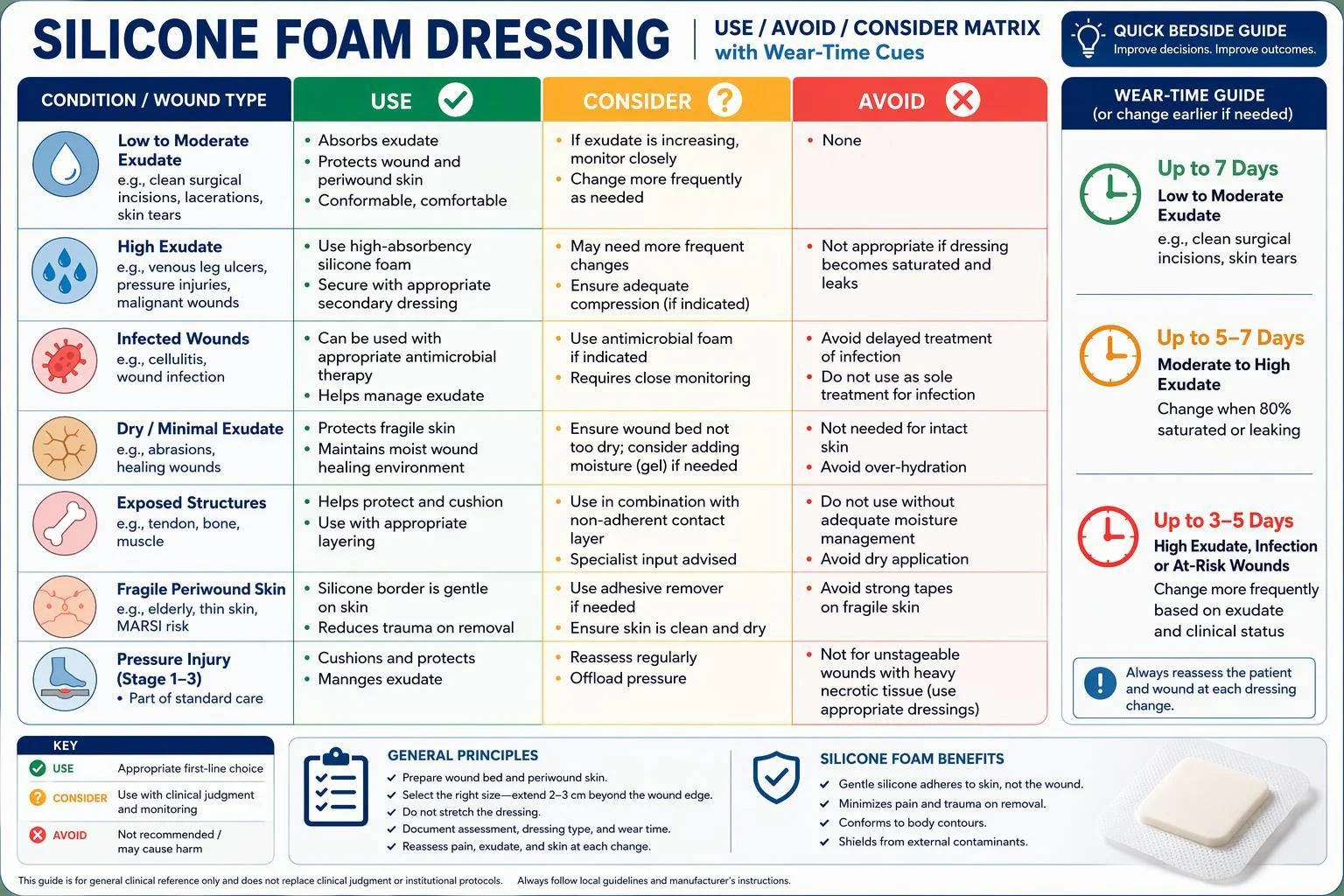
These are the situations where silicone foam’s gentle adhesion does most of its work. Skin tears occur disproportionately in older adults with fragile, thin skin, and every additional adhesive insult raises the risk of extending the tear or causing a new injury. A soft silicone contact layer that releases cleanly supports the goal of securing the flap without stripping the surrounding skin.
Closed surgical incisions and donor sites benefit from a dressing that stays in place, absorbs the modest exudate of the first days, and comes off without disturbing the healing edge. Minor burns — superficial partial-thickness, without the depth or contamination that requires specialist management — are commonly listed among indicated wounds for foam dressings, provided the wound is appropriately cleansed and infection is not suspected.
What these sites have in common is low-to-moderate exudate and high skin sensitivity. That combination favours a thinner foam with a silicone wound contact layer rather than a high-absorbency composite. It also means the dressing should be lifted and inspected rather than left undisturbed for a week on the assumption that longer wear is always better.
How to apply and manage wear time
Application technique and wear-time decisions account for a large share of the difference between a foam dressing that performs and one that leaks, rolls or macerates the periwound skin. The three sections below cover selection, change frequency and leakage control in the order they arise at the bedside.
Selection and sizing (match exudate, protect periwound)
Start with exudate volume. Light exudate suits a thin foam or a foam with a modest absorbent pad; moderate exudate suits a standard bordered foam; heavy exudate, or a wound where saturation occurs within a day, calls for a higher-absorbency construction or a super-absorbent silicone-adherent dressing rather than more frequent changes of a dressing that cannot cope.
Then match the border to the site. A bordered, self-adherent dressing gives a secure seal on flat or gently curved surfaces such as the sacrum and thigh. On highly contoured areas, heels, or cavities, a non-bordered foam with a separate fixation may conform better. The dressing should overlap intact skin by a margin wide enough for the adhesive to grip — typically a couple of centimetres — without crossing onto broken or macerated skin.
Protect the periwound before applying. A skin barrier preparation on intact surrounding skin reduces maceration risk and makes removal gentler. Do not cut a bordered dressing to fit a cavity; use a product designed for that geometry instead.
Change frequency and wear-time cues (often up to several days)
Silicone foam dressings are commonly left in place for several days, and trials of prophylactic sacral foam have used scheduled intervals ranging from every three days to every seven days, with additional changes whenever the dressing became soiled, dislodged or saturated. Those intervals are protocol-specific, not a universal standard, and the product IFU takes precedence.
Change the dressing when any of the following appears: strike-through or visible saturation on the backing, edge lift or rolling, leakage at the border, soilage from incontinence, dislodgement, or new pain at the site. On prophylactic dressings, the skin beneath should still be inspected — many trial protocols lifted the dressing daily for skin assessment without changing it, which is a useful habit to build into the ward round.
A dressing that needs changing every day is giving you information. Either the exudate level is higher than the product can handle, or something else — infection, a deteriorating wound, a fistula — has changed. Treat repeated early changes as a trigger for reassessment rather than a scheduling problem.
Leakage and maceration mitigation (edge seal, timing, technique)
Leakage almost always starts at the edge. Before application, dry the periwound skin thoroughly — residual moisture or barrier cream under the adhesive prevents a seal. Apply the dressing without stretching it; tension creates shear as the patient moves and lifts the border. Smooth from the centre outward to expel trapped air, and press the border firmly for several seconds, warming the adhesive.
Timing matters as much as technique. Applying a foam to a wound that has just been irrigated and is still wet invites failure; so does applying it immediately after a patient has been repositioned and the skin is under load. Where incontinence is a factor, the International Guideline for preventive skin care advises carefully weighing the benefits, risks and cost-effectiveness of a preventive dressing for individuals with incontinence, particularly those experiencing frequent loose stool — a reminder that a dressing alone will not solve a continence-related moisture problem.
If maceration appears despite good technique, the answer is usually a higher-absorbency dressing, a larger overlap, or more frequent review — not a tighter seal over wet skin.
Compatibility, safety, and value
Three practical questions decide whether a silicone foam dressing is a good institutional choice: does it work under the compression or offloading device the patient needs, does any antimicrobial version fit your stewardship obligations, and does the total cost in use justify the unit price. These are procurement and clinical questions at once, and they are best answered together.
Compression and offloading compatibility
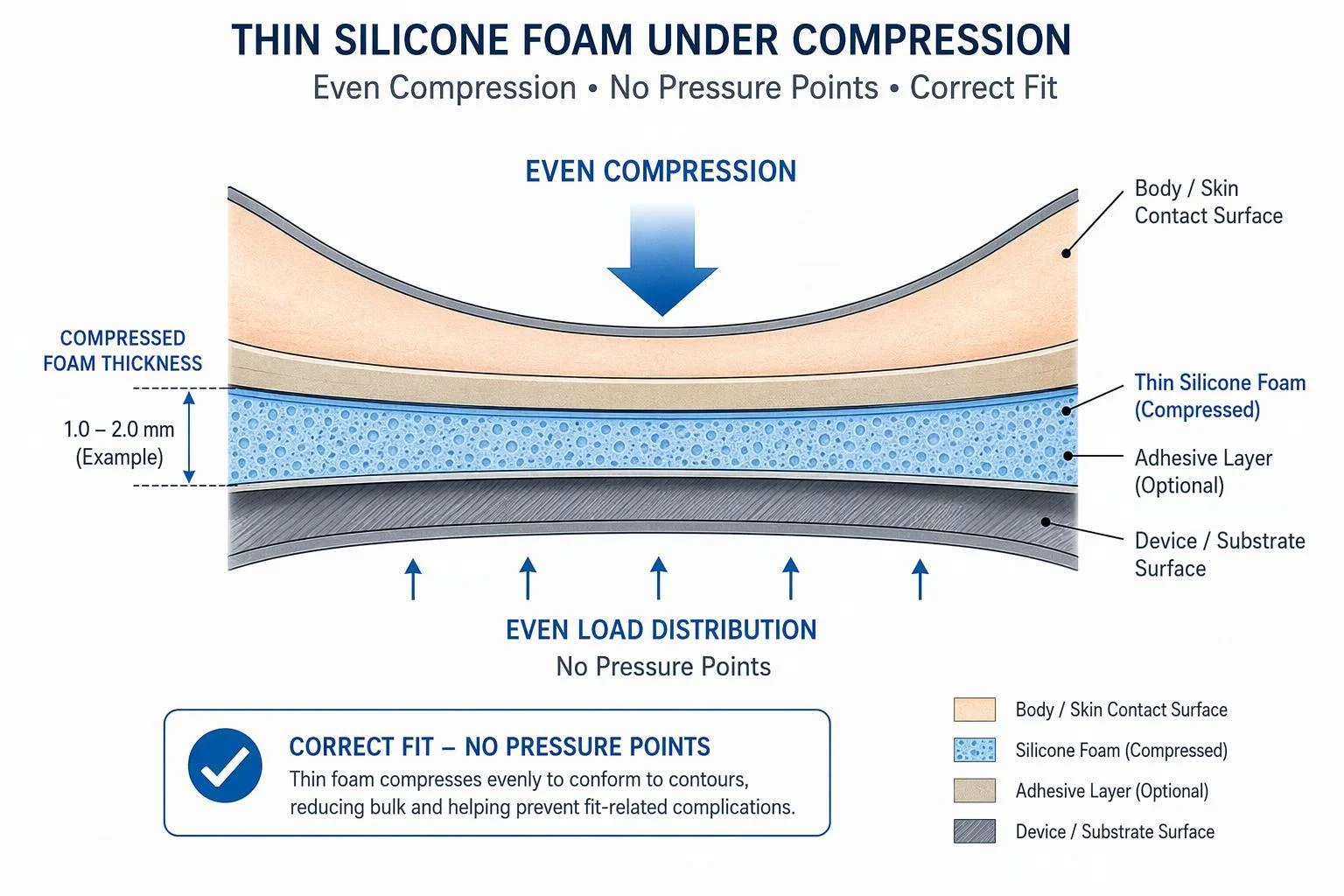
Foam dressings are generally compatible with multi-layer compression bandaging, provided the dressing is thin enough not to create a pressure point and is applied smoothly, without wrinkles, before the bandage layers go on. Compression consensus guidance warns that altered limb shape and tissue consistency create a risk of uneven pressure distribution, tourniquet effects and pressure damage, and recommends extra padding where an ulcer sits over a bony prominence. A bulky or creased foam under a bandage adds exactly that risk.
Under offloading devices, the same principle applies in reverse: the foam must not add bulk inside a total contact cast or a removable walker to the point of creating a new pressure area. Thin foams and foam without a thick border are usually easier to accommodate. Where a device is rigid and space is limited, consider whether the foam is needed at all, or whether a lower-profile dressing would serve.
In both cases, check the fit after application and again at the first device change. A dressing that felt comfortable at application can migrate or bunch once compression is applied and the patient mobilises.
Antimicrobial stewardship (silver): two-week review and step-down
Silver-containing foam dressings have a legitimate but narrow role: wounds with signs of local infection or critical colonisation where an antimicrobial dressing is part of a broader infection-management plan. The Wounds UK silver best-practice statement sets out the stewardship expectations clearly — document the rationale for using a silver dressing in the patient’s records, select the product based on the individual wound’s exudate level, tissue type, depth, conformability needs and change frequency, and review use after two weeks, though not automatically stopping at that point. If the wound is not improving, reassess the patient and wound and consider another antimicrobial agent.
That two-week review is the operational heart of silver stewardship. It is a scheduled decision point, not an expiry date: continued use requires documented justification and regular review, and step-down to a non-silver foam should happen once the infection signs have resolved.
Two further cautions from the same guidance are worth carrying into formulary decisions: silver dressings should be used with caution in children and in very large wounds, and silver sulfadiazine-containing dressings should not be used in patients with sulfonamide sensitivity or hepatic or renal impairment, or during pregnancy, lactation or in newborns. A PrescQIPP bulletin on silver dressings makes the complementary cost argument, noting the lack of high-quality trials establishing advantage over cheaper alternatives for uncomplicated leg ulcers, and recommending a switch to standard non-medicated dressings after a defined quantity.
Cost and standardization notes
Unit price is the wrong unit of comparison. What a formulary committee can actually defend is cost per treatment episode: acquisition price divided by the number of days the dressing stays in place, plus the labour and materials consumed by unplanned changes. A dressing that costs more per piece but holds for four days without edge lift can beat a cheaper one changed daily — but only if your own change data supports the claim. Build the case from your ward’s numbers: documented changes per wound per week, leakage events, and skin-injury reports.
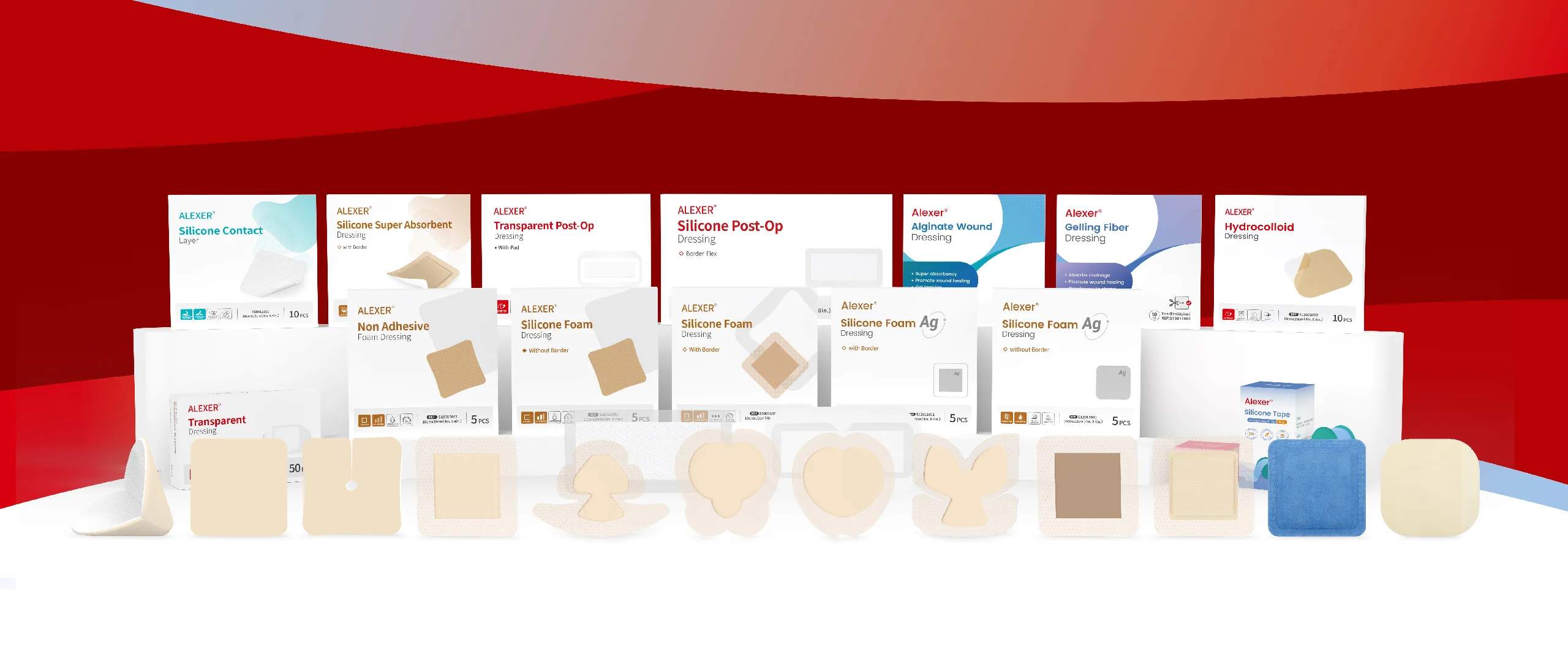
Standardization is where the savings usually sit. Narrowing to a small set of sizes and one or two formats reduces stock-outs, cuts the training burden, and makes consumption auditable. Keep a low-exudate and a high-exudate option, and reserve silver for the indications your antimicrobial stewardship policy defines. Ask suppliers for the IFU, certification documentation and a sampling plan before committing, and pilot on two wards before a full conversion.
Conclusion
A silicone foam dressing is an adjunct, not a diagnosis. It earns its place when a wound is producing more exudate than a basic dressing can hold, when the periwound skin needs protection from maceration, and when repeated, atraumatic changes matter — fragile skin, prophylaxis over bony prominences, comfort at end of life. It does not replace pressure redistribution and repositioning, compression for venous disease, offloading for the diabetic foot, debridement, or infection management. The evidence base reflects that supporting role: the Cochrane review of dressings for preventing pressure ulcers found that it remains unclear whether any included dressing or topical agent makes a difference, with certainty rated low to very low, and international guidance positions prophylactic dressings as an adjunct to offloading and repositioning rather than a substitute.
Selection should follow exudate, not habit. Match absorbency to the volume you are actually managing, size the dressing to overlap intact skin without tension, and protect the periwound before the first application rather than after the first maceration. Soft silicone contact layers are designed to release more gently than aggressive acrylic adhesives, which is why silicone-based products generally show lower MARSI incidence in the systematised review of adhesive-related skin injury — a reason to choose them for high-risk skin, not a guarantee for every patient.
Wear time is a clinical decision with a default, not a rule. Many bordered foam dressings are designed to stay in place for several days; the practical cues to change are strike-through, edge lift, soiling, dislodgement, or a change in the wound itself. Daily inspection of the skin beneath a prophylactic dressing is part of the regimen, not an exception to it. When leakage recurs before the expected wear time, the answer is usually a different absorbency or a better edge seal, not a shorter routine interval.
Compression and offloading compatibility deserve a check before the first application, not after a pressure injury appears under a bandage. A thin foam layer under multi-layer compression should sit smoothly, without ridges or bulk at the ankle, and the compression system should be reassessed if the limb shape changes. Under offloading devices, confirm the dressing does not create a new pressure point at its edge.
Silver is a stewardship decision. Best-practice guidance is to document the rationale, review use at two weeks without automatically stopping at that point, and reassess the patient and wound if there is no improvement rather than continuing the same antimicrobial by default. Silver dressings are not intended as treatment for infected wounds on their own; infection requires a management plan, and in acute wounds there is some evidence that silver may delay healing.
Finally, cost. Compare cost per treatment episode rather than price per piece, and let your own change-frequency and leakage data carry the argument. SLK Medical manufactures silicone foam dressings in Tianchang, Anhui, under ISO 13485 and EU MDR quality management system certification, and supplies documentation and samples for clinical evaluation.
Reassess whenever exudate volume, infection status, or perfusion changes — these are the variables that most often make a previously appropriate dressing the wrong one. Follow the manufacturer’s instructions for use for indications, contraindications and application, and let local protocol govern where it is stricter.