

Introduction
Silicone dressings are the adhesive family most clinicians reach for when the skin under a dressing is as much a concern as the wound itself. Soft silicone adhesives hold with low peel force, which makes removal less traumatic than acrylate tape and reduces the risk of stripping fragile epidermis (Kim et al. 2025). That single property explains most of their clinical value, and also the limits of where they help.
This guide is written for the people who have to make the decision at the bedside and defend it in a value analysis meeting: WOC nurses, unit and wound-clinic nurses, and procurement or VA teams evaluating a category shift away from gauze and basic adhesive dressings. It covers the three wound types where silicone formats have the clearest evidence and guideline backing — pressure injuries, diabetic foot ulcers, and skin tears in fragile skin — then sets out what the dressings do well, where the evidence is thinner than marketing suggests, and how to build selection, wear-time and antimicrobial stewardship rules around them.
Two framing points run through everything below. First, silicone is an adhesive and contact-layer technology, not a wound type. A silicone foam, a silicone wound contact layer and a silicone-faced superabsorbent dressing behave differently, and the format has to match exudate level and anatomy. Second, the strongest evidence for silicone dressings sits in prevention and in fragile-skin trauma, not in accelerating closure of established ulcers. Keeping those two points straight is what separates a defensible protocol from a catalogue order.
Where guidance is cited, it is the current international or national source: the 2026 NPIAP/EPUAP/PPPIA quick reference, the 2023 WHS pressure ulcer treatment guideline, the 2023 IWGDF practical guidelines, the 2025 ISTAP skin tear recommendations, and the Wounds UK silver consensus. Local formularies and unit protocol still govern the final choice.
Indications by wound type
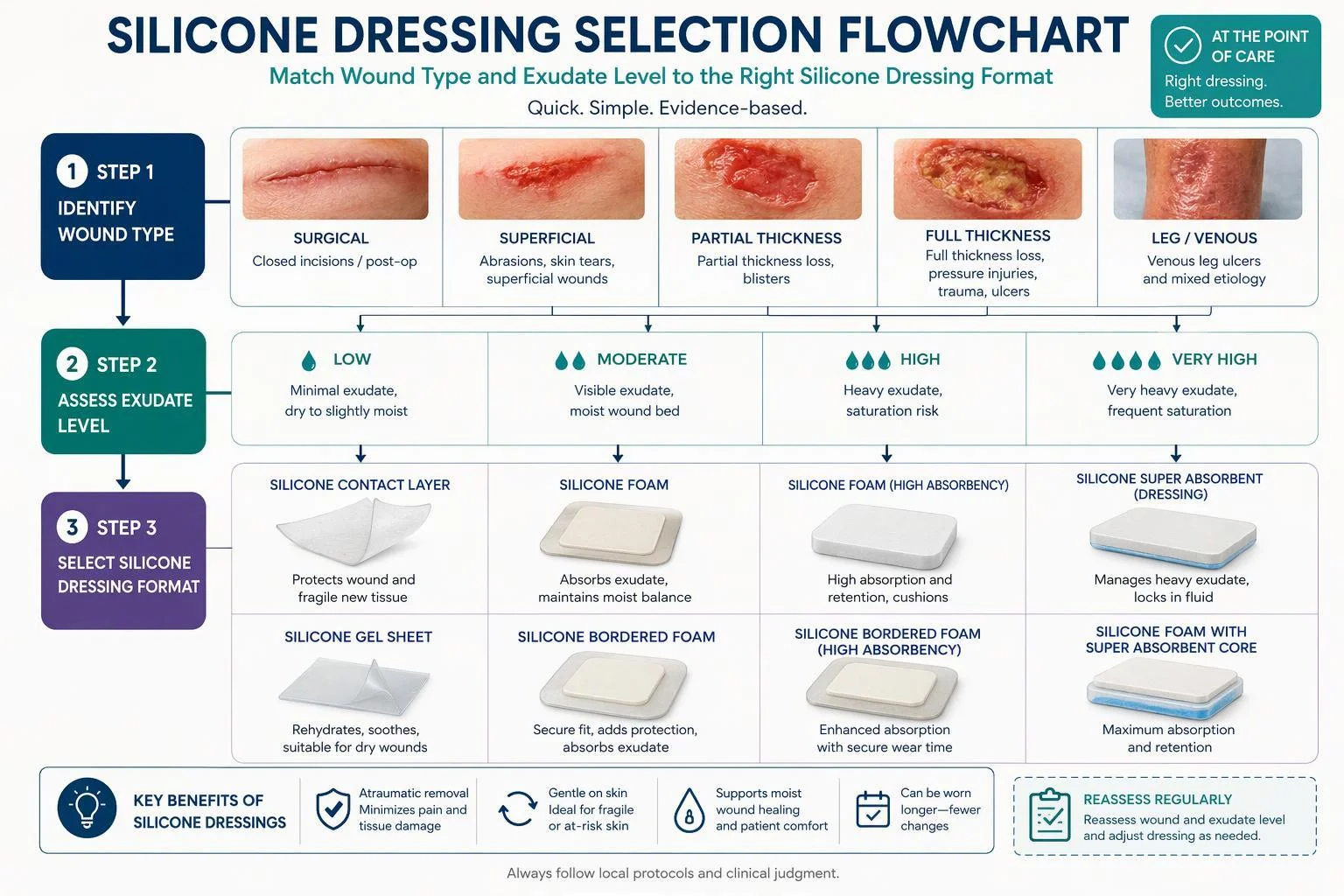
The three wound types below share a common thread: skin that is either already compromised or at high risk of becoming so. In each, the decision is not simply “silicone or not” but which silicone format, at what exudate level, and with what adjunct. The sections that follow treat each wound type in turn, then the infographic after them maps format to exudate level for point-of-care selection.
Pressure injuries: prevention and care
Prevention is where the evidence is strongest. The 2026 NPIAP/EPUAP/PPPIA quick reference makes a conditional recommendation, supported by very low certainty evidence, to use a multilayered soft silicone foam dressing on the sacrum and heels for individuals assessed as high risk, where resources permit. A separate conditional recommendation supports a preventive dressing as an adjunct to heel elevation and repositioning for heel pressure injuries. The wording matters for procurement: these are conditional suggestions with resource caveats, not mandates.
The trial base behind that recommendation is worth knowing. In the largest RCT to date (n=440), critically ill and trauma patients dressed with multilayered soft silicone foam on the sacrum and heels on arrival in the emergency department had fewer pressure injuries than controls — 3.1% versus 13.1% overall, with fewer heel (3.1% vs 12.5%) and sacral (1.2% vs 5.2%) injuries, giving a number needed to treat of 10 (Wounds International prevention review). Smaller RCTs and non-randomised studies point the same direction, but several are single-centre and use historical controls.
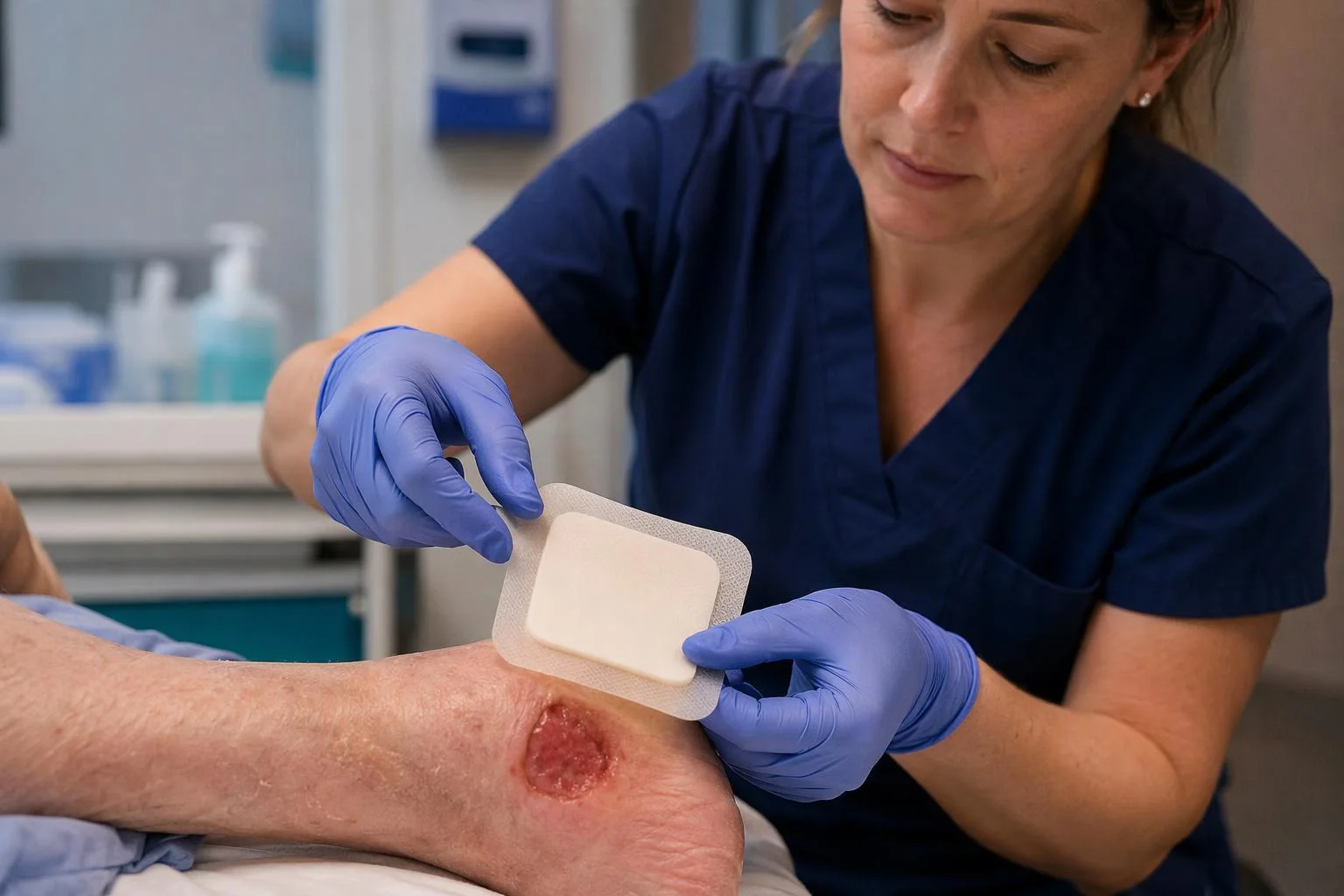
For established pressure injuries, silicone foam functions as the cover dressing over a moderate-to-heavy exudate wound, and a silicone contact layer can sit under it where the wound bed is fragile or the periwound skin cannot tolerate repeated adhesive. The dressing manages exudate and protects the wound; it does not replace repositioning, support-surface selection, nutrition or offloading. A Cochrane review of foam dressings for treating pressure ulcers found the comparative evidence against alternatives uncertain, so the case for foam in treatment rests on exudate control and comfort rather than demonstrated superiority in closure.
Diabetic foot ulcers: adjunct choice
In diabetic foot ulcers, silicone dressings are an adjunct, never the intervention that determines outcome. The 2023 IWGDF practical guidelines place offloading at the centre of treatment for neuropathic plantar ulcers, with a non-removable knee-high device as the preferred option, and list dressing selection as a local-care step: choose dressings that control excess exudation and maintain a moist environment (IWGDF 2023). The same document notes that topical antiseptics and antimicrobial dressings are not well supported for routine ulcer management — a point that bears directly on silver-containing foams.
That framing tells you where a silicone foam fits. A plantar or dorsal ulcer with moderate exudate needs a dressing that holds under a walker or cast, does not macerate the surrounding skin, and can be lifted for inspection without tearing newly formed tissue. A bordered silicone foam or a silicone contact layer under a secondary absorbent dressing can do that. What it cannot do is compensate for inadequate offloading, untreated ischaemia or unresolved infection; the IWGDF is explicit that even optimum local wound care cannot make up for those.
Before selecting any dressing, the foot needs a structured assessment — debridement of callus and necrotic tissue where appropriate, SINBAD classification, infection severity by the IWGDF/IDSA system, and perfusion status. Wash but do not soak the foot, since soaking promotes maceration. Where the ulcer is on a non-plantar site or the patient cannot tolerate a non-removable device, document the alternative chosen and why.
Skin tears and fragile skin
This is the indication with the most direct product-level evidence. The 2025 ISTAP recommendations state that if silicone dressings are available they should be used, because data indicate they improve skin tear healing compared with non-silicone, non-adherent dressings, and they are generally less aggressive than acrylate-based adhesives (ISTAP 2025). The ISTAP ideal-dressing list reads almost like a silicone specification: easy to apply and remove, atraumatic, a protective anti-friction barrier, flexible and contouring, secure but not aggressive adhesion, extended wear time.
The supporting trial was a pragmatic randomised controlled study in 126 long-term care residents. Skin tears treated with soft silicone dressings (a contact layer and/or foam) healed in 96.9% of cases over three weeks versus 34.4% with non-adhesive dressings, and mean time to healing was 11 days versus 22 (LeBlanc et al.). Read the numbers with the setting in mind: two Ontario long-term care facilities, older residents, dressing changes by facility nursing staff. It is strong evidence for this population and this wound type, not a general healing claim.
Practical points follow from the definition. A skin tear is a traumatic wound from mechanical forces, including adhesive removal and patient handling, that does not extend through subcutaneous tissue. Preserve and re-approximate the flap without stretching the skin, avoid sutures, staples and adhesive strips in fragile aged skin, and treat the cause — the handling and adhesive practices that produced the tear. Not every MARSI is a skin tear, and not every skin tear is uncomplicated; lower-limb tears and tears in patients with peripheral arterial disease or diabetes are likely to be classed as complicated and need closer review.
Benefits and limitations
The benefits of silicone dressings are real but narrower than the category’s marketing implies. They cluster around skin safety and exudate handling; the limitations cluster around cost, adhesion under stress, and the gap between prevention evidence and treatment evidence. The three sections below separate those strands so a formulary decision can be argued on the right grounds.
Skin tear healing at 3 weeks in a pragmatic RCT of 126 long-term care residents: soft silicone dressings (contact layer and/or foam) vs non-adhesive dressings. Single study, two Ontario facilities, older residents; not a general healing claim for other wound types.
Atraumatic removal & MARSI reduction
Medical adhesive-related skin injury is common enough to be a quality metric in its own right. In a prospective study of spinal surgery patients, the incidence of MARSI associated with surgical wound dressings was 36.4%, higher than the 11–22.7% reported in critically ill patients and 27.9% in hospitalised patients, with ICU rates reported as high as 41.2% in a systematic review (a spinal-surgery MARSI study). A separate prospective spinal-surgery study found only three cases of mechanical damage in the silicone adhesive group, and the authors attribute this to silicone’s lower peel force and reduced detachment of epidermal cells compared with acrylate (Kim et al. 2025).
The mechanism is worth understanding because it explains both the benefit and its boundary. Soft silicone creates many contact points across the uneven skin surface, giving secure but low-energy adhesion. That is why it lifts off hairy and fragile sites with less pain, and why it can be repositioned. The boundary: low peel force also means lower shear resistance, so a silicone border on a heel or sacrum can roll or lift if the patient slides, is diaphoretic, or the dressing is applied over cream. Skin preparation and correct sizing are not optional.
A second boundary is allergy. Patients with a history of contact dermatitis need attention regardless of which adhesive is used, and silicone is not a guarantee against sensitisation. Document adhesive history at assessment, and where MARSI has already occurred, treat it as a preventable event to be reviewed rather than a dressing failure to be swapped and forgotten.
Moisture and exudate management
Silicone foam manages exudate in two directions at once: it absorbs into the foam matrix and transmits moisture vapour away from the skin. That balance is what protects the periwound skin from maceration, and it is the property most often lost when a unit substitutes a cheaper non-silicone foam or a gauze stack. The clinical consequence of getting it wrong is visible: saturated dressings, leaking edges, macerated peri-wound skin, and more frequent changes than the protocol assumed.
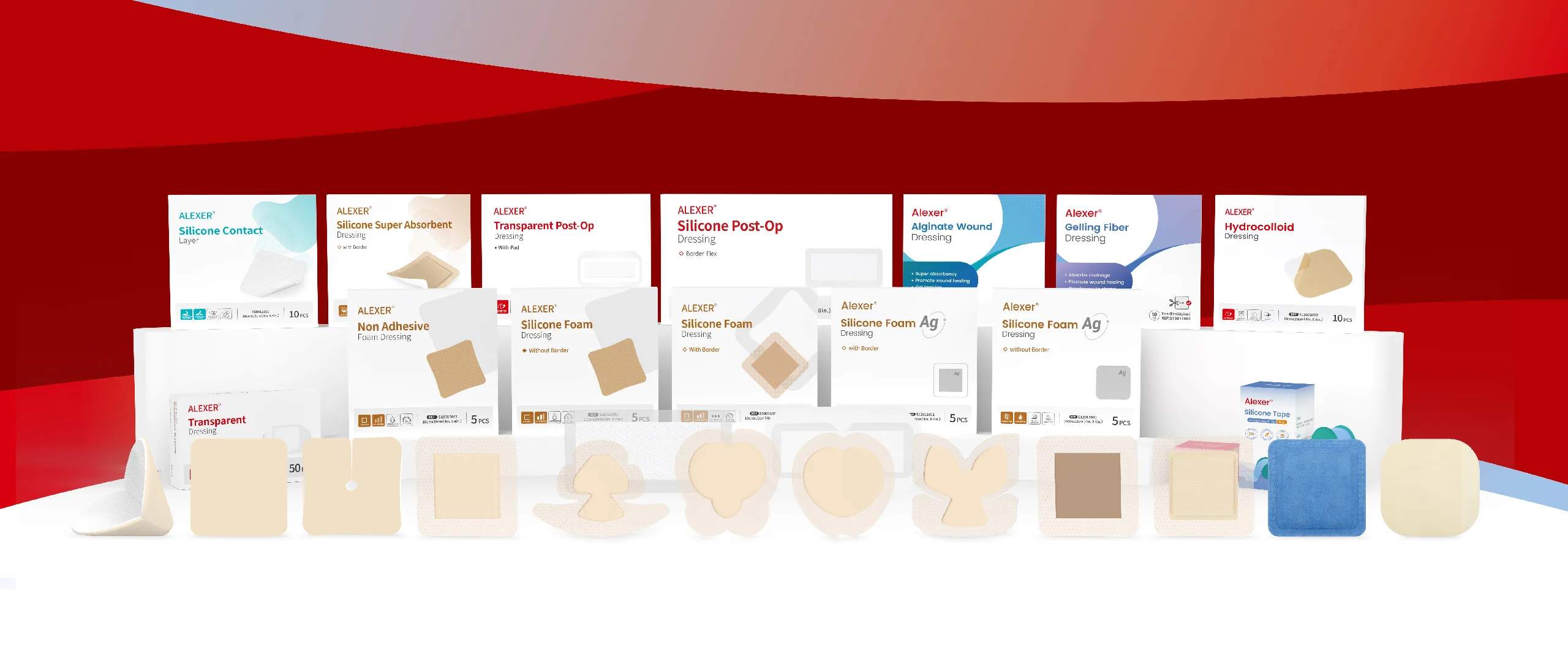
Format choice is the main lever. A thin or lite silicone foam suits low-to-moderate exudate and areas where bulk would interfere with footwear or seating. A standard bordered foam handles moderate exudate on the sacrum, trochanter or heel. For heavy exudate, a superabsorbent silicone-faced dressing or a silicone contact layer under an absorbent secondary dressing is more appropriate than layering standard foams. A silicone contact layer is perforated so exudate passes through to the secondary dressing while the layer itself stays non-adherent to the wound bed.
The limitation is that silicone foam is a cover, not a cavity filler. Deep, tunnelling or heavily sloughy wounds need a filler underneath, and the foam sits on top. Where exudate is being produced faster than any dressing can handle it, the answer is to investigate the cause — infection, venous hypertension, uncontrolled heart failure — not to change the foam more often.
Preventive adjuncts vs healing rates
The distinction that matters most in a value analysis conversation is this: silicone foam has reasonably consistent evidence as a preventive adjunct on the sacrum and heels in high-risk patients, and much weaker evidence as a treatment that accelerates closure of existing ulcers. Conflating the two inflates the business case and invites a challenge from a clinical reviewer.
On prevention, the NPIAP/EPUAP/PPPIA recommendation is conditional and rests on very low certainty evidence, even though the largest RCT showed a substantial absolute reduction. A Cochrane review of dressings and topical agents for preventing pressure ulcers notes that dressing selection must align with both patient and clinical needs, and that not all dressings mitigate the extrinsic factors involved. In other words, a dressing is one component of a prevention bundle, not a substitute for repositioning and support surfaces.
On treatment, a Cochrane review of foam dressings for treating pressure ulcers found the comparative evidence uncertain. Silicone foam is a reasonable choice for exudate management and comfort, and it may support a moist healing environment, but claims that it speeds closure relative to other foams are not well established. For skin tears, by contrast, the healing data are comparatively strong — which is exactly why the ISTAP recommendation is worded more directly than the pressure injury guidance.
Practical use and stewardship
Selection, wear time and antimicrobial review are the three operational decisions that determine whether a silicone dressing programme delivers its clinical promise or becomes a stockroom of unused formats. Each is covered below with the criteria that should appear in a unit protocol.
Dressing types and selection
Match format to exudate level and anatomy before brand. The table below is a starting framework; the infographic above maps the same logic visually for bedside use.
Format | Typical exudate level | Common sites and uses | Notes |
|---|---|---|---|
Silicone wound contact layer | Any, as primary layer | Skin tears, abrasions, grafts, fragile periwound skin | Perforated; requires a secondary dressing |
Thin / lite silicone foam | Low to moderate | Heels, low-profile areas, under footwear | Less bulk; check border security |
Bordered silicone foam | Moderate | Sacrum, trochanter, heel, post-operative wounds | Border aids retention; verify fit over contours |
Non-bordered silicone foam | Moderate | Cavity-adjacent or awkward shapes | Often secured with tape or secondary dressing |
Superabsorbent silicone-faced dressing | Moderate to heavy | Leg ulcers, heavily exuding pressure injuries | For exudate beyond standard foam capacity |
Silicone foam with silver | Infected or critically colonised, short term | Selected wounds under AMS review | Not for routine use; see stewardship section |
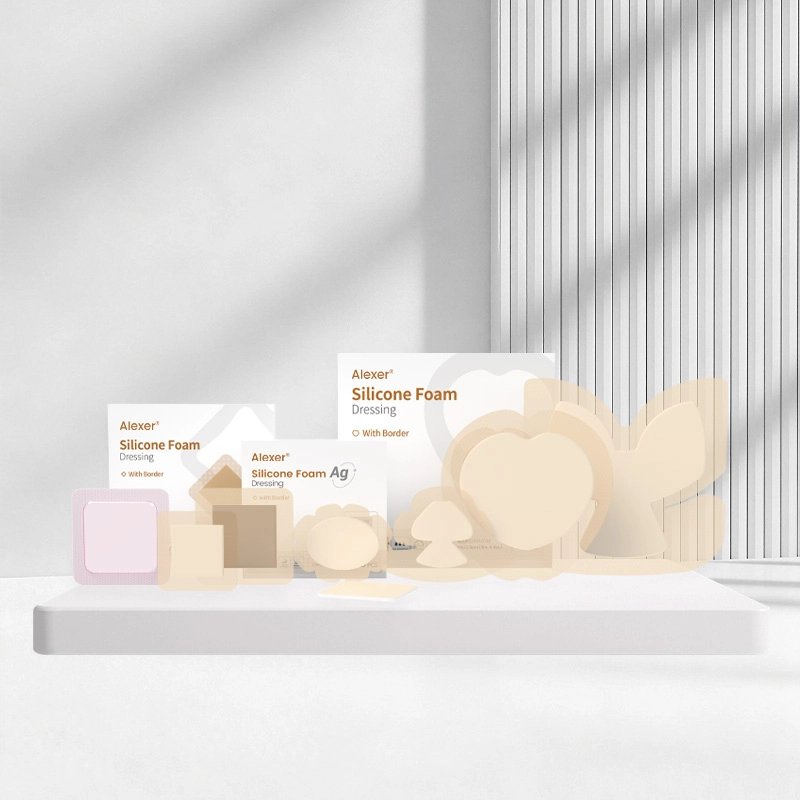
Anatomical formats matter more than they appear on a specification sheet. A sacral dressing shaped for the natal cleft and a heel dressing with a three-dimensional cup distribute and stay put differently from a flat rectangle cut to size, and a dressing that lifts at the edge defeats its own purpose. Where a facility standardises, standardise on formats that match its actual case mix rather than on the widest catalogue range.
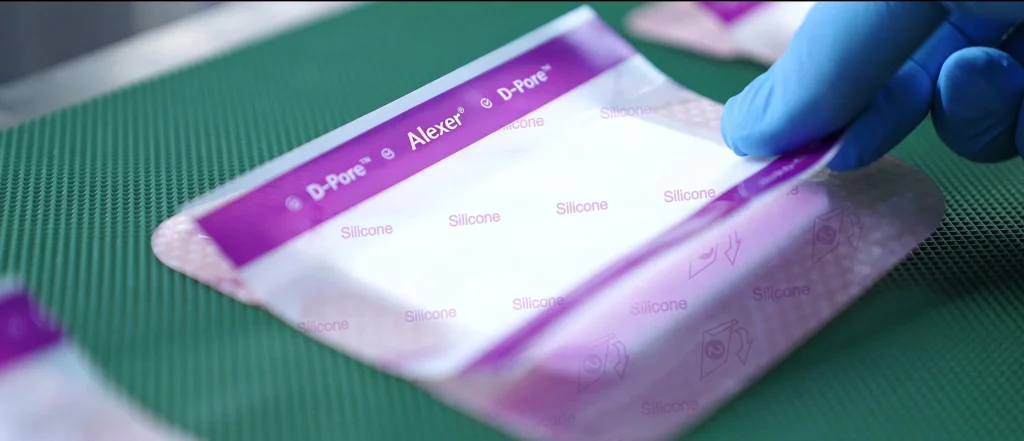
SLK Medical manufactures silicone foam dressings, contact layers and superabsorbent formats, and its D-Pore™ dual-dimensional pore foaming technology is designed to balance fluid absorption, breathability and pressure dispersion (SLK Medical).
Wear time and change criteria
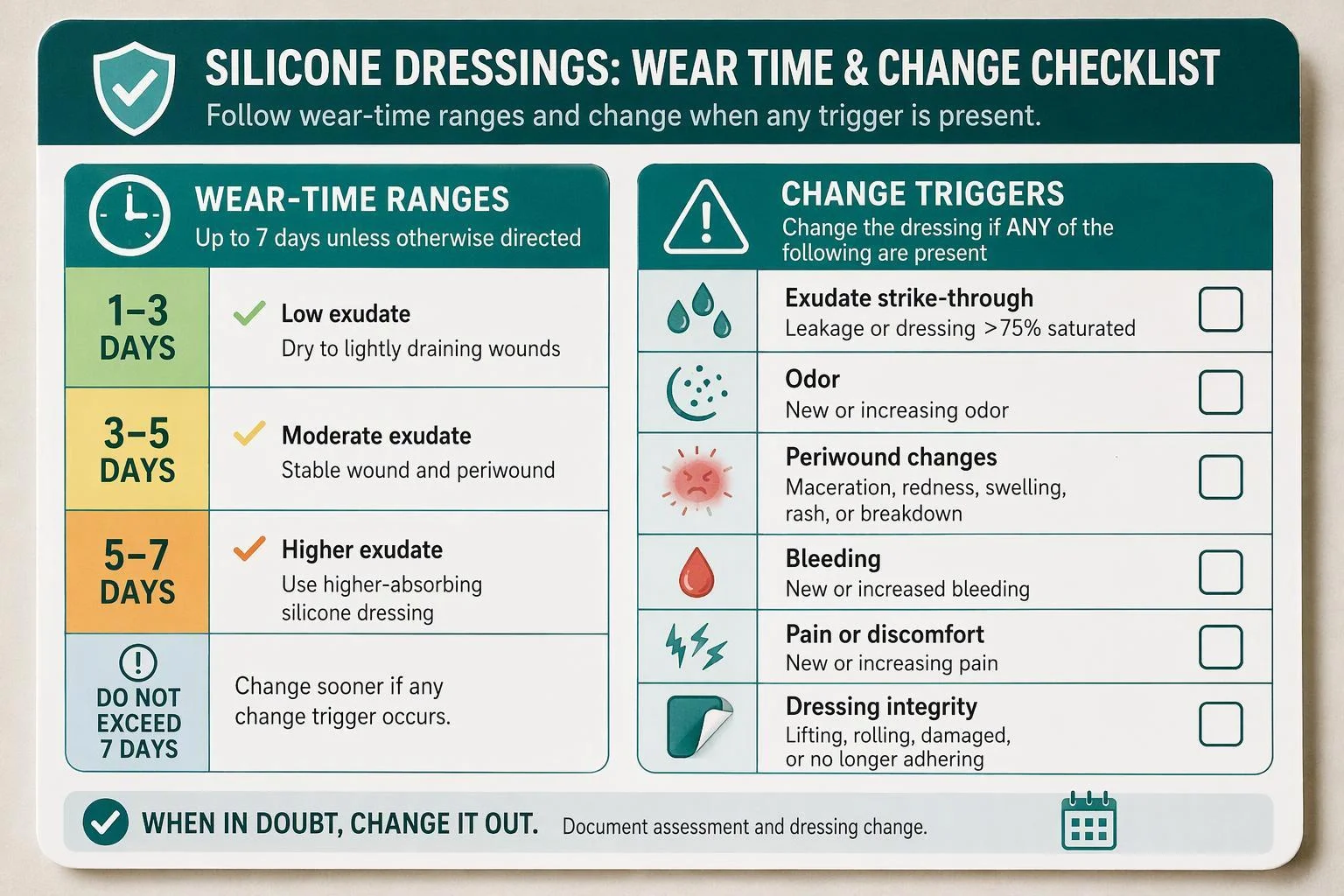
Wear time is a protocol decision bounded by two rules: never exceed the manufacturer’s stated maximum, and inspect the skin beneath a preventive dressing at the frequency set by risk status and local policy, whichever is more frequent. The Wounds International prevention review is explicit that a preventive dressing may stay in place for several days but must be peeled back regularly to assess all covered skin and bony prominences.
Change earlier than planned when the dressing is no longer fully adherent, is dislodged, rolled at the edges, wrinkled, creased or damaged, soiled, saturated, or otherwise compromised. For treatment dressings, exudate level and wound condition drive frequency; a dressing that is saturated at 24 hours is telling you the format is wrong, not that the schedule is wrong. Document the dressing selected, each skin inspection, each change, and the timing and reason for discontinuation.
Two practical cautions. In a diaphoretic patient, dry the skin and be confident of adhesion before applying, or the dressing will fail within hours. Under a medical device, ensure the dressing fits without gaps, does not add pressure, and does not interfere with the device — and continue to lift and reposition the device regularly so the skin can be examined.
Contraindications and silver AMS
Silicone dressings are not appropriate over actively infected wounds requiring drainage or debridement, over ischaemic tissue where perfusion has not been assessed, or on patients with a documented sensitivity to the specific product’s components. They should not be used as a substitute for offloading, debridement or infection source control, and they are not a dressing for dry, necrotic eschar that needs removal rather than occlusion.
Silver-containing silicone foams sit inside antimicrobial stewardship, not outside it. The Wounds UK consensus on silver dressings describes the “two-week challenge”: antimicrobial dressings should be used for two weeks initially, after which the wound, the patient and the management approach are re-evaluated (Wounds UK). Identification of localised infection should trigger prompt topical antimicrobial action, and the regimen should be informed by AMS principles given global concerns about resistance.
Operationally, that means a silver foam order should carry a start date, a review date at or before two weeks, and a documented decision to continue with justification or step down to a non-antimicrobial dressing. The IWGDF guidance that topical antiseptics and antimicrobial dressings are not well supported for routine diabetic foot ulcer management is a useful counterweight when a silver product is proposed by default rather than for a defined indication.
Conclusion
Silicone dressings earn their place in three specific jobs: protecting intact but fragile skin over bony prominences, managing exudate in moderate-to-heavy draining wounds without traumatising the peri-wound skin, and closing fragile wounds such as skin tears where an aggressive adhesive would cause the next injury. They are not a universal upgrade. On a dry, intact wound bed with no exudate, a simple non-adherent or film dressing will do the same work at lower cost, and no dressing substitutes for pressure offloading, revascularisation, debridement or infection control.
The evidence base is uneven, and procurement documents should say so. The strongest signal sits in prevention: the NPIAP/EPUAP/PPPIA quick reference suggests a multilayered soft silicone foam dressing on the sacrum and heels for individuals at high pressure injury risk, where resources permit, as a conditional recommendation supported by very low certainty evidence, and a preventive dressing may be used as an adjunct to heel elevation and repositioning for heel pressure injuries (NPIAP/EPUAP/PPPIA 2026 quick reference). For skin tears, ISTAP’s 2025 best practice recommendations state that silicone dressings should be used if available, as data indicate they improve healing compared with non-silicone, non-adherent dressings (ISTAP 2025). For diabetic foot ulcers, silicone foam is a secondary choice serving the IWGDF instruction to select dressings that control excess exudate and maintain a moist environment — offloading remains the cornerstone (IWGDF 2023).
Three implementation steps turn that into a defensible protocol. First, write the indication list into the unit’s dressing formulary with the wound types and exudate levels each format covers, and align it with WHS treatment guidance, NPIAP prevention statements, IWGDF foot guidance and ISTAP skin tear recommendations rather than with a single product’s marketing sheet. Second, set the antimicrobial stewardship rule in the same document: silver-containing silicone foams are reserved for wounds with signs of localised infection or a documented biofilm concern, reviewed at two weeks, and stopped when the infection resolves — silicone alone is not an antimicrobial claim. Third, build the value analysis file around what the committee will actually ask: HAPI and moisture-associated skin damage rates, dressing changes per wound per week, leakage and reapplication events, MARSI reports, and the wear-time data behind the change criteria. Document dressing selection, skin inspections, change dates and reasons for discontinuation in the wound record so the next review has numbers instead of impressions.
Where a supplier can support that file with certification scope, IFU documentation, consistent sizing and a sampling plan, the evaluation becomes a clinical comparison rather than a price comparison — which is the only basis on which a higher unit cost can be defended.