

Introduction
Silicone foam dressings sit in an awkward position in most US hospital and long-term care formularies. They are rarely the cheapest item on the shelf, they are frequently requested by wound care specialists, and they are often approved without a clear statement of what they are expected to replace or improve. That gap is where standardization efforts stall: procurement sees a premium unit price, nursing sees a dressing that comes off without tearing skin, and nobody has written down the clinical and operational case that connects the two.
This overview is written for the people who have to close that gap — WOC nurses building a product evaluation, unit leaders accountable for pressure injury metrics, and procurement staff running a value analysis review. It covers what the published evidence does and does not show about silicone foam, where the dressings fit among pressure injuries, diabetic foot ulcers, surgical incisions and chronic exudative wounds, how to select and apply them, and how to document and cost them in a way that survives an antimicrobial stewardship review.
Three framing points apply throughout. First, the evidence base for prophylactic dressings is real but graded low to very low certainty, so the case rests on direction of effect plus mechanism, not on a single decisive trial. Second, silicone foam is a dressing class, not a dressing — bordered and non-bordered, thin and absorbent, plain and antimicrobial versions behave differently and should not be evaluated as one line item. Third, the strongest argument for standardization is usually not the dressing itself but the change in practice it makes possible: fewer traumatic removals, fewer leakage events, fewer unscheduled changes, and a defensible rule about when an antimicrobial version is and is not indicated.
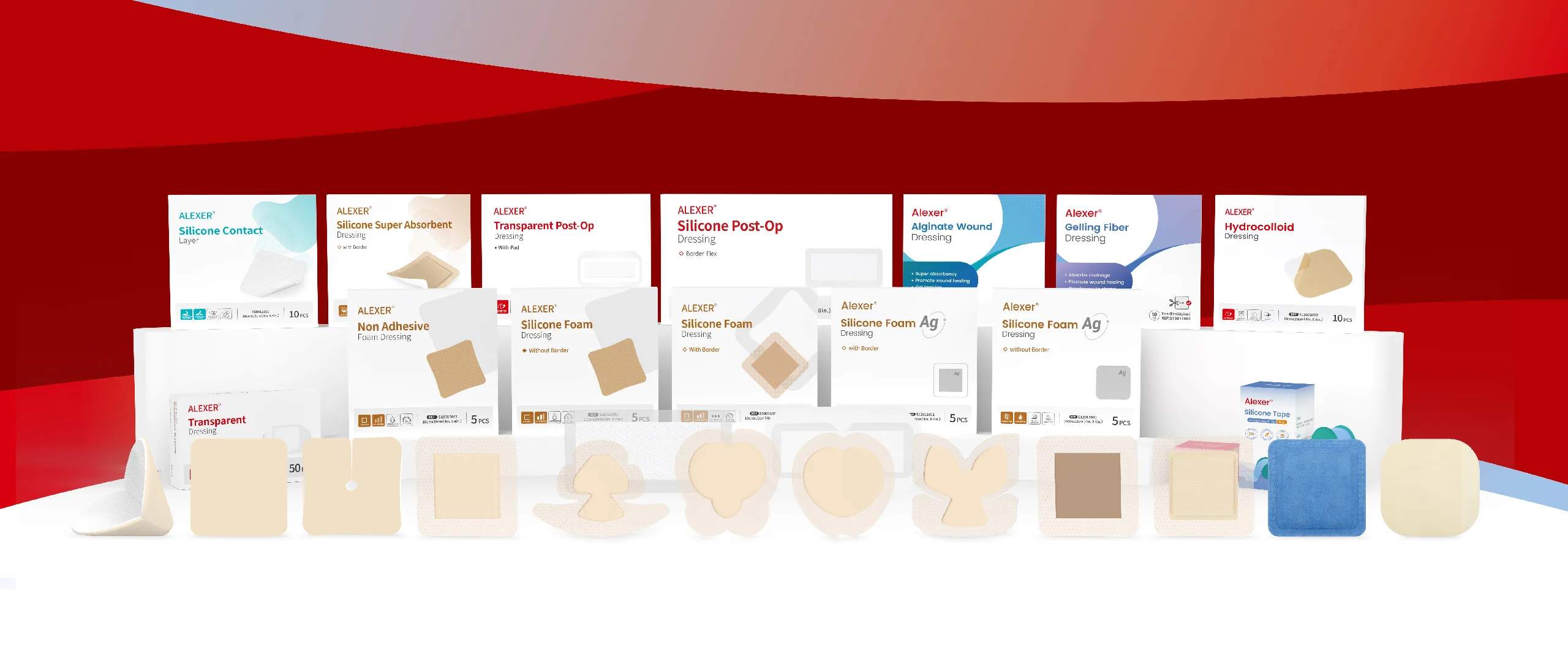
For readers comparing suppliers, SLK Medical manufactures silicone foam dressings under an ISO 13485 quality management system; the technical questions worth asking of any manufacturer are set out later in the selection section.
Evidence-based benefits
The benefits that matter to a standardization committee fall into three groups: skin safety at removal, exudate handling and wear time, and pressure injury prophylaxis at the sacrum and heels. Each has a different quality of evidence behind it, and conflating them is the most common error in internal business cases.
Pooled risk ratios from Fu, Wu & Yu (2025), a meta-analysis of 10 RCTs (4,817 adults without baseline pressure injury, predominantly neurological and postoperative inpatients). Each bar pools 5–8 trials using fixed-effects models; lower values indicate fewer pressure injuries with silicone foam. The Cochrane review (18 trials, 5,903 participants) reported RR 0.50 (95% CI 0.33–0.77) for silicone foam versus no dressing, graded low to very low certainty, and the 2026 NPIAP/EPUAP/PPPIA recommendation is conditional on very low certainty evidence — so these effect sizes should be read as a consistent direction of effect, not as established effectiveness.
Atraumatic removal and MARSI mitigation
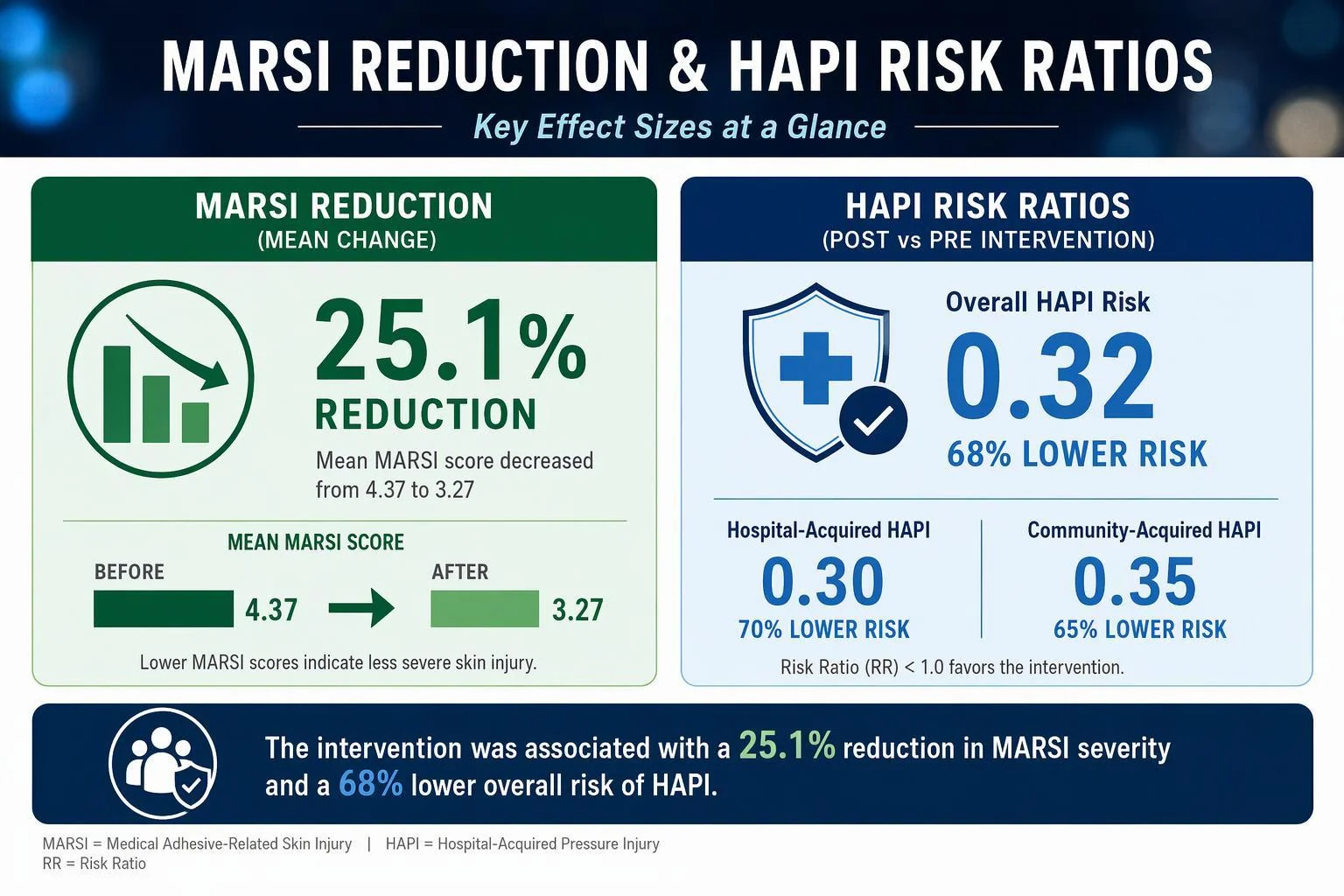
Medical adhesive-related skin injury (MARSI) is the harm most directly attributable to dressing choice, and it is common enough to be a quality metric rather than an occasional complication. A systematised review of 45 studies found MARSI prevalence generally high, with a median of 28.0% and a range of 0.85–70.21%, influenced by adhesive type, dressing duration and patient condition; silicone-based products generally showed lower MARSI incidence (Ousey et al., Global Wound Care Journal). The same review notes that repeated adhesive use and associated skin damage can compromise skin integrity and make secure placement of subsequent devices progressively harder — a compounding effect that matters in long-stay patients.
The mechanism is well described. Acrylic-based adhesives are common in dressings but can be traumatic to fragile skin, whereas silicone adhesives carry minimal risk of trauma, and consensus guidance recommends considering silicone adhesive in place of acrylic adhesive in at-risk or fragile skin (Savine & Snelson, Wounds International). Laboratory work on adhesive performance reaches a compatible conclusion: newer silicone adhesives can achieve good adhesion without causing much skin damage on removal (Bernatchez & Bichel, Adv Wound Care 2023).
The most useful single comparative datum for a business case comes from a non-randomized single-centre study in spinal surgery patients: within 10 days of surgery, 45% of 140 participants developed MARSI, and the acrylate-dressing group had a higher cumulative incidence (56.8%) than the silicone group (31.8%, p = 0.003), with a 2.55-times higher risk of MARSI (Yang et al. 2025, Wounds International). Two cautions belong with that number. It is a non-randomized design in one surgical population, so it supports a directional argument rather than a generalizable incidence estimate. And the review-level evidence is heterogeneous enough that the Ousey authors explicitly could not pool it. What the evidence supports is a claim about relative adhesive trauma, not a promise that any given unit will see a specific reduction.
Exudate control, wear time ranges, leakage prevention
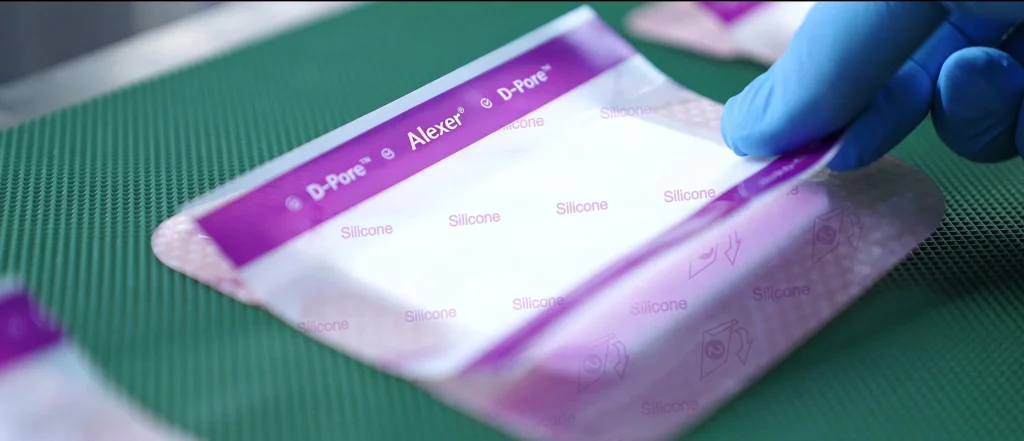
Silicone foam works as an exudate manager because of its construction rather than its adhesive. A typical multilayer product combines a polyurethane foam absorbent core with nonwoven fabric and highly absorbent polyacrylate fibres, an outer polyurethane film, and a porous silicone adhesive; the three-dimensional architecture is designed to conform to the contours of the sacrum and heels (Fu, Wu & Yu 2025). The film is breathable enough to allow some evaporation while remaining waterproof, and the foam spreads fluid through capillary action rather than holding it in one saturated spot.
That matters clinically because excess exudate causes pain, leakage, maceration of the periwound skin and wound edges, and significantly increases dressing change frequency; a gap between wound bed and dressing also raises the risk of bacterial pooling (Gaspar et al., Int Wound J 2019). Leakage is therefore not a cosmetic complaint — it is the event that converts a planned dressing interval into an unplanned change, a linen change and, in long-term care, a skin breakdown risk.
Wear time should be set by exudate volume and dressing condition, not by a fixed calendar. Prophylactic use in trials has maintained dressings on intact skin with daily inspection and change only when soiled or dislodged (Patton et al., Cochrane CD009362.pub4), while treatment of a moderately to heavily exuding wound will require more frequent review. Published community-care observations of extended wear exist, but they come from specific UK and Danish settings and are not a universal benchmark for hospitals or nursing homes (SLK Medical wear-time review). The practical rule for a protocol is to define the maximum interval, the inspection frequency, and the specific conditions — strikethrough, lifting edges, soilage — that trigger an earlier change.
HAPI prophylaxis as adjunct (sacrum/heels)
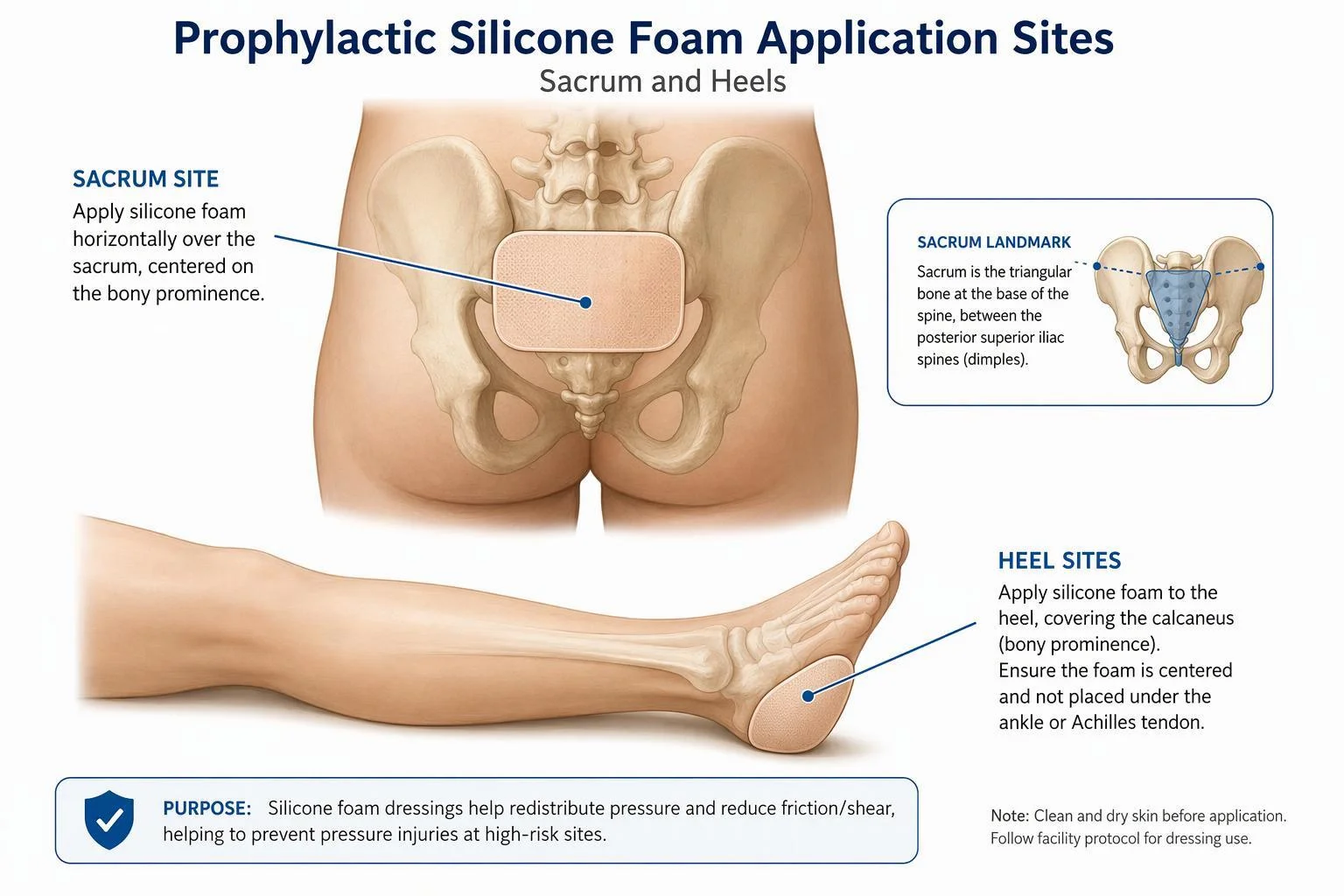
This is the indication with the most guideline visibility and the most careful language attached to it. The 2026 NPIAP/EPUAP/PPPIA quick reference suggests using a multilayered soft silicone foam dressing on the sacrum and heels for individuals assessed as high risk, where resources permit — a conditional recommendation based on very low certainty evidence (NPIAP/EPUAP/PPPIA 2026). The wording matters: it is a suggestion, it is conditional on resources, and it sits alongside repositioning and offloading rather than replacing them. The same guideline states that no support surface can entirely replace repositioning.
The effect sizes are encouraging but must be read with their certainty grade attached. The Cochrane review’s prioritized comparison of silicone foam dressing versus no dressing pooled 18 trials and 5,903 participants at a risk ratio of 0.50 (95% CI 0.33–0.77), graded low or very low certainty, with risk of bias and imprecision the main reasons for downgrading (Patton et al., Cochrane). A 2025 meta-analysis restricted to sacral and heel sites reported a pooled RR of 0.18 (95% CI 0.09–0.33) for stage I sacral pressure injuries across seven RCTs and 0.30 (95% CI 0.14–0.66) for stage I heel injuries across five RCTs, with the authors noting that heterogeneity limits generalization to specific subgroups (Fu, Wu & Yu 2025).
Individual trials illustrate the range. In critically ill patients dressed in the emergency department before ICU transfer, incidence was 3.1% versus 13.1%, a number needed to treat of ten, with fewer sacral and heel ulcers and no adverse events related to the dressings (Santamaria et al. 2013). A systematic review of prevention bundles also records a counter-example worth knowing: in patients with complete paraplegia, sacral pressure injury proportions were similar between a gel mattress group and a multilayered foam dressing group (20.8% versus 27.3%, p = 0.63), and the authors advise caution with prophylactic dressings in that population (Gaspar et al., Int Wound J 2019). Prophylaxis is an adjunct with a plausible mechanism and a favorable pooled direction — not a substitute for offloading, and not uniformly effective across every high-risk group.
Indications and use cases
Silicone foam covers four clinical situations that a hospital or long-term care formulary will encounter routinely. They differ in what the dressing is being asked to do — protect intact skin, manage exudate, support a closure, or control a chronic wound — and each has its own boundaries.
MARSI cumulative incidence within 10 days after spinal surgery in a non-randomized single-centre study of 140 participants (silicone adhesive 31.8%, n=21/66; acrylate adhesive 56.8%, n=42/74; p=0.003; adjusted HR 2.55, 95% CI 1.49–4.34). The overall 45% incidence reflects one surgical population and is not a generalizable hospital-wide rate; the review-level evidence is too heterogeneous to pool.
Pressure injuries: prophylaxis and treatment contexts
Prophylaxis and treatment are separate decisions that are often merged in product requests. Prophylaxis applies to intact skin over the sacrum and heels in patients assessed as high risk, and the dressing is maintained with daily skin inspection and changed when soiled or dislodged, as in the trial protocols summarized by Cochrane. Treatment applies to an existing pressure injury, where the dressing must handle exudate and protect the periwound skin while the wound is staged, offloaded and, where indicated, debrided.
The distinction has practical consequences. A thin prophylactic dressing is chosen for conformability and low friction over intact skin; a treatment dressing is chosen for absorbency and fit to the wound bed. Using one where the other is indicated produces either poor absorption or unnecessary bulk and cost. It is also worth recording that pressure injury incidence varies substantially by setting — roughly 8.66% in general inpatients versus 30.18% in intensive care — which is why prophylaxis protocols are usually targeted at ICU, perioperative and long-stay populations rather than applied hospital-wide (Fu, Wu & Yu 2025).
Diabetic foot ulcers: when appropriate, stewardship aligned
In diabetic foot ulcers, the dressing is the least important part of the treatment plan. NICE recommends offloading with non-removable casting for plantar neuropathic, non-ischaemic, uninfected forefoot and midfoot ulcers, with an alternative offloading device until casting can be provided, and advises choosing dressings with the lowest acquisition cost appropriate to the clinical circumstances (NICE NG19). A silicone foam dressing earns its place when exudate is moderate to high, the periwound skin is fragile or macerated, or the patient needs a dressing that can be removed without trauma for frequent inspection.
Where stewardship enters is the antimicrobial version. Silver and other antimicrobial foams are not routine-use products; they are indicated when there is localised infection, suspected biofilm, or a clear high risk of infection or re-infection, and they are generally designed for short-term use with review at two weeks (Wounds UK Best Practice Statement). The two-week point is a review opportunity, not an automatic stop. For a DFU pathway, the defensible sequence is: assess for infection and ischaemia, establish offloading, select a plain silicone foam for exudate and skin protection, and reserve the antimicrobial version for documented infection or biofilm suspicion with a named review date.
Postoperative incisions and chronic exudative wounds
Postoperative use splits into two purposes. Over a closed incision, the goal is protection with minimal adhesive trauma, particularly in patients with fragile or previously damaged skin — the spinal surgery MARSI study is the clearest illustration of why adhesive choice matters in this setting. Over a wound healing by secondary intention, the goal is exudate management and conformability.
Chronic exudative wounds — venous leg ulcers, pressure injuries, dehisced surgical wounds — are where the absorbent properties earn their cost. In a four-week randomized comparison of a silicone foam with 3DFit technology versus standard of care (a filler plus secondary dressing) in 102 patients with exuding, non-infected venous leg or diabetic foot ulcers, mean wound area reduction was 54.3% (95% CI 37.1–71.5%) with the investigational dressing versus 43.0% (95% CI 26.5–59.6%) with standard of care; the confidence intervals overlap, and the responder analysis was not statistically significant (odds ratio 1.24, 95% CI 0.49–3.14) (4-week randomized controlled trial). The honest reading is that the foam performed at least comparably to a filler-plus-secondary regimen while simplifying application — not that it accelerated healing. For procurement, that is still a relevant finding, because a single conformable dressing can replace a two-product regimen and the associated application time.
Selection and value in practice
Selection is where evidence meets the shelf. The framework below is built to be used in a product evaluation meeting: it starts with wound and skin assessment, narrows by format, and only then considers antimicrobial status and price.
Clinical assessment and product selection framework
Work through the assessment in a fixed order, because each step constrains the next.
1. Confirm the wound type and whether infection is present. Plain silicone foam has no antimicrobial action and should not be used where local infection is present. If there are signs of localised infection, suspected biofilm, or a clear high risk of re-infection, an antimicrobial foam is the appropriate class — with a documented rationale and a review date. If the wound is contaminated or colonised without host reaction, plain foam is the correct choice.
2. Grade the exudate. Low exudate suits a thin or lite construction; moderate to high exudate requires an absorbent core and, in deep or cavitating wounds, a filler under the foam. Selecting an absorbent foam for a dry wound wastes money and can desiccate the bed.
3. Assess the periwound skin and the patient’s adhesive risk. Fragile, thin, macerated or previously injured skin points to silicone adhesive and, where possible, a non-bordered format or a bordered format with a low-tack border. A history of MARSI or a high MARSI risk score should be recorded and should drive the adhesive decision rather than the price decision.
4. Match the format to the anatomy. Sacrum and heels benefit from anatomically shaped dressings that conform to contours; heels in particular need a design that stays put under shear. Flat wounds on limbs and trunk are usually served by bordered or non-bordered flat formats. Deep wounds need a filler plus a cover.
5. Check the sizing range and supply continuity. A formulary that stocks three sizes and runs out of the one the ward needs will generate substitutions and leakage events. Size range and lead time belong in the evaluation, not in a post-award complaint.
6. Verify the manufacturer’s quality system. For any supplier, ask for the current ISO 13485 certificate and its scope, the sterilization method, and the regulatory pathway for the specific product. SLK Medical holds ISO 13485 certification covering sterile foam dressing production (TÜV SÜD certificate Q5 112764 0001) and applies in-house silicone gel foaming and coating technology to its silicone foam range. Confirm that the certificate scope and validity match the exact product and site you are buying from, and that the device has the appropriate market authorization for your jurisdiction.
A short comparison table helps a value analysis committee see the decision rather than the catalogue.
Application technique: fit, seal, review intervals
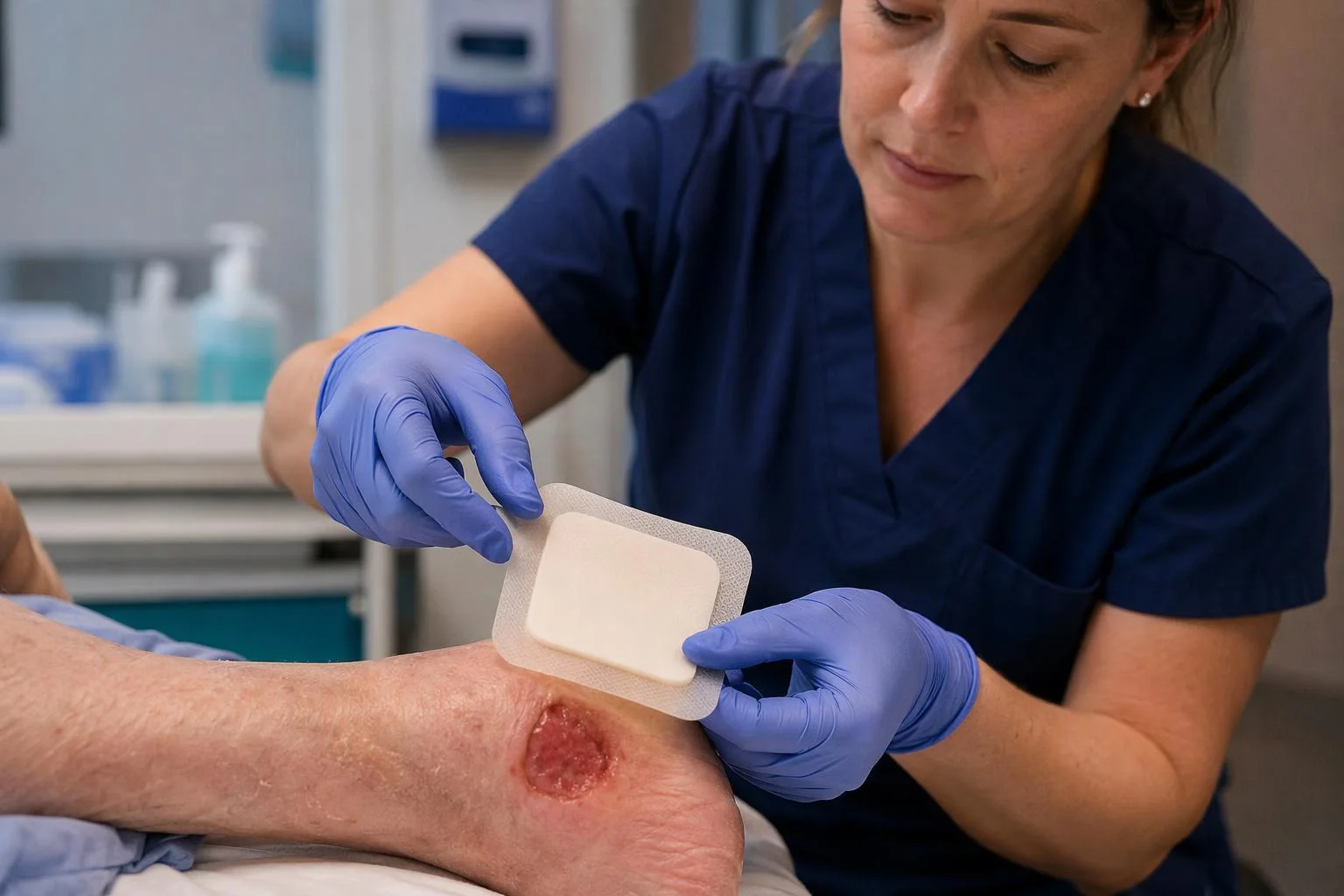
Fit is the step that determines whether the dressing’s absorption capacity is ever used. The dressing should overlap intact periwound skin by roughly 2–3 cm on every side, with no tension and no wrinkles across the wound bed; a stretched border will lift as the patient moves, and a creased one channels exudate under the edge. On the sacrum, center the pad over the bony prominence and let the border follow the natal cleft rather than bridging it. On the heel, a heel-shaped or cup format conforms better than a flat rectangle, and it should sit under, not over, any offloading boot that will be applied.
Seal means the border is pressed down for a full 30 seconds, warmed by hand, and dry at the edges. Moisture, lotion, or barrier film residue under the border defeats the adhesive. Where tape or a secondary securement is used, apply it over the dressing border, not to the skin beyond it, so removal does not strip peri-wound skin.
Review intervals follow exudate, not the calendar. A dressing that strikes through, lifts at an edge, or causes pain is changed regardless of the scheduled day. Otherwise, inspect at every repositioning turn and change when the absorbent pad is saturated to within about 1 cm of the border. For prophylaxis, guidelines describe leaving dressings in place and inspecting the skin beneath daily; for exuding wounds, the practical range is commonly two to four days, with longer intervals only where the product’s instructions for use and the wound’s output support them.
Economics and documentation: total cost, wear logs, AMS notes
Unit price is the least informative number in a dressing comparison. Total cost in use is the sum of dressing cost, nursing time per change, adjunct products consumed (secondary dressings, tape, cleanser), and the cost of the event the dressing is meant to prevent. A dressing that costs more per piece but halves the number of changes can still lower the monthly figure, and a cheap dressing that lifts after a shift raises it. Build the comparison on cost per patient-day of coverage rather than cost per unit, and state the change frequency assumption explicitly, because that assumption drives the result.
Wear logs make the assumption auditable. Record application date and time, site, product and size, reason for removal (scheduled, saturated, lifted, soiled, painful), and skin condition at removal. Aggregated over a month, these fields give average wear time, leakage and lifting rates, and MARSI events by unit — the numbers a value analysis committee can act on.
Antimicrobial stewardship notes belong in the same record. Plain silicone foam has no antimicrobial action and should not be documented as infection control. If a silver or PHMB foam is used, document the indication, the start date, and the planned two-week review, then record the decision at that review: continue with a stated rationale, or step down to a non-antimicrobial dressing once signs of infection have resolved. In US settings, DMEPOS surgical dressing claims require a new order every three months and monthly documentation of wound evaluation, so a wear log that already captures wound status and change frequency reduces the documentation burden at resupply.
Conclusion
Silicone foam dressings earn a place in a standardized formulary on three grounds, and each has a limit worth stating plainly.
Benefits. The strongest evidence sits in two areas. For pressure injury prevention at the sacrum and heels, the 2026 NPIAP/EPUAP/PPPIA guideline suggests multilayered soft silicone foam for individuals assessed as high risk, where resources permit — a conditional recommendation resting on very low certainty evidence. A 2025 meta-analysis reported a pooled risk ratio of 0.18 (95% CI 0.09–0.33) for stage I sacral injuries across seven RCTs and 0.30 (0.14–0.66) for stage I heel injuries across five. Cochrane’s 2024 review, by contrast, judged silicone foam versus no dressing to show a risk ratio of 0.50 (0.33–0.77) across 18 trials and 5,903 participants but rated the certainty low to very low. The honest reading is that the direction of effect is consistent while the precision is not, and that dressings work as an adjunct to repositioning and offloading, never as a substitute. For skin safety, silicone adhesives are associated with less MARSI than acrylate adhesives; in one post-spinal-surgery cohort, 31.8% versus 56.8% cumulative incidence within 10 days.
Indications and precautions. Prophylaxis at sacrum and heels in high-risk patients; stage 2 and uncomplicated stage 3 pressure injuries with moderate exudate; selected diabetic foot ulcers as part of an offloading plan; postoperative incisions and chronic exudative wounds. Do not use plain foam on infected or biofilm-suspected wounds, on dry eschar that has not been assessed, or as a primary dressing over exposed tendon or bone without specialist review. In complete spinal cord injury, evidence for prophylactic sacral foam is weaker and should be applied with caution.
Implementation. Write the protocol before the product list: risk assessment on admission and on change of condition, defined anatomical sites, a size matrix that covers the actual patient mix, application and removal technique, and a documented review interval. Train by demonstration at the bedside rather than by poster, and re-audit at 30, 90, and 180 days using wear time, leakage, lifting, and HAPI rates as the measures. Suppliers such as SLK Medical can support this with specification sheets, instructions for use, and certification documentation for the value analysis file.
Stewardship. Keep antimicrobial foams off the standard prophylaxis line. Reserve them for documented local infection, suspected biofilm, or a clearly stated high risk of re-infection; record the indication at initiation; review at two weeks and document the decision rather than stopping automatically; step down to plain silicone foam when the bioburden is controlled. Reassess any wound that has not reduced by roughly 40% in four weeks (50% for diabetic foot ulcers) and refer on if it continues not to progress (Wounds UK Best Practice Statement). That single reassessment rule does more for both outcomes and budget than any product substitution.