


Pressure injuries remain common in hospitals and care facilities. You face a 12.8% prevalence rate, with 8.5% of these injuries acquired in hospitals. Foam sacral dressing can lower the risk of pressure injuries, as studies show a relative risk reduction to 0.37 compared to standard care. Choosing the right product and applying it correctly helps you protect patient skin and speed up healing. SLK Medical brings advanced technology and high standards to wound care, supporting your commitment to better outcomes.
SLK Medical believes in empowering your wound care practice with innovative solutions.
Statistic Type | Value |
|---|---|
Pressure injury prevalence | 12.8% (95% CI 11.8–13.9) |
Incidence rate | 5.4 per 10,000 patient-day |
Rate of hospital-acquired pressure injury | 8.5% (95% CI 7.6–9.3) |
Outcome | Sacral Foam Dressing Group | Standard Care Group | Relative Risk (RR) | 95% Confidence Interval (CI) |
|---|---|---|---|---|
Sacral Pressure Injury Rate | Lower | Higher | 0.37 | 0.17–0.82 |
≥ Stage II Sacral Pressure Injury Rate | Lower | Higher | 0.56 | 0.37–0.83 |
Blanching Erythema Rate | Lower | Higher | 0.64 | 0.42–0.97 |
Key Takeaways
Choose foam sacral dressings that provide pressure redistribution and moisture management. These features help prevent pressure injuries and support healing.
Assess each patient’s needs before selecting a dressing. Consider the wound’s size, location, and the patient’s skin sensitivity to ensure effective treatment.
Follow proper application steps for foam sacral dressings. Clean the skin, select the right dressing, and monitor it daily for the best outcomes.
Change foam sacral dressings every three to seven days or sooner if signs of saturation or irritation appear. Timely changes help prevent complications.
Educate your team on the latest guidelines for dressing application. Ongoing training ensures everyone uses the correct techniques to improve patient care.
Choosing the Best Foam Sacral Dressing

Key Features for Pressure Ulcer Prevention
You want to achieve the highest level of pressure ulcer prevention for your patients. Selecting the right foam sacral dressing starts with understanding the features that matter most. Pressure redistribution, moisture management, and anatomical conformity play a major role in protecting vulnerable skin. Silicone foam sacral dressing adapts to the body’s contours, which helps reduce local tissue pressure by up to 40%. This pressure redistribution is essential for pressure ulcer prevention, especially in high-risk areas like the sacrum.
The waterproof and breathable design of a foam sacral dressing helps prevent skin maceration and infection. You maintain an optimal microclimate by balancing humidity and temperature, which is crucial for pressure ulcer prevention. The advanced multilayer structure in SLK Medical dressings, such as the Alexer® Silicone Foam Dressing with Border, provides a soft barrier that prevents shear forces and skin damage. You also benefit from skin-friendly silicone adhesive, which reduces trauma and allows painless removal, enhancing patient comfort.
Tip: Always choose a foam sacral dressing that offers both pressure redistribution and moisture management. These features work together to support pressure ulcer prevention and improve healing rates.
A study showed that using foam sacral dressing on the heel significantly reduced pressure compared to no dressing. This supports the role of foam sacral dressing in pressure ulcer prevention through effective pressure redistribution.
Assessing Patient and Wound Needs
You must assess each patient and wound before selecting a foam sacral dressing for pressure ulcer prevention. International guidelines recommend dressings that maintain a moist wound environment. Foam sacral dressing is suggested for treating exuding Category/Stage II and shallow Category/Stage III pressure ulcers. You need to evaluate the wound’s location, size, and level of exudate. Consider the patient’s skin sensitivity and risk factors for pressure injuries.
For patients with fragile or sensitive skin, choose a foam sacral dressing with a gentle silicone adhesive.
For wounds with moderate to high exudate, select a dressing with high absorbency and moisture retention.
For sacral wounds, use dressings shaped to fit the anatomical contours, which helps prevent edge lifting and reduces contamination risk.
You should also consider the patient’s mobility and comfort. The flexible design of silicone-bordered foam sacral dressing allows it to conform to body shapes, which helps prevent edges from lifting and reduces contamination risk. The soft foam layer redistributes pressure, which is essential for pressure ulcer prevention and enhancing comfort. Breathability helps manage moisture levels, preventing maceration and creating an optimal healing environment.
Note: Careful assessment of patient and wound needs ensures you select the most effective foam sacral dressing for pressure ulcer prevention.
Comparing SLK Medical Silicone Foam Dressings
SLK Medical offers several foam sacral dressing options designed for pressure ulcer prevention. You can compare their features to find the best fit for your patients.
Feature | SLK Medical Silicone Foam Dressings | Other Brands |
|---|---|---|
Moisture Management | Advanced technology | Varies |
Pain during Dressing Changes | Reduced pain | Higher pain reported |
Patient Satisfaction | High satisfaction | Moderate satisfaction |
Absorption of Exudate | Effective absorption | Varies |
Skin Trauma | Gentle silicone adhesive | Higher trauma risk |
Clinical Support | Reduces wound size and infection | Limited evidence |
Certifications | ISO 13485, CE, FDA | Varies |
SLK Medical foam sacral dressing stands out for pressure ulcer prevention because of its advanced moisture management technology. You experience reduced pain during dressing changes, which increases patient satisfaction. The gentle silicone adhesive minimizes skin trauma, making it ideal for patients with sensitive skin. SLK Medical foam sacral dressing is effective in reducing wound size and infection rates, backed by quality and safety certifications.
Advanced technology for moisture management
Reduced pain during dressing changes
High patient satisfaction
Gentle silicone adhesive minimizes skin trauma
Effective in reducing wound size and infection rates
Backed by ISO 13485, CE, and FDA certifications
SLK Medical foam sacral dressing provides a secure barrier and adapts to wound contours, which is essential for pressure ulcer prevention. You maintain proper moisture control, which accelerates healing and minimizes complications. The hydrofibre multilayer technology ensures that excess moisture evaporates, keeping the wound environment balanced and protecting the surrounding skin.
Feature | Benefit |
|---|---|
Skin-friendly silicone adhesive | Reduces trauma and allows painless removal, enhancing patient comfort. |
Multilayer design | Includes hydrogel and antimicrobial components for infection control and moisture retention. |
Pressure redistribution | Provides a soft barrier that helps prevent shear forces and skin damage. |
High patient satisfaction | 90.2% recommendation rate indicates effectiveness and ease of use. |
High healthcare professional satisfaction | 92.2% satisfaction rate highlights clinical performance. |
You can choose from several SLK Medical foam sacral dressing products:
Alexer® Silicone Foam Dressing with Border: Designed for moderately to highly exudating wounds, provides a moist environment, and is gentle on sensitive skin.
Alexer® Silicone Foam Dressing with Border Flex: Features Flex Technology for 360° stretch, ideal for challenging anatomical areas, and offers advanced pressure redistribution.
Alexer® Silicone Foam Dressing without Border: Suitable for wounds requiring a customizable fit, maintains moisture balance, and is easy to apply and remove.
You empower your pressure ulcer prevention strategy by selecting SLK Medical foam sacral dressing. These products combine advanced technology, patient comfort, and clinical effectiveness, making them a top choice for healthcare professionals.
Applying Sacral Foam Dressing Effectively
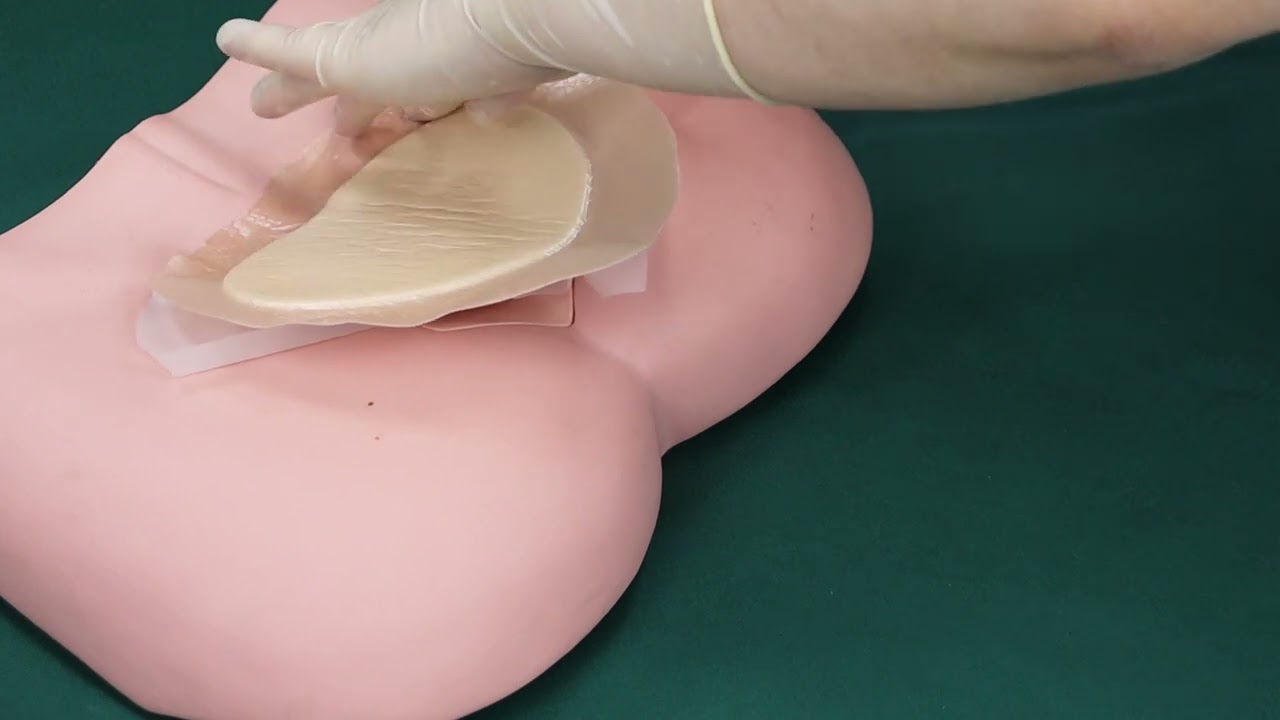
Preparation and Skin Cleansing
Proper preparation sets the foundation for successful sacral foam dressing use. You start by gathering all necessary supplies, including gloves, a gentle pH-balanced cleanser, sterile gauze, and the selected sacral foam dressing. Clean skin helps prevent complications and supports healing. Studies show that using a pH-balanced, no-rinse cleanser improves skin condition and reduces irritation, especially for patients at risk of pressure injury.
Evidence Type | Description |
|---|---|
Level 5b and 5c | Maintaining clean, dry skin is essential in skin care. A pH balanced cleanser helps reduce skin irritation and dryness, which protects skin integrity. |
Level 1c | A randomized controlled trial showed that a foam no-rinse, pH balanced, emollient-containing cleanser was more effective than a standard soap solution in improving skin condition in individuals at risk of pressure injuries. After 14 days, more individuals with Category/Stage 2 pressure injuries showed improvement (p=0.05). |
You should always inspect the skin around the sacrum for redness, moisture, or signs of breakdown before each dressing application. Gently cleanse the area, pat it dry, and avoid rubbing, which can damage fragile skin. This step ensures the sacral foam dressing adheres well and provides optimal protection.
Tip: Consistent skin cleansing with a pH-balanced product helps maintain skin integrity and supports the effectiveness of the sacral foam dressing.
Application Steps for SLK Medical Dressings
You can achieve the best results by following a step-by-step approach to sacral foam dressing application. SLK Medical’s silicone foam dressings are designed for sensitive skin and provide gentle adhesion, making them ideal for patients at risk of pressure injury.
Educate Yourself and Your Team
Review clinical guidelines and SLK Medical’s instructions for sacral foam dressing application. Training ensures everyone uses the correct technique.Assess the Wound
Examine the wound and surrounding skin. Use tools like the Braden scale to evaluate pressure injury risk and select the right sacral foam dressing.Prepare the Skin
Cleanse the area with a pH-balanced cleanser. Pat the skin dry to create a clean surface for the sacral foam dressing.Select the Right Dressing
Choose a sacral foam dressing that matches the wound’s size, shape, and exudate level. SLK Medical offers options with borders, flexible designs, and customizable shapes.Apply the Dressing
Remove the protective film from the sacral foam dressing. Center the dressing over the wound, ensuring full coverage of the affected area and surrounding skin. Smooth the dressing from the center outward to eliminate air pockets and secure the edges. The silicone adhesive gently holds the sacral foam dressing in place without causing trauma during removal.Monitor Daily
Check the sacral foam dressing and underlying skin each day. Look for signs of moisture, irritation, or infection. Replace the dressing as needed, following SLK Medical’s guidelines.
Note: The five-layer design of SLK Medical’s sacral foam dressing reduces shear forces and helps prevent skin breakdown. The dressing’s gentle adhesion minimizes pain and irritation, supporting patient comfort during dressing application and removal.
Mistakes to Avoid in Sacral Foam Dressing Use
You can improve outcomes by avoiding common errors in sacral foam dressing use. Proper technique and adherence to guidelines help prevent complications and maximize the benefits of the dressing.
Strategy | Description |
|---|---|
Updated Guidelines | Always consider the patient’s medical condition, skin tolerance, and treatment goals before sacral foam dressing application. |
Education and Training | Ensure all staff receive training on the latest NPIAP guidelines for sacral foam dressing use. |
Usage Protocol | Establish a clear protocol for sacral foam dressing application and replacement. |
Application of Dressings | Use sacral foam dressing to reduce severe pressure injuries, especially at the sacrum, which is a high-risk site. |
Staff Education | Ongoing education helps reduce hospital-acquired pressure injury rates through proper sacral foam dressing protocols. |
You should avoid these mistakes during sacral foam dressing application:
Skipping skin cleansing or using harsh soaps, which can increase irritation and reduce dressing adhesion.
Selecting the wrong size or shape of sacral foam dressing, leading to poor coverage or edge lifting.
Failing to smooth out air pockets, which can cause friction and reduce the effectiveness of the sacral foam dressing.
Not monitoring the dressing daily, which may delay detection of complications or the need for replacement.
Remember: Consistent education and adherence to protocols ensure that sacral foam dressing provides the best protection against pressure injury.
You play a key role in pressure injury prevention by following evidence-based steps for sacral foam dressing application. SLK Medical’s silicone foam dressings offer advanced technology, gentle adhesion, and flexible designs to support your wound care practice. When you use the correct technique, you help maintain skin integrity, reduce pain, and improve healing outcomes for your patients.
Monitoring and Changing Foam Sacral Dressings
Checking Dressing Effectiveness
You need to check the effectiveness of wound dressings every day. This helps you protect patients from sacral pressure ulcers and keep skin healthy. You should look for signs that the foam sacral dressing is working well. Good wound dressings control moisture, keep the skin at a safe temperature, and prevent irritation.
Here is a table that shows what you should monitor:
Clinical Sign | What It Means for Wound Dressings |
|---|---|
Microclimate Humidity | Wound dressings should lower humidity to prevent skin damage. |
Moisture Absorption | Wound dressings must absorb extra moisture and allow it to evaporate. |
Temperature Control | Wound dressings should keep skin temperature stable to reduce risk of sacral pressure ulcers. |
You should also watch for skin reactions. If you see redness, swelling, or discomfort, you need to consider dressing removal and document the incident. Training helps you and your team apply wound dressings correctly and check them often. Regular checks by clinical staff make sure wound dressings stay in place and protect the skin.
When to Change SLK Medical Dressings
You must know when to change wound dressings to prevent sacral pressure ulcers. SLK Medical recommends changing foam sacral dressings every three to seven days. The exact timing depends on how much fluid the wound produces and the condition of the wound. Some advanced wound dressings can stay on longer, which helps reduce the number of changes.
You should replace wound dressings if you notice any of these signs:
The wound dressings are saturated or leaking.
The edges of the wound dressings are lifting or not sticking well.
The skin under the wound dressings looks red, irritated, or shows signs of infection.
The wound dressings have lost their shape or integrity.
Studies show that using a built-in change indicator helps you decide when to change wound dressings. This improves healing and saves resources. You should always follow SLK Medical guidelines for wound dressings to get the best results for sacral pressure ulcers.
Tip: Consistent monitoring and timely changes of wound dressings help you prevent sacral pressure ulcers and support faster healing.
You improve pressure injury prevention by choosing preventive dressings that match patient needs and applying them with care. SLK Medical foam sacral dressings help you lower pain, speed up healing, and reduce pressure ulcer rates. Ongoing education and teamwork support best practices in preventive dressings. The right preventive dressings offer shorter healing time and higher patient satisfaction.
Outcome | Foam Dressings | Traditional Dressings |
|---|---|---|
Healing Time | Shorter | Longer |
Pain During Changes | Lower | Higher |
Healed Pressure Ulcers | Higher | Lower |
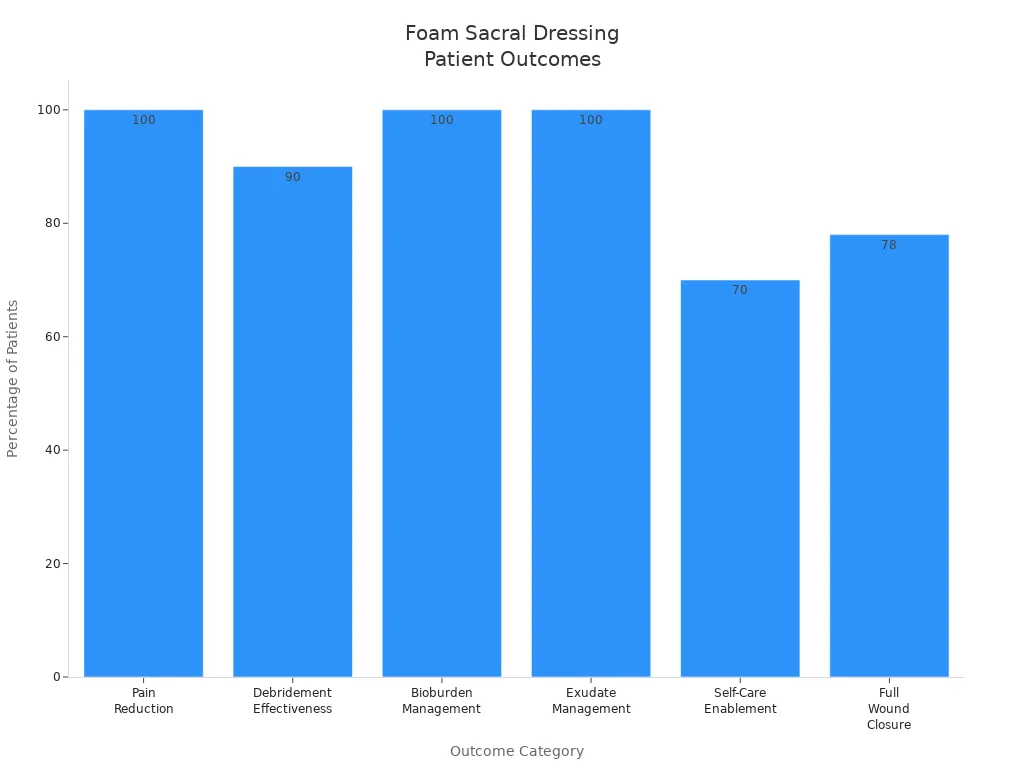
You support pressure injury prevention by using advanced preventive dressings and staying updated on clinical guidelines.
FAQ
What are sacral foam dressings and how do they help prevent sacral pressure injury?
Sacral foam dressings protect the sacrum by redistributing pressure and managing moisture. You use them to lower the risk of sacral pressure injury. These dressings create a barrier that supports skin health and reduces friction.
How often should you change sacral foam dressings to prevent sacral pressure injury?
You should change sacral foam dressings every three to seven days. If you see signs of saturation, edge lifting, or irritation, replace the dressing sooner. Regular changes help you prevent sacral pressure injury and keep skin healthy.
Can sacral foam dressings be used for patients with sensitive skin at risk of sacral pressure injury?
You can use sacral foam dressings for patients with sensitive skin. The gentle silicone layer reduces pain during changes and lowers the chance of sacral pressure injury. These dressings provide comfort and protection for fragile skin.
What signs show that sacral foam dressings are working to prevent sacral pressure injury?
You notice healthy skin, reduced redness, and no signs of moisture buildup. Sacral foam dressings keep the wound area dry and stable. These results show that you are preventing sacral pressure injury and supporting healing.
Why should you choose SLK Medical sacral foam dressings for sacral pressure injury prevention?
You choose SLK Medical sacral foam dressings for advanced technology and proven results. These dressings offer high absorbency, gentle adhesion, and effective protection against sacral pressure injury. You improve patient outcomes and comfort with every application.
Tip: You improve sacral pressure injury prevention by using sacral foam dressings that match patient needs and follow clinical guidelines.
Benefit of Sacral Foam Dressings | Impact on Sacral Pressure Injury |
|---|---|
Pressure redistribution | Lowers risk |
Moisture management | Prevents skin breakdown |
Gentle adhesion | Reduces pain |
Anatomical fit | Improves protection |


