


You want to pick the best moist wound healing dressing for your patients. Advanced dressings help wounds heal faster. They cause less pain. They also lower the chance of infections. Older methods do not work as well. Many hospitals and clinics use moist wound dressings now. These dressings help many types of wounds. SLK Medical is a leader in wound care. They make high-quality wound dressing choices. These choices help you give patients more comfort. They also help patients recover better.
Key Takeaways
Advanced moist wound dressings help wounds heal faster and hurt less.
Hydrocolloid dressings from SLK Medical keep wounds wet and help skin grow.
Picking the right dressing for the wound and fluid is very important.
Checking wounds often and changing dressings helps healing and stops problems.
Learn about new dressings to give your patients the best care.
Types of Moist Wound Healing Dressings
A moist wound healing dressing helps wounds heal faster. It keeps the wound wet, which helps new skin grow. This also makes pain less. You can use these dressings for many wounds. They help stop infections and make care easier for you and your patients.
Hydrocolloid Dressings by SLK Medical
SLK Medical’s Hydrocolloid Dressing has special particles. These turn into a gel when they touch wound fluid. The gel keeps the wound moist and helps skin heal. The dressing is thin and bends easily. It is see-through, so you can check the wound. You can use it on many body parts. It protects nerve endings and lowers pain. Studies show hydrocolloid dressings help wounds heal faster. They also make pain less and patients need less medicine. Many people think these dressings feel good. They can keep doing their daily activities.
Study | Findings |
|---|---|
Knapman and Bache | Hydrocolloid dressings helped wounds heal and made patients feel less pain than regular dressings. |
Andersson et al. | Patients with hydrocolloid dressings had less pain than those with paraffin gauze. |
Heffernan and Martin | Patients using Granuflex/Duoderm Extra Thin had less pain and needed less pain medicine than with other dressings. |
Hermans and van Wingerden | Over 80% of patients said the hydrocolloid dressing was comfortable and let them do daily things. |
Silicone Foam and Other Advanced Dressings
There are many advanced moist wound dressings to pick from. Silicone foam dressings are soft on your skin. They do not stick to the wound, so changing them does not hurt. These dressings soak up a lot of fluid and keep the skin around the wound dry. You will see better healing and need to change dressings less often. Other choices are alginate dressings, transparent film, hydrogel, collagen, silver, and composite dressings. Each type works best for different wounds.
Healing with less pain using gentle silicone foam
Great at soaking up fluid to protect your skin
Fewer dressing changes and better healing
Key Properties and Indications
You need to choose the right dressing for each wound. The table below shows the main features and uses for each type:
Dressing Type | Key Properties | Clinical Indications |
|---|---|---|
Foam Dressings | Soaks up a lot, stops skin from getting too wet, keeps wound moist | Used for leg ulcers, pressure ulcers, and diabetic foot ulcers with lots of fluid. |
Alginate Dressings | Made from seaweed, soaks up a lot, fits the wound well | Used for surgical wounds, injuries, and burns with lots of fluid. |
Transparent Film | Thin, waterproof, lets air in, you can see through it | Used for shallow wounds, IV sites, donor sites, and biopsy sites that need protection and moisture. |
Hydrogel Dressings | Made with water or glycerin, gives moisture, helps clean wounds | Used for dry wounds, pressure ulcers, diabetic foot ulcers, burns, and dead tissue. |
Collagen Dressings | Has collagen, helps new tissue grow, lowers swelling | Used for chronic wounds, surgical wounds, deep burns, and scrapes that need tissue repair. |
Silver Dressings | Kills germs, works against bacteria and fungi | Used for infected wounds, burns, injuries, and pressure ulcers that need infection control. |
Composite Dressings | Made of many materials for many benefits | Used for fistulas or sinuses that need to soak up fluid and stay safe from germs. |
Tip: Always pick the dressing that matches the wound and how much fluid it has. This helps your patients heal better.
Clinical Evidence for Moist Wound Healing Dressings
Healing Outcomes and Infection Control
You want your patients to heal quickly and feel less pain. Many studies say moist wound dressings help with this. These dressings keep the wound wet, which helps new skin cells grow. This helps the skin heal and lowers the chance of scars. You can see better healing in both new and old wounds, especially in diabetic foot ulcers. Research shows wounds with moist dressings heal faster than wounds with dry dressings.
The gelling fiber dressing soaks up fluid from all kinds of wounds.
Wound edges get better, from 25.7% to 65.7% healthy.
The average wound size gets 55% smaller in four weeks.
Pain from wounds drops by 67%.
Moist wound dressings also help stop infections. Studies show these dressings do not make infections more likely than dry dressings. The moist area keeps the wound from getting too dry and helps new tissue grow. You can trust that infection rates stay low with these dressings.
SLK Medical Hydrocolloid Dressing: Evidence and Benefits
SLK Medical Hydrocolloid Dressing is special in wound care. This dressing soaks up wound fluid and turns it into a gel. The gel keeps the wound wet and helps remove dead tissue. The hydrocolloid polymers in the dressing work with the wound to help it heal. You can use this dressing for many wounds, like surgical wounds and burns.
The hydrocolloid dressing protects nerves and lowers pain. Patients often say they feel better and need less pain medicine. The clear design lets you look at the wound without taking off the dressing. This saves time and keeps the wound safe. The dressing is thin and bends easily, so you can use it on many body parts. You help your patients heal faster and feel better with this advanced dressing.
Comparative Effectiveness of Advanced Dressings
You may wonder how advanced moist dressings compare to old ones. Studies show advanced dressings make patients more comfortable and lower pain during changes. For example:
Advanced dressings like Mepilex Border Post-Op work better than old dressings at handling wound fluid and lowering problems after surgery.
Patients with advanced dressings feel less pain when changing dressings (3.5 vs. 6.0 on a pain scale).
Fewer problems happen with advanced dressings (1.2% vs. 9.8%).
People with advanced dressings heal faster and better than those with standard care.
You should pick the dressing that fits the wound’s needs. The right choice means better healing, less pain, and fewer problems. New wound dressings have made wound care better. You can now help your patients heal faster and feel more comfortable with advanced moist wound dressings.
Treatment Protocols and Application
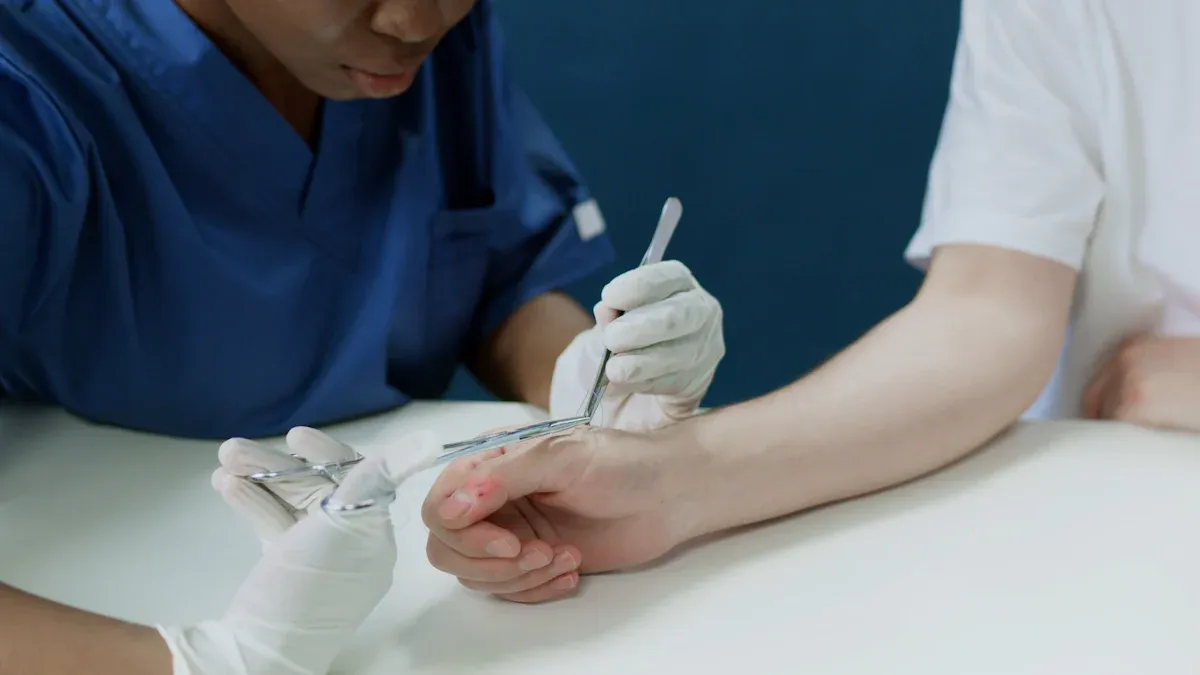
Dressing Selection and Assessment
You want to choose the optimal wound dressing for each patient. Start by looking at the wound and thinking about the patient’s needs. The right choice helps you reach better healing and comfort. Use a step-by-step approach to make your decision.
Key questions to ask:
How long has the wound been present?
Do you have a history of pressure wounds?
What medications do you currently take?
Do you have any allergies?
What is your diabetes regimen?
You should also look at the wound itself. Check the size, depth, and color. Notice how much fluid comes from the wound and what it looks like. Look at the skin around the wound for signs of damage or irritation. The wound edge can tell you if healing is happening.
You can use special tools to help with assessment. Here is a table with some common tools:
Tool Name | Description |
|---|---|
Bates-Jensen Wound Assessment Tool | Looks at the whole patient and the wound in detail. |
Reeda Wound Assessment Tool | Checks wound size, depth, and type. Less helpful for pain. |
Pressure Ulcer Scale for Healing | Helps you track healing over time. |
When you select a dressing, think about these key points:
Key Considerations | Recommendations |
|---|---|
Moist Environment | Use moisture-retentive dressings for faster healing. |
Dressing Types | Choose occlusive dressings to keep a balanced moist environment. |
Patient Involvement | Involve patients in dressing choices to improve care and compliance. |
You can use this information to guide your wound care decisions. The right dressing supports healing and makes wound management easier.
Application Steps for SLK Medical Hydrocolloid Dressing
You can apply the SLK Medical Hydrocolloid Dressing in a few simple steps. This dressing helps you create a moist environment for healing and protects the wound from outside harm.
Step-by-step application:
Wash your hands and put on gloves.
Clean the wound with normal saline or a wound cleanser.
Gently dry the skin around the wound.
Choose the right size of hydrocolloid dressing. Make sure it covers the wound with a border of at least 2 cm.
Remove the backing from the dressing.
Place the dressing over the wound. Smooth the edges to seal it.
Press gently to make sure the dressing sticks well.
Remove gloves and wash your hands.
The SLK Medical Hydrocolloid Dressing is thin and flexible. You can use it on many body parts. Its clear design lets you check the wound without removing the dressing. This makes wound care easier and helps you keep track of healing.
Tip: Always check the dressing package for instructions. Use the right size and shape for the wound area.
Change Frequency and Monitoring
You need to know when to change the dressing for the best healing results. The frequency depends on the wound, the amount of fluid, and the type of dressing. For moist wound dressings, you usually change them every 1 to 7 days. If the dressing becomes loose or full of fluid, change it sooner.
Some dressings work best when changed every 24 hours, especially if you use normal saline. If you use a solution like 0.1% betaine-polyhexanide, you can change the dressing every 12 to 48 hours. Most wounds heal best with changes at 24-hour intervals.
You should check the wound and dressing often. Look for signs of healing, such as smaller size, less fluid, and healthy pink tissue. Write down the wound’s size and appearance at each visit. If you see redness, swelling, or pus, the wound may have an infection. You may need to change the dressing type or frequency.
Note: Regular monitoring helps you spot problems early and adjust the treatment plan for better healing.
Practical Tips and Troubleshooting
You may face some common problems during wound management. Here are some tips to help you solve them:
Watch for signs of infection. These include more pain, swelling, redness, warmth, bad smell, or pus.
Ask patients to tell you if they have pain that does not go away. This could mean a deeper problem.
Prevent skin irritation by choosing the right dressing for the wound and skin type.
Keep the wound area clean. Secure the dressing well so it stays in place.
For wounds with a lot of fluid, use dressings with strong exudate management.
If the wound is chronic or slow to heal, review your treatment plan and consider other dressing options.
For infected wounds, you may need to use antimicrobial dressings.
You can help your patients heal faster by following these steps. Good wound care and regular checks lead to better outcomes. Always use the optimal wound dressing for each situation. This supports healing and makes wound management more effective.
Case Studies and Best Practices
Real-World Success with Advanced Dressings
You can see how advanced dressings help in real life. Many clinics use these dressings to help wounds heal better. The table below gives some examples of how moist wound dressings work in tough cases:
Case Study | Description |
|---|---|
Management of diabetic foot ulcers using Prontosan® | This case series shows 10 clinical reviews of Prontosan® used for different diabetic foot ulcers. |
Implementation of the Wound Hygiene protocol for wound healing | This study series shows how the Wound Hygiene protocol helps treat hard-to-heal, chronic wounds. |
Using advanced wound dressings in the local management of diabetic foot ulcers | This review talks about using advanced wound dressings for diabetic foot ulcers. |
PROMOGRAN™ Protease Modulating Matrix and PROMOGRAN PRISMA™ Wound Balancing Matrix for non-healing wounds | This case series looks at how well PROMOGRAN™ products work for wounds that do not heal. |
These cases show that the right wound dressing and plan can help wounds heal faster and better.
Avoiding Common Pitfalls
You may have problems when picking dressings for hard wounds. No one product works for every wound. If you do not keep the wound moist enough, healing will slow down. This can cause more pain and make infection more likely. You need to focus on important things for the best results:
Key Function | Description |
|---|---|
Moist Environment | Dressings should keep the right amount of moisture for healing but not too much. |
Protection | Dressings must keep the wound safe from harm and germs. |
Ease of Use | Dressings should be simple to put on and not hurt when removed. |
To stop problems:
Keep the wound moist but not too wet.
Use dressings that block germs and let air in.
Pick dressings that help get rid of dead tissue.
Choose dressings that do not stick, are clean, and do not cause allergies.
Strategies for Challenging Wounds
You can use good steps to help manage hard wounds. Start with a full check by a trained wound care expert. Pick dressings based on the wound type, healing stage, and how much fluid is there. Meet with your team often to talk about how the wound is doing. Use advanced dressings in the right order. Always try to keep the wound moist for healing. These steps help you care for chronic wounds and help your patients heal better.
Tip: Good wound care starts with checking the wound and picking the right dressing. Learn about new products and ways to help your patients heal their wounds.
You can help wounds heal better by picking advanced dressings. These dressings fight germs, lower pain, and give you many ways to care for wounds. SLK Medical is a top company with new silicone foam dressings and a smart research team. Using proven steps helps you give the same care each time and helps wounds heal faster.
Keep the wound moist, help it heal quickly, and stop infections. Pick dressings that fit the wound and what the patient needs.
Keep learning about new wound dressings to know the latest updates.
FAQ
What is a moist wound healing dressing?
A moist wound healing dressing keeps your wound wet. This helps new skin grow faster. You feel less pain and your wound heals better.
How do you know which dressing to choose?
You look at the wound’s size, depth, and how much fluid it has. You also check the skin around the wound. Pick a dressing that matches these needs.
How often should you change a hydrocolloid dressing?
You usually change a hydrocolloid dressing every 1 to 7 days. If the dressing gets loose or full of fluid, you should change it sooner.
Can you use SLK Medical Hydrocolloid Dressing on any body part?
Yes! The SLK Medical Hydrocolloid Dressing bends easily. You can use it on arms, legs, back, or other areas. It fits many shapes and sizes.


