


You should stop using a hydrocolloid dressing if you see infection, irritation, or if your wound is closed. The table below shows important signs that tell you when to take off your wound dressing for best healing:
Clinical Sign | Description |
|---|---|
Signs of Infection | Redness, swelling, pain, discharge, or fever |
Allergic Reactions or Skin Irritation | Itching, rash, or blisters at the wound area |
Wound Deterioration or Lack of Progress | No healing after 7-10 days or wound getting bigger |
Excessive Exudate Production | Dressing is soaked or starts to leak |
Wound Closure or Complete Healing | Skin is closed and healed |
Patient Discomfort | Ongoing pain or not liking the dressing |
SLK Medical’s hydrocolloid dressing helps wounds by keeping them moist, lowering pain, and making it easy to look at the wound. Studies show hydrocolloid dressings help wounds heal faster and feel better than regular dressings. Always check your wound often and ask a healthcare professional if you are not sure when to stop using hydrocolloid dressing.
Key Takeaways
Take off hydrocolloid dressings if you notice infection signs, like redness, swelling, or discharge. This stops more problems from happening.
Look at your wound every day for any changes. If it does not get better in 7 to 10 days, think about changing the dressing or ask a healthcare worker for help.
If the dressing gets very wet or starts to leak, change it right away. It is very important to keep the wound clean and dry so it can heal.
Watch for allergic reactions, such as itching or rashes. If you see these, take off the dressing and ask for advice.
Try SLK Medical’s hydrocolloid dressing because it is see-through. You can check your wound’s healing without taking it off.
When to Stop Using Hydrocolloid Dressing

Knowing when to stop using hydrocolloid dressing is important for your healing. You want to make sure your wound heals in the best way possible. Hydrocolloid bandages work well for many wounds, but you should not use them forever. You need to watch for certain signs and check your wound often. SLK Medical’s hydrocolloid dressing makes this easy because you can see your wound through the clear bandage.
Key Signs for Removal
You should know when to stop using hydrocolloid dressing by looking for these key signs:
Your wound shows redness, swelling, or pain. These can mean infection.
You see a rash, itching, or blisters around the hydrocolloid bandage. This may be an allergic reaction.
The wound dressing leaks or becomes soaked. Too much fluid means the hydrocolloid bandage cannot keep the wound clean.
Your wound does not get smaller after a week. Sometimes, wounds even get bigger.
The skin closes and looks healed. When this happens, you can stop using the hydrocolloid bandage.
Tip: Hydrocolloid dressings should not be used on dry wounds or wounds with a lot of fluid. If your wound is dry or leaking too much, it is time to discontinue hydrocolloid dressings.
You can also use this table to help decide when to stop using hydrocolloid dressing:
Dressing Condition | Duration (Days) |
|---|---|
Healthy | 3–7 |
Most people keep a hydrocolloid bandage on for three to seven days. If you see any of the signs above before this time, you should remove it sooner.
Monitoring Wound Progress
You need to check your wound every day. This helps you know when to stop using hydrocolloid dressing. Look for changes in color, size, and how much fluid comes out. If you use SLK Medical’s hydrocolloid dressing, you can see your wound without taking off the bandage.
Here are some ways to monitor your wound:
Check the pH of your wound. Healthy skin has a pH between 4.8 and 5.7. If your wound pH goes up to 7.15 or higher, bacteria may be growing.
Feel the temperature of your skin. Healthy skin is between 36 and 37.5 °C. If your wound feels warmer, it could mean infection.
Watch for pain or discomfort. If the hydrocolloid bandage causes pain or itching, you should remove it.
Hydrocolloid bandages help wounds heal by keeping them moist. But if you see signs of infection or too much fluid, you need to know when to stop using hydrocolloid dressing. Always check your wound and change your hydrocolloid bandage if needed. If you are not sure, ask a healthcare professional for advice.
Remember, using hydrocolloid bandages the right way helps your wound heal faster. Knowing when to stop using hydrocolloid dressing keeps your skin healthy and safe.
Infection or Irritation
When you use a hydrocolloid dressing, you must watch for signs of infection or irritation. These problems can slow down healing or make your wound worse. If you see any of these issues, you should remove the dressing and talk to a healthcare professional.
Redness and Swelling
Redness and swelling are common signs of infection. You may notice your skin turning red around the wound. Swelling can make the area look puffy or feel warm. Sometimes, you might see pus or feel pain. These changes mean your body is fighting germs. If you see these signs of infection, you need to act quickly.
Here is a table showing common symptoms you might see under a hydrocolloid dressing:
Symptom | Description |
|---|---|
Dermatitis reactions | Skin turns red with clear borders. It gets better in a day or two if you remove the dressing. |
Allergic dermatitis | Skin becomes red with small blisters. This can last up to a week. |
Maceration | Skin looks white or gray and feels wrinkled. It can get hurt easily. |
Folliculitis | Small bumps or pimples form around hair follicles. |
If you notice any of these symptoms, they could be signs of infection or irritation. You should check your wound every day.
Allergic Reaction Symptoms
Some people have allergic reactions to the adhesive in hydrocolloid dressings. You might see itchy skin, a rash, or hives. These are also signs of infection or irritation. In rare cases, you could have trouble breathing or notice swelling in your face or throat. This is very serious and needs emergency help.
Look for these allergic reaction symptoms:
Erythematous patches (red spots)
Pruritus (itchy skin)
Vesicular lesions (small blisters)
If you see these signs of infection or allergic reaction, remove the dressing right away. Always keep an eye on your wound and your skin. Quick action helps you heal faster and stay safe.
Wound Not Improving
When you use a hydrocolloid dressing, you expect your wound to get better. Sometimes, wounds do not heal as planned. You need to know what to look for so you can act quickly and help your skin recover.
Lack of Healing Progress
You should see some improvement in your wound within a week. If your wound looks the same or worse after 7 to 10 days, this means the dressing may not work for you. Wounds that do not heal can lead to more problems. You might notice the wound stays open, looks wet, or does not shrink in size.
Tip: Keep a simple wound diary. Write down the size, color, and how much fluid you see each day. This helps you spot changes early.
Here are some signs that show your wound is not improving:
The wound edges do not move closer together.
The wound bed stays red, yellow, or gray.
You see the same amount or more fluid every day.
The wound smells bad or looks the same for many days.
Recent studies show that hydrocolloid dressings do not always heal pressure ulcers faster than other dressings. You may need to try a different dressing if you do not see progress.
Hydrocolloid dressings do not show significant improvement over alternative dressings in healing pressure ulcers.
Wound Getting Larger
If your wound gets bigger, you need to take action. A growing wound means the dressing is not helping. You might see the wound edges pull apart or the area of redness spread. This can happen if the wound gets infected or if the dressing does not fit well.
Warning Sign | What You Should Do |
|---|---|
Wound size increases | Remove dressing, check wound, and talk to a healthcare professional |
More redness spreads | Watch for infection signs |
More pain or swelling | Remove dressing and seek advice |
You should remove the hydrocolloid dressing if your wound gets larger. Always check your wound every day. If you feel unsure, ask a healthcare professional for help. Early action helps you heal faster and keeps your skin healthy.
Excessive Exudate and Leakage
When you use a hydrocolloid dressing, you should watch for too much exudate. Exudate is the fluid that comes out of your wound. If your wound makes a lot of fluid, the dressing can get soaked and leak. This can slow healing and hurt your skin.
Dressing Saturation
You can check if your dressing is too wet by looking at it. If most of the bandage is wet, your wound is making too much fluid. More than 75% wet means there is a lot of exudate. The dressing might start to peel off at the edges. You might also smell something bad or see fluid on your skin.
Here is a table to help you see how wet your dressing is:
Exudate Level | Dressing Type |
|---|---|
None | Dry dressing and wound bed |
Scant | Nothing measurable on the dressing |
Small/minimal | Less than 25% of the dressing wet |
Moderate | 25% to 75% of the dressing wet |
Large/copious | More than 75% of the dressing wet |
If you see your dressing is very wet, smells, or is loose, you should change it. You need to control exudate to keep your wound healthy and stop skin problems like maceration.
Tip: If your dressing gets soaked before you expect, you might need a new kind of dressing or to change it more often.
Frequent Changes Needed
Hydrocolloid dressings work best for wounds with a little or medium amount of fluid. If your wound makes a lot of exudate, you need to change your dressing more often. For a medium amount, change it every 3 to 5 days. If you see a lot of fluid and the dressing is soaked, change it every 1 to 3 days.
Here is a table that shows how often to change your dressing:
Dressing Type | Exudate Level | Recommended Change Frequency |
|---|---|---|
Hydrocolloid | Moderate | Every 3-5 days |
Hydrocolloid | High | Every 1-3 days (if saturated) |
If you have to change your dressing more than once a day, talk to a healthcare professional. You might need a different dressing for your wound. Keeping your wound clean and dry helps it heal and keeps your skin safe.
Note: Changing your dressing often can stop problems like bad smells, pain, and skin damage. Always look at your wound and dressing every day.
Wound Closure and Healing
Signs of Complete Healing
You need to know when your wound has reached complete healing. This helps you decide when to stop using hydrocolloid dressings. You can look for several clinical indicators that show your skin is healthy again. The wound should look closed, dry, and free from redness or swelling. You should not see any fluid or open areas. Your skin may feel smooth and strong.
Here is a table that shows important signs of complete healing:
Clinical Indicator | Description |
|---|---|
Incidence of healed pressure ulcers | The number of wounds that have healed completely. |
Time to complete healing | How long it takes for the wound to close and heal. |
Reduction in ulcer size | The wound gets smaller until it disappears. |
You can use SLK Medical’s hydrocolloid dressing to check your wound easily. The transparent design lets you see the healing process without removing the bandage. This helps you spot wound closure and avoid disturbing new skin.
Tip: If your wound looks closed and you do not see any fluid, you can stop using the hydrocolloid dressing.
When Moisture Retention Is No Longer Needed
Hydrocolloid dressings work best when your wound needs moisture to heal. You should stop using them when your wound is dry or when you see too much fluid. Excess moisture can cause problems like maceration, which makes your skin soft and weak.
You can look for these signs to know when moisture retention is no longer needed:
Hydrocolloid dressings help wounds with small or moderate fluid.
If your wound makes a lot of fluid, you should use a different dressing.
Too much moisture can hurt your skin and slow healing.
You should check your wound every day. If you see the skin is closed and dry, you do not need to keep the area moist. SLK Medical’s transparent hydrocolloid dressing makes it easy for you to inspect your wound and decide when to stop using it.
Note: Always talk to a healthcare professional if you are unsure about wound closure or healing progress.
Patient Discomfort
Hydrocolloid dressings help many wounds heal, but sometimes you may feel discomfort while using them. Paying attention to how your skin feels can help you decide when to remove the dressing for better healing.
Persistent Pain or Itching
You should not ignore pain or itching under your dressing. These feelings can mean your skin is not happy with the dressing or that something is wrong with the wound. Some people notice itching or pain when the dressing stays on too long or if the skin gets too wet. Chitosan-based hydrocolloid dressings can help reduce these symptoms. Studies show that patients with chronic wounds often feel less pain and itching when using these advanced dressings. If you still feel pain or itching that does not go away, you should remove the dressing and check your skin.
Tip: If you feel burning, stinging, or see redness, take off the dressing and let your skin breathe. Always check for signs of infection or allergy.
Dressing Not Staying in Place
A dressing that does not stick well can cause problems. If your hydrocolloid dressing lifts at the edges or slides off, it cannot protect your wound. This can let germs in and slow healing. You may also feel uncomfortable if the dressing bunches up or rubs against your skin.
Common types of discomfort with hydrocolloid dressings include:
Skin maceration if the dressing covers healthy skin
Trouble checking your wound if the dressing is not clear
Edges peeling or dressing moving out of place
You should always make sure your dressing fits well and stays in place. If it does not, replace it with a new one. SLK Medical’s hydrocolloid dressing has a flexible and transparent design, making it easier for you to check your wound and keep the dressing secure. If you keep feeling discomfort, talk to a healthcare professional for advice.
SLK Medical Hydrocolloid Dressing Features
Moist Healing Environment
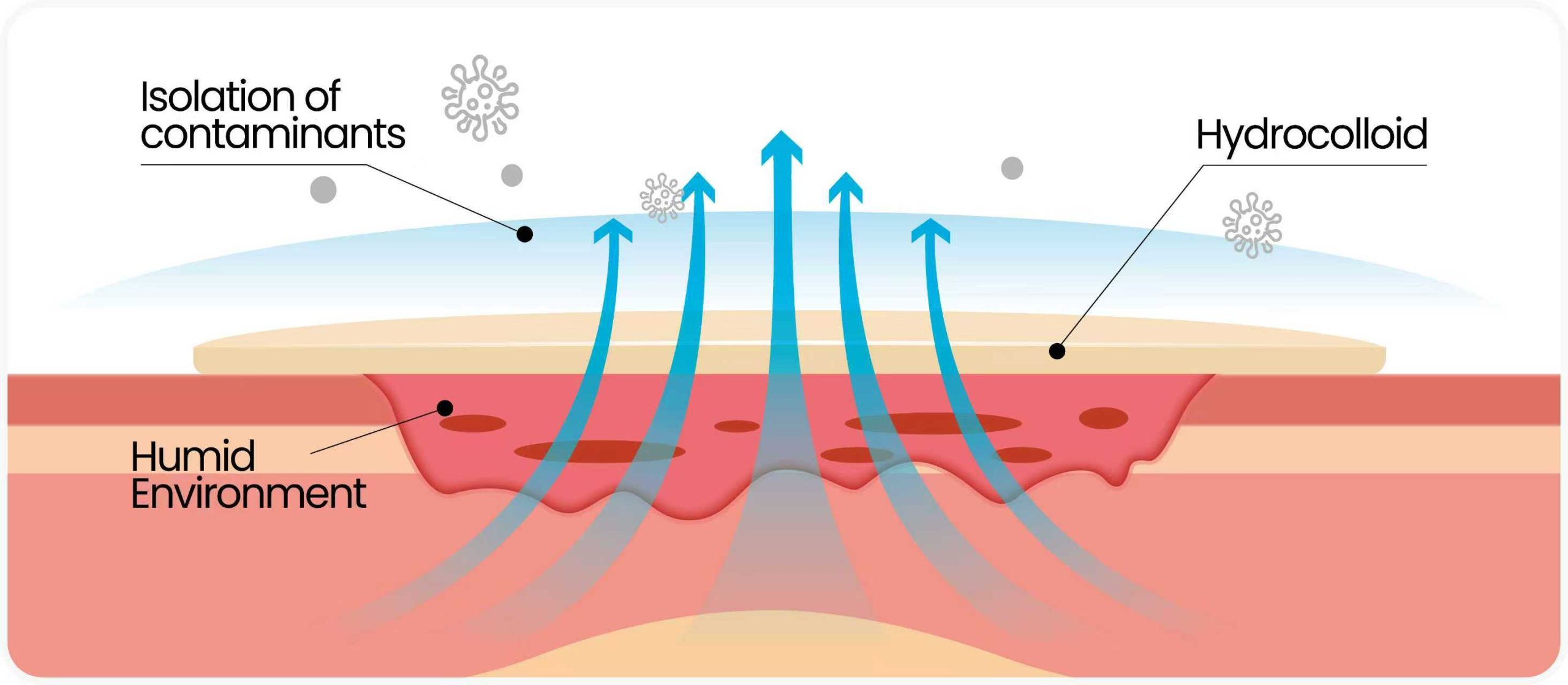
You want your wound to heal fast and feel better. SLK Medical hydrocolloid dressing helps your skin heal by keeping it moist. When you put the hydrocolloid bandage on, it soaks up fluid and turns into a soft gel. This gel keeps the wound wet, which is good for healing. Moist wounds help new skin cells grow and cover the area. It also helps your body clean out dead skin without hurting you. You will feel less pain when you change the bandage because the gel does not stick to your wound. This means you can heal with less pain and do not need to change the bandage as much.
A moist wound helps you heal faster and keeps your skin healthy. You can count on SLK Medical hydrocolloid dressing to help you get better.
Transparent and Flexible Design
SLK Medical hydrocolloid bandage is special because it is clear and bends easily. You can see your wound through the bandage, so you do not have to take it off to check it. This makes it simple to watch your healing and notice problems early. The bandage is flexible, so you can move your arm or leg without trouble. You will feel safe and comfortable while you do your daily activities.
Here is a table that shows why a clear and flexible hydrocolloid dressing is helpful:
Benefit | Description |
|---|---|
Moisture Management | Keeps the wound wet and stops it from drying out. |
Infection Prevention | Helps stop infection if used on clean, closed wounds. |
Ease of Use | Easy to put on and does not need extra tape. |
Reduced Dressing Changes | You do not need to change it as much, so it costs less and feels better. |
You get better healing, less pain, and more freedom with SLK Medical hydrocolloid dressing. The design helps you feel good and lets you check your wound easily.
When to Seek Professional Advice
Uncertain Wound Status
Sometimes, you may feel unsure about your wound. You might not know if it is healing the right way. If your wound looks too dry, you should ask a healthcare professional for help. Hydrocolloid dressings work best for wounds with light to moderate fluid. If your wound does not fit this, you may need a different type of care. Wounds that are too dry can heal slowly and may even get worse. If you see too much moisture, leaking, or signs of infection, you should not wait. Getting advice early can help you avoid bigger problems.
If you are not sure about your wound, it is always safer to talk to a nurse or doctor. They can check your wound and tell you if you need to transition to breathable dressings or try another product.
Signs of Complications
You need to watch for problems that can happen with hydrocolloid dressings. Some people have issues with the adhesive or the way the dressing fits. Here are some common complications that mean you should seek professional help:
Pain that does not go away or gets worse
Red, itchy, or blistered skin near the dressing (irritant contact dermatitis)
Skin that looks white, soft, or wrinkled (maceration)
Signs of infection, such as swelling, pus, or a bad smell
About 27% of people with surgical wounds have problems with dressings. Around 8% of these problems are serious infections. Pain is the most common issue, but skin irritation and maceration also happen often with hydrocolloid dressings.
If you notice any of these signs, remove the dressing and get help from a healthcare professional. Quick action can keep your wound healthy and help you heal faster.
You should remove hydrocolloid dressings when you see these signs:
Your wound leaks too much or the dressing gets soaked.
The wound looks dry or has dead tissue.
You notice redness, swelling, or a rash.
The wound shows infection or does not heal.
Timely removal helps you get the best results in wound care. SLK Medical’s Hydrocolloid Dressing supports healing, but always ask a healthcare professional if you feel unsure.
FAQ
How often should you change a hydrocolloid dressing?
You should change your hydrocolloid dressing every 3 to 7 days. If the dressing leaks, becomes soaked, or you see signs of infection, change it sooner. Always check your wound daily.
Can you shower with a hydrocolloid dressing on?
Yes, you can shower with a hydrocolloid dressing. The dressing is waterproof and protects your wound from water. Pat the area dry after your shower. Do not soak the dressing.
What should you do if the dressing causes itching or redness?
If you feel itching or see redness, remove the dressing right away. Wash your skin gently. You may have a mild reaction. If symptoms do not improve, talk to a healthcare professional.
Is SLK Medical’s hydrocolloid dressing safe for sensitive skin?
SLK Medical’s hydrocolloid dressing uses gentle materials. It works well for most people with sensitive skin. If you notice irritation, stop using it and ask your doctor for advice.


