


If you want the best high absorbent wound dressing for leg ulcers, pressure ulcers, or diabetic foot wounds, you need a dressing that controls moisture and keeps your skin safe. Many people get these wounds every year, especially people with diabetes. Picking the right wound dressing helps healing and makes you feel better. Today, wound care tries to keep wounds moist. This helps wounds heal faster and lowers the chance of infection. SLK Medical is a leader in wound care. They give new options that stick gently and soak up a lot.
Key Takeaways
Pick a high absorbent dressing to handle fluid and help healing for leg ulcers, pressure ulcers, and diabetic foot wounds.
Find dressings that keep the wound moist but not too wet. This helps stop infection and helps the wound heal faster.
Think about comfort when you pick a dressing. Soft and gentle dressings hurt less when changed and make you feel better.
Use dressings with antimicrobial properties if your wound has an infection. These dressings fight germs and keep your wound safe.
Ask a healthcare professional if you do not know which dressing to use. They can give you advice that fits your wound care needs.
Why Absorbency Matters in Wound Care
Managing Exudate for Healing
When you care for a wound, you want it to heal as quickly and safely as possible. One big part of wound care is managing the fluid, or exudate, that comes from the wound. If you have chronic wounds like leg ulcers, pressure ulcers, or diabetic foot wounds, you know how much fluid can build up. Too much moisture can slow healing, but not enough can dry out the wound and cause pain.
Absorbent dressings help keep the wound bed moist but not soggy. This balance is important for healing. When you use the right dressing, you protect the skin around the wound and lower the risk of wound infection. Good exudate management also means you feel more comfortable and need fewer dressing changes. Studies show that when you manage exudate well, you can improve your quality of life and even lower healthcare costs. Some new dressings use special technology to speed up healing and help people with chronic wounds feel better faster.
Tip: If you have exudative wounds, look for dressings that can hold a lot of fluid but still let your skin breathe.
Risks of Poor Absorbency
If a dressing cannot absorb enough fluid, you might run into problems. Excess moisture can make the skin around the wound soft and white. This is called maceration. Macerated skin breaks down easily, which can make the wound worse or slow healing. You might also notice that wounds with too much fluid can leak, making you feel uncomfortable and raising the risk of infected wounds.
On the other hand, if you use dry gauze, the wound can dry out too much. This can cause pain and even damage the wound when you change the dressing. Dry dressings do not protect against outside germs, especially when they get soaked. This can lead to wound infection and more pain.
For chronic wounds and exudative wounds, you need a dressing that absorbs well and protects your skin. Some dressings even have antimicrobial agents to help fight bacteria and keep infected wounds under control. Using the right dressing helps you heal faster and keeps you comfortable.
Leg Ulcers: Best High Absorbent Wound Dressing
SLK Medical Super Absorbent Dressing Silicone Adherent
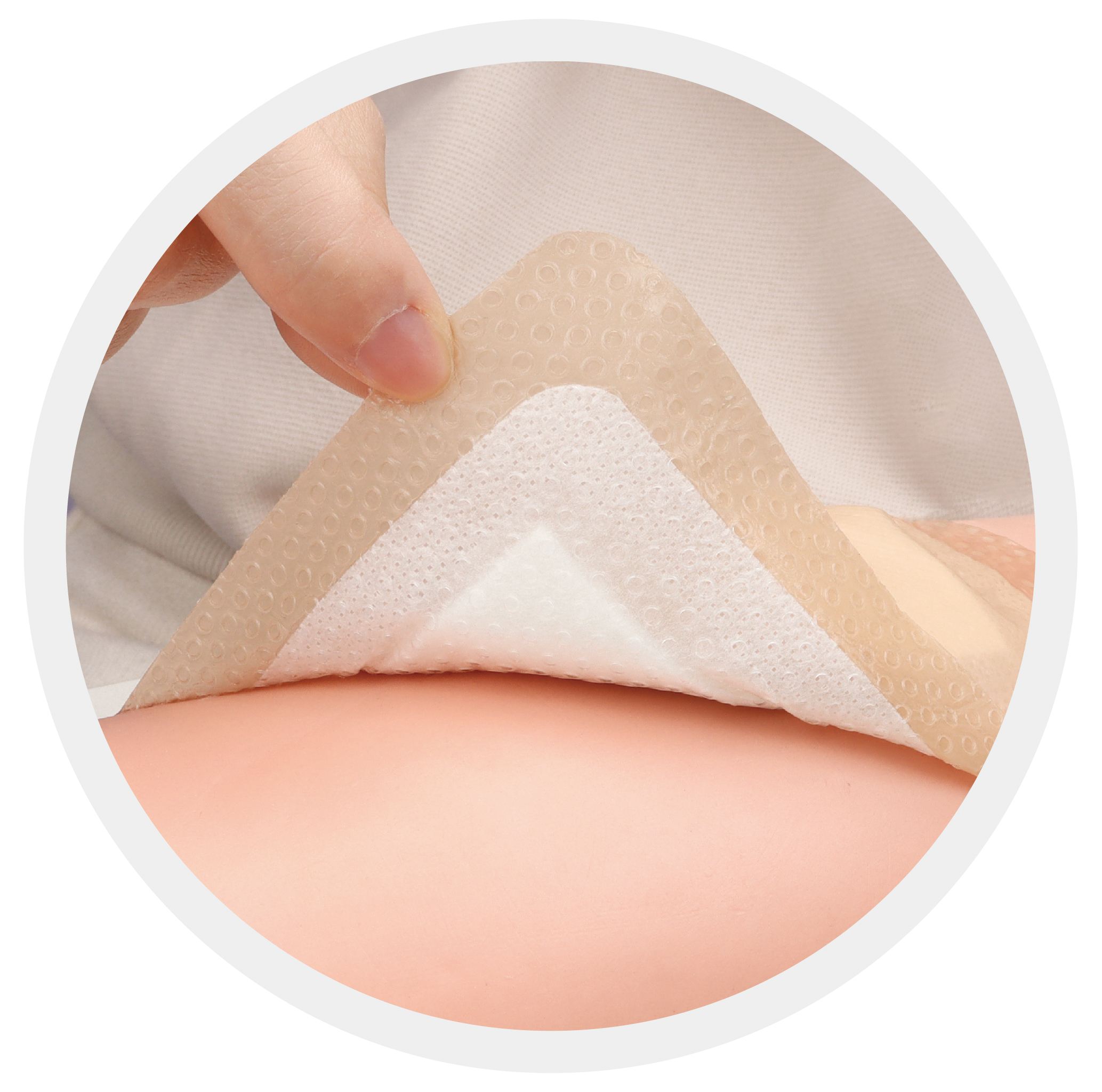
If you have a leg ulcer, you may see a lot of fluid. You need a dressing that keeps your skin dry and helps healing. The SLK Medical Super Absorbent Dressing Silicone Adherent is a great choice for leg ulcers. This dressing uses special technology to soak up lots of fluid. It keeps the fluid away from your skin. The soft silicone layer feels gentle. It is good for sensitive or sore skin.
Many people with chronic wounds like leg ulcers feel comfortable with this dressing. It helps lower irritation. You do not need to change it often because it holds so much fluid. This means less pain and fewer stops in your day. Studies show superabsorbent dressings like this one help wounds heal faster than regular dressings. Research found these dressings improve healing rates. They make a big difference for people with chronic wounds. You get better wound care and a lower risk of wound infection.
Note: The SLK Medical Super Absorbent Dressing Silicone Adherent can soak up to 20 times its weight in fluid. This keeps your wound dry and safe, even with lots of exudate.
Alternative Wound Dressings Compared
You have other choices for high absorbent wound dressing for leg ulcers. Each type has its own good points. Here is a quick look at how some popular dressings compare:
Dressing Type | Absorbency | Patient Comfort | Notes |
|---|---|---|---|
High | Easy to remove | Good for lots of fluid, not for dry wounds | |
High | Easy to remove | Works well for wounds with lots of fluid or infection | |
High | Gentle removal | Great for lots of fluid, keeps wound moist |
They help keep the wound moist, which helps healing. You may find some dressings work better for you. It depends on how much fluid your wound makes and how sensitive your skin is.
Tip: If you have infected wounds, pick dressings with antimicrobial properties. These help fight bacteria and keep your wound safe.
Key Features for Leg Ulcer Care
When you pick a wound dressing for a leg ulcer, think about a few key things. The right dressing makes wound care easier and helps healing.
Management of Exudate: You need a dressing that handles lots of fluid. This keeps your skin from getting too wet and stops leaks. If fluid leaks, it can be embarrassing and upsetting.
Pain Management: Changing dressings can hurt, especially with chronic wounds. A soft, gentle dressing helps lower pain and makes changes less scary.
Dressing Change Frequency: You want a dressing that lasts longer. Fewer changes mean less pain and more time for your wound to heal.
Antimicrobial Protection: Some dressings have antimicrobial agents. These help protect against wound infection, especially if you have infected wounds or are at risk.
Feature | Why It Matters |
|---|---|
Exudate Management | Stops leaks and keeps you comfortable |
Pain Management | Makes dressing changes easier and less painful |
Change Frequency | Lets your wound heal without being disturbed |
You want a high absorbent wound dressing that does all these things. The SLK Medical Super Absorbent Dressing Silicone Adherent does this well. It gives strong fluid control, gentle sticking, and comfort. You can trust it for wound care, especially if you have chronic wounds or wounds with lots of fluid.
Pressure Ulcers: Best Wound Dressing Options
SLK Medical Super Absorbent Dressing Non Adherent
Pressure ulcers are hard to take care of. You need a dressing that keeps wounds dry and helps healing. It should not hurt when you take it off. The SLK Medical Super Absorbent Dressing Non Adherent does all these things. This dressing soaks up a lot of fluid. It keeps your wound safe from too much moisture. The soft layer does not stick to your skin. This means less pain when you remove it. You can use it for sacral pressure ulcers and other wounds that leak a lot.
You may wonder if this dressing works well. Many patients and nurses say it is “very good” or “good” at handling exudate. In fact, 96% of people give it high scores for soaking up fluid. People feel less pain and do not need to change dressings as often. This means you worry less about your wound. You get more time for things you enjoy. Using this dressing can also save money. Studies show it can cut costs by almost half. You need fewer supplies and less help from nurses.
Here’s what people say:
Statistic | Value |
|---|---|
Ratings of ‘very good’/‘good’ for exudate handling | 96% |
Reduction in pain levels | Improved |
Cost savings during use | £1,179.00 (47%) |
Superabsorbent dressings help lower bacteria and infection risk.
You feel less pain and need fewer dressing changes for sacral pressure ulcers.
Healing and quality of life get better for people with pressure ulcers.
You get a high absorbent wound dressing that helps you manage wounds and makes your day easier.
Comparing Other High Absorbent Dressings
You have other choices for pressure ulcers. Foam and alginate dressings are common. Foam dressings use a special material to soak up fluid. They keep the wound moist. Alginate dressings come from seaweed. They turn into a gel when they touch wound fluid. Some mix with collagen to help healing.
But what do studies say? Researchers looked at six studies with 336 people. They compared alginate dressings to other types. The studies were small and did not last long. Results showed no big difference in healing or side effects. Foam dressings also do not have strong research support. You might not see better results with these than with superabsorbent dressings.
Here’s a table to help you compare:
Dressing Type | Key Properties | Evidence Quality |
|---|---|---|
Foam Dressings | Hydrophilic polyurethane foam designed to absorb exudate while maintaining moisture. | Limited and low quality |
Alginate Dressings | Highly absorbent, forms a gel upon contact with wound, can be combined with collagen. | Limited and low quality |
Six studies compared alginate dressings to other options.
All studies had small groups and short follow-up.
No clear difference in healing or problems.
If you want the best for your wound, look for a dressing with strong proof and high absorbency.
Features for Pressure Ulcer Wound Care
When you care for pressure ulcers, you need more than just a cover. You want a dressing that helps healing, keeps you comfortable, and protects from infection. New research shows some key features to look for.
Dressing Type | Key Features | Benefits |
|---|---|---|
Nanomaterials | Contains nano-silver or nano-zinc oxide | Speeds up healing, lowers infection risk, helps tissue repair and regrowth. |
PLGA | Biodegradable polymer with special drug release | Stops infections, helps wounds heal, and improves results. |
Polyurethane | Great fit for skin, soaks up fluid, stretches well | Handles wound fluid, keeps moisture just right, makes dressing changes less painful. |
You want a dressing that manages exudate and keeps the wound moist. It should not stick to your skin. Polyurethane dressings fit well and soak up fluid. Nanomaterials add power to fight germs. This helps with infected wounds. PLGA dressings can give medicine right where you need it.
For chronic wounds like pressure ulcers, you need a dressing that helps healing and keeps you comfortable. Look for high absorbency, gentle removal, and antimicrobial features. These make wound care easier and help you heal faster.
Tip: If you have wounds with lots of fluid, talk to your nurse or doctor. The right dressing can help you heal and feel better.
Diabetic Foot: High Absorbent Wound Dressing Choices
SLK Medical Super Absorbent Dressing Silicone Adherent
If you have a diabetic foot wound, you need to keep it clean and dry. You want a dressing that can soak up lots of fluid. It should also feel soft on your skin. The SLK Medical Super Absorbent Dressing Silicone Adherent is a top pick for diabetic foot wounds. This dressing uses new technology to pull fluid away from your skin fast. The silicone layer sticks gently, so you can take it off without pain.
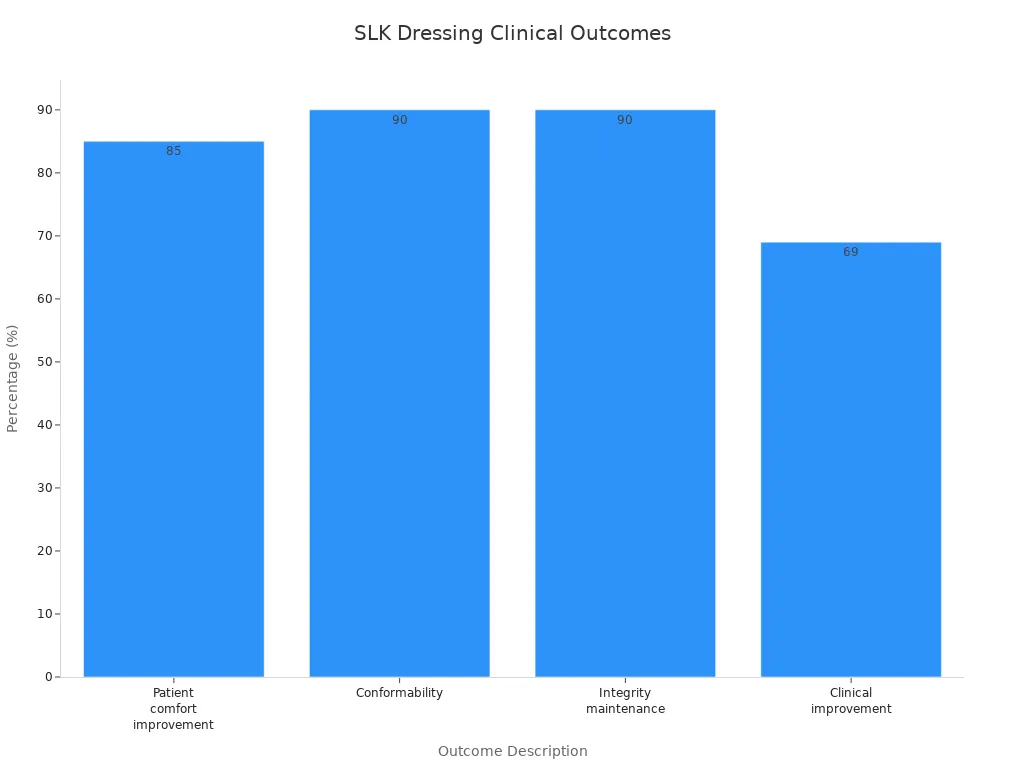
Many people with diabetic foot wounds say this dressing helps a lot. Most patients feel more comfortable when they use it. The dressing fits well and stays put, even if you walk around. The edges do not come off, so you do not have leaks. Over four weeks, fewer people had soft, wet skin. The number dropped from 30% to 8%. Skin damage from the dressing also went down. Almost 70% of patients saw their wounds get better.
Here’s a look at the results:
Outcome Description | Percentage | Notes |
|---|---|---|
Patient comfort improvement | Most patients felt much better | |
Conformability | 90% | Dressings fit well and stay in place |
Integrity maintenance | 90% | Edges stay together and do not peel off |
Reduction in maceration | N/A | Maceration dropped from 30% to 8% in four weeks |
Reduction in excoriation | N/A | Excoriation dropped from 11% to 4% in four weeks |
Clinical improvement | 69% | Many patients saw their wounds get better |
This high absorbent wound dressing helps you heal. It keeps your skin safe and makes wound care easier.
Other Wound Dressing Alternatives
You have other choices for diabetic foot wounds. Some people use hydrocolloid dressings or alginate dressings. These dressings also soak up fluid and keep the wound moist. But do they work better than others? Studies show hydrocolloid dressings do not heal diabetic foot ulcers faster than other dressings. You should think about cost and how well the dressing works for you.
Here are some things to remember:
No studies show hydrocolloid dressings heal diabetic foot ulcers better.
Look at price and how well the dressing works for your wound.
When you compare antimicrobial fibrous-hydrocolloid dressings and alginate dressings, healing rates are about the same. The same is true for iodine-impregnated dressings and standard fibrous-hydrocolloid dressings.
No big difference in healing between antimicrobial fibrous-hydrocolloid and alginate dressings.
Similar results for iodine-impregnated and standard fibrous-hydrocolloid dressings.
If you look at antimicrobial (silver) fibrous-hydrocolloid dressings and alginate dressings, results are the same. There is no clear winner.
No big difference in healing between antimicrobial (silver) fibrous-hydrocolloid and alginate dressings.
No difference between antimicrobial dressings (iodine-impregnated) and standard fibrous hydrocolloid dressings.
Many dressings work about the same for diabetic foot wounds. Pick the one that feels good, fits well, and is easy to use.
Key Considerations for Diabetic Foot Wound Care
Picking the right wound dressing for a diabetic foot wound can be hard. You want to make the best choice for healing and comfort. Experts say you should use your own judgment and think about your experience. You should also look at your wound and where it is on your foot. Some dressings work better for certain spots.
Here are some tips to help you:
Use your own judgment to pick a moist wound dressing.
Ask a wound care expert for help if you are unsure.
Look at your wound and think about what it needs.
Where the ulcer is matters when picking a dressing.
Your comfort and what you like are important.
Think about cost and pick a dressing that works well but is not too expensive.
If you have chronic wounds or wounds with lots of fluid, you need a dressing that can soak up a lot. You also want something that feels good and does not hurt when you change it. If you have infected wounds, you may need a dressing with antimicrobial properties. Always talk to your doctor or nurse if you are not sure which dressing to use. Good wound care can help you heal faster and feel better.
Dressings Comparison Table
Summary of Best Choices
There are many dressings you can use for wounds. Some dressings work better for certain wounds. The table below shows which dressing is best for each need:
Dressing Type | Absorbency Level | Ideal For |
|---|---|---|
Gauze Dressings | Low to Moderate | Minor wounds, surgical sites |
Hydrocolloid Dressings | Moderate | Partial-thickness wounds, pressure ulcers |
Foam Dressings | Moderate to Heavy | Pressure ulcers, surgical wounds |
Alginate Dressings | High | Heavy exudate wounds, venous ulcers |
Hydrogel Dressings | Low | Dry wounds, burns |
Transparent Film | Low | Superficial wounds, IV sites |
Antimicrobial Dressings | Varies | Wounds at risk of infection |
If your wound makes a lot of fluid, you need a dressing that can soak it up. Foam and alginate dressings are good for wounds with lots of fluid. Hydrocolloid dressings are good for pressure ulcers. Pick a dressing that matches your wound and how much fluid it has.
Tip: High absorbent dressings help you change dressings less often. They also keep your skin safe.
Pros and Cons Overview
Every dressing has good things and some problems. You should know what to expect before you choose one. Here is a table that shows the pros and cons:
Dressing Type | Pros | Cons |
|---|---|---|
Collagen Dressings | Helps wounds heal and new blood vessels grow | Expensive, needs expert care |
Foam Dressings | Feels soft, does not stick, soaks up fluid | Needs extra dressing to stay on, can cause maceration |
Hydrogel Dressings | Good for sore wounds, protects from infection | Not for wounds with lots of fluid |
Hydrocolloid Dressings | Absorbs fluid, helps clean wounds, lowers bacteria | Not for infected wounds, can hurt skin in friction areas |
Alginate Dressings | Soaks up a lot, easy to remove, helps clean wounds | Needs extra dressing, too much fluid can dry out wound |
Some dressings can cause problems. Pain happens in about 30% of people. Skin irritation, skin stripping, and maceration happen in about 25% of people. These problems are more common with polyurethane, acrylate, and hydrocolloid dressings.
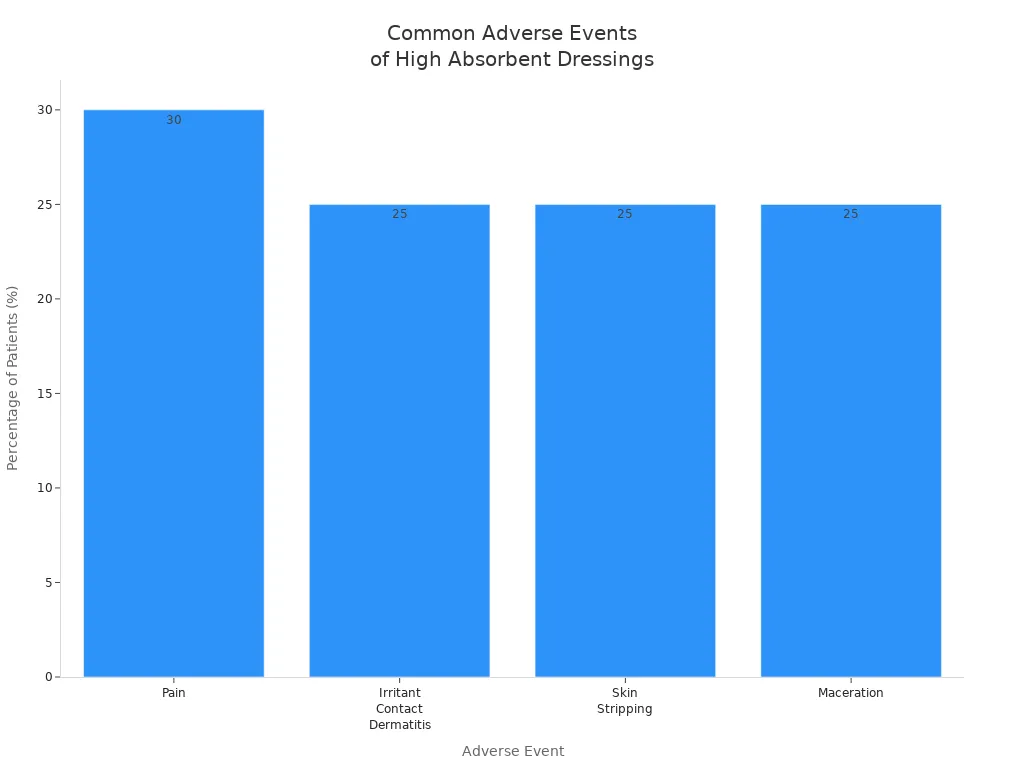
Pain is the most common problem with some dressings.
Skin irritation and stripping can happen with some types.
Maceration is more likely with hydrocolloid and acrylate dressings.
High absorbent dressings help you handle fluid better. You do not have to change dressings as much. Nurses spend less time on wound care, and you feel better. This can help you save money. Treating diabetic foot wounds, pressure ulcers, and leg ulcers can cost a lot. Picking the right dressing helps you heal faster and spend less.
Note: Many people have chronic wounds. Good dressing choices help you heal and feel comfortable.
How to Choose the Right Wound Dressing
Factors for Effective Wound Care
Choosing the right dressing can make a big difference in how your wound heals. You want to pick a dressing that matches your wound and helps you feel comfortable. Here are some things you should look for when making your dressing selection:
Check how much fluid your wound makes. If you see a lot of exudate, you need a dressing that can soak it up.
Look at the wound’s moisture. Some wounds need more hydration, while others need to stay dry.
Notice if there is dead tissue or yellow slough. You might need a dressing that helps clean the wound.
Watch for signs of infection. If you see redness, swelling, or pus, you may need a dressing with antibacterial features.
Think about your skin around the wound. A good dressing protects your skin and feels gentle when you put it on or take it off.
Make sure the dressing fits the shape of your wound. It should cover the area well and not leave gaps.
Pick a dressing that does not cause pain or irritation. You want something soft and safe.
Choose a dressing that keeps the wound at the right temperature and pH. This helps healing.
Think about the type of wound and how far along it is in healing. Some dressings work better for new wounds, while others are best for wounds that have been there a while.
You should also think about how often you want to change the dressing. Some dressings last longer and need fewer changes. This can save you time and make wound care easier.
Tip: Dressing selection is not just about the wound. It’s also about what feels best for you and fits your daily life.
When to Consult a Professional
Sometimes, you need extra help with wound dressing selection. If you have chronic wounds or your wound does not get better, talk to a healthcare professional. They know how to look at your wound and pick the best dressing for you. They can also help if you see signs of infection or if you feel pain that does not go away.
A nurse or doctor can give you advice that matches your wound and your needs. You do not have to figure it out alone. Good wound care often starts with the right team.
Note: If you feel unsure about your dressing selection, or if your wound changes, reach out to a healthcare provider. They want to help you heal.
You want a good dressing for your wound. SLK Medical’s super absorbent dressing silicone adherent is best for leg ulcers and diabetic foot wounds. Their non adherent dressing is good for pressure ulcers. Picking the right dressing helps you heal faster. It also helps you feel better. Keep your wound moist. Check how much exudate you have. Ask about your wound history. Chronic wounds need care all the time. If your wound does not heal or gets worse, talk to a wound care expert.
Wound Type | |
|---|---|
Leg Ulcer | SLK Medical Super Absorbent Dressing Silicone Adherent |
Pressure Ulcer | SLK Medical Super Absorbent Dressing Non Adherent |
Diabetic Foot | SLK Medical Super Absorbent Dressing Silicone Adherent |
FAQ
What makes a dressing “high absorbent”?
You get a high absorbent dressing when it can soak up a lot of fluid from your wound. This helps keep your skin dry and supports healing. You will not need to change it as often.
How do I know if my wound needs a high absorbent dressing?
If you see a lot of fluid or your wound leaks, you need a high absorbent dressing. This type helps control moisture and keeps your skin safe. Ask your nurse or doctor if you are unsure.
Can I use the same dressing for every wound?
No, you should not use the same dressing for every wound. Each wound is different. Some need more moisture, while others need to stay dry. Always pick the dressing that matches your wound’s needs.
How often should I change my dressing?
You should change your dressing when it gets wet or dirty. Some high absorbent dressings last longer, so you do not need to change them as much. Always follow your nurse’s advice.
Where can I find more information about wound care?
You can talk to your doctor or nurse for advice. You can also visit the SLK Medical website for more tips and product details.


