


You have many choices when picking a hydrocolloid dressing for bed sores. Choosing the right one can help patients heal and feel better. Pressure ulcers are common and affect many people. The rates range from 0.4% to 38.6% in acute care. In American hospitals, the rate is 12.3%:
Region/Setting | Prevalence Rate (%) |
|---|---|
Acute care | 0.4% to 38.6% |
American hospitals | 12.3% |
Hydrocolloid dressings keep wounds moist and can lower infection risk. Some new types, like SLK Medical’s Hydrocolloid Dressing, are clear, bend easily, and help with pain. These features help you make good choices for your patients. This can lead to better care.
Key Takeaways
Hydrocolloid dressings help wounds stay moist. This helps wounds heal faster and hurts less. – Pick the right hydrocolloid dressing by checking the wound type. Also, look at how much fluid is in the wound. This helps make sure the treatment works well. – Find dressings that soak up fluid well. They should feel comfortable and be easy to take off. This helps patients feel better. – Check wounds often for infection. Change dressings when needed to keep skin healthy. – Using hydrocolloid dressings can save time and money. This is because you do not need to change them as often.
What Is a Hydrocolloid Dressing?
Hydrocolloid Technology in Wound Care
You might ask why a hydrocolloid dressing is different. This dressing has two layers. The inside layer has special particles. These particles soak up wound fluid and turn it into a soft gel. The gel keeps the wound moist. This helps your body heal faster. The outside layer acts like a shield. It keeps out dirt, bacteria, and water. But it still lets some moisture leave.
Hydrocolloid dressings have some main parts:
Inner Hydrocolloid Layer: This layer uses things like gelatin, pectin, and sodium carboxymethylcellulose. These soak up fluid and make a gel.
Outer Backing Layer: This is usually made from polyurethane film or foam. It is waterproof and blocks germs.
Adhesive Components: These help the dressing stick to your skin.
The technology in hydrocolloid dressings gives many good things:
They keep wounds moist for better healing.
They help your body clean the wound by itself (autolytic debridement).
They protect against infection.
They keep the wound warm.
They help lower pain by making a soft cover.
Tip: Some hydrocolloid dressings are clear. You can look at the wound without taking off the dressing.
Role in Treating Pressure Ulcers
You can use a hydrocolloid dressing for pressure ulcers, also called bed sores. When you put the dressing on, it soaks up extra fluid and makes a gel. The gel keeps the wound moist, which helps it heal. A moist wound helps new skin grow and lowers infection risk. It also makes the wound hurt less.
Hydrocolloid dressings control moisture very well. They stop the wound from getting too dry or too wet. This helps wounds heal faster than dry dressings. The outside layer keeps out bacteria and dirt. This keeps the wound clean and safe.
Hydrocolloid dressings work best for wounds with a little or medium amount of fluid. They also protect the skin around the wound. They make changing the dressing less painful. This makes them a good choice for treating pressure ulcers and helping patients feel better.
Choosing Hydrocolloid Dressings for Bed Sores
Wound Assessment and Pressure Ulcer Stages
You should always look at the wound carefully first. This helps you pick the best hydrocolloid dressing for bed sores. Start by checking what stage the pressure ulcer is in. Pressure ulcers can be mild or very deep with tissue loss. You also need to see what kind of wound it is, how much fluid comes out, and if there might be an infection.
Here is a table that helps you match wounds with dressings:
Wound Type | Exudate Level | Dressing Recommendation |
|---|---|---|
Granulated wounds | Mild to moderate | Hydrocolloid dressing for bed sores keeps granulation tissue healthy and helps new skin grow. |
Presence of wound exudate | Moderate | Hydrocolloid absorbs fluid, forms a gel, and stops leaks, making wound management easier. |
Shallow wounds | N/A | Hydrocolloid dressings create a moist space, which helps healing. |
Later stages of healing | N/A | Hydrocolloid dressings protect the wound and lower the number of dressing changes. |
Various wound types (abrasions, etc.) | N/A | You can use hydrocolloid dressing for bed sores, abrasions, burns, and donor sites. |
Always look for signs of infection. If you see redness, swelling, or pus, talk to a doctor or nurse. For people who cannot move much or have thin skin, check their skin often. This helps you find pressure ulcers early and use hydrocolloid dressings when needed.
Key Features of Hydrocolloid Dressings
When picking a hydrocolloid dressing for bed sores, look for features that help wounds heal. Hydrocolloid dressings are good because they soak up fluid, keep wounds moist, and block germs.
Here is a table that shows what to look for:
Criteria for Selection of Hydrocolloid Dressings | Description |
|---|---|
Absorption of exudate | Soaks up and holds wound fluid without leaking. |
Contaminant management | Leaves no particles in the wound. |
Thermal insulation | Keeps the wound warm for better healing. |
Permeability | Blocks water and bacteria but lets some moisture out. |
Wound trauma on removal | Comes off gently, so it does not hurt the wound. |
Change frequency | Needs fewer changes, saving time and supplies. |
Pain relief | Makes the wound hurt less. |
Comfort | Feels soft and fits the body well. |
Hydrocolloid dressings are flexible. You can use them on many body parts, even hard-to-cover places like the sacrum or heel. This helps protect skin that gets a lot of pressure, especially for people who are at high risk.
Patient Comfort and Skin Sensitivity
You want patients to feel comfortable while their wounds heal. Hydrocolloid dressings help with this in a few ways:
They feel soft and cushion the wound.
The sticky part is gentle, so taking it off does not hurt much.
They cover nerve endings, so the wound hurts less from air or touch.
For people with sensitive skin, hydrocolloid dressings lower the chance of skin damage. You can use them for people with fragile skin or who need their dressings changed a lot. The moist space also keeps the wound from drying out, which can cause pain.
Tip: Always check the skin around the wound for redness or irritation. This helps you find problems early and keep high-risk patients safe.
SLK Medical Hydrocolloid Dressing Benefits
SLK Medical Hydrocolloid Dressing gives you many good things for pressure ulcers and wound care. It keeps the wound moist, which helps it heal faster and lowers the chance of scars. The gel layer blocks bacteria, so there is less risk of infection.
You can see the wound through the clear dressing, so you do not have to take it off as much. This saves time and money. The dressing bends and fits well on different body parts, so it works for high-risk patients. There are many sizes, like extra thin, border, sacrum, and heel shapes. This helps you pick the right one for the wound.
Patients feel less pain because the dressing protects the wound and lowers rubbing. You also do not have to change the dressing as often, which means less stress for everyone. For pressure ulcers, SLK Medical Hydrocolloid Dressing is a smart and affordable choice.
Note: SLK Medical Hydrocolloid Dressing is a good pick for high-risk patients who need strong protection and comfort while their wounds heal.
Treatment Outcomes with Hydrocolloid Dressings
Healing Rates and Evidence
You might wonder if hydrocolloid dressings help pressure ulcers heal. Research shows they work well. In one study, people with stage I and II pressure ulcers healed faster with hydrocolloid dressings than with other treatments. The table below shows the healing rates:
Ulcer Stage | Hydrocolloid Group Healing Rate | Other Treatment Group Healing Rate | Difference (%) | P-value |
|---|---|---|---|---|
Stage I | 85% (11/13) | 45% (5/11) [SD] | 40% | < 0.05 |
Stage I | 85% (11/13) | 22% (2/9) [PC] | 63% | < 0.005 |
Stage II | 67% (12/18) | 16% (3/19) [SD] | 51% | < 0.005 |
Stage II | 67% (12/18) | 48% (10/21) [PC] | 19% | > 0.05 |
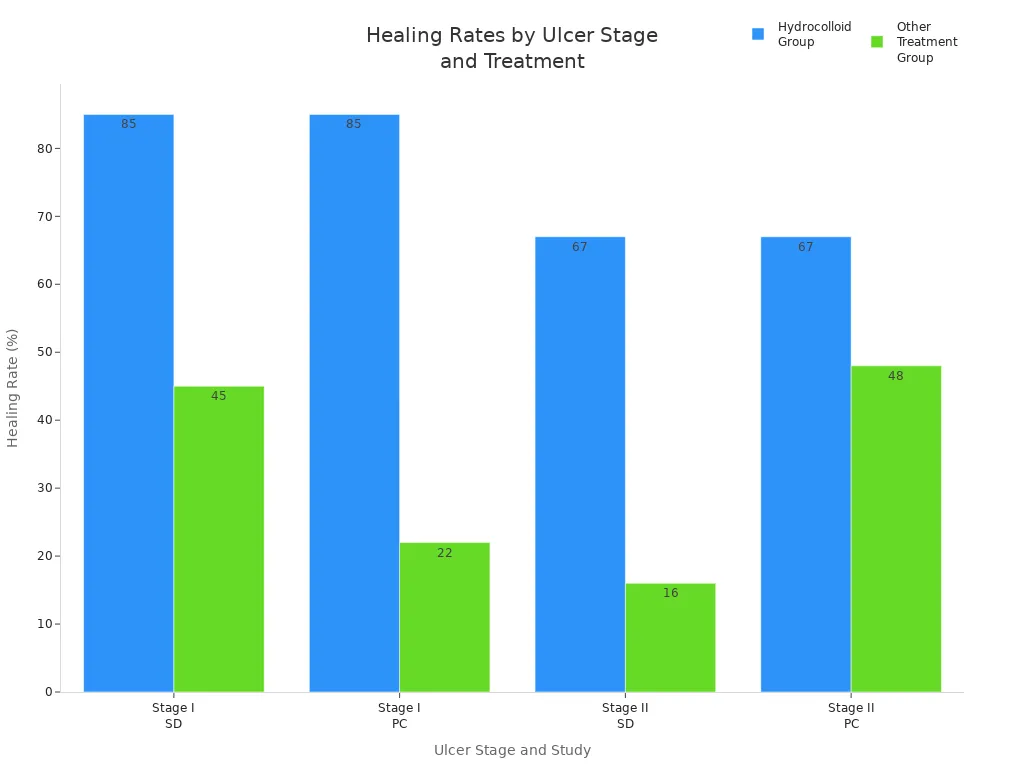
Doctors say hydrocolloid dressings are better than gauze for pressure ulcers. You can trust these results. Hydrocolloid dressings keep wounds moist, which helps them heal better.
Pain Relief and Fewer Dressing Changes
It is important to help patients feel less pain. Changing dressings can hurt people with pressure ulcers. One study found that hydrocolloid dressings hurt less than gauze. Patients felt less upset and more comfortable. Hydrocolloid dressings do not need to be changed as often. This means less pain and less trouble for patients. Keeping the wound moist also helps lower pain.
You can use hydrocolloid dressings to make healing easier for patients. Fewer changes save time and help keep patients safe.
Complications and Risk Management
You want to stop problems when treating pressure ulcers. Hydrocolloid dressings work best for stage 2 pressure ulcers that are not infected. Be gentle when taking off the dressing, especially on fragile skin. These dressings do not need to be changed a lot. This helps stop skin damage. Moist wound healing helps the skin repair and lowers problems.
Tip: Always look for signs of infection before using hydrocolloid dressings. This keeps patients safe.
Patient Satisfaction and Quality of Life
You want patients to feel good and happy during treatment. Studies show hydrocolloid dressings help people feel better. Patients say these dressings are more comfortable and easier to use. They also like how their scars look after healing. The table below shows what patients think:
Evidence Type | Description |
|---|---|
Comfort | HCD was much more comfortable than CDD. |
Convenience | Patients thought HCD was easier to use than CDD. |
Scar Appearance | HCD made scars look better than CDD. |
Simplicity of Instructions | HCD had easier instructions than CDD. |
Preference | 96.8% of patients liked HCD more than CDD. |
SLK Medical Hydrocolloid Dressing lets you see the wound without taking off the dressing. This helps keep patients safe and happy. Patients feel less pain and heal better. Moist wound healing and simple instructions make care easy.
Note: You can pick SLK Medical Hydrocolloid Dressing for pressure ulcers to help patients feel safe, comfortable, and happy.
Practical Tips for Hydrocolloid Use
Application and Removal
You want to make sure you apply and remove hydrocolloid dressings the right way. This helps with preventing pressure ulcers and keeps the skin safe. Start by washing your hands and gathering all supplies. Always check the dressing for signs of wear or infection before you remove it. Gently lift one corner of the dressing to reduce pulling on the skin. If the dressing sticks, you can use a medical adhesive remover. Peel the dressing back slowly and steadily. After you remove it, clean the wound site before putting on a new dressing. These steps help lower pain and protect fragile skin, which is important for pressure ulcer prevention.
Tip: Always use gentle movements to avoid skin damage, especially for people at high risk of developing bed sores.
Monitoring and When to Change Dressings
You need to check the wound and dressing often. Look at the size, depth, and color of the wound. Watch for redness, swelling, or any unusual discharge. These signs can mean infection. Always wash your hands and wear gloves before touching the wound. Use a clean area for your supplies. Knowing the different stages of wound healing helps you decide what care the wound needs. Change the dressing if you see leaks, if the dressing lifts at the edges, or if the wound looks worse. Regular checks are a key part of preventing pressure ulcers and keeping wounds healthy.
Patient education is important. Teach patients and caregivers how to spot problems early and when to ask for help.
When to Switch to Other Dressings
Sometimes you need to use a different dressing. If you see more pain, redness, or swelling, the wound may have an infection. Watch for signs like pus, a bad smell, or fever. If the skin around the wound gets itchy, red, or forms blisters, this could mean an allergy. If the wound gets bigger or does not heal, you may need to try another product. Too much fluid, leaking, or skin that looks soggy means the dressing is not working well. If the wound closes or heals, you can stop using the dressing. Always focus on preventing pressure ulcers by checking wounds often and changing care as needed.
Remember, preventing pressure ulcers takes teamwork. You, your patients, and caregivers all play a role in keeping skin healthy.
You can pick the best hydrocolloid dressing by looking at the wound. Check what kind of wound it is and how much fluid comes out. Think about what the patient needs. Some dressings, like SLK Medical Hydrocolloid Dressing, help keep the wound moist. This lowers the chance of infection and makes patients feel better. The table below shows important results:
Outcome | Evidence |
|---|---|
Moist Environment | Hydrocolloid dressings keep wounds moist and help them heal. |
Infection Rates | Studies say hydrocolloid dressings lower infection risk. |
Need for Research | We need more studies to know long-term results. |
You can use hydrocolloid dressings for donor sites and to help patients feel better.
Film dressings can be used instead if you need another option.
Use these ideas to help your patients heal faster and feel more comfortable.
FAQ
What are pressure ulcers and why do they form?
Pressure ulcers are injuries to your skin and tissue. They form when you stay in one position for too long. You might see them on your back, heels, or hips. Pressure ulcers can cause pain and slow healing.
How do hydrocolloid dressings help with pressure ulcers?
Hydrocolloid dressings keep your wound moist. They help your skin heal faster. You can use them for pressure ulcers that have mild or moderate fluid. These dressings protect your wound and make changing dressings less painful.
Why is cost-effectiveness important in pressure ulcer care?
Cost-effectiveness means you get good results without spending too much. You want to use products that help pressure ulcers heal quickly. Hydrocolloid dressings save money because you change them less often. This helps with pressure ulcer prevention and lowers costs for you.
How can you improve pressure ulcer prevention at home?
You can move often and check your skin every day. Use soft cushions or special mattresses. Hydrocolloid dressings help protect your skin. Good pressure ulcer prevention lowers your risk and saves money. You want to keep your skin healthy and avoid problems.
Are hydrocolloid dressings a cost-effective choice for pressure ulcers?
Yes, hydrocolloid dressings are a cost-effective choice. You use fewer dressings and spend less time changing them. This helps you save money. Cost-effectiveness is important for pressure ulcer care. You want the best results for less cost.


