


You can find different types of wound dressings for skin wounds. These include gauze, foam, hydrocolloid, hydrogel, alginate, transparent, collagen, composite, silicone, antimicrobial, hydrofiber, and super absorbent dressings. Choosing the right dressing helps wounds heal better. It lowers infection risk and keeps the wound moist. Research shows that the best dressing for chronic wounds heals them faster. This means fewer dressing changes and saves money.
Impact Area | Result | Description |
|---|---|---|
Healing Time | Shorter | The right dressing helps wounds heal more quickly. |
Dressing Change Frequency | Fewer Changes | You change dressings less often, which feels better and hurts less. |
Cost Efficiency | Reduced Labor Costs | Good choices help spend less on wound care. |
SLK Medical is a leader in providing different types of wound dressings. They help you achieve better results for your patients.
Key Takeaways
Picking the right wound dressing helps wounds heal faster and lowers infection risk. It can also save time and money because you do not need to change it as often.
New dressings, like hydrocolloids and foam, keep wounds moist. They help wounds heal better than old gauze. They also make dressing changes hurt less.
For wounds with a lot of fluid, super absorbent and hydrofiber dressings work best. They soak up extra fluid and keep the wound clean.
Always choose a dressing that fits the wound type and how much it drains. This helps the wound heal well and keeps the patient comfortable.
Let patients help pick their wound care. This makes them follow instructions better and helps them heal faster.
Overview of Different Types of Wound Dressings
When you look at wound care, you find many options. There are 12 different types of wound dressings. These include gauze, foam, hydrocolloid, hydrogel, alginate, transparent, collagen, composite, silicone, antimicrobial, hydrofiber, and super absorbent dressings. Each type helps wounds heal in a special way. You need to know how these dressings work to make the best choice for your needs.
Traditional vs. Modern Wound Dressings
You may know about traditional dressings like gauze and bandages. These do not keep the wound moist. They often stick to the wound bed and can cause pain when you remove them. They also do not protect well against bacteria. Modern wound dressings use new materials and smart designs. They keep the wound moist, which helps with moist wound healing. Some modern wound dressings use advanced technology, like sensors or self-healing layers. These features help wounds heal faster and lower the risk of infection. You get better results with modern wound dressings, especially for chronic wounds.
Key Selection Criteria
You should think about several things when you choose a dressing. Dressing selection depends on the type of wound, how deep it is, and how much fluid it makes. For small wounds, you can use simple dressings like gauze or transparent film. Deep wounds need modern wound dressings that can absorb more fluid. If you have chronic wounds, you need dressings that fight bacteria and help with cutaneous wound healing. Infected wounds need antimicrobial dressings to keep the area clean. Burns need dressings that cool and protect. Surgical wounds need dressings that help healing and stop infection. You should always match the dressing to the wound for the best results.
Tip: Knowing the different types of wound dressings helps you make smart choices for better healing.
Gauze Dressings
Features
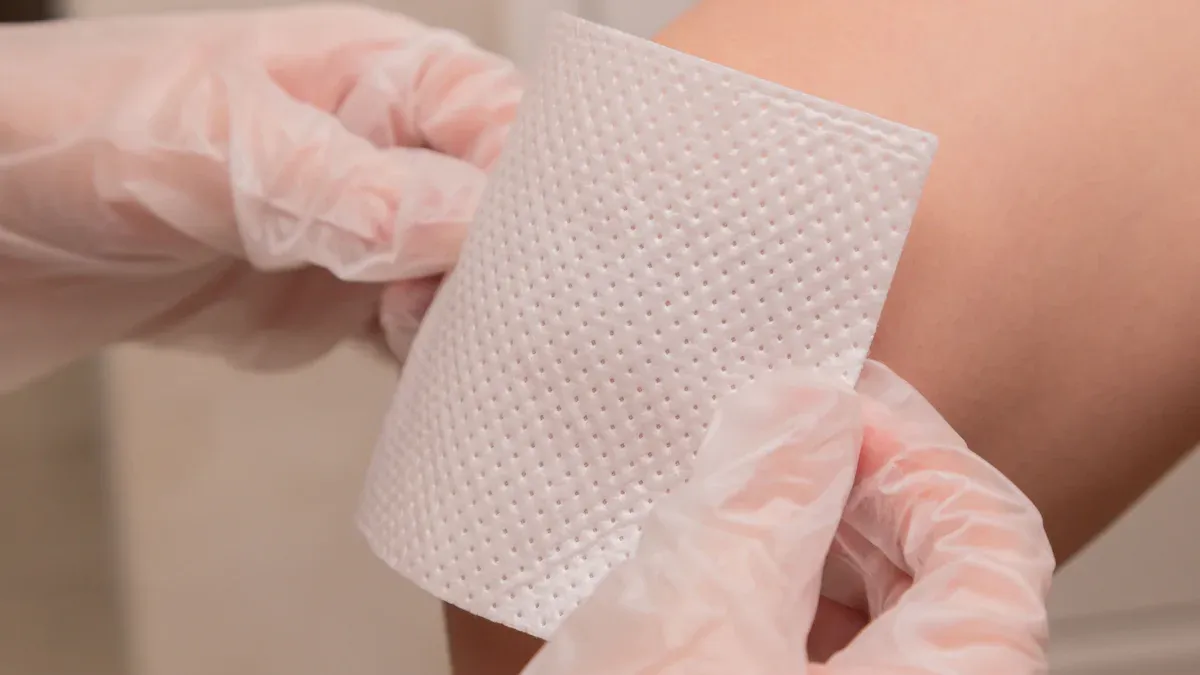
Gauze dressings are one of the oldest types of wound care products. You can find them in many shapes and sizes. Most gauze is made from cotton, which makes it soft and easy to use. You can use gauze dry or wet, depending on what your wound needs. Many people use gauze as a secondary layer to cover other dressings. You can also use it for cleaning and scrubbing wounds. Gauze helps keep the area clean and supports homeostasis. You can wrap it around a wound to hold it in place.
Tip: Gauze works well for both surgical and non-surgical wounds when you need to clean or cover them.
Benefits
You will find gauze dressings in almost every first aid kit. They are easy to use and do not cost much. You can cut gauze to fit any shape or size of wound. Gauze is helpful for cleaning wounds and removing debris. You can use it to stop bleeding and protect the area. Many people use gauze as a secondary dressing to hold other products in place. You can also use it to keep wounds clean during bandaging.
Common uses for gauze dressings include:
Secondary dressing for extra protection
Wound cleansing and scrubbing
Helping to stop bleeding (homeostasis)
Limitations
You may notice that gauze dressings do not always help wounds heal as fast as modern products. Studies show that hydrocolloid dressings work better than saline or paraffin gauze for chronic wounds. Gauze can stick to the wound and cause pain when you remove it. It does not keep the wound moist, which can slow healing. Most experts now use gauze as a secondary dressing instead of a primary one. Modern dressings often provide better results for complex wounds.
Foam Dressings and SLK Medical Solutions
Features
Foam dressings help you manage wounds that produce moderate to heavy exudate. These dressings use soft, absorbent foam layers that pull in moisture from the wound. You can use them on many types of wounds, including pressure ulcers, diabetic foot ulcers, and surgical wounds. Foam dressings keep the wound moist, which helps new tissue grow. They also protect the wound from outside germs and reduce pain during dressing changes.
SLK Medical offers two advanced options: the Silicone Foam Dressing without Border and the Non Adhesive Foam Dressing. Both use a waterproof backing to keep out bacteria and hold in moisture. The silicone layer in the Silicone Foam Dressing without Border is gentle on sensitive skin. The Non Adhesive Foam Dressing can be cut to fit wounds in hard-to-cover places. You can use these dressings for fragile or delicate skin.
Benefits
You get many benefits when you use foam dressings. They absorb large amounts of exudate, so you do not have to change them often. This keeps the wound moist and helps it heal faster. Studies show that foam dressings work well for wounds with moderate to heavy exudate. For example, in a study by Fordert (2023), 92% of patients with chronic and acute wounds showed no signs of infection after six weeks. Another study by Barrett (2017) found that 65.6% of wounds improved or healed with foam dressings.
Study | Patient Count | Wound Types | Results |
|---|---|---|---|
Fordert, 2023 | 194 | Chronic and acute wounds | 92% free of infection signs after 6 weeks |
Barrett, 2017 | 32 | VLUs, DFUs, PUs, surgical wounds | 65.6% improved; 7 healed, 14 improved enough to switch dressings |
SLK Medical’s foam dressings are a suitable modern wound dressing for sensitive or fragile skin. You can use them to keep the wound moist, absorb exudate, and protect the area.
Tip: Foam dressings help you manage wounds with lots of exudate and keep the healing process on track.
Limitations
You may find that foam dressings do not work well for dry wounds or wounds with very little exudate. They may not stick well to some body parts unless you use a secondary dressing or tape. You should check the wound often to make sure the dressing is not too wet or too dry. Always choose the right dressing for your wound type to get the best results.
Hydrocolloid Dressings and SLK Medical Hydrocolloid
Features
Hydrocolloid dressings use a special material. This material reacts with wound exudate and forms a soft gel. The gel keeps the wound moist and helps new skin grow. These dressings stick well to the skin and seal the wound. They block germs from getting in. Hydrocolloid dressings come in many shapes and sizes. You can use them on different wounds. Some are transparent, so you can see the wound without removing the dressing. SLK Medical’s Hydrocolloid Dressing uses hydrophilic particles. These particles soak up exudate and make a gel-like layer. This layer keeps the wound moist and protects it from bacteria. The dressing is thin and flexible. You can use it on hard-to-cover areas.
Benefits
Hydrocolloid dressings help wounds heal faster. They keep the wound moist and protect new skin. The gel layer lowers pain when you change the dressing. You can wear these dressings for several days. You do not need to change them often. This saves time and supplies. The waterproof seal keeps out bacteria. It lowers the chance of infection. Transparent dressings let you check the wound easily. You do not disturb healing. SLK Medical’s Hydrocolloid Dressing is comfortable and fits many wound shapes. It helps control exudate and keeps the right moisture for healing.
Keeps the wound moist for better healing
Blocks bacteria and germs from outside
Lowers pain during dressing changes
Makes it easy to check the wound
Saves time because you wear it longer
Note: Hydrocolloid dressings work well for pressure ulcers, surgical wounds, and wounds with moderate exudate.
Limitations
Hydrocolloid dressings do not work well for wounds with lots of exudate. If the wound makes too much fluid, the dressing cannot soak it all up. These dressings are not good for infected wounds. They are not best for wounds that need checking often. You should look at the wound for signs of infection or too much moisture. If you see redness, swelling, or extra fluid, change the dressing sooner.
Hydrogel Dressings
Features
You will find hydrogel dressings soft and cool to the touch. These dressings contain a high percentage of water. The water helps keep the wound moist. You can use them on wounds that need extra moisture. The gel feels soothing and does not stick to the skin. You can shape hydrogel dressings to fit different wound sizes. Some come as sheets, while others are in gel or paste form. You can use them for wounds with light exudate. The cooling effect can help reduce pain.
Benefits
You can use hydrogel dressings for many types of wounds. They work well for burns, diabetic foot ulcers, and pressure injuries. The moisture in the gel helps new tissue grow. You will notice less pain when you change the dressing. The gel does not pull on the skin. Hydrogel dressings can also help clean the wound by softening dead tissue. This makes it easier for your body to heal. You can see the benefits in the table below:
Type of Wound | Evidence Summary |
|---|---|
Superficial and Partial Thickness Burns | Hydrogel dressings may heal these wounds more quickly than silver sulfadiazine or paraffin gauze. |
Diabetic Foot Ulcers | Some evidence suggests hydrogel dressings are more effective than basic dressing products. |
Pressure Ulcers/Injuries | No conclusive evidence that hydrogel dressings are more or less effective than other dressings. |
Tip: You can use hydrogel dressings to add moisture to dry wounds and help with pain relief.
Limitations
You may notice some limits with hydrogel dressings. Most research looks at either healing or testing, not both together. This means these dressings do not always adjust to changes in the wound. You may need to combine them with other products for the best results. Hydrogel dressings do not work well for wounds with heavy exudate. They may need to be changed often if the wound is very wet. Some experts suggest adding new features, like sensors, to help these dressings respond to the wound’s needs.
Hydrogel dressings may not absorb much exudate.
They may need extra support for wounds that change quickly.
You may need to check the wound often to make sure it is healing well.
Alginate Dressings
Features
Alginate dressings are made from seaweed fibers. These fibers turn into a soft gel when they touch wound fluid. The gel keeps the wound moist and helps it heal. Alginate dressings work best for wounds that leak a lot. You can use them on ulcers, trauma wounds, or after surgery. Some alginate dressings have silver added. Silver helps protect against germs. You can cut these dressings to fit many shapes and sizes.
Indication | Key Features | |
|---|---|---|
Kaltostat® | Acute and chronic wounds with moderate to heavy exudate | Helps wounds heal and soaks up fluid well |
Luofucon® Extra Silver Alginate | Moderate to heavily exuding wounds, ulcers, trauma-inflicted or post-operative wounds | Fights bacteria for seven days, helps wounds heal |
Medihoney® | Heavily exuding ulcers, diabetic foot, pressure ulcers | Fights bacteria, works for many wound types |
Note: Alginate dressings do not stick to the skin. You need another dressing on top to hold them in place.
Benefits
Alginate dressings are good for wounds with lots of fluid. They soak up a lot of exudate and keep the wound dry. The gel that forms helps new skin grow. It does not hurt much when you take off the dressing. Some alginate dressings have silver. Silver helps fight bacteria and lowers infection risk. You can use these dressings for ulcers, burns, and surgical wounds.
Soaks up heavy exudate and keeps the wound moist
Helps wounds heal faster by making a gel barrier
Makes dressing changes less painful
Gives extra germ protection if it has silver
Tip: Alginate dressings are great for wounds that need strong fluid control and gentle care.
Limitations
There are some things to know before using alginate dressings. Some people may have a reaction to them. Always check the patient’s medical history first. Some people are allergic to alginate. Watch for redness, itching, or swelling near the wound.
Calcium reaction risks can happen for some people
Alginate allergies can cause redness, itching, or swelling
Do not use alginate dressings on dry wounds or wounds with little fluid. They can dry out the wound bed and slow healing.
Transparent Dressings and SLK Medical
Features
You can use transparent dressings to cover and protect a wound. These dressings use a thin film that lets you see the wound without removing the cover. The film is waterproof and allows air to pass through. This helps keep the right amount of moisture around the wound. The dressing does not stick to the wound bed, so you can remove it with less pain. SLK Medical’s Transparent Dressing uses a soft, hypoallergenic material. It works well for people with sensitive skin. The rounded corners help the dressing stay in place and prevent curling. You can use it for wounds or to keep catheters secure.
Benefits
Transparent dressings give you many advantages. You can check the wound at any time because the film is clear. This helps you spot problems early. The dressing keeps out water and germs, which lowers the risk of infection. It also lets moisture and air move in and out. This balance helps the wound heal faster. The dressing absorbs exudate and keeps the area from getting too wet. You do not need to change the dressing often, which saves time and reduces pain. SLK Medical’s Transparent Dressing is gentle on your skin and easy to use. You can shower without worrying about the dressing coming off.
Tip: You can use transparent dressings for wounds that need moisture control and easy monitoring.
Limitations
You may find that transparent dressings work best for wounds with low to moderate exudate. If your wound produces a lot of exudate, you may need a different dressing. The film may not absorb heavy exudate well. You should check the wound often to make sure the moisture level is right. If you see too much fluid under the dressing, you should change it. Always match the dressing to the wound’s needs for the best healing.
Collagen Dressings
Features
Collagen dressings use natural proteins from animals. These proteins come from cows, pigs, or fish. Collagen helps your body make new skin. When you put the dressing on, it touches the wound and helps healing. You can use collagen dressings for many wounds. They work well for wounds that heal slowly. Collagen dressings come as sheets, powders, or gels. Some have extra things like resveratrol to help healing.
Collagen dressings keep the wound moist and help fix your skin.
Benefits
Collagen dressings help wounds heal faster. They help your body make new skin and close wounds quickly. Doctors use collagen dressings for wounds that do not heal easily. Research shows collagen dressings help a lot:
Collagen dressings help wounds heal faster and may be safe for chronic wounds.
In one study, dressings with resveratrol helped wounds shrink more (49.2% vs. 32.8%), made hospital stays shorter (12.3 days vs. 14.5 days), and needed fewer dressing changes (19.8 vs. 24.3). No bad side effects happened.
You may feel less pain and more comfort with these dressings. Collagen helps your body heal and can help wounds that are stuck.
Limitations
Collagen dressings do not work the same for every wound. Studies show different results because products and wounds are not always the same. Some reviews found only a few good studies. Researchers saw differences in collagen types and how long wounds were treated. Sometimes, the body may not accept collagen, but there is not enough information about this.
Only a few studies exist, and some may not be fair.
Different collagen types and ways to measure wounds make results unclear.
Some worry about immune reactions, but more research is needed.
Always ask your doctor before you try a new dressing for your wound.
Composite Dressings
Features
You can use composite dressings for many types of wounds. These dressings have several layers. Each layer does a special job. The top layer keeps out water and germs. The middle layer absorbs fluid from the wound. The bottom layer touches the skin and does not stick. Some composite dressings have a border that helps them stay in place. You can use them for wounds that are dry or have fluid. The design helps control moisture and protects the wound.
Layer | Function |
|---|---|
Top | Blocks water and bacteria |
Middle | Absorbs wound fluid |
Bottom | Gentle on skin, non-adherent |
Benefits
You get many benefits when you use composite dressings. You can use them on wounds with different amounts of fluid. The layers work together to keep the wound moist but not too wet. The dressing absorbs extra fluid and keeps the area clean. If your wound is dry, the dressing protects it from outside germs. If your wound is wet, the dressing soaks up the fluid. The special pores in the dressing help fluid move quickly through the layers. Smaller pores let fluid pass faster and keep the wound from getting too wet. You do not need to change the dressing often. This saves time and lowers pain.
You can use one dressing for wounds with mixed exudate levels.
The dressing helps wounds heal by keeping the right moisture.
You feel less pain when you change the dressing.
Limitations
You should know some limits before you choose composite dressings. These dressings may not work well for wounds that bleed a lot. If your wound has a lot of infection, you may need a different type of dressing. Sometimes, the dressing may not fit well on joints or curved areas. You should check the wound often to make sure it is healing. If you see redness or swelling, talk to your doctor. Always match the dressing to your wound for the best results.
Note: Composite dressings give you a flexible option for many wounds, but you should always check your wound and talk to a healthcare provider if you have questions.
Silicone Dressings and SLK Medical Innovations
Features
Silicone dressings work for many wound types. They have a soft silicone layer that feels gentle. SLK Medical’s Silicone Foam Ag Dressing without Border has three layers. The top layer blocks water and germs. The middle foam layer soaks up fluid. The bottom silicone layer touches your skin and does not stick. This design helps you avoid pain when you take off the dressing. SLK Medical’s Silicone Wound Contact Layers use special silicone technology. They spread fluid evenly and protect weak skin.
SLK Medical’s silicone dressings use new technology for wound care. The silicone foam dressing helps with post-operative wounds, pressure ulcers, and diabetic foot ulcers. You get a dressing that helps wounds heal, lowers infection risk, and keeps you comfortable.
Benefits
SLK Medical’s silicone dressings have many good points. The soft silicone layer makes changing dressings less painful. You do not have to worry about hurting your skin. These dressings work well for sensitive skin and help you feel better. The special design helps you heal faster and keeps the wound moist. You can wear the dressing for several days, so you change it less.
Here is a table that shows how SLK Medical’s silicone dressings compare to traditional silicone dressings:
Feature | SLK Medical’s Silicone Dressings | Traditional Silicone Dressings |
|---|---|---|
Soft silicone layer | Yes | Varies |
Minimizes pain during removal | Yes | No |
Reduces risk of skin damage | Yes | Limited |
Suitable for sensitive skin | Yes | No |
Enhances patient compliance | Yes | Limited |
Tip: SLK Medical’s silicone dressings are good for wounds that need gentle care and better healing.
Limitations
Silicone dressings may not work well for wounds with lots of bleeding. You need to check the wound often to make sure it is healing. Always ask your healthcare provider if you are not sure which dressing to use.
Antimicrobial Dressings
Features
Antimicrobial dressings help protect wounds from infection. These dressings have special agents like silver, honey, or DACC. These agents stop bacteria from growing in the wound. You use these dressings for wounds that heal slowly or show infection. DACC binds bacteria and helps remove them from the wound. You can find these dressings as foams, gauze, or films.
Choose antimicrobial dressings for wounds that need extra protection or heal slowly.
Benefits
Antimicrobial dressings help wounds heal faster and lower infection risk. You use them when regular dressings do not work well. Studies show DACC-coated dressings can help wounds heal and lower infection rates. Here is a table with some important studies:
Study Title | Authors | Year | Journal |
|---|---|---|---|
Use of DACC-coated wound dressings in the reduction of surgical site infection | Rippon M, Rogers AA, Karen O, Stephenson J | 2025 | Glob Wound Care J |
Experimental and clinical evidence for DACC-coated dressings: an update | Rippon M, Rogers AA, Ousey K, Chadwick P | 2023 | J Wound Care |
Antimicrobial stewardship strategies in wound care: evidence to support the use of DACC-coated wound dressings | Rippon MG, Rogers AA, Ousey K | 2021 | J Wound Care |
Dialkylcarbamoyl chloride (DACC)-coated dressings in the management and prevention of wound infection: a systematic review | Totty JP, Bua N, Smith GE et al | 2017 | J Wound Care |
Does the use of DACC-coated dressings improve clinical outcomes for hard to heal wounds: A systematic review | Schwarzer S, Lazaro-Martinez JL, Killeen A et al | 2024 | Int Wound J |
Many experts say antimicrobial dressings help wounds that are hard to heal. These dressings keep wounds clean and lower infection chances.
Limitations
There are some limits to antimicrobial dressings. Some studies did not use a secondary dressing, so wounds dried out. Other studies used lab tests that did not show real-life results. Here is a table with common study problems:
Design Flaw | Description |
|---|---|
The study did not use secondary dressings to prevent drying out the wound. | |
Inadequate in vitro techniques | The lab tests did not show all the ways the dressings work. |
You may see biofilm in wounds. Biofilm is a group of germs covered in slime. This slime makes it hard for your body and medicine to fight germs. Biofilm can slow healing and make infection harder to treat.
Biofilm can form in wounds and slow healing.
It protects germs from your body and medicine.
Treating wounds with biofilm is harder.
Always check wounds often and talk to your healthcare provider if you see infection or slow healing.
Hydrofiber Dressings
Features
Hydrofiber dressings use special fibers that change into a soft gel when they touch wound fluid. You will notice that these dressings help keep the wound moist, which supports healing. Here are some main features that make hydrofiber dressings effective:
Moisture retention helps your wound heal by keeping the right amount of wetness for new cells to grow.
High absorption soaks up extra fluid, which means you do not have to change the dressing as often.
The gel barrier protects the wound from bacteria and dirt.
The dressing fits closely to the wound, so you can remove it gently without hurting new tissue.
You can use hydrofiber dressings for wounds that have moderate to heavy fluid. The gel forms a soft cover that adapts to the wound shape.
Benefits
You will find that hydrofiber dressings make wound care easier. They keep the wound moist, which helps your body repair itself faster. The high absorption means you do not need to worry about leaks or wet skin around the wound. The gel barrier keeps out germs, so the wound stays clean. When you remove the dressing, it does not stick or pull on the skin. This makes dressing changes less painful and lowers the risk of damage to healing tissue.
Tip: Hydrofiber dressings work well for wounds with a lot of fluid, such as pressure ulcers or surgical wounds.
Limitations
Hydrofiber dressings may not be the best choice for wounds that are dry or have very little fluid. If you use them on a dry wound, the dressing may not form a gel and could stick to the wound bed. You should check the wound often to make sure it is healing well. If you see signs of infection or if the wound gets too dry, you may need to try a different dressing. Always talk to a healthcare provider if you are unsure about which dressing to use.
Super Absorbent Dressings and SLK Medical
Features
Super absorbent dressings help you manage wounds that leak a lot of fluid. These dressings use special layers that soak up and hold large amounts of exudate. The core of the dressing can absorb up to 20 times its own weight. This helps keep the wound dry and clean. You will find that the outer layer is soft and comfortable. It fits well to the body and stays in place. The non-adherent contact layer does not stick to the wound, so you can remove it with less pain.
SLK Medical’s Super Absorbent Dressing Non Adherent uses advanced technology to give you high absorption. The dressing has a breathable backing that prevents leaks. The design helps the dressing fit many wound shapes and sizes.
Benefits
You can use super absorbent dressings for many types of wounds. These dressings work best for wounds with moderate to heavy exudate. You will see the most benefit in wounds like leg ulcers, pressure injuries, and diabetic foot ulcers. They also help with traumatic injuries and surgical incisions. The high absorption means you do not have to change the dressing as often. This saves you time and lowers the risk of infection.
Keeps the wound dry by soaking up extra fluid
Reduces the number of dressing changes
Protects the wound from germs and dirt
Makes dressing changes less painful
SLK Medical’s Super Absorbent Dressing Non Adherent stands out because it holds more fluid than regular foam dressings. You get a clean, safe healing environment for your wound.
Limitations
Super absorbent dressings may not be the best choice for wounds that are dry or have very little fluid. You should check the wound often to make sure it is healing well. If you see signs of infection or if the wound gets too dry, talk to your healthcare provider.
Modern Wound Dressings: A Comparative Table

You can use this table to look at different wound dressings. The table shows what each dressing does, how it helps, and what problems it might have. You will notice that modern dressings keep wounds moist and feel more comfortable than older ones. SLK Medical has special dressings for many kinds of wounds.
Dressing Type | Key Features | Main Benefits | Limitations | SLK Medical Solution Highlighted |
|---|---|---|---|---|
Gauze | Cotton, dry or wet, flexible | Low cost, easy to use | Can stick, less moisture control | – |
Foam | Soft foam, absorbs exudate | Moisture balance, comfort, fewer changes | Not for dry wounds | Silicone Foam, Non Adhesive Foam |
Hydrocolloid | Gel-forming, seals wound | Promotes healing, less pain, waterproof | Not for heavy exudate | Hydrocolloid Dressing |
Hydrogel | High water content, cooling | Adds moisture, soothes pain | Not for heavy exudate | – |
Alginate | Seaweed fibers, forms gel | Absorbs heavy exudate, gentle removal | Not for dry wounds | – |
Transparent | Thin film, waterproof, breathable | Easy monitoring, protects wound | Not for heavy exudate | Transparent Dressing |
Collagen | Natural protein, supports healing | Speeds healing, helps chronic wounds | Limited evidence | – |
Composite | Multi-layer, versatile | For mixed exudate, flexible use | Not for heavy bleeding | – |
Silicone | Soft silicone layer, gentle removal | Less pain, protects sensitive skin | Not for heavy bleeding | Silicone Foam Ag, Wound Contact Layers |
Antimicrobial | Silver/honey/DACC, fights bacteria | Reduces infection, supports healing | May dry out wound | – |
Hydrofiber | Gel-forming fibers, high absorption | Moisture control, easy removal | Not for dry wounds | – |
Super Absorbent | Multi-layer, high absorption core | Manages heavy exudate, fewer changes | Not for dry wounds | Super Absorbent Dressing Non Adherent |
Modern dressings like hydrocolloids and foam dressings keep wounds moist and feel better. Gauze is good for dry wounds or as a cover over other dressings. Hydrocolloids help new skin grow and mean you change dressings less. Foam dressings are great for wounds with lots of fluid, like diabetic wounds.
Modern dressings keep wounds moist and feel better than gauze.
Gauze works best for dry wounds or as a second layer.
Hydrocolloids help new skin grow and mean fewer dressing changes.
Foam dressings are good for wounds with lots of fluid, like diabetic wounds.
Pick the dressing that fits your wound and helps it heal.
You have learned that each type of wound dressing supports cutaneous wound healing in a unique way. Chronic wounds need special care and moist wound healing for the best results. When you select a dressing, experts suggest you:
Cleanse the wound at each change.
Check if the wound is partial- or full-thickness.
Match the dressing to the wound type and drainage.
Choose the right size.
Think about who will change the dressing and how often.
You should also look for dressings that help collagen grow, remove barriers to healing, and are safe for long-term use. Involving patients in wound care choices improves compliance and outcomes. SLK Medical continues to lead in modern wound care, supporting moist wound healing and better results for chronic wounds. Always talk to a healthcare professional for the best advice on cutaneous wound healing.
FAQ
What is the best dressing for sensitive skin?
You should choose silicone or hydrocolloid dressings. These dressings feel gentle and do not stick to your skin. SLK Medical’s silicone foam dressings work well for sensitive or fragile skin.
How often should I change my wound dressing?
You need to change your dressing when it becomes wet, dirty, or as your doctor tells you. Some dressings, like foam or hydrocolloid, can stay on for several days.
Can I shower with a wound dressing on?
Yes! Many modern dressings, like SLK Medical’s foam and transparent dressings, are waterproof. You can shower without worrying about the dressing coming off.
What should I do if my wound looks red or swollen?
You should check your wound every day. If you see redness, swelling, or pus, talk to your doctor. These signs may mean your wound has an infection.
Do all wounds need moist dressings?
Most wounds heal faster with moist dressings. You should use moist dressings for chronic wounds, burns, and ulcers. Dry wounds or scabs may need different care.


